
How to Define Brand Values That Guide Every Business Decision
Brand values are the principles that guide company decisions, define what a brand stands for, and shape how it treats customers, employees, and partners.
Updated February 12, 2026

Holiday shopping pushes consumers to share more data in exchange for convenience, speed, and personalized experiences. But as online spending increases, so do concerns around privacy, transparency, and how responsibly brands use consumer data. Learn how consumer trust is breaking down in terms of data sharing and how brands can rebuild it, with exclusive data from Clutch.
The holiday season is a time where consumers are more willing than ever to click, share, and spend online. Between flash sales, personalized gift guides from top influencers, and last-minute shipping promises, shoppers often trade their personal info for convenience, opting for speed and flexibility with just a few taps.
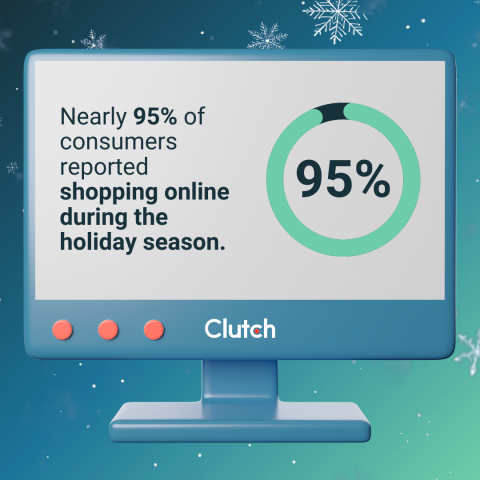
Nearly 95% of consumers shopped online during the 2025 holiday season, according to a Clutch survey of 402 consumers. But what information did those consumers give up for that convenience? And more importantly, how comfortable do they feel with brands having that kind of access?
Looking for a Public Relations agency?
Compare our list of top Public Relations companies near you
With almost half (47%) of respondents believing that brands collect extensive data on them, including their preferences, location, and online behaviors, there’s an increased awareness around data privacy and safety that breeds a mix of comfort and skepticism.
This report will explore where consumers draw the line when it comes to data sharing, what they expect brands to do with the information they collect, and how brands can balance personalization with responsibility.
As trust becomes harder to earn and easier to lose, the way companies handle consumer data may define post-holiday relationships more than any discount ever could.
Transparency has become one of the most valuable assets in the digital economy. As consumers share more personal information online, often in exchange for convenience or personalization, they increasingly expect brands to be upfront about how that data is collected, stored, and used. Our survey found that transparency is no longer optional; it’s a baseline requirement for trust.
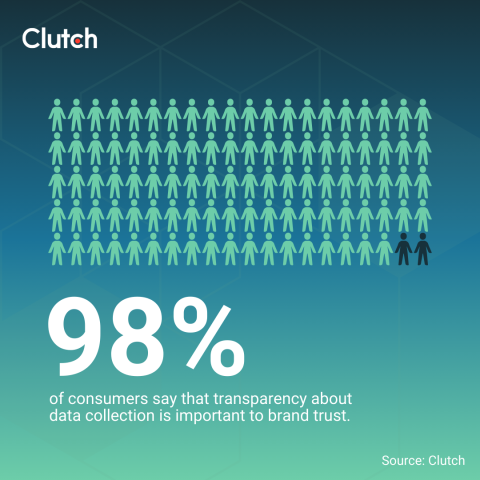
An overwhelming majority of consumers (98%) say transparency about data collection is important to brand trust, underscoring how closely openness is tied to credibility.
“We notice every brand that doesn't, every time an unwanted email or text interrupts our day from some organization that bought our information somewhere along the way,” said Adam Bird, Director of Strategy at DEKSIA.
Similarly, 97% of respondents believe that it’s important for brands to meet strict privacy and data protection standards, signaling that consumers expect all companies, no matter the sector or industry, to take data responsibility seriously.
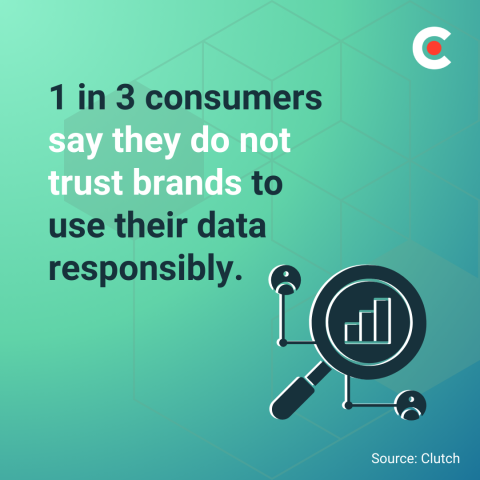
Despite these expectations, trust remains fragile. One-third of consumers say they do not trust brands to use their data responsibly, revealing a gap in what consumers expect and what they believe brands are actually delivering. This disconnect presents a clear risk for companies that fail to prioritize transparency, but it also creates an opportunity for brands willing to lead with accountability.
Part of this distrust stems from a lack of clarity. Consumers want to understand why data is being collected, how it will be used, and whether it will be shared with third parties. Vague privacy policies, buried disclosures, and unclear opt-in language can quickly erode confidence, even among otherwise loyal customers. When transparency falls short, consumers are likely to assume the worst.
High-profile data breaches and misuse scandals have also shaped consumer skepticism. News of data leaks, unauthorized sharing, or lax security practices across industries has made many consumers more cautious, regardless of the brand.
For brands, transparency must go beyond compliance checklists or legal disclaimers. It needs to be paired with demonstrated and reinforced responsible data use, like clear communication, accessible privacy controls, and visible efforts to protect consumer information. In an environment where nearly everyone expects transparency, the brands that actively prove their commitment while planning for the future are poised to win.
Additional Reading: '5 Reasons to Use Data Scrubbing Services'
While online shopping and digital engagement are now routine for consumers, their comfort with data sharing is far from guaranteed.
Nearly half (46%) of consumers report being uncomfortable sharing their data with brands, while an additional 37% feel neutral.
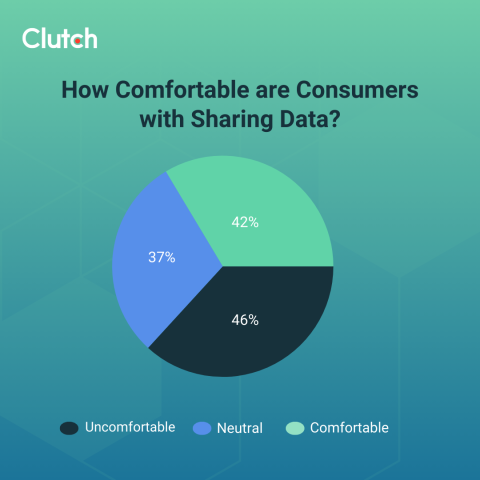
Together, these findings suggest that for most consumers, data sharing is approached with caution rather than confidence.
Consumers want reassurance that their information is being handled responsibly. For brands, the challenge is not eliminating concern altogether, but addressing it through transparency, trust-building, and clear value exchange in their branding.
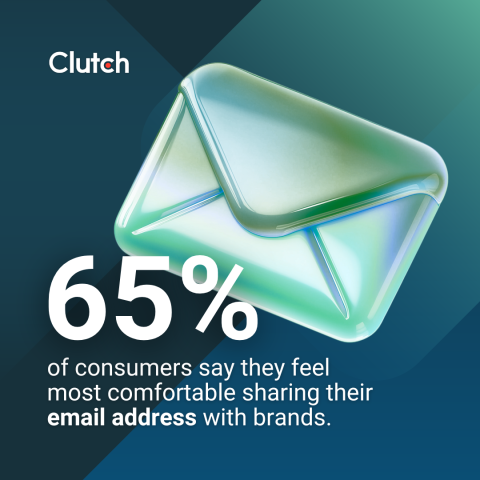
One area where brands have a clear advantage is email. Sixty-five percent of consumers say they feel most comfortable sharing their email address with brands, making it the most accessible and trusted entry point for data collection.
Email feels familiar and low-risk; consumers can opt out, unsubscribe, or manage preferences with minimal friction. As a result, many view it as a reasonable tradeoff for order confirmations, promotions, or updates.
This comfort positions email as a natural “gateway” for businesses. When used thoughtfully, email allows brands to establish credibility, demonstrate respect for privacy, and communicate value before asking for deeper or more sensitive data.
“If someone gives you access to their inbox, they’re not opting into your funnel, they’re opting into your voice. That’s a high-trust environment, and it should be treated accordingly,” said Quincy Samycia, CEO & Founder of The Branded Agency. “We advise brands to stop asking, ‘How do we monetize email faster?” and start asking, “How do we earn the right to stay?’”
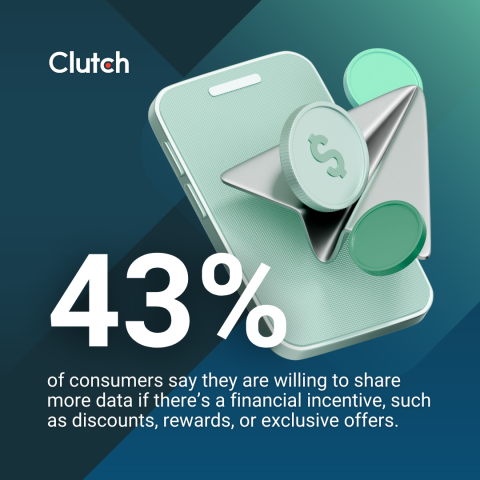
Incentives can also play a role. Forty-three percent of consumers say they are willing to share more data if there’s a financial incentive, such as discounts, rewards, or exclusive offers.
However, incentives alone are not enough to overcome trust concerns. Consumers may accept a deal, but they still expect transparency and responsible data use in return. Without trust, even attractive rewards can feel transactional or risky.
Ultimately, consumer comfort with data sharing is conditional. It’s driven by trust, clarity, and meaningful value.
Personalization is often positioned as proof that brands “know” their customers. But our results suggest that many personalization efforts are failing to resonate, pointing to a growing mismatch between what brands deliver and what consumers actually find useful.
When asked which personalization tactics they find helpful, consumers favored simple, functional approaches: cart reminders (24%), personalized product recommendations (24%), recently viewed item reminders (23%), and tailored emails or content (22%). However, the most telling finding is that 36% of consumers say they do not find any personalization tactic helpful at all.

This disconnect suggests that personalization, as it’s commonly executed, may not be delivering clear value. Rather than feeling supported, many consumers appear indifferent or even disengaged. For those who do appreciate personalization, the appeal is straightforward: reminders and recommendations that are directly tied to immediate needs.
Problems arise when personalization feels excessive, inaccurate, or disconnected from a consumer’s intent. Overly specific recommendations, poorly timed messages, or content that relies on incorrect assumptions can quickly cross the line from helpful to uncomfortable.
In high-profile cases, take the recent ad by McDonald’s, for example, brands have faced backlash when personalized or AI-driven campaigns felt tone-deaf or misaligned with consumer values.
Forty-one percent of consumers say they are uncomfortable with brands using AI to personalize their experiences, highlighting unease not just with personalization itself, but with how decisions are being made behind the scenes. AI can amplify concerns around data sources, accuracy, bias, and lack of human oversight, especially when consumers don’t understand why they’re seeing certain content or offers.
“Just because AI can jump ten steps ahead doesn’t mean your brand should,” said Samycia.
For AI-powered personalization to succeed, transparency and benefit must go hand in hand. Consumers need clarity around how their data informs personalization and reassurance that AI tools are being used responsibly and thoughtfully. Without that, even well-intentioned personalization risks feel impersonal or invasive.
Effective personalization isn’t about doing more; it’s about doing what matters to satisfy customers.
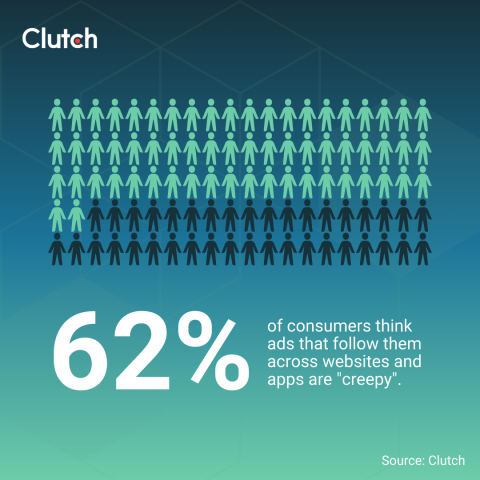
Personalization is meant to make advertising feel relevant, but for many consumers, it’s having the opposite effect. Our data shows that 62% of consumers think ads that follow them across websites and apps are “creepy,” signaling a clear tipping point where relevance turns into discomfort.
This reaction highlights how easily personalization can shift from helpful to invasive. Retargeting, once viewed as an effective way to re-engage interested shoppers, now often triggers unease, especially when it feels persistent or unavoidable. Seeing the same product ad appear repeatedly across unrelated platforms can make consumers feel like they are being watched rather than understood.
Many consumers are unaware of how their behavior is tracked across various sites, apps, and devices, or how different data sources are connected behind the scenes. Without that clarity, retargeting creates a sense of digital surveillance.
When transparency is missing, these ad experiences feel less like a service and more like a violation of personal boundaries. Instead of reinforcing brand familiarity, hyper-targeted ads can erode trust and amplify broader anxieties about data collection and control.
For brands, this presents a critical moment to reassess default retargeting strategies. Aggressive tracking tactics may deliver short-term impressions, but they come at the cost of long-term trust. To rebuild confidence, brands should prioritize clear consent, meaningful value, and open communication.
For example, brands can explain why a consumer is seeing an ad (“You’re seeing this because you showed interest in buying a new swimsuit”) , offer easy ways to manage ad preferences, or limit retargeting frequency to avoid overexposure. These small shifts signal respect for consumer autonomy and help ensure personalization feels intentional, not intrusive.
For a significant portion of consumers, privacy matters more than personalization. Our data shows that 42% of consumers prefer maximum privacy – even if it comes at the expense of personalized experiences. This finding challenges the long-held assumption that consumers will always trade data for relevance or convenience.
This preference signals a clear willingness to give up tailored recommendations, customized ads, or dynamic content in order to protect personal information. For these consumers, privacy outweighs convenience. Rather than viewing personalization as a benefit, they see it as a potential risk that could introduce uncertainty about how their data is used.
As concerns around data misuse, tracking, and AI-driven decision-making continue to grow, this privacy-first mindset is becoming more common. Consumers are increasingly aware that personalization often relies on extensive data collection, and many are choosing to opt out altogether rather than accept unclear tradeoffs.
Recent privacy regulations appear to be making a meaningful difference in how consumers perceive brand data practices. According to our survey, 58% of consumers feel that recent privacy laws have improved how brands handle their data, suggesting that regulation is more than symbolic; it’s influencing real behavior.
This perception points to a growing alignment between legal requirements and brand actions. As companies adapt to stricter standards around consent, disclosure, and data management, consumers are beginning to notice. Clearer opt-in mechanisms, more accessible privacy policies, and standardized rights around data access and deletion are helping normalize better data practices across industries.
If they request it, 56% of consumers say they are confident that brands will follow through with deleting their data.
Together, these findings point to early signs of repaired trust. Consumers may still be cautious, but they increasingly believe that brands are capable of honoring their commitments, especially when those commitments are backed by regulation. Companies should proactively demonstrate follow-through by responding promptly to data requests, confirming actions taken, and making privacy controls easy to find and use for their customers.
As privacy expectations continue to evolve, brands that treat data responsibly will be better positioned to maintain and strengthen their customer relationships.
As the shine of the holiday season wears off, consumers are thinking more clearly about their habits. The findings from this report make one thing clear: consumers are not anti-data, but they are increasingly cautious about how it’s collected, used, and shared.
“The structural problem: to businesses, data is a commodity. To consumers, it's my life, my attention, my inbox, my phone,” said Bird.
With nearly all consumers believing in the importance of data collection transparency and brand trust, the role that data plays in modern experiences is clear, especially as knowledge about data privacy grows.
Trust hinges on transparency, control, and the delivery of meaningful value. Excessive personalization, especially when powered by AI or cross-platform tracking, can quickly erode consumer confidence, prompting them to adopt privacy-first preferences, even at the expense of convenience.
At the same time, there are signs of progress. Growing confidence in privacy laws and data deletion rights demonstrates that trust can be restored when brands fulfill their commitments. For companies, the path forward isn’t more data, but better data practices.
Brands that meet consumers where they are, respect boundaries, clearly explain their choices, and design experiences that work with or without personalization will be best positioned to build lasting trust long after the holiday season ends.
Clutch surveyed 402 consumers in the U.S. during December 2025 about their feelings about brands and data privacy.
Of the respondents, 49% of respondents were male and 51% were female.
14% of respondents were ages 18 to 29; 33% of respondents were ages 30 to 44; 53% of respondents were 45 and older.