
Why Salesforce Staff Augmentation Is Becoming a Strategic Choice
Salesforce staff augmentation is no longer a stop-gap. Learn why more businesses now use external specialists to access expertise, move faster, and scale...
Updated February 12, 2026

Browsing history offers powerful insights into consumer intent, but only a small percentage of people feel comfortable sharing it. Learn what it means for your data collection and marketing.
A person’s online history is a window into their mind. It’s a collection of data that can reveal highly useful information for brands — from a lead’s interest in a brand’s products to their concerns and intent.
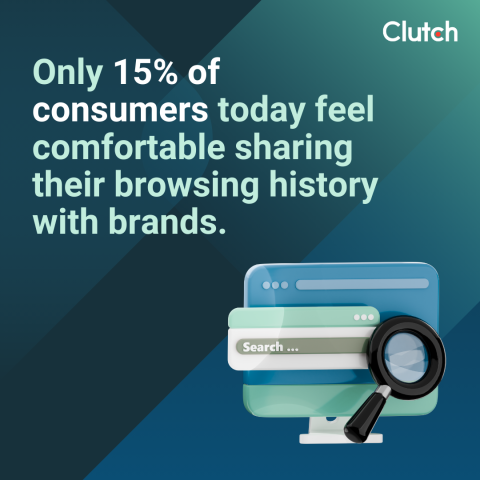
However, a new Clutch survey has found that only 15% of consumers today feel comfortable sharing their browsing history with brands. So while this data can be highly useful, collecting it can feel invasive to the consumer and lead them to shop elsewhere.
Looking for a IT Services agency?
Compare our list of top IT Services companies near you
For many users, sharing data like browser history feels a step beyond other types of digital information. But that doesn’t necessarily mean your business has to avoid it entirely. Explore why collecting browsing and search history data is perceived as especially invasive and what strategies your business can use to reduce customer uncertainty and rebuild trust.
Browsing history captures a user’s intent in real time at a level few other data sources can match. For example, transactional data captures only completed actions, while demographic data provides broad context but doesn't delve into the specifics of an individual shopper.
Search history data shows what consumers are actively exploring now. That kind of immediacy is what makes it valuable to brands, but it’s also why consumers are so sensitive about having their browsing history collected.
Fundamentally, browser history signals a person’s interest in various topics. The pages that a person visits, the comparisons they make, and the time they spend researching specific angles can all indicate emerging needs long before a purchasing decision is made.
These patterns often align with meaningful life events, such as a career change, a major purchase, or shifts in financial priorities. Marketers can leverage this data to anticipate demand and cultivate leads earlier in their decision-making process. But you’ll need to do so carefully and transparently to avoid losing trust.
Browsing history is useful to brands, but most consumers don’t want them to collect this information. A primary reason is that browsing data often touches on subjects consumers consider private — from health symptoms and personal relationships to debt and mental well-being.
Consumers recognize that this intimate data can sometimes be connected back to them and potentially misinterpreted. That’s why there’s often a natural feeling of resistance to brands trying to leverage these queries for marketing purposes.
Browsing or search history and transactional data can look similar at first glance. But there’s a crucial difference between the two: Purchase history reflects decisions people are comfortable owning, while browsing history can reflect thoughts they may never intend to act on.
Many consumers are aware that their transactional data is being collected and used for future marketing retargeting. But they’re often less comfortable about being evaluated based on one-off thoughts and searches that may not reflect their true intent.
Another major factor in consumer hesitation is how people perceive the lifespan of their browsing data. Many assume that browsing records are stored indefinitely and reused across many contexts.
These assumptions may or may not be accurate, depending on the company collecting them. But what matters is the belief itself. When people feel their past searches could resurface later, detached from their original context, they experience a sense of lasting exposure that feels like a loss of control.
Together, these factors explain why collecting browsing history feels like a step beyond other forms of digital data. It can still provide brands with high-value insight into intent and context. But using it in a way that your target audience dislikes can erode brand trust and lifetime customer value.
The fact that only 15% of consumers feel comfortable sharing their browser history reflects a deeper sense of loss of control. People don’t just worry if their online journey data is collected. They worry that it’s being collected without boundaries and used in ways that they can’t anticipate or influence.
Unlike opt-in data exchanges, browsing data collection often feels passive. It accumulates in the background without a clear moment where the user provides their consent. This lack of understanding creates a power imbalance. Brands gain more insights into their customers, but the people themselves often aren’t aware of what they’ve revealed or how it might be used later.
Even if your business is benefiting from excessive data collection today, that may only be a short-term trend. McKinsey and others point out how consumers are increasingly factoring trust and privacy into their purchase decisions.
Three main factors amplify consumers’ reluctance to share their browsing history. Here’s a closer look at each.
One of the most significant factors behind consumer hesitation is confusion. Many people lack a clear mental model of what counts as browsing history, how it’s collected, and who might have access to it in the future. Without this knowledge, people often default to assuming the broadest and most threatening possibilities.
In practice, the difference between first-party data collected by a brand and third-party data collected through tools is meaningful. But consumers rarely understand the difference. For some, browsing history is simply a list of websites they’ve visited. For others, it includes search queries and even content found in private or incognito sessions.
Anonymity complicates things further. Brands may rely on pseudonymous identities and aggregated datasets. However, studies have shown that these can often be re-identified and linked back to specific individuals by comparing browsing patterns against other publicly available information.
All of this confusion makes people feel very uncomfortable sharing their browsing history. They typically don’t know what’s being collected, which means they can’t make an informed decision about the trade-offs between privacy and digital personalization.
Ultimately, this leads to caution. People prefer to withhold their browsing data because it feels safer than the unknowns they face if sharing it.
Beyond collection, people also have significant anxiety about what happens to their browser history data once a company has it. They worry about a range of possible outcomes that can feel uncontrollable and scary.
One key concern is profiling. Browsing behavior helps companies infer their targets' interests, intent, finances, health status, or life circumstances. People worry that their digital footprint will be treated as definitive and could impact their perceived identity.
Another concern is downstream use. Consumers are rarely confident that their browsing data will stay with the original brand that collected it. Many fear it will be shared, sold, or reused by third parties for purposes they can’t anticipate. Long-term storage possibilities intensify these feelings, as people worry that data collected today could shape their digital footprint months or years later.
For brands, this is a clear reason to provide more transparency around data collection and storage practices. Avoid vague statements like “shared with trusted partners” and provide the actual path a consumer’s data could take once you have it. You may need to outline the limits of your strategy before consumers feel comfortable with it, as research shows 77% of consumers report that transparency practices impact their purchasing decisions.
Another key source of discomfort is fear that browsing data could be misunderstood once it’s processed by automated systems. Browsing data can reflect momentary curiosity or research for someone else. But when these signals are converted into algorithmic categories, the original context gets stripped away.
Consumers may worry that a few of these searches can quickly define how brands perceive them, as 72% of Americans report worrying that all or most of what they do online is being tracked by advertisers and other companies. This can impact the ads they see, the offers they receive, and assumptions made about their needs and priorities.
It’s also difficult for consumers to correct mistakes when they’re made. For example, people can unsubscribe from marketing emails, but they don’t always know how to reset conclusions drawn from past browsing behavior.
When people believe that their digital curiosity can be permanently misclassified, reluctance to share browsing data is a natural outcome. It’s a form of self-protection that helps people safeguard their online experience.
Finally, browsing history feels more invasive than other forms of data collection because it captures unfiltered intent rather than finalized decisions. It reveals details about someone's curiosity, uncertainty, and digital exploration, which people don’t always want to share.
One study found that consumers believe the industry status quo of behavioral targeting results in high levels of perceived privacy violations. This indicates general discomfort with modern tracking activities.
For example, browsing data can expose thoughts people never intended to externalize. People fear being judged or unfairly targeted based on early signals that could later be used out of context.
Cultural narratives have reinforced these ideas over time. Years of public discourse around surveillance and data misuse shape how people feel about the collection of their browsing data. Even responsible practices can feel intrusive when they resemble patterns that people already associate with unwanted surveillance.
Consumer discomfort with data collection during browsing has very real implications for companies. For one, it changes behavior. When people feel uneasy about having their history collected, they often take steps to protect themselves, such as using:
These actions degrade the quality of data companies can collect and may distort measurements. Signals get fragmented, and attribution becomes more difficult. This makes personalization more challenging, potentially leading to underperformance.
Left unchecked, this problem can compound over time. When browsing data use feels invasive or unpredictable, consumers become less willing to engage and share. That hesitation grows as public discourse expands, potentially leading to lost loyalty and lifetime value for brands.
The good news is that your business doesn’t necessarily need to stop collecting browsing data altogether. It may instead need to take actions to reduce uncertainty and demonstrate restraint. This can restore trust over time and help to differentiate your brand from competitors.
Academic work on privacy control adoption shows that trust and control over data sharing often go hand in hand. The work suggests consumers share more when they trust their service provider and understand what's being done with their data.
Brands that succeed in this area tend to focus on these key principles:
These steps won’t eliminate concerns around browsing data collection for all consumers. But they can shift the dynamic meaningfully. When consumers understand your rules and believe the boundaries you set will be respected, collection feels more like a negotiated exchange.
Only 15% of consumers feel comfortable sharing their browsing history, even as personalization expectations continue to rise. These worries stem from the intimate nature of this information and a lack of understanding of what’s being collected and how it’s being used.
For brands, the path forward doesn’t necessarily mean collecting more or less data, but setting clearer boundaries. Let people know what you’re collecting, how you’re keeping the scope limited, and the value that customers can expect through this process.
The key is reducing uncertainty. When consumers feel like they have a say in what data you collect and how it’s used, they’re often more comfortable sharing it. Plus, making these changes can establish your brand as forward-thinking about privacy and consumer-friendly, which can support sales growth.