
How to Define Brand Values That Guide Every Business Decision
Brand values are the principles that guide company decisions, define what a brand stands for, and shape how it treats customers, employees, and partners.
Updated February 12, 2026

Consumers are increasingly aware of how brands collect and use their data. For marketers, it doesn’t necessarily mean collecting less data, but being more intentional about policies and transparency.
Consumer privacy has grown to become an increasingly important consideration for marketers. What was once a matter of compliance is now essential to customer loyalty and ongoing sales growth.
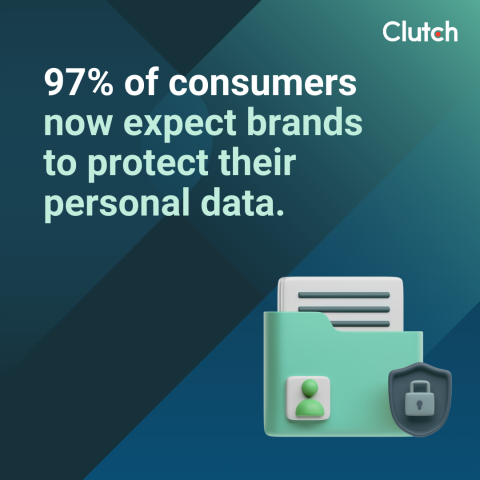
According to new data from Clutch, 97% of consumers now expect brands to protect their personal data, while 85% say they’re aware of major privacy regulations like the EU's General Data Protection Regulation (GDPR) and the California Consumer Privacy Act (CCPA). This indicates a growing knowledge of data privacy laws and heightened expectations.
Looking for a Public Relations agency?
Compare our list of top Public Relations companies near you
However, this doesn’t mean your company needs to stop collecting data or anything that extreme. As Quincy Samycia, CEO and founder of The Branded Agency, notes: “Consumers have been trained — through years of dark patterns, retargeting creepiness, and broken promises — that data is collected for the company, not for them. The issue isn’t data itself, it’s intent.”
Your business can still benefit from consumer data, but it may need to update its policies and practices to do so safely, without eroding brand trust. This guide covers what you need to know to accomplish this.
There’s always been some consumer awareness of digital privacy. But until recently, the number of concerned consumers was relatively small. Companies could generally focus on meeting minimum regulatory standards and stick to business as usual.
That framing has shifted as regulations like the GDPR and CCPA enter mainstream consciousness. These frameworks have forced organizations to be more explicit about how consumer data is collected, stored, and shared. This process of codifying user rights has raised consumer awareness and normalized the idea that people should have agency over their digital data.
As awareness grows, minimum compliance standards are no longer enough. They represent a floor for internal policies, not a ceiling, as consumers look for deeper information around:
The key takeaway is that a brand today can be totally compliant with all relevant privacy frameworks and still feel intrusive or untrustworthy to its target users. This could mean shifting how your leaders think about digital privacy.
The most effective brands today treat consumer privacy as a strategic initiative. It’s not only about meeting baseline standards but about positioning the company to earn confidence and differentiation through data collection practices.
Apple represents a great example of this shift in how companies are thinking about data privacy. The tech giant has differentiated itself from competitors through a more consumer-friendly approach to data collection. It’s released marketing around this, which is worth reviewing as your business refines its approach and works to communicate it to the market.
Apple’s approach is notable because the company reframes the conversation about data collection as a consumer choice. Features like App Tracking Transparency don’t eliminate personalization but make the value more explicit to users.
This transparency has helped Apple position itself as a proponent of privacy. Instead of competing solely on performance or ecosystem lock-in with the likes of Microsoft and other software companies, Apple now differentiates itself on trust.
For marketers, it’s a great example of how privacy-forward design actively supports brand positioning. The same strategy can help your business win long-term loyalty from a customer base that's increasingly concerned about privacy.
Growing awareness has been one of the most important forces reshaping privacy conversations today. According to Clutch's data, 85% of surveyed consumers say they recognize major privacy regulations like the GDPR and CCPA.
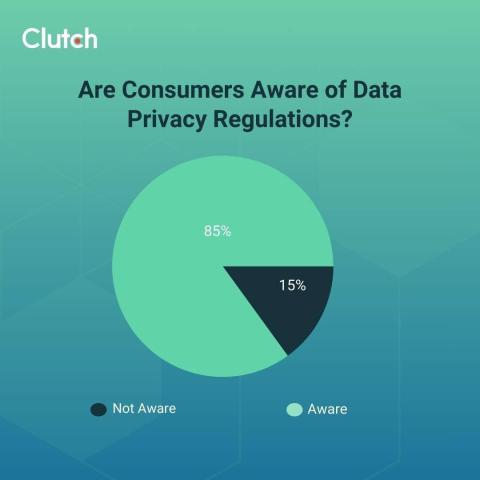
This shows a broad understanding of the importance of privacy and a growing awareness of the policies and practices that support it.
Privacy policies and consent notices are everywhere online now, making data practices more visible. It’s natural that consumers would think more about their digital privacy as they see these notices on most of the websites they visit.
There have also been years of news stories showing the cost of high-profile breaches and the misuse of consumer data. This has contributed to a growing skepticism about data collection and security. Today’s users increasingly see themselves as stakeholders with rights and expectations.
It’s a shift that has impacted the balance of power between brands and audiences. Consumers now consider whether a brand’s data practices are proportionate to the value they receive from the company. When personalization and data sharing feel excessive or disconnected from any meaningful benefits, it raises questions about intent.
Privacy-conscious consumers are also more willing to act on these feelings. They may opt out of data collection, withhold information, or switch providers when data practices feel misaligned with their expectations.
With all this at stake, the privacy decisions a company makes today will directly impact its customers’ purchasing decisions tomorrow.
When 97% of consumers say they expect brands to strictly protect their personal data, it’s more than a security preference. It’s a baseline expectation about the respect and accountability people expect from the brands they choose to buy from.
There’s logic and emotion behind this. Rationally, customers understand the risks they could face if a company misuses their data or experiences a breach. Emotionally, privacy policies work as a signal. When information collection is excessive and lacks real value, customers may feel exploited and choose to shop elsewhere.
Ultimately, several converging dynamics have amplified privacy’s role as a trust signal:
Privacy matters to brands more than ever because it affects virtually all consumers, regardless of demographics. It can build trust when done well or quickly lose it when collection practices feel misaligned with stated values or overly intrusive.
In an environment where skepticism is the default view of most consumers, showing restraint and clarity in data collection can go a long way toward building trust. It’s also something you can advertise, as Apple has, to pursue sales growth.
Personalization has become more sophisticated as data collection increases. But as users notice this, they’re also asking for heightened transparency from brands. This may impact your marketing decisions moving forward.
For example, Samycia says, “Personalization adds value when it solves a real problem, saves time, or reduces friction, and is explainable and expected.” So if you’re collecting user data for personalization that doesn’t fit these criteria, the collection may be unnecessary and hurt your brand in the long run.
The idea of explainable personalization is becoming more important because of this. Consumers are willing to share data when they connect its use to a tangible benefit, such as reduced effort or better recommendations. But they’re less interested when their data is only leveraged to market to them more effectively.
Clarity can also reduce resistance to data collection. When customers understand how personalization works, they may be less likely to opt out or disengage with the brand. In this way, transparency can actually improve marketing effectiveness. It aligns relevance with trust by helping users understand the process behind personalization.
Today’s consumers want more control over how their data is collected and used than earlier users did. Privacy alerts that used to be passive opt-ins are now part of an experience that signals whether a brand respects its customers or prioritizes convenience over trust.
As Adam Bird, director of strategy at DEKSIA, notes: “Clarity on use, and more importantly, clarity on intent, are critical for data collection that doesn’t undermine trust.”
But this isn’t a one-time process. Consumers increasingly expect consent to be specific, reversible, and ongoing. They want to be able to change their preferences of what they choose to share over time and feel confident that their boundaries will be respected when they do.
These consent experiences directly shape brand perception. Offering clear, flexible control mechanisms signals that you value your users' privacy and aren’t unnecessarily abusing their digital data. This can help your business stand out and establish a more trustworthy reputation in its market.
Policy updates and surface-level messaging only go so far. If you want consumers to associate your business with ethical data collection, you’ll need to integrate a new way of thinking into the business as a whole. Here are four tips for doing that:
First, think about consumer data internally as something entrusted to your business, not owed to it. That means shifting away from questions like, “What can we collect?” to “What should we collect? And why?”
That could mean adopting practices like:
When leaders push teams to justify the intent and necessity of their data collection practices, privacy concerns become more central to organizational decision-making.
Another powerful way to show how much your company cares about privacy is to find new ways to incorporate it into products and services. For example, in 2021, Apple updated its App Store policy to require all iOS apps to ask users for permission to share their data before doing so. Users now see how much Apple values their privacy in each new app they access.
You might consider steps like:
The important thing is showing your target audience that you value their privacy by integrating it more intentionally into products and experiences.
Communication is another essential element of modern consumer privacy. Brands that explain their data practices in plain language and tie them directly to customer value lower skepticism and gain trust.
Tips for this include:
The goal here isn’t necessarily communicating more about privacy than you already do. It’s to minimize surprises, so fewer customers feel you’re intruding on their privacy when you do collect their information.
Finally, privacy can break down when responsibility for it remains siloed. Marketing, engineering, and leadership should all play a role in shaping how data is collected and how customers experience it. This keeps policies aligned to create and reinforce unified expectations for your brand.
You can get there by:
Consistency across teams is what turns privacy into believable brand behavior that builds trust.
Consumer privacy has moved beyond a basic compliance requirement to a core brand value. With 97% of consumers expecting strict data protection and 85% aware of major privacy regulations, privacy is now a visible measure of how much a brand respects its audience.
Brands that treat privacy as a promise are better positioned to earn and maintain trust in the coming years. By prioritizing transparency and responsible data stewardship, organizations can turn privacy into a lasting differentiator.