The Community Advantage: Why Reddit and Quora Are Reshaping B2B Marketing
Reddit and Quora now shape B2B buying decisions long before a sales call. Learn how community trust, expert answers, and peer proof win buyers over.
Updated March 27, 2026

New survey data reveals a sharp and unexpected decline in influencer trust, signaling a shift in how audiences perceive online endorsements. In this report, we break down what this trend means for your influencer marketing strategy—and how to adapt moving forward.
Social media product sensations like SugarBearHair are a thing of the past. Influencer marketing has evolved from curated Instagram posts and polished partnerships to more dynamic content that’s rooted in authenticity and personalized content. As the landscape matures, so do consumer expectations.
Audiences today are seeking transparency and relatability, two things that can be hard to achieve with the all-expenses-paid trips that are common among many influencers. This shift is reshaping how brands approach tapping into those audiences, especially as online trust becomes more fragile.
Looking for a Social Media Marketing agency?
Compare our list of top Social Media Marketing companies near you
To better understand this changing dynamic, Clutch surveyed 277 consumers in June 2025 about how they interact with influencers on social media and their product recommendations. The results revealed how trust can be built – and easily lost – in today’s digital world.
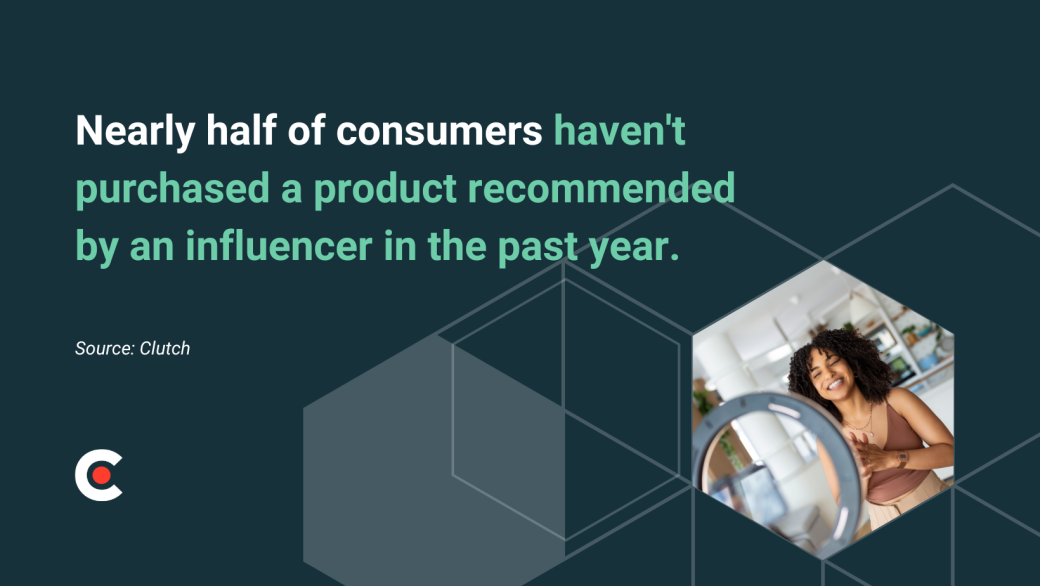
Influencer endorsements were once seen as powerful conversion tools that drive measurable sales and brand engagement. Our survey shows that there has been a shift, with nearly 50% of consumers stating that they haven't purchased a product recommended by an influencer in the last year. In a 2023 study from Matter Communications, data showed that nearly 70% of consumers trust influencer recommendations. So why the change?
Several factors could be contributing to this decline in influencer trust.
Oversaturation of sponsored content across social media has led to consumer fatigue, with audiences increasingly tuning out promotional messages. Moreover, the perception of inauthenticity can contribute to eroded trust. A recent $150 million lawsuit involving a popular Lululemon competitor cited influencer misrepresentation as a central role.
“A few years ago, influencer content felt more organic, like a genuine recommendation from someone you followed. Now, with so many paid partnerships and templated captions, consumers are more tuned in to the transaction behind the post,” said Paul Bies, President of Mystique, a branding agency. “It’s not that they completely distrust influencers—it’s that the novelty and perceived authenticity have worn off.”
Many consumers are now gravitating toward more relatable voices. While 30% of respondents state that it doesn’t matter which type of influencer recommendations are coming from, nearly 20% of survey respondents said that they prefer product recommendations from micro influencers—those with 10,000 to 100,000 followers—who are often perceived as more authentic and accessible.
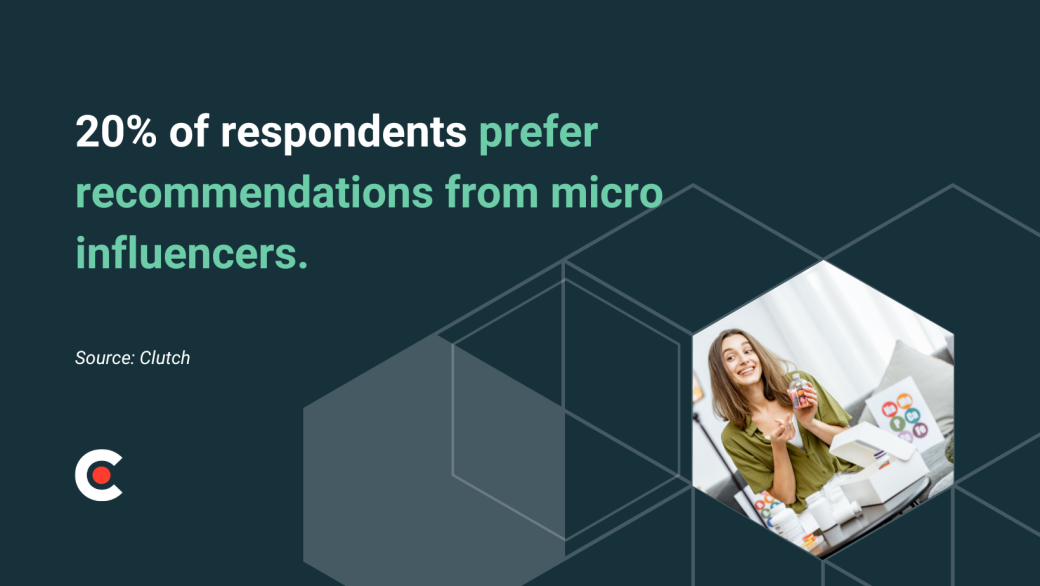
This growing preference suggests a broader pivot away from celebrity-style endorsements toward UGC and community-based marketing, where everyday consumers play a more central role in shaping brand narratives.
“Authenticity isn't a strategy; it's a mandate that begins with my core belief that sales is the art of helping,” said Mario Martinez Jr., CEO & Founder of Vengreso, a productivity management software company.
Brands that prioritize transparency are likely to regain consumer trust and drive more effective engagement.
While influencer marketing continues to be a key tactic for brands, our survey found that 53% of consumers feel less trust in a product recommendation if they know the influencer was paid for the promotion.
This reflects a common perception of bias, but our data also shows that 87% of consumers believe that influencers have actually used the products they promote. This finding suggests that the issue isn’t necessarily disbelief in product experience, but rather skepticism around why influencers are promoting it.
“The [percentage] who believe influencers actually use the products aren't naive,” said Adam Bird, Director of Strategy at DEKSIA, a marketing agency. “They're making a sophisticated calculation: ‘Yes, they're paid to talk about this, but they probably wouldn't risk their credibility on something they've never touched.’ This isn't trust, it's risk assessment dressed up as faith. How else are we to decide what to buy?”
Consumers may question the intent behind the endorsement, especially when compensation is involved.
For marketers, this presents both a challenge and an opportunity. To build and maintain credibility, brands need to focus on cultivating long-term relationships that will reflect genuine collaboration with influencers. These sustained relationships can better signal authenticity and shared values to consumers.
The tension around trust becomes even more complex when examined through a generational lens.
Influencer marketing doesn’t land the same way across generations, and the data makes that clear.
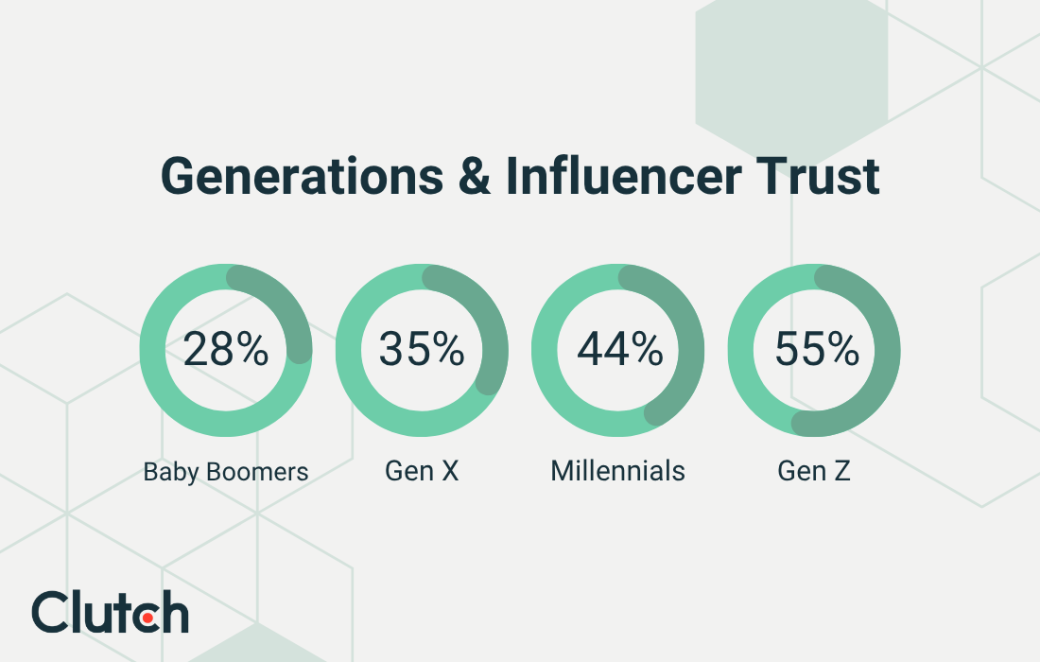
According to our survey, 55% of Gen Z consumers say they trust influencer recommendations, compared to just 28% of Baby Boomers. This gap can be traced back to how each generation engages with media.
Gen Z has grown up immersed in social media and influencer culture. This group is familiar with online personalities and often sees influencers as extensions of their social circles.
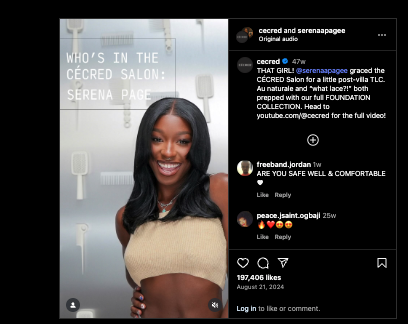
For example, on Love Island USA Season 6, the friendship between Serena Page, JaNa Craig, and Leah Kateb, referred to as PPG, has taken the social media universe by storm.
Commentary on their friendship and the diversity of each woman has skyrocketed them to popularity amongst younger generations because of how “real” they are perceived. With that, each girl (all of them have between 2 to 6 million followers on TikTok and Instagram) has become a brand partner for products, including Craig for Maybelline, Kateb for Skylar, and Page for Cécred.
In contrast, Baby Boomers tend to rely more heavily on traditional media and peer reviews, making them less receptive to digital endorsements and more cautious about paid promotions.
For brands, this generational difference underscores the importance of a hybrid approach to building trust. While influencer marketing may resonate strongly with younger audiences, integrating traditional strategies can help reach older consumers more effectively.
Visual content is at the heart of today’s influencer marketing strategy – and the numbers back it up.
Nearly 61% of consumers say they encounter influencer product recommendations on visual-first platforms like YouTube, TikTok, Instagram, and Pinterest.
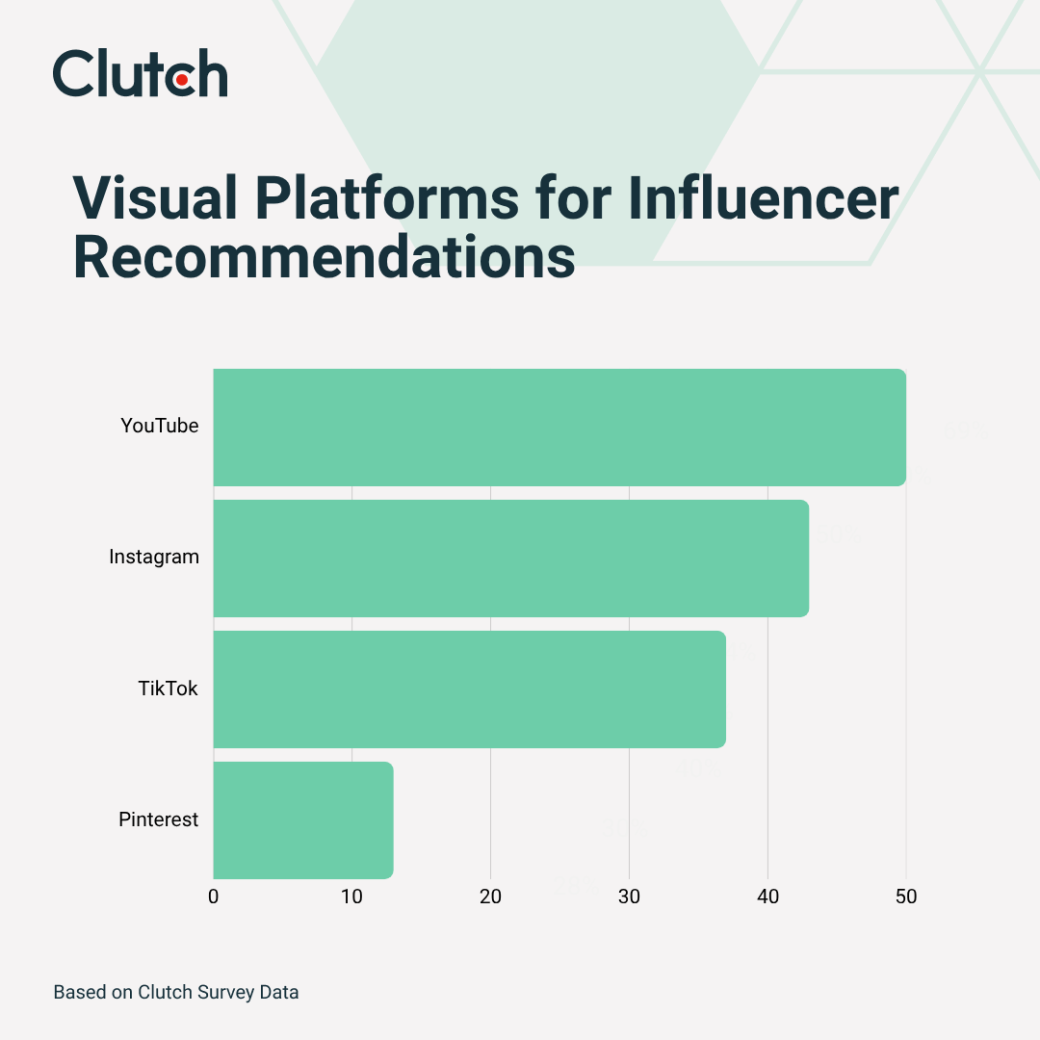
As visual storytelling becomes increasingly central to how consumers decide on products, these platforms offer unique advantages:
To maximize impact, brands and influencers must choose platforms and formats that align with their products and target audiences.
“In today's highly visual world, especially on platforms like TikTok and Instagram, authentic visuals speak volumes. A polished, overly staged photo or video can immediately trigger distrust,” said Josh Webber, CEO of Big Red Jelly, a brand strategy agency.
Influencer partnerships should prioritize authentic visual storytelling tailored to each channel's context.
When asked whether they trust product recommendations more from influencers or directly from brands, more than 2 in 5 people (41% of consumers) are unsure.
This hesitancy reflects a broader uncertainty in the marketplace, where traditional trust signals have weakened, and consumers are left questioning where to put their trust. The data showcases that consumers do not necessarily trust people more than companies, despite their real desire to see more personalized and relatable content from all media sources.
The rise of paid partnerships and sponsored content has blurred the lines between genuine endorsement and commercial promotion, both for influencers and brands. Consumers are increasingly savvy, often scrutinizing the motives behind a recommendation. For many, it’s not clear whether an influencer’s post or a brand’s messaging offers the more honest take.
“Trust comes from consistent quality, not consistent quantity,” said Andy Crestodina, Co-Founder & CMO of Orbit Media Studios, a digital marketing and web design agency. “If you publish a string of medium-quality posts just to have consistent frequency, you're hurting trust. You are misunderstanding why you have followers.”
While this presents a challenge, it offers a valuable opportunity for brands. If brands proactively address this trust gap by fostering transparency, prioritizing authenticity, and aligning messaging across both influencer collaborations and internal campaigns, consumers will become more confident.
Ultimately, trust isn’t automatic; it’s earned. As consumers demand more honesty, businesses – and influencers – must rise to meet that standard.
The days of glossy, highly curated influencer content are fading fast. Influencer marketing is no longer about perfectly fitted endorsements but about building authentic relationships with audiences. As the landscape matures, trust now sits at the heart of every consumer interaction.
Influencer marketing isn’t dead – but lazy, performative strategies are. Brands and influencers that listen to consumer expectations and adapt will be the ones that break through the noise.
Clutch surveyed 277 consumers in the U.S. during June 2025 about their thoughts on influencers.
About 53% of respondents were female; 44% were male, and about 3% didn’t specify their gender or identify as non-binary.
13% of respondents were ages 18 to 29; 33% of respondents were ages 30 to 44; 55% of respondents were 45 and older.