How UGC Video Ads Outperform Traditional Creative in Paid Social Campaigns (With Real Examples)
Learn why UGC video ads outperform traditional creative in paid social, with real examples, best practices, and proven strategies.
Updated May 29, 2026

YouTube advertising has become a must-have tool for B2B brands. From bumper ads to Shorts, here’s how you can use these videos to make an impact.
Video has taken America by storm. Sure, people have always watched movies and Saturday morning cartoons.
But thanks to social media, consuming videos is easier than ever.
Looking for a Video Production agency?
Compare our list of top Video Production companies near you
According to Statista, adults spent 176 minutes (nearly three hours) per day watching digital videos in 2023 — up from just 138 minutes in 2020.
Many B2B businesses have embraced this phenomenon, investing heavily in video advertising.
Clutch surveyed 260 respondents in the marketing industry and found that 34% of respondents plan to moderately increase their video advertising budget (25-50%) in 2025.
Some share content on TikTok, but the risk of a permanent shutdown has left marketers wary.
Jacqueline Basulto, CEO of SeedX, a digital marketing agency, warns marketers not to focus too much on a single channel.
“Regarding the uncertainty surrounding TikTok — it’s important to always diversify your means to communicate with and attract a customer base,” she advises. “No platform is ever certain to work long-term.”
With TikTok’s future uncertain, many businesses are turning to YouTube. In fact, a 2024 study found that 66% of marketers plan to increase their use ofYouTube advertising. It’s not hard to see why. Viewers stream over 1 billion hours of YouTube daily just on their TVs.
Of course, you can’t just upload all your old TikTok videos to YouTube and call it a day.
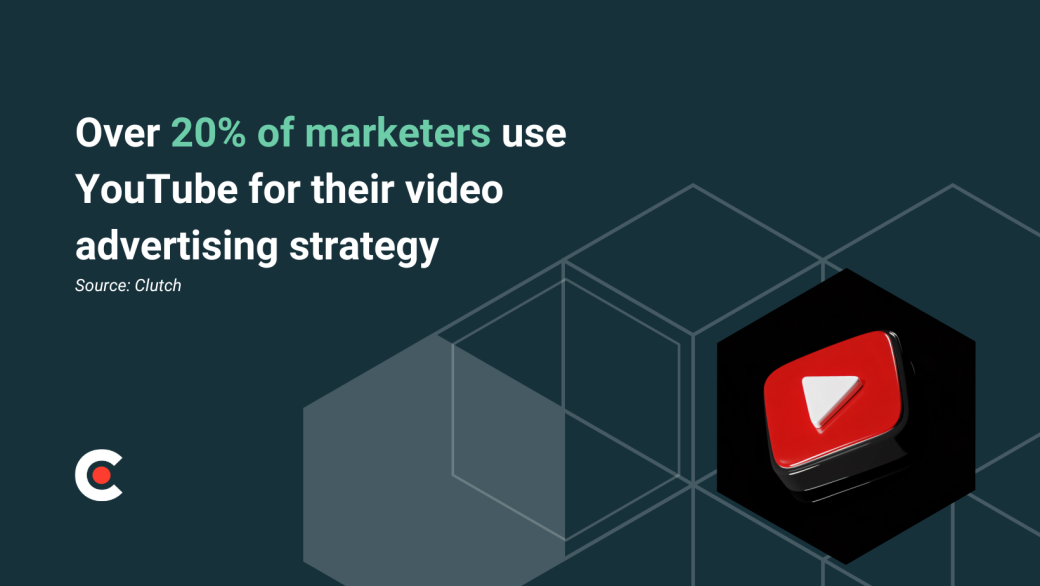
Clutch also found that 23% use YouTube for their video advertising strategy.
“Video content is critical for advertisers, but it's important to create a video that feels native to the platform you are on,” Basulto explains. “Long gone are the days where each video is akin to a TV commercial. Videos that convert the best feel like your best friend could have posted them — they are shot on iPhones, genuine feature people, and talk about products in a genuine light.”
Are you interested in trying YouTube advertising? Let’s examine this channel’s creative possibilities and challenges.
Since 2005, YouTube has been the go-to platform for videos. In its early days, it was mostly a hub for amateur creators. Silly videos like “Charlie bit my finger” and “Chocolate rain” became viral sensations. And who can forget classics like “Potter Puppet Pals”?
Soon, YouTube allowed businesses to enjoy the fun with video advertising. Early options included InVideo ads and TrueView ads, which gave users the choice of whether to watch.
In 2020, the platform introduced YouTube Shorts to tap into the growing popularity of TikTok-style videos. This format lets creators share videos that are up to three minutes long. But it’s not just about the length — after all, you've always been able to post brief videos on YouTube.
Shorts are special because they give creators more visibility. They get a dedicated section on the main platform, where users can easily scroll through them.
YouTube Shorts make it easy for advertisers to hop on the short-form video trend. Gone are the days when you needed a dedicated video editor or fancy equipment. Now, you can just film clips on your smartphone and upload them straight to the platform. From there, you can quickly add filters, remix your content with popular audio, and more.
There’s no one-size-fits-all approach to promoting your brand on YouTube. The platform has several formats, so you can experiment to see what works best for your audience. Here are a few popular types of YouTube advertising:
Skippable ads have essentially replaced TrueView ads. Both types allow the viewer to skip — or opt out — after five seconds.
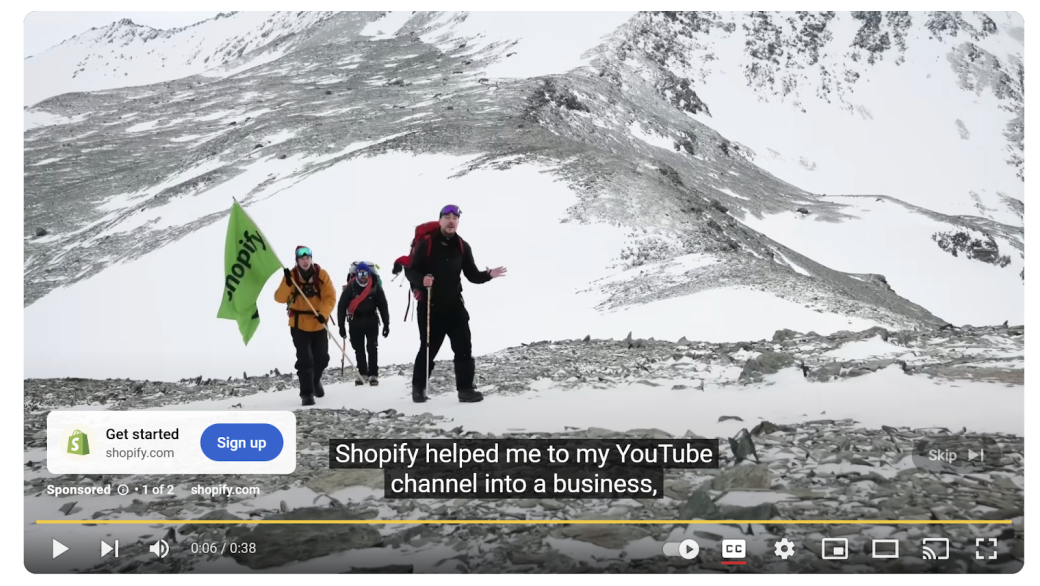
A faint “skip” button appears at the bottom of this skippable ad. Source: Shopify.
These ads typically play before or during longer videos and are sometimes followed by a second, unrelated ad.
Take this Shopify ad, for example. The video is 38 seconds long, but a faint “skip” button appears at the bottom right after six seconds. The text “1 of 2” on the left side indicates that another ad will follow. After the viewer watches or skips both ads, they can view the main video.
This format gives viewers more control over their experience. Many skippable ads include call-to-action buttons — like the Shopify ad’s “Sign up” link — which let the audience decide to keep interacting. They can skip it if they’re not interested in your content.
At first, this might seem like a major downside for advertisers. Making videos is hard work, so the thought of someone skipping your content to watch funny cat videos can feel a little, well, hurtful. But don’t feel too sad. YouTube only charges you if viewers watch or interact with the full ad. That means you just pay for people who genuinely care about your content.
As the name suggests, non-skippable ads don’t allow users to opt-out. However, these videos are only between six and 15 seconds long, so viewers aren’t trapped by an endless commercial.
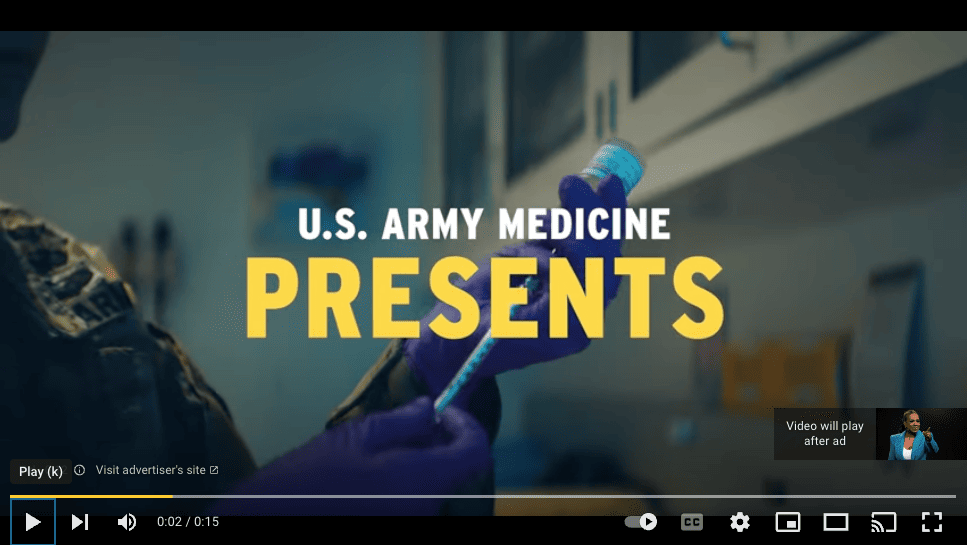
This non-skippable ad doesn’t allow users to opt out. Source: U.S. Army Medicine.
As this example from the U.S. Army Medicine illustrates, non-skippable ads look a lot like skippable ones. However, viewers see the message “Video will play after ad” and a preview image instead of a “Skip now” button.
Non-skippable videos have a different pricing model, too. You must bid on non-skippable ads based on your target cost per thousand impressions. That means you decide how much you will pay for YouTube to show your ad to 1,000 people. This approach helps you stick to a budget while maximizing your impressions.
A bumper ad is a non-skippable video that comes before the main content. This type of video is extremely brief, lasting just six seconds or less. The goal? To share a message with the audience as quickly as possible.
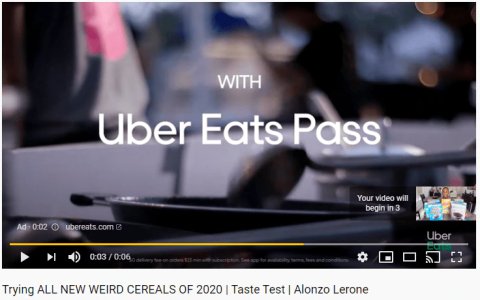
This bumper ad uses bold text to promote the Uber Eats Pass in only six seconds. Source: Uber Eats.
Bumper ads work best on mobile. They allow users to encounter your brand on the go without significantly disrupting their viewing experience. Think of them as mini commercials — they have just enough content to create a fleeting, hopefully memorable impression. Many businesses pair bumper ads with longer videos for even greater impact.
There are two ways to promote your business with YouTube Shorts: organic content or paid advertisements.
Organic content costs nothing to produce — well, except for the time you invest into your videos. It’s a low-stakes way to experiment with different ideas and connect with your audience. Want to humanize your brand? Consider making a behind-the-scenes video to introduce your team members. To gain credibility, share thought leadership videos.
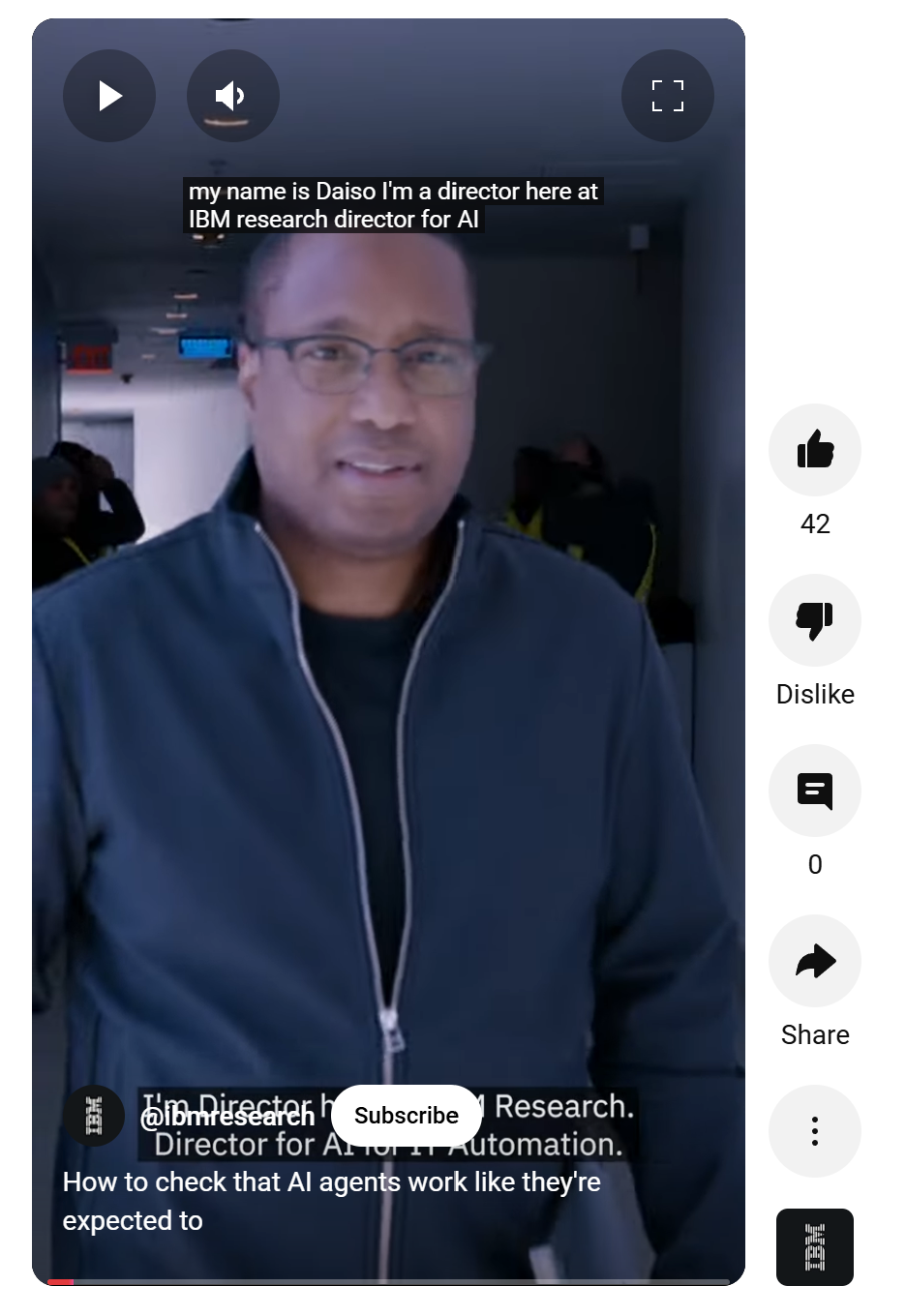
This Short introduces ITBench, a series of benchmarks used to test AI agents. Source: IBM.
IBM frequently uses YouTube Shorts to share organic content. These brief videos spotlight the company’s technological innovations, such as AI frameworks and tools. The Shorts also feature IBM employees, which makes the content feel more authentic. These videos may help win over viewers who dislike in-your-face, non-skippable ads.
Businesses can also invest in paid YouTube Short ads. These images or videos appear between organic videos in the Shorts Feed. There’s no minimum viewing time, so users can choose to swipe past them immediately. Still, these paid ads can be incredibly useful for connecting with viewers who mostly consume short-form videos.
Let’s face it: Many social media platforms have relatively niche audiences.
For instance, the Pew Research Center found that only 4% of people over the age of 65 use Snapchat, while BeReal’s user base is almost entirely people under 29. By contrast, over 85% of all American adults use YouTube, making it the most popular social media platform. It’s followed distantly by Facebook, which only 70% of Americans use.
While this universal appeal is great for advertisers, you must target your ads strategically. A video that appeals to a 60-year-old farmer in Montana probably won’t have the same impact on a Gen Z fashionista in Chicago.
Luckily, YouTube offers plenty of targeting options. You can decide who you want your videos to reach based on many criteria, including:
Let’s say your company sells trendy art supplies. You might use demographic data to target your ads to young women who may enjoy creative hobbies. Want to get even more specific? You could target users who have recently browsed similar Google products or watch art tutorials. By narrowing your audience, you can increase the chances that viewers will actually care about your ads.
Of course, all the targeting in the world won’t help if you have bland or shoddy content. That’s why visual storytelling is critical. Focus on designing engaging ads that keep viewers from clicking the skip button.
These practical strategies will help you create compelling ads:
Once you’ve launched your first ad, monitor its performance carefully. YouTube automatically gathers several video metrics, including:
This data will help you determine if your video ads are meeting your goals and quickly pinpoint areas for improvement. For example, if your content has 1,000 impressions but only a handful of views, that might be a sign that you lack an engaging hook.
Like any marketing channel, YouTube poses several challenges.
Most obviously, YouTube faces stiff competition from TikTok — at least when it comes to Gen Z. If you focus solely on YouTube advertising, you might miss potential customers who spend more time on other short-form video platforms.
42% of businesses plan to use more short-form video content in 2025.
But that doesn’t necessarily mean that you need to invest in TikTok marketing.
Rafal Blecharz, VP at Animwood, observes, “While video advertising is becoming increasingly important, I believe TikTok is often overestimated as a go-to channel in general discussions outside the industry. In our conversations with clients, TikTok rarely comes up.”
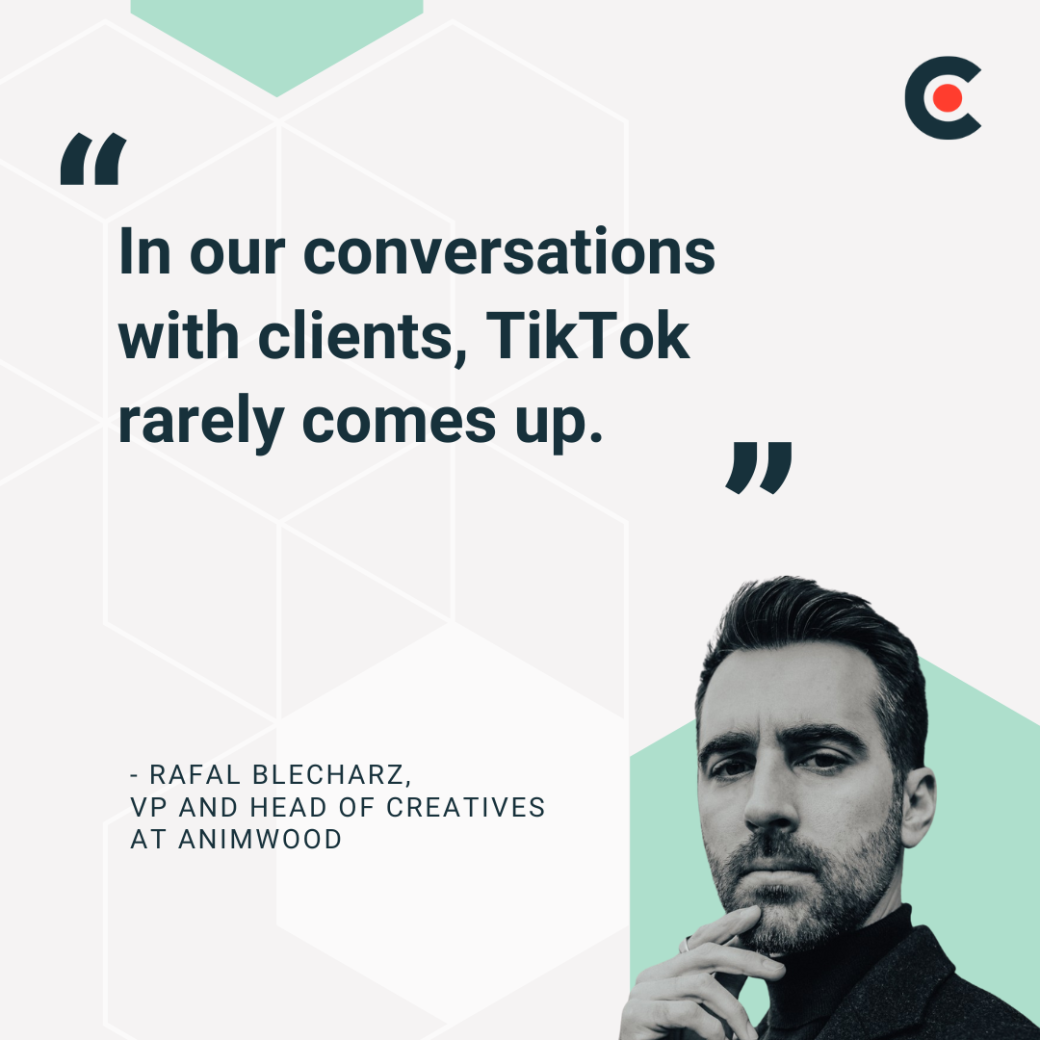
“The reason is simple,” Blecharz continues. “It’s an excellent platform for B2C marketing, but decision-makers in B2B are still primarily on YouTube, LinkedIn, and especially Meta due to their age and disconnection from TikTok’s content due to the age gap. This may change over time, but the shift will take a while.”
In other words, while TikTok has steadily gained popularity, YouTube is still the best fit for many audiences. Data from the Pew Research Center backs this up. While 86% of people aged 50 to 64 use YouTube, only 26% are on TikTok.
Brand safety is another key consideration. YouTube offers incredible creative freedom, but that doesn’t mean anything goes. Your ads should still fit your brand voice and, of course, avoid offending anyone.
Take the time to set up content filtering, too. These settings let you choose what types of content your videos appear alongside and exclude sensitive materials. That way, you don’t have to worry about your brand being associated with violent or profanity-filled videos.
Ad fatigue is another constant threat. According to a 2024 Harris Poll survey, 50% of viewers feel annoyed when they see the same ads repeatedly, and 25% are less likely to make a purchase.
Avoid this issue by developing a steady stream of fresh content — maybe an interactive ad one month, followed by a hilarious one the next.
People often associate YouTube advertising with B2C brands like Amazon and Airbnb. But with careful planning, this platform can also be a powerful tool for attracting B2B audiences.
Here are a few content ideas to help you get started:
Start small with a brief ad or some organic Shorts. As you gain experience, you can branch out into other types of YouTube advertising.
Advertising on YouTube has come a long way since the early days of optional TrueView videos and banner ads. Modern brands can use many formats — from bumper ads to organic Shorts — to connect with different audiences. This versatility means YouTube is still the king of video advertising, even in the TikTok era.
Need help kickstarting your video advertising campaign? Find top video production providers on Clutch. These experts can handle every step, from shooting footage to tracking performance.