
How to Define Brand Values That Guide Every Business Decision
Brand values are the principles that guide company decisions, define what a brand stands for, and shape how it treats customers, employees, and partners.
Updated February 10, 2026

Clutch data found that Gen Z is more likely to buy products recommended by influencers than other generations. Learn how to use that insight to meet your sales goals.
Do you trust the accounts you follow on social media? If you're like most of Gen Z, the answer is yes.
Clutch surveyed 277 consumers about their thoughts on influencer marketing and product recommendations.
Looking for a Public Relations agency?
Compare our list of top Public Relations companies near you
Our data shows 87% of Gen Zers are willing to buy products based on influencer recommendations. That’s more than Gen X (77%), millennials (78%), and baby boomers (54%). But what does it mean for your business strategy?
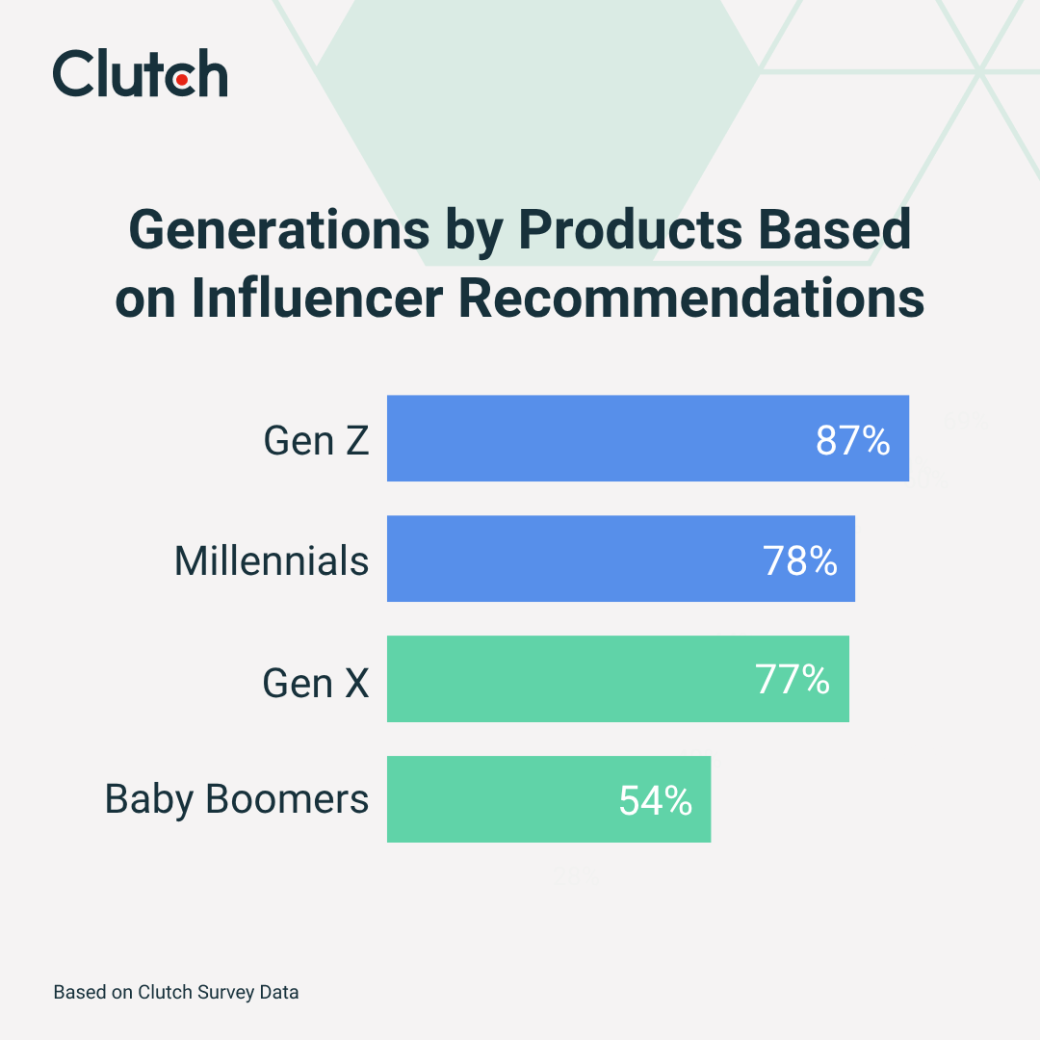
It could be a sign to invest in more influencer partnerships to improve your Gen Z marketing outcomes. This guide goes in-depth to help you understand the value of these campaigns, why they resonate with Gen Z, and how to leverage them to grow your brand.
First, why does Gen Z value influencer recommendations more than earlier generations? There are a few potential answers, but we should start by remembering that Gen Z is the first “digital native” generation. While millennials, Gen Xers, and baby boomers use smartphones and computers, most remember a time without them. The vast majority of Gen Z can’t, which has impacted how they navigate and view the world.
One key shift has been the growing influence of digital personalities on traditional advertising. Instead of relying on newspapers or TV, Gen Z looks for answers on their smartphones. This often means turning to social media, where influencers with large followings have become the new authorities.
Young people also tend to view influencers as more authentic and relatable than businesses. This makes them more likely to listen to an influencer’s recommendation than a traditional ad. Gen Z marketing focuses on tapping into these relationships to drive sales. As detailed in the next section, this can be an effective strategy across many industries.
Gen Z relies on influencer recommendations for everything from groceries to high fashion. But some of today’s sectors are more impacted by this trend than others. For example, Clutch data found the following industries to be the most popular for Gen Z influencer marketing.
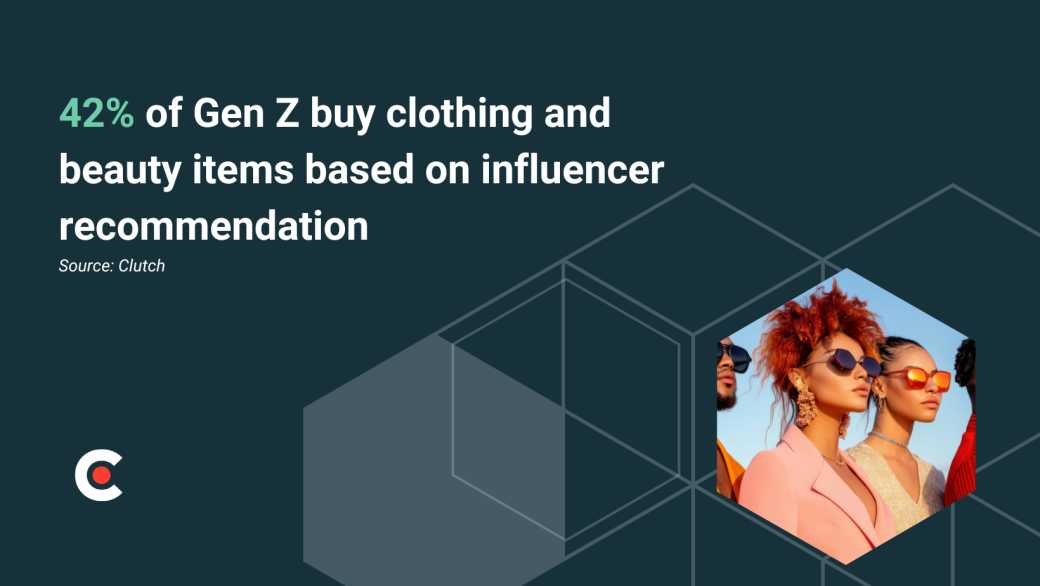
Forty-two percent of Gen Z will buy clothes and beauty items, like makeup, based on an influencer’s recommendation. These products are easy for influencers to share with their audiences on social media, who often decide to buy the products featured to emulate their favorite internet celebrities. Many people also trust beauty and fashion influencers to tell them the truth about what looks good, how to wear different things, and where to shop.
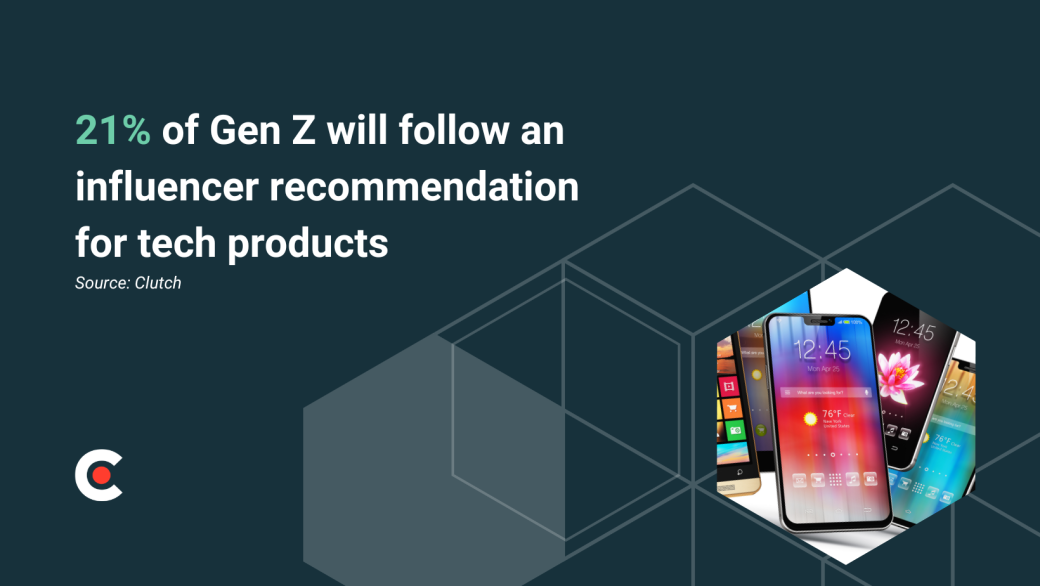
Twenty-one percent of Gen Z will follow an influencer’s recommendation when purchasing tech products like smartphones and laptops. Many do so because they’ve built up trust with an influencer over a long time.
For example, a member of Gen Z might spend five to ten years learning about technology from the same YouTuber. They learn from experience that they can trust this person to give them the truth. So, when that person recommends a product, they’re more likely to take it seriously than a traditional ad.
Older generations don’t have the time to watch YouTube videos to learn new tech. Unlike Gen Z, they rely on verified professionals for their tech support.
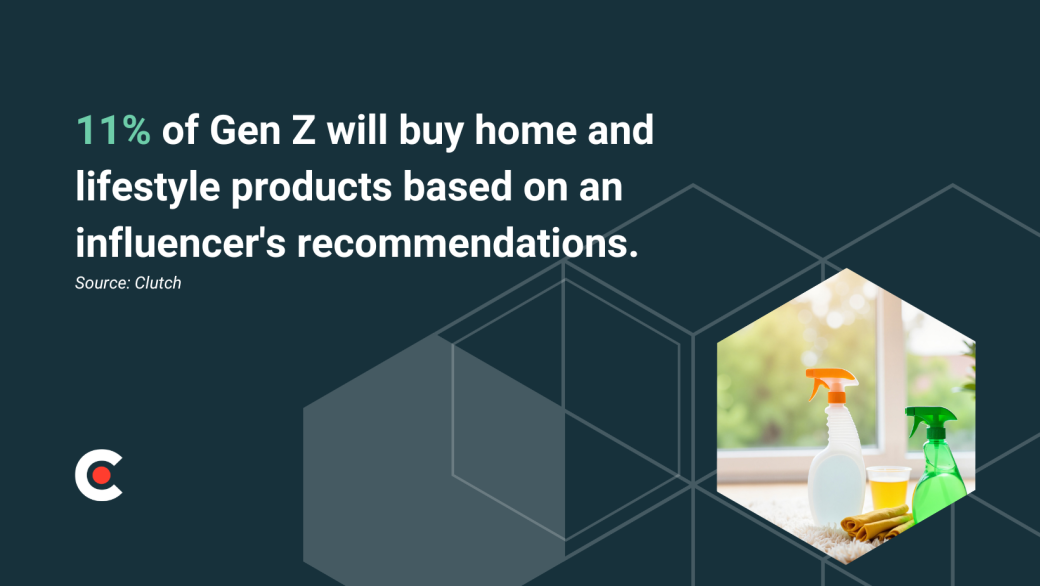
Finally, 11% of Gen Z buy home and lifestyle products based on an influencer’s recommendation. They do so for various reasons, including social proof, trust, and authenticity. For example, someone might want to purchase the same furniture that an influencer they follow has in their living room. Or they might trust a cooking influencer to give them an honest opinion on some pans they're thinking of purchasing.
So, what does all this mean for your business? Here are four takeaways to consider as you develop your strategy.
First, authenticity is becoming more important in marketing. Gen Z wants honest reviews from people they trust, not market-tested ads from companies they don't know.
Many members of other generations share this sentiment, and Gen Z is beginning to advance in the workforce. This means investing in authentic, influencer-driven campaigns has never been more valuable, but still has plenty of room to grow. However, it's important to choose your partnerships carefully. For the best results, choose creators who are a natural fit for your products.
For example, if you sell B2B software, you’d want to partner with creators who talk about software in your niche regularly. Recommendations tend to fall flat when they have nothing to do with an influencer’s daily content.
Clothes, technology, and lifestyle products may be the most popular sectors for influencer marketing. But you can apply the strategy to any product that people primarily learn about through reviews.
For example, people often consult reviews when choosing between tech gadgets, appliances, skincare products, and even cars. They do so to get an honest opinion of the products they’re considering purchasing. Influencers provide the same type of insight, often replacing or supplementing reviews in this critical stage of the buyer's journey.
There are two key takeaways from this. First, if you have poor or average reviews today, influencer partnerships can help you overcome them. Second, even if you have great reviews, that's not always enough to beat a targeted ad from the right influencer.
Next, these studies show that Gen Z is more open to discovering new products than previous generations. Many members will purchase products simply because a creator they trust has recommended them. That may influence how you think about new product development and expansion moving forward.
For example, even if you think a product already has a very competitive market, the right influencer’s recommendation could help you cut through the noise and stand out. In this environment, it may be worth experimenting with more of your ideas and building strategic partnerships with influencers to tap into Gen Z's willingness to try new things.
Finally, these trends highlight the value of building long-term relationships with influencers. Content creators will only become more important to marketing as Gen Z advances in the workforce and earns more money. You can prepare your business to thrive in this landscape by forming connections with the right influencers today.
That typically means offering creators you'd like to work with more than a one-time ad deal. For example, you could also offer influencers a percentage of the profits from every sale they generate, equity in a new venture, or exclusive rewards such as luxury goods and special access to products and events. These incentives align what’s valuable to your business with what’s valuable to the creator. This encourages them to do everything possible to drive sales and foster brand loyalty among their audience.
The bottom line is you'll get more value out of influencer marketing by forming long-term, value-aligned relationships. Just be cautious of aligning your brand too closely with any single creator. You don’t want to be overly reliant on a single source of traffic. Plus, if an influencer who people associate with your brand gets canceled or becomes less popular, it could be hard to move forward without other relationships already in place.
Gen Z's trust in influencers is more than a passing trend. It's part of what makes this digitally-native generation unique. Your brand can leverage that to achieve its sales goals with a targeted influencer marketing strategy. So, why not get started today?
You can take the first steps by reviewing what influencer marketing looks like in your industry. Then, zero in on the accounts you'd like to partner with, share a pitch, and reward influencers with a real stake in your company's success. If you'd like help with all of this, consider contacting an agency that specializes in influencer marketing.