Lead Quality vs. Lead Quantity: Why B2B Teams Are Rethinking Their Funnel in 2026
Bigger buying committees and tighter budgets are forcing B2B teams to rethink lead quality vs. quantity. Here's how top teams rebalance the tradeoff in 2026.
Updated March 25, 2026

Earning trust requires the right strategies and a deep understanding of your audience’s motivations. Based on recent Clutch data, discover which sources customers rely on, from influencer-loving Gen Z to more traditional Baby Boomers.
With enough money, any brand can buy attention. Celebrity endorsements, billboards, cinematic Instagram posts –It’s all just a swipe of a credit card away. You can’t, however, purchase your customers’ trust. You have to earn it (and then keep it).
This trust is the foundation of every purchase. Think about it from your customers’ perspective: Would you rather buy an expensive product from a brand that’s never failed you, or a slightly cheaper one from a competitor with bad reviews and a sketchy website? If you chose the first option, you’re part of the 87% of customers who are willing to pay more for products from trusted brands.
Looking for a Digital Marketing agency?
Compare our list of top Digital Marketing companies near you
Of course, this trust can look very different across generations. A recent Clutch survey of 277 consumers found that:
By understanding who consumers trust most when they’re deciding on a purchase, you can choose the right marketing channels and influence buyer behavior — because you can’t buy trust, but you can earn it.
Social media is full of product recommendations. There's a deluge of influencers on everything from Facebook to YouTube. And sometimes, it feels like every other TikTok video displays that orange shopping cart, ready to whisk you away to the TikTok shop.
These recommendations don’t come directly from brands, but they can be powerful trust builders. Based on the Clutch survey, here’s a breakdown of that trust by generation:
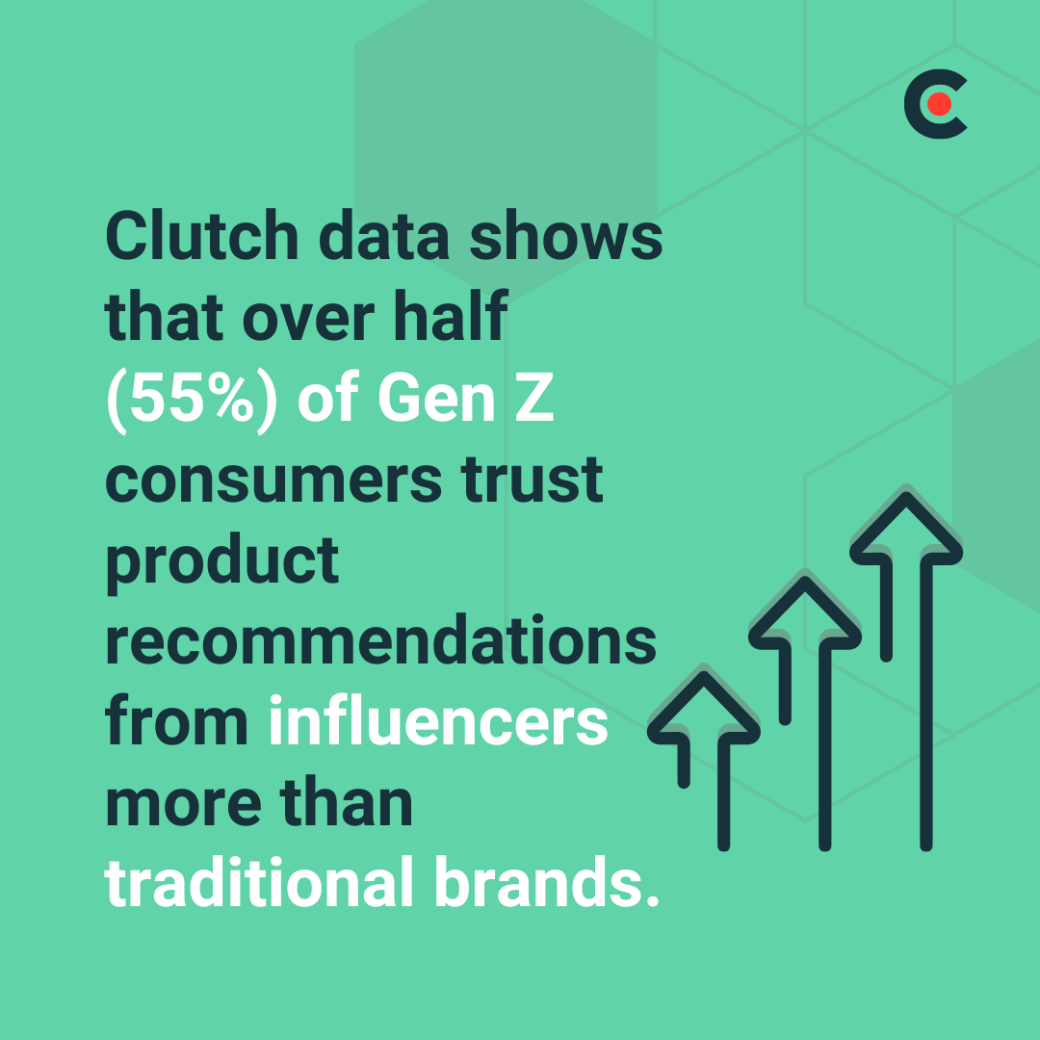
Over half (55%) of Gen Z shoppers trust product recommendations from influencers more than traditional brands. They’re also more likely to discover products on social media.
Given how much time Gen Z spends on social media, it’s no surprise that they’re the most influenced by it. Sixty percent say they spend at least four hours a day on social media — and a whopping 22% report spending seven or more hours daily (practically a full-time job).
But it’s not purely about screen time. This generation deeply values authenticity and reality, often turning to influencers to help them fact-check content. That’s why influencers' personal experiences and opinions impact Gen Z buying behavior more than old-school advertisements.
The following two generations fall somewhere in the middle—35% of millennials and 29% of Gen X trust product recommendations over brands.
These generations have spent more years online than Gen Z, and they tend to be more skeptical of influencers. Maev founder Katie Spies observes, “Some millennial consumers care about formal authority sources, but many are skeptical as they are aware that some brands pay for those formal authority sources.”
For example, a nurse influencer who promotes a specific supplement may influence millennial buying behavior by decreasing trust. After all, they may wonder, can they really believe a paid endorsement?
Additionally, a 2022 study found that Gen X feels less loyal to social media influencers than Gen Z, who often form strong parasocial relationships with creators. This difference may partially explain why the older generation puts less stock in influencer recommendations.
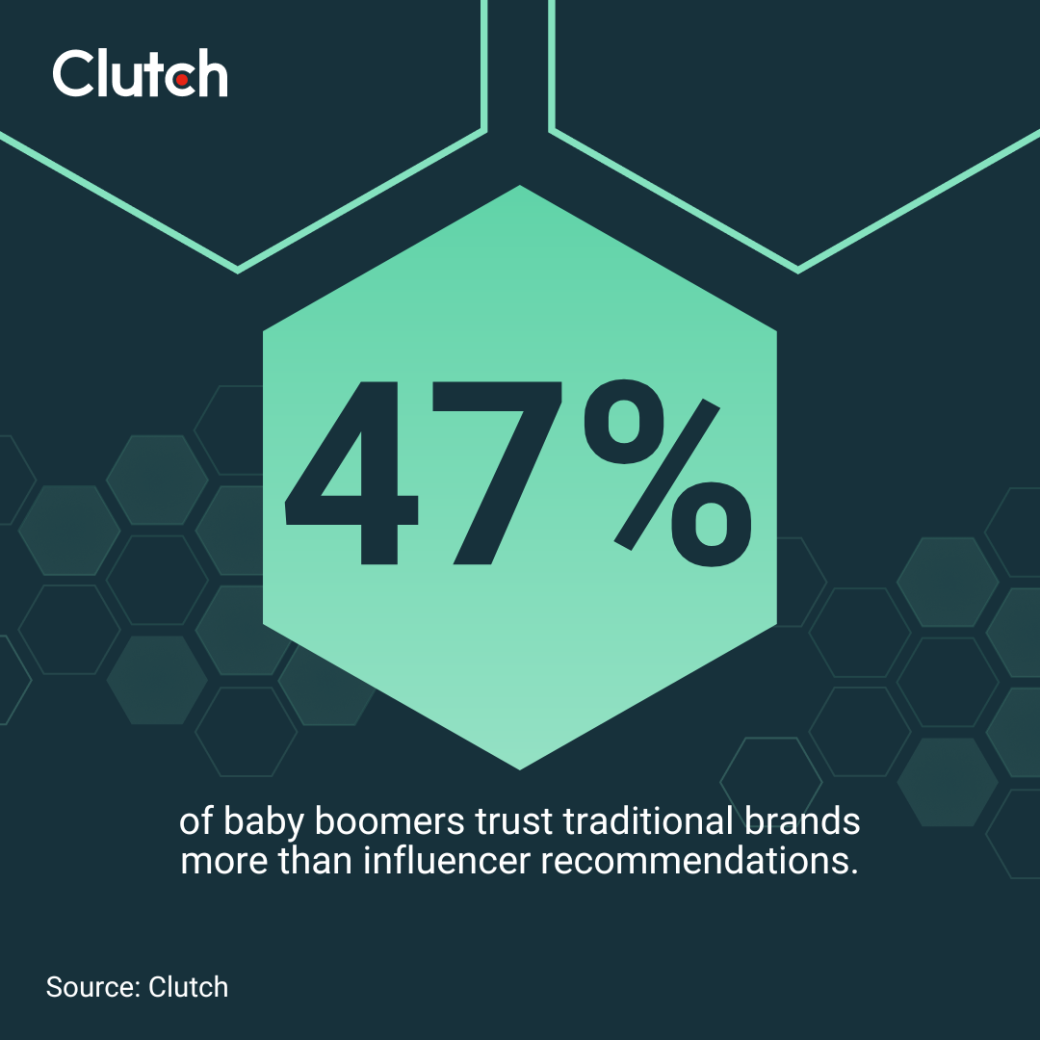
On the other hand, 47% of baby boomers trust traditional brands more than influencers. They also tend to prefer recognizable brands — like Glad and Kellogg’s — over unfamiliar ones.
You might assume it's because baby boomers aren’t as exposed to social media, but that’s not true. According to a McKinsey Health Institute survey, “baby boomers…report spending as much time on social media as Gen Zers.” That’s right — older folks are scrolling away, too.
So, why do baby boomers still prefer traditional brands? For one, they’re less likely to make impulse purchases than younger shoppers. Only 20% of baby boomers said they planned to splurge in the next three months, compared to 53% of millennials and 35% of Gen X. When other generations are scrambling for the “Add to cart” button, baby boomers will probably just keep scrolling.
Baby boomers also tend to prefer Facebook over other social media platforms, making up 29% of its weekly users. Facebook has the least amount of influence on purchasing decisions, with only 32% of users saying they’ve bought something they saw on the platform. In other words, baby boomer buying behavior is less swayed by social media because they’re not exposed to as many influencers on Facebook.
Of course, it’s not just the internet that affects the customer decision process. The opinions of loved ones matter, too — but not to the same extent for every generation.
When asked if they agreed with the statement that they trust product recommendations from influencers more than those from family and friends, 42% of Gen Z agreed.
This finding suggests that younger shoppers prefer online voices over more familiar ones. They might assume that influencers know more about products and services, especially niche ones. For example, a Gen Z buyer choosing a kibble brand might trust a dog trainer influencer over a relative who hasn’t owned a dog since 2005.
On the other hand, these generations disagreed that they trust influencers more than loved ones:
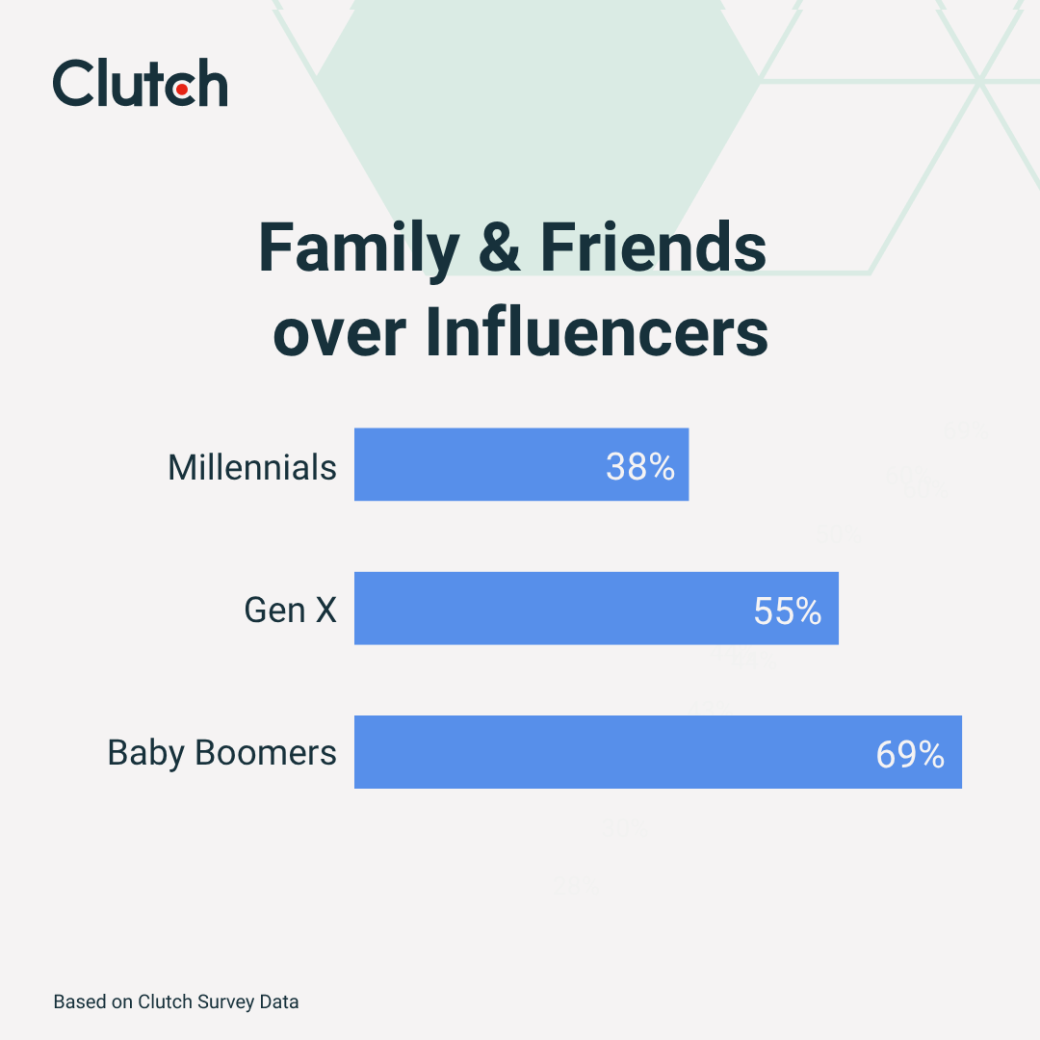
This trend may be part of a larger mistrust of advertising among older generations. An Advertising Association study found that people aged 18 to 34 were the most trusting of all forms of advertising, while those aged 55 and older were the least. This trust gap, the author speculates, may be caused by technology: “the young, who have been socialized with digital technologies, feel comfortable, while older age-groups do not.”
Gen Z has practically grown up with algorithms and sponsored posts. But for older people — especially baby boomers — these technologies may seem strange or even suspicious. As a result, a personal recommendation from a friend may feel much more reliable than one from a random influencer.
Plus, mature customers (aged 50 to 70) are more risk-averse. Spending their hard-earned money on something they saw on Instagram — “check out this awesome tent!” — might feel downright scary.
For these shoppers, the Boston Consulting Group reports, “Messages that come directly from their networks or from accredited or recognizable brands help build trust.” For example, a Gen Xer might never even think to input “best vacuum” in TikTok, but they won’t hesitate to ask a colleague about their brand.
A one-size-fits-all approach just won’t cut it when working with different generations. Go all-in with influencer marketing; your older customers might never see it. But keep it too old-school, and your Gen Z audience will suddenly evaporate.
Adjusting your message for each group is the most effective way to build and maintain trust. Here’s how.
Of course, you should also track your performance to ensure you’re reaching your audience. Use engagement metrics (comments, likes, etc.), revenue, and other data to track your results.
Trust is an incredibly valuable resource for every business, but it doesn’t look the same for everyone. A short TikTok video from a credible influencer might be all you need to attract Gen Z customers. Meanwhile, Gen X and Baby Boomers often prefer word-of-mouth.
Use these findings to meet your customers where they’re at, whether scrolling endlessly through TikTok or chatting with a neighbor. And remember that trust is dynamic, so never take it for granted. With consistency, you can build a loyal following.
Read through our latest report on influencer marketing and customer trust.