Lead Quality vs. Lead Quantity: Why B2B Teams Are Rethinking Their Funnel in 2026
Bigger buying committees and tighter budgets are forcing B2B teams to rethink lead quality vs. quantity. Here's how top teams rebalance the tradeoff in 2026.
Updated January 29, 2026

When it comes to B2B lead gen, putting all your eggs into the basket of a single channel is an increasingly bad idea. The new buyer gets information now from more than one channel; customers interact with solutions on LinkedIn, Google Search results, webinars, case studies delivered to their inbox, and articles that catch their eye on Clutch and other review platforms. This means that if you’re marketing your solutions in just one of these ways, you are losing a significant share of the potential buying audience
Cross-channel lead generation is a direct response to this issue. Where before you simply hoped that the potential client reached you via one digital marketing channel or another, you are now building a seamless process in more than one channel. Thus, you have multiple marketing sources working in conjunction with each other on the same potential client in order to get from awareness to actually booking a meeting or purchasing your product. In combination with cross-device tracking, companies should get the fullest information on leads possible. This article will examine how to optimize your cross-channel advertising to acquire B2B leads.
Implementing a cross-channel marketing strategy is more demanding and requires a more thorough approach than working on an isolated campaign. However, it is well worth it – the pipeline becomes better, brand visibility improves, and the marketing returns are more likely to consistently build up over time rather than shortly peak and fall after.
Looking for a Digital Marketing agency?
Compare our list of top Digital Marketing companies near you
As you execute the cross-channel approach, you create the “surround-sound effect”, as many marketers call it (unlike multichannel marketing, which can be compared to a cacophony). It means that potential customers are exposed to your brand across multiple channels, with each experience reinforcing the others. This is especially important in B2B sales because purchase committees often include stakeholders and researchers who use different research methods and channels. A CFO could have found you through a Google search, while a Head of Marketing may have come across your product on LinkedIn.
This gradually leads us to discuss the key benefits of cross-channel marketing for almost any product, especially in B2B lead acquisition.
In short, cross-channel advertising offers greater reach, lower risk, and greater adaptability to market fluctuations.
Although you might think cross-channel lead generation means declaring your presence on as many various marketing channels as possible, it is not quite like that. There is no need to cover every possible resource or media. Most B2B companies can execute a strong cross-channel campaign with just three to five core channels. It involves identifying which marketing channels a target market is active on and focusing on those channels.
| Channel Type | Examples | Role |
| Discovery | LinkedIn (paid + organic), social media | Build awareness, reach buying committees |
| Intent | Google Search, Clutch reviews | Capture active researchers |
| Nurture | Direct mail campaign, retargeting on LinkedIn/Meta | Stay top-of-mind, move leads forward |
| Conversion | Landing page, SDR outreach | Generate meetings and demos |
All other marketing channels are driven or powered by strong content. Case studies, benchmarking reports, ROI calculators, and guides give additional value to all your promotions. Without great content, the rest of your cross-channel marketing effort offers nothing of value beyond a “book a demo” invitation that most B2B buyers are not yet ready for.
Here is a real-world, actionable approach that is useful for any B2B company, regardless of its budget size. All these steps can be handled by a small team or even a single person with access to enterprise-level tools and can be implemented across multiple marketing channels.
Do not forget, however, about your personal and industry-specific flexibility. There are no rules carved in stone that guarantee the best results; the key to success is understanding the environment, adapting to it, and always considering the customer experience.
Cross-channel marketing campaigns require more than just launching. The true benefit comes from improvements made month to month and year to year, based on actual results and the engagement metrics. There are three main areas to focus on:
A/B testing is one of the best friends for marketing teams.
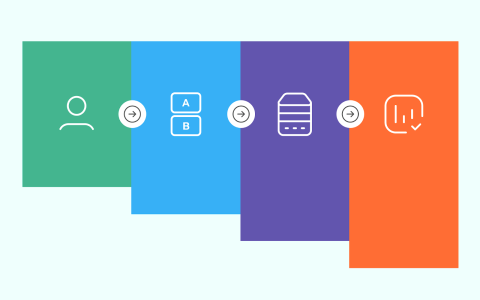
However, it is important to keep it simple. Begin with high-impact testing that can shift results:
Each test should run for at least 2-3 weeks, with sufficient traffic to achieve statistical significance. The results of what performed well can then be noted, and the successful versions replicated across channels to ensure consistent messaging and customer satisfaction.
Optimization should be based on down-funnel metrics, such as sales-qualified leads, opportunities, and revenue, rather than just click metrics. A marketer is wasting money on a channel if it provides low-quality leads at a cheap click price.
Use CRM tools to analyze conversion rates per lead source. For example, if leads from LinkedIn twice as frequently convert to new business opportunities compared to leads from Google, then move more spend from Google to LinkedIn. When email nurturing series show customer loyalty, they increase spend on related content. It is also a great idea to include offline channels in your statistics.
Your first assumptions about your ICPs will change once you have real-world customer data. Give a closer look at the following patterns:
Adjust your LinkedIn targeting, Google keywords, and email segmentation for future campaigns based on the information provided. Try different channel combinations and stick to the most effective ones. Create lookalike audiences from your closed-won customers when possible. The aim is to make iterative adjustments, not sweeping changes that erase what you've learned.
The goal of cross-channel lead generation is not to be everywhere. In reality, it means being in the right place with the right message at the right time. A fully integrated marketing process will create a seamless experience as users move from awareness to getting a consistent brand message and insights on practical application.
For B2B marketers, multi-channel marketing is no longer a nice-to-have option but a necessary part of the game to effectively generate leads on a sustainable basis. Start with what you have by integrating the following three marketing channels into a single marketing effort: LinkedIn, Google Search, and email marketing. Resolve your tracking issues so you can effectively measure what delivers results, adjust to your findings, and always consider the industry-specific details – these are the key steps to success.