How Consumers Feel About AI in Social Media: What They Welcome (and Don't)
New Clutch data shows how consumers feel about AI in social media marketing, where they welcome it and where they draw a hard line.
Updated January 8, 2026

Meta’s Andromeda update changes how ads are evaluated and delivered by prioritizing creative uniqueness through metrics like Creative Similarity, Creative Fatigue, and Entity ID. This article explains the update in simple terms and provides a clear action plan for building diverse, UGC-powered creative that scales profitably.
Meta just changed the rules of creative performance.
The Meta Andromeda update is the biggest shift in creative delivery since the original Learning Phase.
Looking for a Social Media Marketing agency?
Compare our list of top Social Media Marketing companies near you
If you have ever launched dozens of ads and wondered why Meta spent money on only a few, or why small creative tweaks did not behave like true tests, you now have the answer.
Meta does not see your ads the way you do.
It sees patterns, structures, familiar setups, matching backgrounds, repeated angles, similar faces, and repeated visuals. When it believes two creatives look alike, it groups them and treats them as one test.
The system behind this grouping is called Entity ID, and with Andromeda, Meta is giving advertisers new visibility into how it perceives creative sameness. This visibility comes through three new metrics, including the Creative Similarity Score.
This article explains:
By the end, you will know exactly how to structure your creative pipeline for stronger learning, better distribution, and more consistent results.
The Andromeda update is Meta’s newest framework for ad delivery.
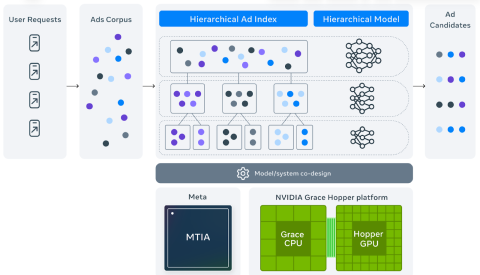
Instead of relying heavily on targeting and manual campaign structure, Meta now places greater weight on:
In simple terms — your creativity is now your targeting.
Meta decides:
Meta makes these decisions based on how visually unique each creative appears.
Advertisers have always seen two creative identifiers:
There is a third identifier underneath that Meta uses internally:
This determines whether Meta sees two ads as separate tests or as the same creative with minor variations.
If two creatives share visual similarities, Meta groups them into one Entity ID. When that happens:
This is why a brand may launch 100 ads but see only 10 receive real delivery.
Meta does not treat them as 100 ads.
It treats them as 10 creative entities.
Meta uses advanced computer vision to look past ad creative headline or hook changes, focusing instead on the raw visual DNA of your content. If the algorithm detects significant overlaps in composition or style, it consolidates your ads into a single “Entity ID.”
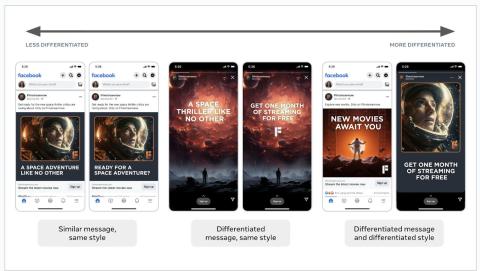
Meta groups ads together when they share:
Even if the script changes, Meta may still see them as the same.
Creatives receive new Entity IDs when they have meaningful visual differences, such as:
This is the foundation of creative diversification in 2026.
To support Andromeda, Meta released three new KPIs that offer the first real insight into how the platform perceives creative uniqueness.
This measures how often your audience has been exposed to a creative.
High fatigue typically means higher CPMs, lower engagement, and weaker conversions.
This is Meta’s proxy for Entity ID overlap.
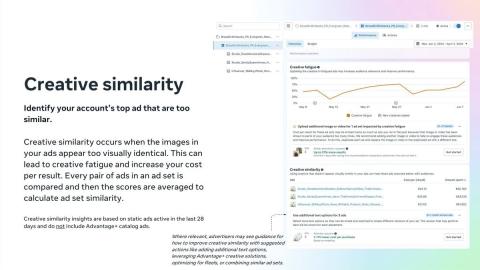
A high similarity score means:
This is one of the most important metrics to watch.
Meta automatically categorizes your creative library into themes such as:
This helps identify whether you are testing enough different storytelling structures.
Under Andromeda, each unique Entity ID receives its own:
This means a brand’s creative library is now its segmentation strategy.
For example: If you launch ads featuring two UGC creators, one a 25-year-old Caucasian woman and the other a 35-year-old Hispanic woman, Meta will naturally route those creatives to different audience pockets. This happens even if the campaign settings are identical.
Your goal is no longer to simply produce more ads.
Your goal is to produce more visually and structurally distinct ads.
UGC is one of the most effective ways to generate new Entity IDs consistently because each creator introduces a unique combination of:
These differences matter to Meta’s system.
They help prevent creative similarity and expand your audience reach.
UGC also supports persona-driven creative, including:
Brands relying only on branded studio content will struggle.
Brands that build wide pipelines and effective partnerships to source UGC will scale efficiently.
Look for repeated patterns:
Similarity kills learning.
Use a theme-based approach:
You should have several themes live at all times.
Your content should vary across:
This is how you force new Entity IDs.
Plan for:
More creators equals more audience paths.
More filming styles equals more unique Entity IDs.
Track:
Use Facebook ad reporting tools such as DataAlly to make this process much easier.
All signs indicate Meta is preparing for:
Entity IDs and similarity scoring provide the infrastructure for this future.
Brands with rigid or overly strict brand guidelines will fall behind.
Brands with flexible content pipelines and strong UGC systems will thrive.
The Meta Andromeda update is a major shift in how ads are scored, delivered, and scaled.
With Entity IDs, Creative Similarity Scoring, and Creative Themes, Meta is signaling a clear message:
Show the algorithm something truly new, or your ads will not scale.
Your advantage now comes from:
The brands that turn creative production into a repeatable system will dominate in 2026.