Lead Quality vs. Lead Quantity: Why B2B Teams Are Rethinking Their Funnel in 2026
Bigger buying committees and tighter budgets are forcing B2B teams to rethink lead quality vs. quantity. Here's how top teams rebalance the tradeoff in 2026.
Updated September 9, 2026

How do consumers engage with shoppable content on social media? Explore insights on trust, purchasing behavior, and more from consumer data that details the future of online commerce.
Online shopping has undergone a major transformation over the past decade. Today, social media platforms not only inspire consumers to make purchases but also serve as full-fledged shopping destinations.
At the heart of this shift is shoppable content, which drives consumers by blurring the line between browsing and buying.
Looking for a Digital Marketing agency?
Compare our list of top Digital Marketing companies near you
To better understand how consumers are navigating the online shopping marketplace, Clutch surveyed 483 consumers in August 2025 about their online shopping habits and the growing role of social media in that journey.
Surprisingly, there is a striking contrast. 98% of consumers say they’ve seen a product or service promoted on social media, yet only half (50%) have made a direct purchase through a social media platform this year. Even though 74% of consumers encounter such content daily.
Why is there this gap? This report will investigate how consumers perceive shoppable content and what social media marketing companies need to know.
In today’s digital-first shopping environment, social media is more than a place to connect. It is an opportunity to make a sale.
Our survey shows that 78% of consumers say that brand posts on social media (including paid ads and organic content) impact their buying decisions. Whether through a sponsored ad in a feed or a post from a brand they follow, consumers are highly receptive to what they see on social media.
Consumers are exposed to two main types of brand content on social media: sponsored ads and organic posts.
Sponsored ads typically appear in feeds or stories. Since they are designed to reach new or targeted audiences, these often highlight limited-time offers, product launches, or trending items.

On the other hand, organic posts come from brands users have intentionally chosen to follow, giving those messages a sense of trust.

Both interactions influence perception, but the tone, intention, and credibility are often quite different.
Tania Molenko, COO of UAWC Agency, an e-commerce marketing agency, believes that paid and organic content are “symbolic rather than interchangeable.”
“The highest-performing strategies integrate both streams: paid to accelerate exposure, organic to anchor loyalty and reinforce purchase decisions,” said Molenko.
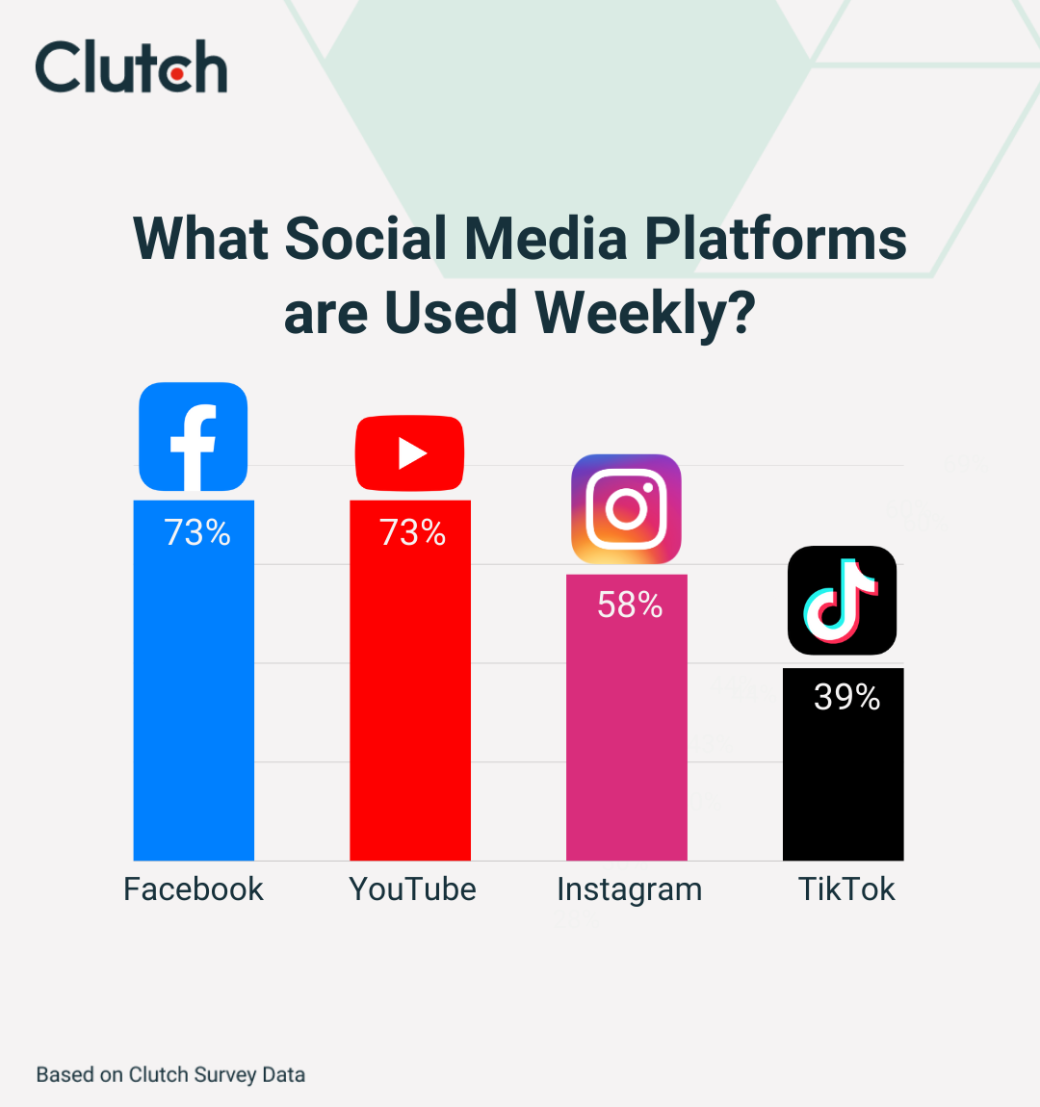
The platforms where consumers spend their time are key to understanding where brands should focus their energy. Our survey found that Facebook (73%) and YouTube (73%) are the most frequently used social media platforms on a weekly basis, followed by Instagram (58%) and TikTok (39%).
This frequency of use creates more opportunities for brands to show up where consumers are already engaged.
“We’re seeing more consumers get comfortable with buying directly on platforms like TikTok and Instagram, but only when certain credibility signals are in place,” said Adam Yaeger, CEO of Llama Lead Gen, a lead generation agency. “It’s less about platform trust and more about brand presence.”
With the majority of shoppers influenced by brand content on social media, a balanced mix of strategic paid ads and genuine, engaging organic posts can significantly boost brand impact.
Each social media platform plays a distinct role in the path from product discovery to purchase, with users turning to different channels for different parts of their process.
Over the past six months, YouTube (49%) has been the top platform for discovering or researching products. This isn’t surprising – YouTube functions more like a visual search engine than a traditional social platform.
Consumers frequently turn to the platform to watch unboxings, product demos, comparisons, and reviews before committing to a purchase.
Faraz Hemani uses YouTube when he is looking for new products.
“The reviews of influencers and creators are unbiased and straightforward…,” said Hemani. “It helps to give me a much clearer idea and reveals the product’s performance, which gives me confidence before making a purchase decision.”
When it comes to actually completing a purchase, Facebook (59%) and TikTok (53%) are the platforms leading the charge. Their environments have built-in shopping features that make it easy for users to go from interest to checkout without ever leaving the app.
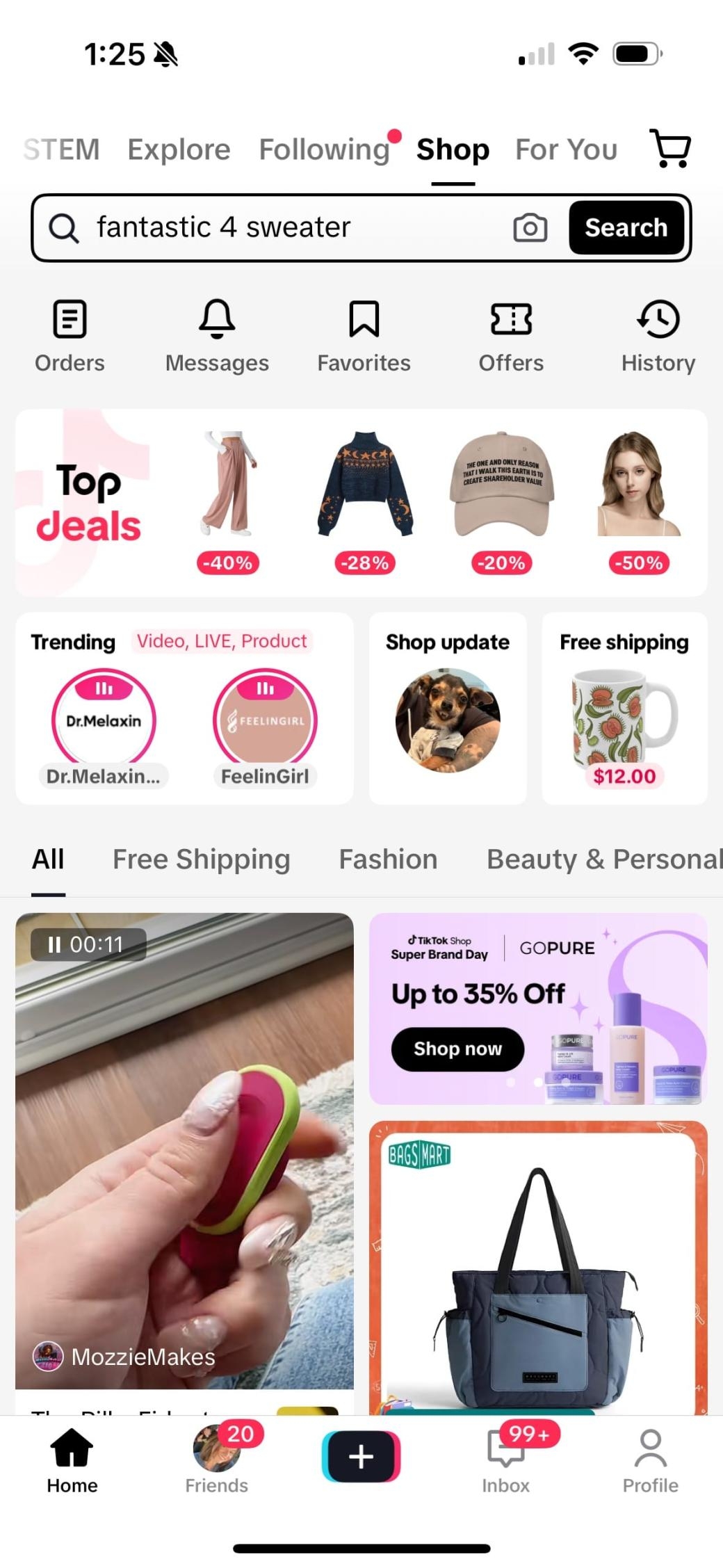
For example, a viewer might come across a TikTok video in which an influencer tries on a new sweater set, then taps the product tag to purchase it instantly—no separate website or app is required.
Matt Taschner, a 41-year-old, prefers using Facebook because of the smooth shopping process.
“I have brought through it [Facebook] directly as it seems as safe as buying through the company site, but with the added bonus of being able to see real-time reviews,” said Taschner. “That openness creates trust quickly.”
“That openness creates trust quickly.”
As social commerce continues to evolve, it’s clear that platforms like YouTube, Facebook, and TikTok are playing complementary roles in the shopping experience. YouTube builds the foundation of trust through discovery, while Facebook and TikTok streamline the path to purchase with targeted promotions and embedded shopping experiences.
While social media has cemented itself as a major player in product discovery, it hasn’t yet fully captured consumers at the point of purchase.
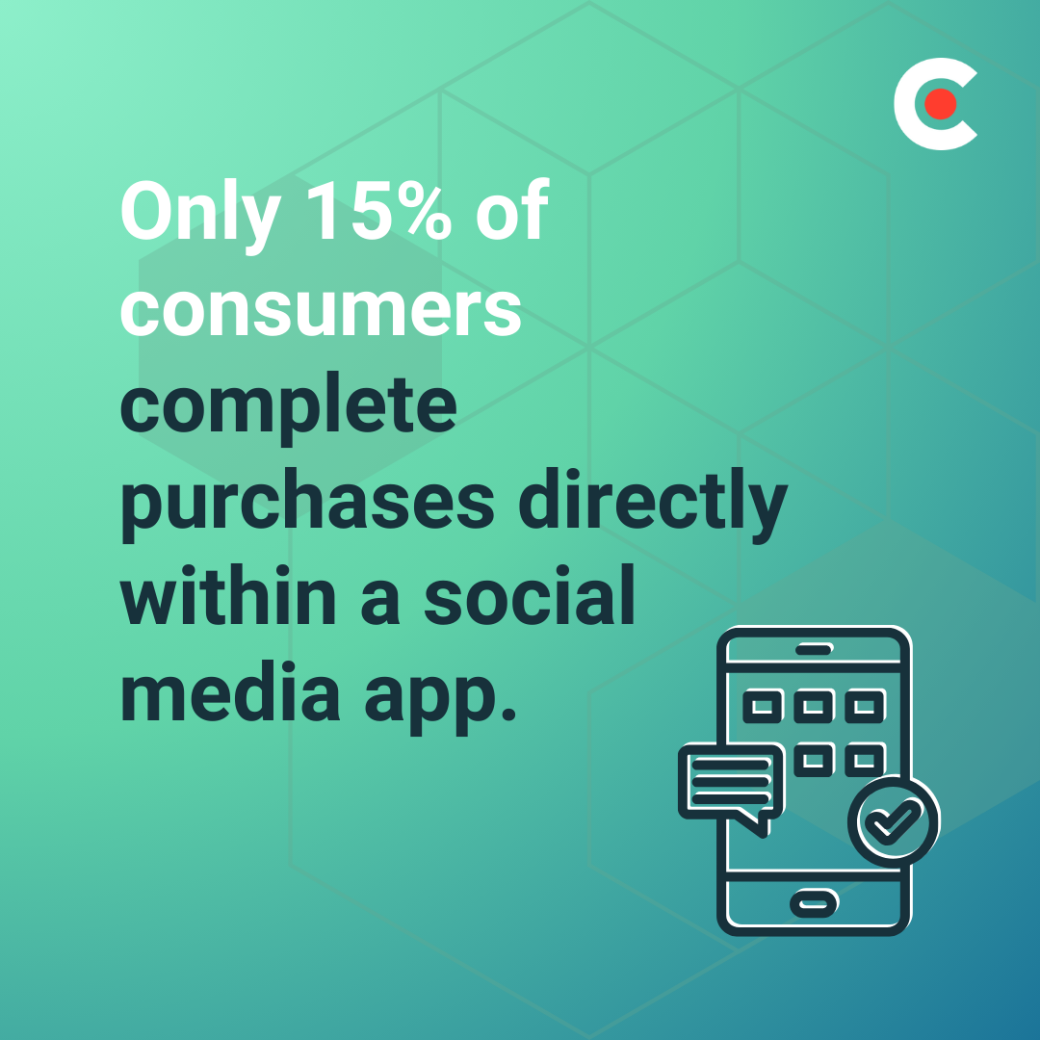
Despite the growing presence of in-app shops and shoppable content, only 15% of consumers say they actually complete their purchases directly within a social media app.
Instead, most consumers still turn to familiar online channels to finalize their purchase decisions: a product’s official website (36%) and Amazon or other marketplaces (31%). Social media is a powerful marketing tool, but it’s not yet the go-to transaction hub for the majority of shoppers.
The data also reveals clear generational differences in how people complete purchases after discovering products online. Top trends show:
Younger consumers are used to navigating brand shops and seeking out more personalized customer experiences, while older generations prefer convenience and the perceived security of well-established online marketplaces.
“Adapt social by age through platform mix, format, tone, and proof,” said Borislav Donchev, CEO of Back2Rank, a marketing agency. “Earn trust in the feed, reply fast in comments and DMs, then send people to a clean product page.”
At the end of the day, consumers will likely leave a social media platform to complete a purchase elsewhere, which could lead them to be distracted or lost entirely.
Brands have the potential to shorten the buying journey by building trust and improving in-app purchasing experiences, which is what consumers are looking for.
Social media provides brands with unprecedented access to consumers, seamlessly blending product discovery with instant purchasing potential. Despite this, a persistent barrier remains: trust.
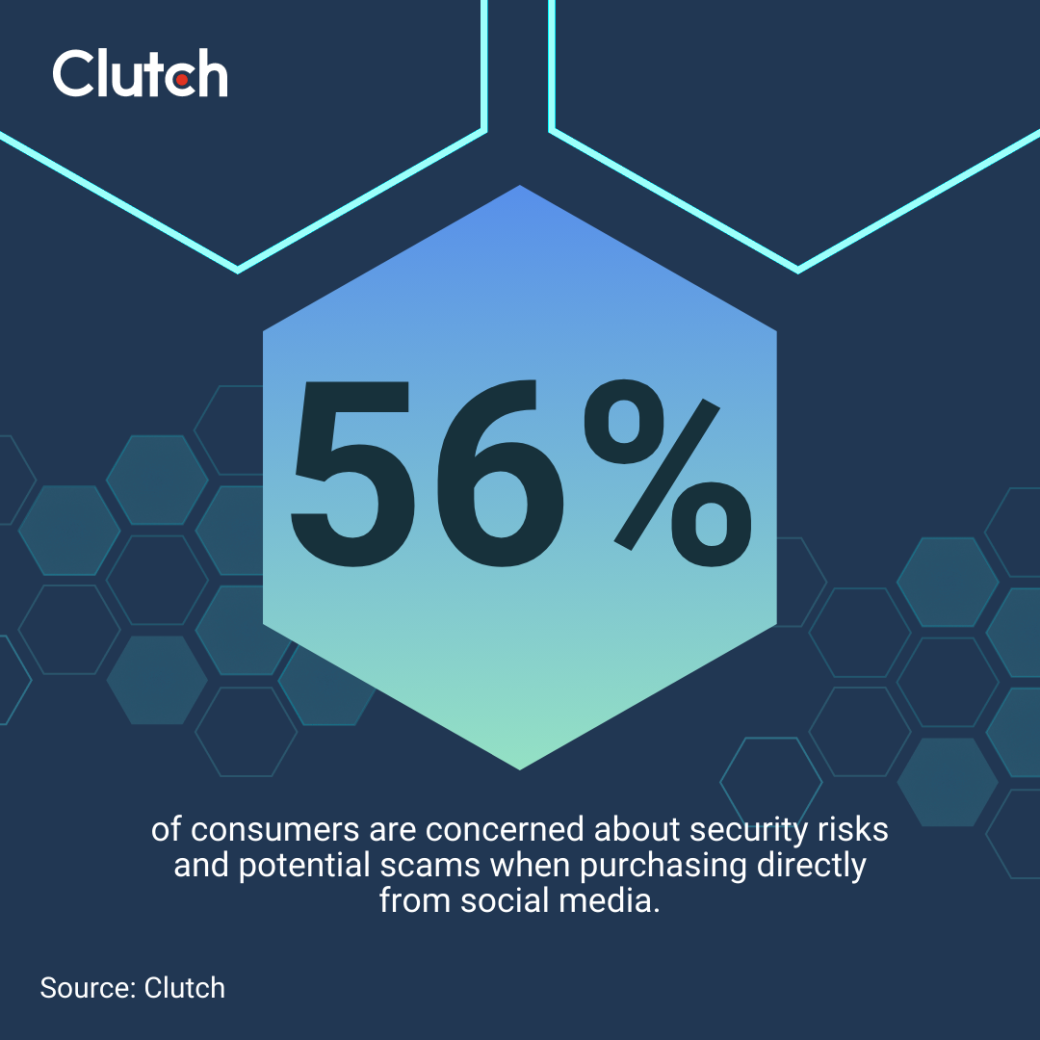
Our survey found that nearly 60% of consumers (56%) are concerned about security risks and potential scams when purchasing directly from social media platforms.
For many shoppers, hesitation stems from concerns around platform transparency, unfamiliar checkout processes, and the fear of fraud. First-time buyers may not be confident in the legitimacy of the seller or the safety of their payment information.
Shifts are also happening in the influencer marketing space when it comes to trust, which could also have an impact.
Despite these concerns, there are key motivators that encourage shoppers to overcome that skepticism.
Consumers are more likely to make a purchase directly via social media if there’s a promo or discount code available (35%) or if a product is positively recommended or reviewed by a peer (31%).
If it is a trending product or impulse buy, a sense of savings can justify the perceived risk, and limited-time offers also create a sense of urgency. Authentic endorsements clearly matter, too; seeing that others have purchased and had a good experience outweighs any potential distrust.
“When a product is promoted on social media, I normally think twice about purchasing because I need to know more about the product before deciding,” said Hemani. “I don’t usually get convinced easily, even though ads seem to be enticing, but as a smart consumer, I dig into feedback from previous shoppers before deciding if I am to buy it or not.”
Our data also highlights how much of the shopping process can be habitual: 64% of consumers will make a repeat purchase via social media if they’ve done so previously.
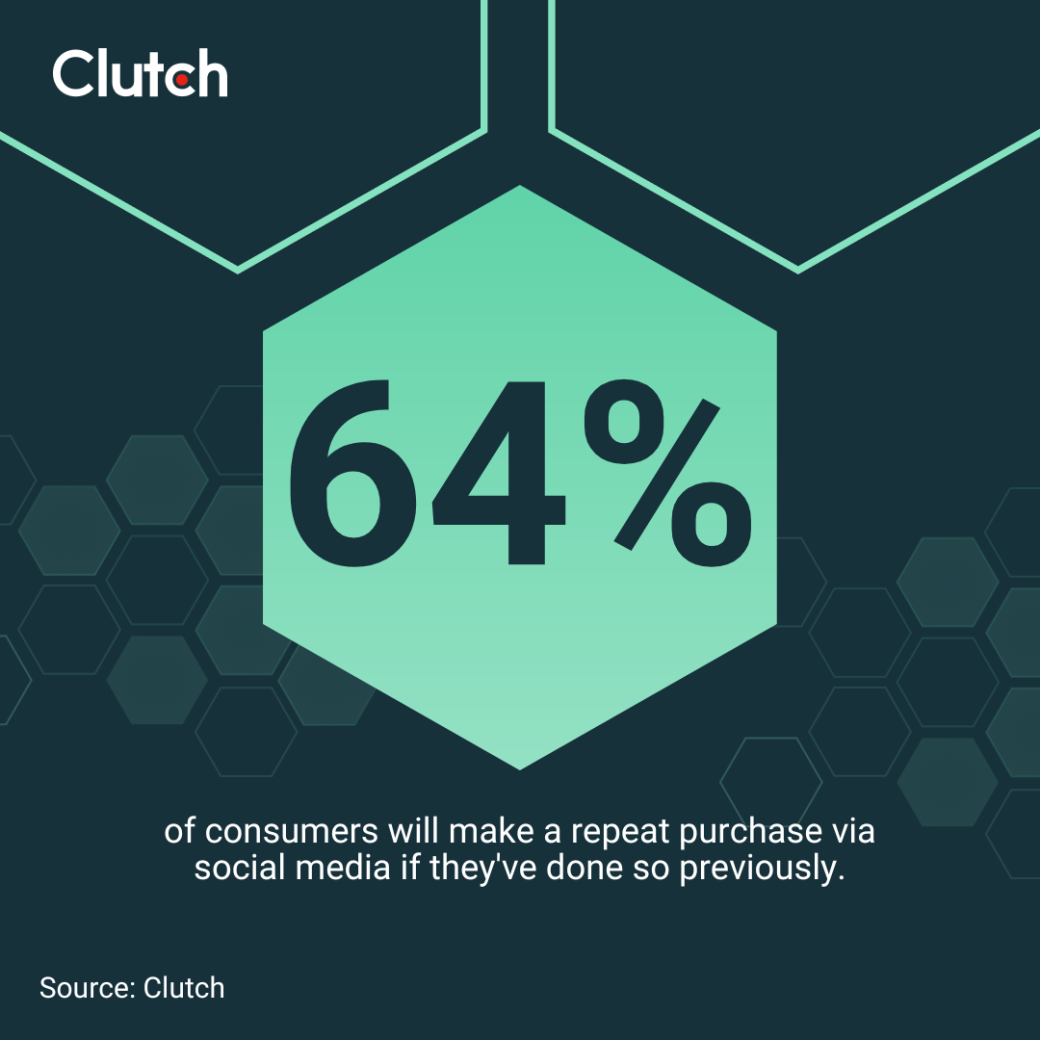
A positive first experience establishes trust. Smooth checkout, timely delivery, good customer service, and more can create a feedback loop that encourages ongoing engagement and purchases.
The opportunity for social commerce is massive, but brands must earn trust before they can convert interest into sales.
Despite social media's massive reach and influence in shaping consumer behavior, there remains a clear gap between seeing a product and buying it. While nearly all consumers have seen a product promoted on social media, only 15% complete purchases directly within these platforms. This reveals a disconnect between the opportunity social media presents and the consumer confidence required to act on it.
At the core of this hesitation is a lack of trust. To close the gap between scroll and sale, businesses and brands must prioritize transparency, safety, and seamless user experience on social media platforms.
Social commerce and shoppable content aren’t trends. They are a shift in how consumers discover and interact with brands. The future belongs to those brands that can make that journey feel as natural as the scroll itself.
Clutch surveyed 483 consumers in the U.S. during August 2025 about their online shopping behaviors.
About 52% of respondents were female and 48% were male.
10% of respondents were ages 18 to 28; 40% of respondents were ages 29 to 44; 49% of respondents were 45 and older.