Lead Quality vs. Lead Quantity: Why B2B Teams Are Rethinking Their Funnel in 2026
Bigger buying committees and tighter budgets are forcing B2B teams to rethink lead quality vs. quantity. Here's how top teams rebalance the tradeoff in 2026.
Updated September 25, 2025

Social and e-commerce have made buying and returning products effortless, but loyalty still lives in stores. Learn how to balance the two to support your growth goals.
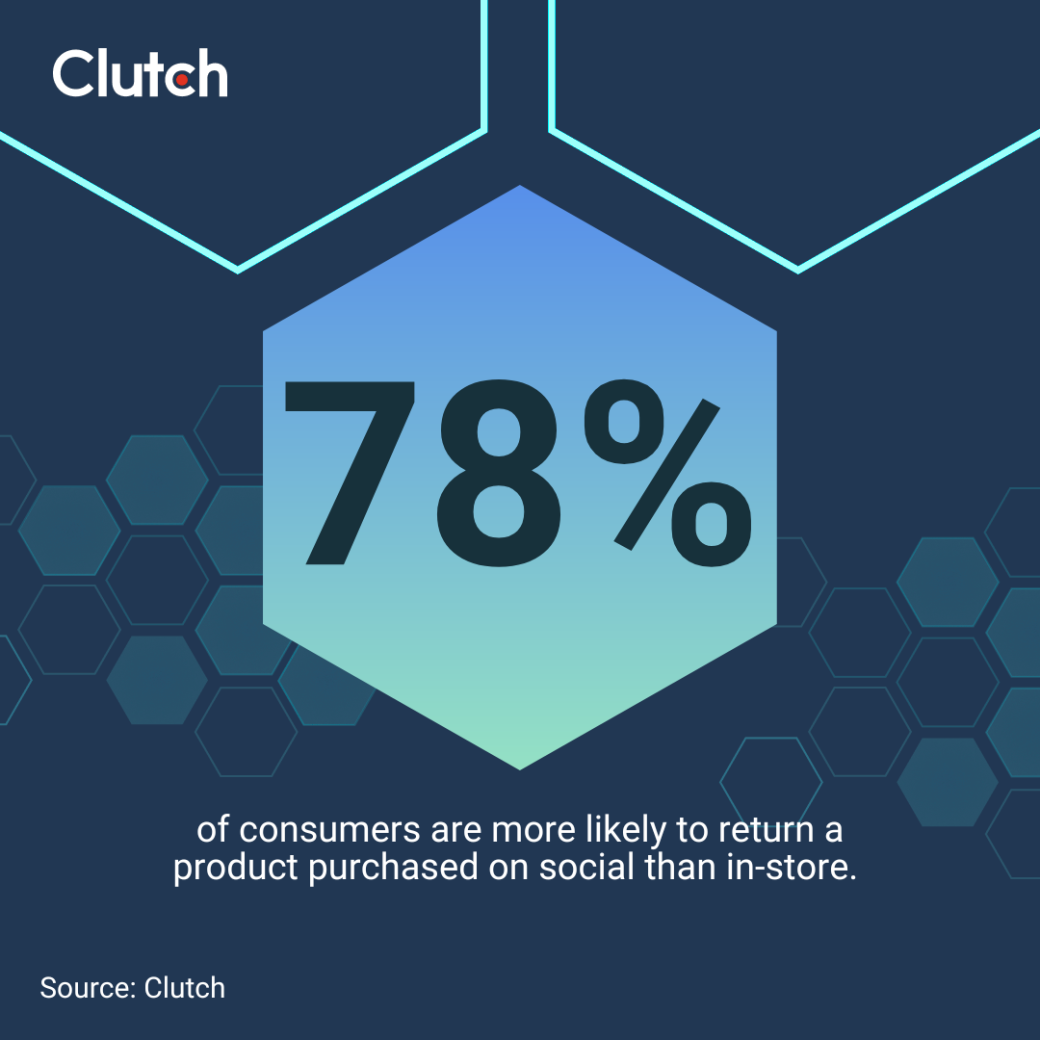
A Clutch survey of nearly 500 consumers has found that 78% are more likely to return a product purchased on social media than one bought in a store. That’s one reason why brick-and-mortar can still be worth your investment in the era of social media and e-commerce.
Looking for a Digital Marketing agency?
Compare our list of top Digital Marketing companies near you
While digital shopping is often more convenient than visiting a store in person, it’s not always what the customer wants. Some prefer to complete their purchases and e-commerce returns in person, where they can try before they buy or shop with friends.
By pairing your online offerings with a physical store presence, you can create loyalty while expanding your reach. That could be the secret to helping your business thrive in an increasingly competitive economic landscape.
Online shopping has grown massively over the last several decades — and it still has lots of room to run. As of 2025, roughly 21% of retail sales were made through e-commerce. We could see many more years of outpaced growth and still not overtake brick-and-mortar stores.
Some of the key factors driving this trend include:
Companies are also investing more heavily in social commerce — buying and selling through social media platforms like Instagram and TikTok. These often provide direct access to younger consumers who prefer to purchase in their favorite apps.
Online product returns have followed a similar path. As they become more common, companies are starting to offer prepaid labels, doorstop pickups, and automated refund systems. This is highly flexible for the consumer, but creates a potential problem for brands. When the cost of a return is nearly zero, the threshold for impulse purchases drops dramatically.
That means e-commerce conversions may rise when returns become easier. But it doesn’t necessarily mean you’ll take home more net profit. So, as the industry evolves, new problems can also arise.
Despite the increasing convenience of digital shopping, many customers still prefer visiting physical stores. They enjoy:
To appeal to these shoppers (and they make up nearly 80% of retail sales), you’ll need physical stores that stand out. That can be a challenge, but also an opportunity. Physical spaces immerse customers in curated, branded environments. This can help you form emotional connections and create loyalty that’s hard to foster digitally.
In-store shoppers tend to be more deliberate, which could mean fewer product returns from this group. Plus, in-store returns take time, gas, and energy that some shoppers don’t have to spare. So, if you have both digital and in-person stores, you may see more returns from online buyers.
The bottom line is that in-store shopping is here to stay, even as e-commerce continues to grow. These two types of sales simply appeal to different types of customers at different times, so it’s worth investing in both to maximize your reach.
Customers today increasingly expect brands to offer the ease of digital commerce and the instant gratification of in-person experiences. This dual expectation is difficult for brands to meet, but not impossible.
Here are some of the key tensions to watch for as you create your strategy:
The above are just a few examples of the kinds of tensions your brand could experience as it develops a strategy. You may also notice a generational divide, where older buyers prefer in-store shopping and younger ones opt for online purchases.
Navigating these tensions will be easier if you have a keen understanding of your target customer and what they care about. For example, if you want to target younger demographics and know that they prefer shopping on social media or seeing live shopping experiences, that would be a strong platform for your next e-commerce campaign.
These insights can be gleaned from data you’re already collecting, including purchase and return histories, engagement analytics, and demographic data.
The future of consumer commerce belongs to the brands that best align their digital and physical storefronts. You can get there by embracing each of the following strategies. Do so before your competitors, and you could develop an edge that helps you become more profitable.
New tools, like AR fitting rooms, have made bridging this divide easier than ever. They let customers try on clothes and accessories without physically changing, bringing digital convenience to physical stores.
Depending on what you sell, you can offer the same, personalized virtual try-ons on your website. This is a way to stand out by letting customers experiment with your products from home, school, the park, or anywhere else they have an internet connection.
Plus, by giving customers a more accurate sense of size, style, and fit, brands can significantly reduce return rates.
Another strategy is allowing customers to return products to their preferred method, regardless of how they originally purchased them. Accepting online returns at your physical stores can lower logistics costs and drive more in-store traffic, potentially leading to additional sales. It also creates a valuable data touchpoint.
Every in-store return is an opportunity to understand why a product didn’t meet expectations, gather feedback, and re-engage the customer. Some brands go further by training associates to turn returns into upsell moments, recommend alternatives, or offer loyalty perks on the spot. This means that accepting digital returns in person can do more than cut down on logistics expenses. You also get the chance to recover the lost revenue from the return and regain the customers’ trust in the process.
Tracking loyalty can be challenging when many customers shop both online and in person. That’s why many retailers now offer cross-channel loyalty programs. These reward customers for interactions in physical stores, digital stores, and social media platforms.
This helps to create a consistent sense of value when engaging with your brand. That can make customers more likely to continue doing so in the future, improving your in-store loyalty and reducing churn.
Next, look for ways to implement your social commerce strategy in the real world. For example, you could host an in-store event tied to a limited-time announcement on a social media platform.
Some brands also host pop-ups at new locations (often secret) and exclusive experiences tied to social promotions. This creates a feedback loop between your digital presence and your physical one, encouraging customers to engage with both.
Practically, that means you could see more of your online customers shopping with you in person. This could increase your lifetime customer value and boost profitability.
Physical stores and e-commerce platforms can work well together, but an effective strategy is needed to maximize their potential. For most brands, that means supporting cross-channel loyalty programs and accepting digital returns in person, among other actions.
The most successful brands in the coming years will balance physical and in-store dynamics and find ways to blend them. Those who master this will not only reduce their returns but also build stronger, more resilient customer relationships for years to come. They will also likely enjoy a reputation as emerging leaders in the sector.
The key will be understanding how your customers prefer to shop and building with that in mind. That’s why your first step will likely be to review consumer data, so you can create an informed strategy.