Lead Quality vs. Lead Quantity: Why B2B Teams Are Rethinking Their Funnel in 2026
Bigger buying committees and tighter budgets are forcing B2B teams to rethink lead quality vs. quantity. Here's how top teams rebalance the tradeoff in 2026.
Updated February 16, 2026

Promotional marketing helps brands convince customers of the unique value of their product or service and provides purchase incentives. Creating trusted promotional experiences is crucial for building ongoing relationships with customers and inspiring brand loyalty.
Promotional marketing is the process of sharing knowledge about a brand through various marketing channels to increase brand awareness. SEO, content marketing, email or SMS marketing, PPC advertising, and affiliate marketing all fall under this umbrella.
Social media marketing has become a dominant force in promotional marketing. Businesses of all kinds engage in social commerce, selling their products and services directly through social media platforms like TikTok and Instagram. Social media marketing drives in-app sales by enabling social channel users to make purchases directly within apps.
Looking for a Digital Marketing agency?
Compare our list of top Digital Marketing companies near you
To explore the impact of social media on online shopping decisions, Clutch surveyed 483 consumers about their thoughts on online shopping and the growing role of social media.
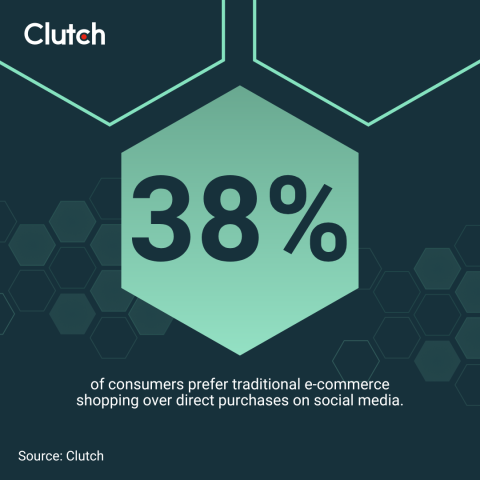
The survey found that 38% of consumers prefer traditional e-commerce shopping over direct purchases via social media. Some could be persuaded to purchase directly from social media platforms if specific improvements were made. The survey found that the upgrades consumers wanted to see on social media platforms included:
The data indicates that businesses can improve their credibility and boost sales on social media platforms by adding more detailed product descriptions and reviews that showcase their trustworthiness.
This article examines the dos and don’ts of promotional marketing and provides examples.
Let's explore some of the most frequently used promotional marketing tactics.
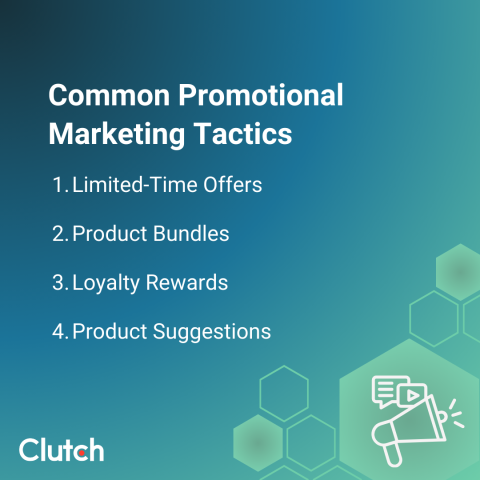
Limited-time discounts allow brands to increase sales during slower periods. By creating an urgency to act, limited-time offers often provide the push a potential customer needs to make their first purchase or the motivation a loyal customer needs to make a repeat purchase. Flash sales are effective because they encourage impulse buying and motivate customers to make purchases sooner than they would otherwise.
This approach allows retailers to sell multiple items together at a discounted price. This is a win-win situation because retailers sell increased quantities, and customers are rewarded for their volume buying with discounts. Savvy retailers use product bundling to sell slower-moving items or to cross-sell complementary products.
“Buy one, get one” (BOGO) promotions are an example of bundle discounting.
Loyalty programs reward customers for their ongoing patronage of a brand. Members tend to spend more to maximize their points earnings. Customers often shop exclusively with brands that offer them loyalty rewards. Loyalty programs often have tiers that provide rewards of different values. A well-designed loyalty program motivates customers to progress to higher tiers, thereby increasing their customer lifetime value (CLV) to the brand.
A good example is airline mileage clubs. Most frequent travelers are loyal to one airline, allowing them to maximize the miles they earn and the status they receive. Airline status is important because it provides customers with perks such as elevated boarding priority and improved chances for seating upgrades.
This data-driven approach increases sales by encouraging current customers to make additional purchases. Popular forms of product suggestions include:
Think about which suggestions work best for your audience.
Customers expect transparency and may be less likely to shop with a brand they perceive as risky or deceptive. Adding these trust elements to your website will reduce customer hesitation:
Additional Reading: ‘What Trustworthy Websites Look Like in 2025’
A well-crafted product description tells a persuasive story about the product’s value proposition. Online shoppers expect accurate product descriptions because they cannot see or physically touch items before purchasing them. Images are helpful, but customers need details such as measurements to determine if the item will meet their needs.
Misleading descriptions only disappoint shoppers and lead to returns. Many disingenuous product description examples bear this out. Product descriptions must clearly explain how the product will solve the customer’s problems or meet their requirements.
Artificial intelligence has the potential to personalize offers based on shoppers’ individual preferences and browsing histories. This enables brands to increase purchases by delivering highly targeted promotions to individual customers through apps, text messages, or emails. Personalized rewards, such as birthday gifts and frequent shopper discounts, strengthen customers’ connection and loyalty to your brand while generating additional sales.
Amazon’s ”Pick up where you left off” and “Gift ideas inspired by your shopping history” are examples of personalized promotions.
Platform-specific promotions capitalize on the unique strengths of each social media platform. To be successful, brands must take a strategic approach that includes site-specific campaigns tailored to the target audience’s preferred platforms.
For example, Airbnb’s “Live There” campaign generated millions of views.
The campaign’s message, “Don’t go there. Live there,” leveraged YouTube’s ability to feature user-generated content, building trust and credibility with potential vacationers.
Customer trust is crucial to the sales process. Potential customers may be hesitant about making a purchase, and it’s your job to allay their fears. Engaging product descriptions that highlight product benefits, along with positive user reviews that build social proof, help shoppers overcome their concerns, thereby increasing their chances of making a purchase.
Misleading and overpromising statements often backfire. When a much-anticipated item arrives and doesn’t look like it did in an online picture or doesn’t work as indicated in its description, a customer is likely to return it and may lose confidence in your site. Once a customer feels misled by a brand, it’s not easy to regain their trust.
For example, Southwest Airlines’ slogan, “Bags fly free,” was viewed as a brand promise. When the airlines eventually added fees for checked bags, customers felt misled and lost trust in the brand.
Promotions should be simple and easy for customers to understand, and participation should feel effortless. If a promotion requires too much of a customer’s time or effort, they may become frustrated with it.
Customers appreciate immediate gratification. Promotions that offer on-the-spot discounts, in-cart bonuses, or instant point credits tend to perform better than those with multiple steps and are more effective at increasing customer engagement and loyalty.
Starbucks’ loyalty program is a good example. The promotion initially alienated members with a confusing and frequently changing rewards structure. Eventually, the company introduced a new system that was less frustrating and a better match for customer expectations. By focusing on simplicity and transparency, Starbucks gained customer loyalty.
Measure and track the results of each promotion, and be prepared to adjust your strategy if the results are not satisfactory. By tracking metrics, you can quickly assess the success of your plan and make adjustments as needed. Be clear upfront about the promotion’s objectives. This will make it easier to spot shortfalls and adapt quickly.
The customer’s journey includes customer service, thank-you emails and texts, service surveys, and ongoing brand communications, such as bounce-back offers. Customers who have a positive experience with your brand, from browsing your site to the checkout process and beyond, are more likely to make future purchases.
Customer loyalty is essential for growth and is earned over time by delivering positive brand experiences and consistent value.
While conversions are a key objective of promotional marketing, keeping existing customers satisfied is even more critical. New customer acquisition is often more costly than retaining existing customers; however, loyal customers tend to buy more and refer others, which can have a greater impact on profits.
Promotions that are executed correctly help brands establish ongoing relationships with customers, fostering brand loyalty and strengthening shopping habits. Points-based reward programs are a prime example because they create incentives for customers to return and motivate customers to shop exclusively with the brand. Influencer endorsements on social media platforms not only increase customer loyalty but also establish social proof, leading to the acquisition of new customers.
Trust in a brand leads to long-term loyalty. The best way to build customer trust is to prioritize providing excellent customer service and creating memorable brand experiences. Helpful customer service reps who provide valuable knowledge and resources empower customers and strengthen their confidence in the brand.
Social media platforms are increasingly regarded as destinations for learning about products and making purchases. They offer user-generated content and interactive features to engage users and generate conversions.
Promotional marketing offers brands a unique opportunity to build the ongoing customer relationships that are essential for growth. Including benefit-oriented product descriptions and positive customer testimonials in promotions helps convey a sense of trustworthiness and credibility. In the long run, this establishes customer loyalty and boosts sales.
Businesses should focus on creating trusted promotional experiences, particularly when hoping to expand their social commerce presence.
Learn more about what’s driving sales on social media in our recent Clutch report.