Lead Quality vs. Lead Quantity: Why B2B Teams Are Rethinking Their Funnel in 2026
Bigger buying committees and tighter budgets are forcing B2B teams to rethink lead quality vs. quantity. Here's how top teams rebalance the tradeoff in 2026.
Updated May 29, 2026

Most C-level executives now research B2B products on social media platforms. Learn how to sell to them with a bespoke social commerce strategy.
Social media is playing a growing role in the B2B buyer’s journey. According to LinkedIn, 75% of B2B buyers use it to make purchasing decisions. That’s unleashed a new wave of investment in emerging social commerce channels across Facebook, Instagram, LinkedIn, and TikTok.
But what is social commerce, exactly? And how can your B2B brand leverage it to drive growth? This guide covers everything you need to know to get started, with practical strategies, tips for choosing platforms, and more.
Looking for a Digital Marketing agency?
Compare our list of top Digital Marketing companies near you
Social commerce means integrating e-commerce capabilities into social platforms like Facebook, TikTok, and Instagram. This makes it possible for users to discover, learn about, and purchase new products directly in their favorite social app.
There’s considerable demand for this convenience, and experts say the market should reach trillions of dollars in annual sales by 2030.
Social commerce is distinct from traditional social media marketing as it tries to generate and convert leads within the same app instead of using social media to drive traffic elsewhere. Many businesses use both strategies to connect with customers who have different digital shopping preferences.
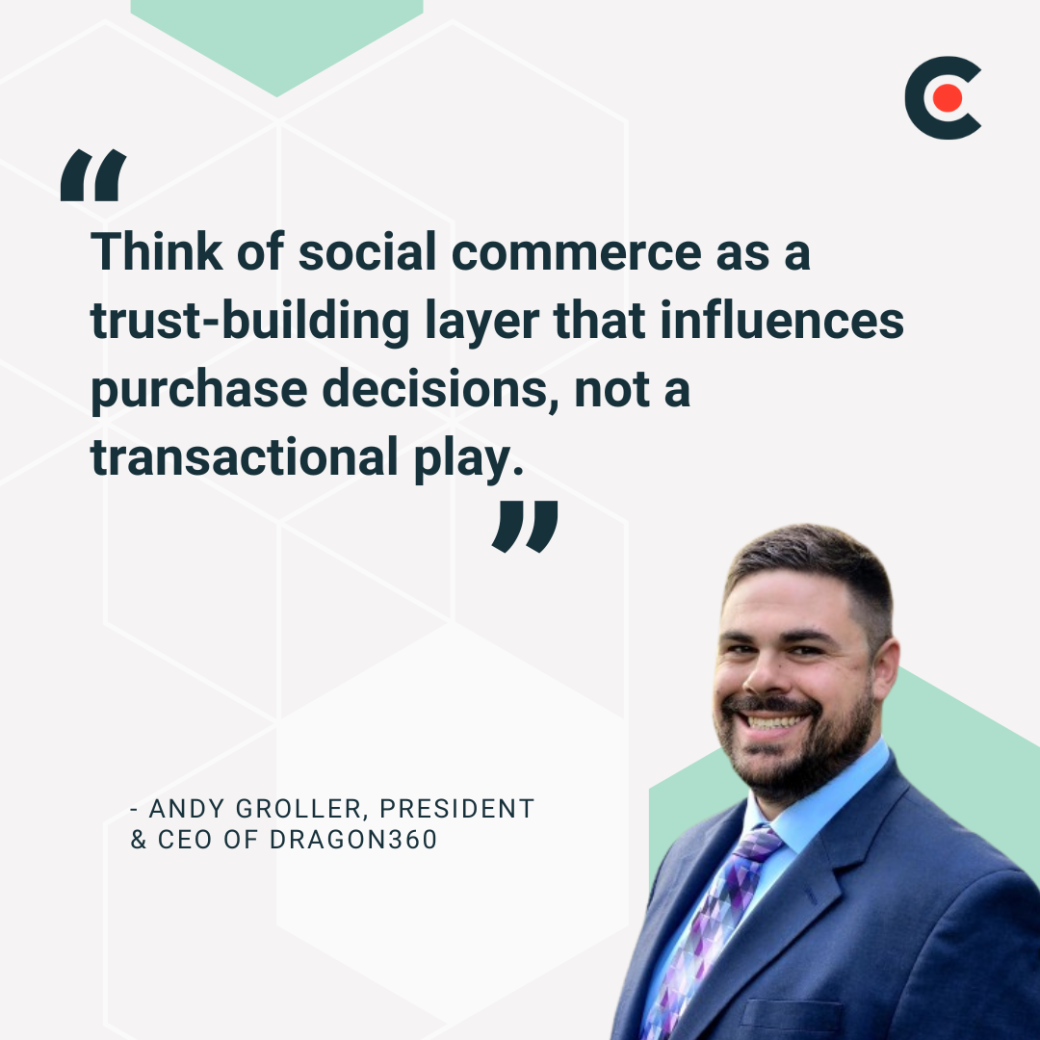
That being said, social commerce processes for B2B companies differ from B2C processes. B2C firms often use the strategy to drive impulse purchases toward low-cost items. But Andy Groller, president and CEO of Dragon360, says B2B companies should “Think of social commerce as a trust-building layer that influences purchase decisions, not a transactional play.”
In other words, B2B social commerce is more about developing a frictionless digital shopping journey than closing immediate deals. That can mean:
Social commerce is becoming increasingly valuable as humans spend more and more time on social media platforms.
Social commerce is a way to meet your prospects where they already are instead of trying to direct them out of their app and onto your website.
The field has become more important in B2B markets for each of the following reasons:
Peter Palarchio of NAV43, summarizes the business value of embracing social commerce: “By integrating social commerce tactics with a data-driven B2B marketing strategy, companies can expand their reach, nurture a community, and ultimately accelerate their sales pipeline.”
Investing in building up social commerce is a great strategy, but the first question many teams may ask when developing a social commerce strategy is which platforms work best.
The answer depends on your audience, product, and goals. Understanding the unique value of each social platform will help you make a more informed decision.
LinkedIn may be the most effective social commerce platform for B2B marketers. It offers direct access to professionals and powerful integrated e-commerce tools like product pages and lead generation forms.
Christopher Savage, president & founder of Savage Global Marketing, summarizes the value: “B2B businesses can leverage social commerce by sharing valuable insights and success stories on platforms like LinkedIn. This builds a network of engaged professionals and opens new avenues for lead nurturing.”
If you’re interested in video-based engagement, YouTube is a good place to start. It’s perfect for long-form content like webinars, explainer videos, product walkthroughs, and storytelling. You can post the full versions on YouTube and share clips across other social platforms to increase reach.
Chad de Lisle, VP of marketing at Disruptive Advertising, says it may be worth going further: “...even Instagram and TikTok can drive awareness when humanized and backed by strong CTAs.” These platforms can help your brand connect with buyers interested in short-form visual content.
Ultimately, every social commerce platform can help you connect with a different type of buyer. That’s why establishing a presence on each may be the right move. You could use LinkedIn to share thought leadership articles, YouTube for webinars, and TikTok for short how-to videos that capture leads at the top of your funnel.
Regardless of the platforms you use, there are some best practices worth considering when developing your strategy. Following these will help you get more done with the money you invest in social commerce.
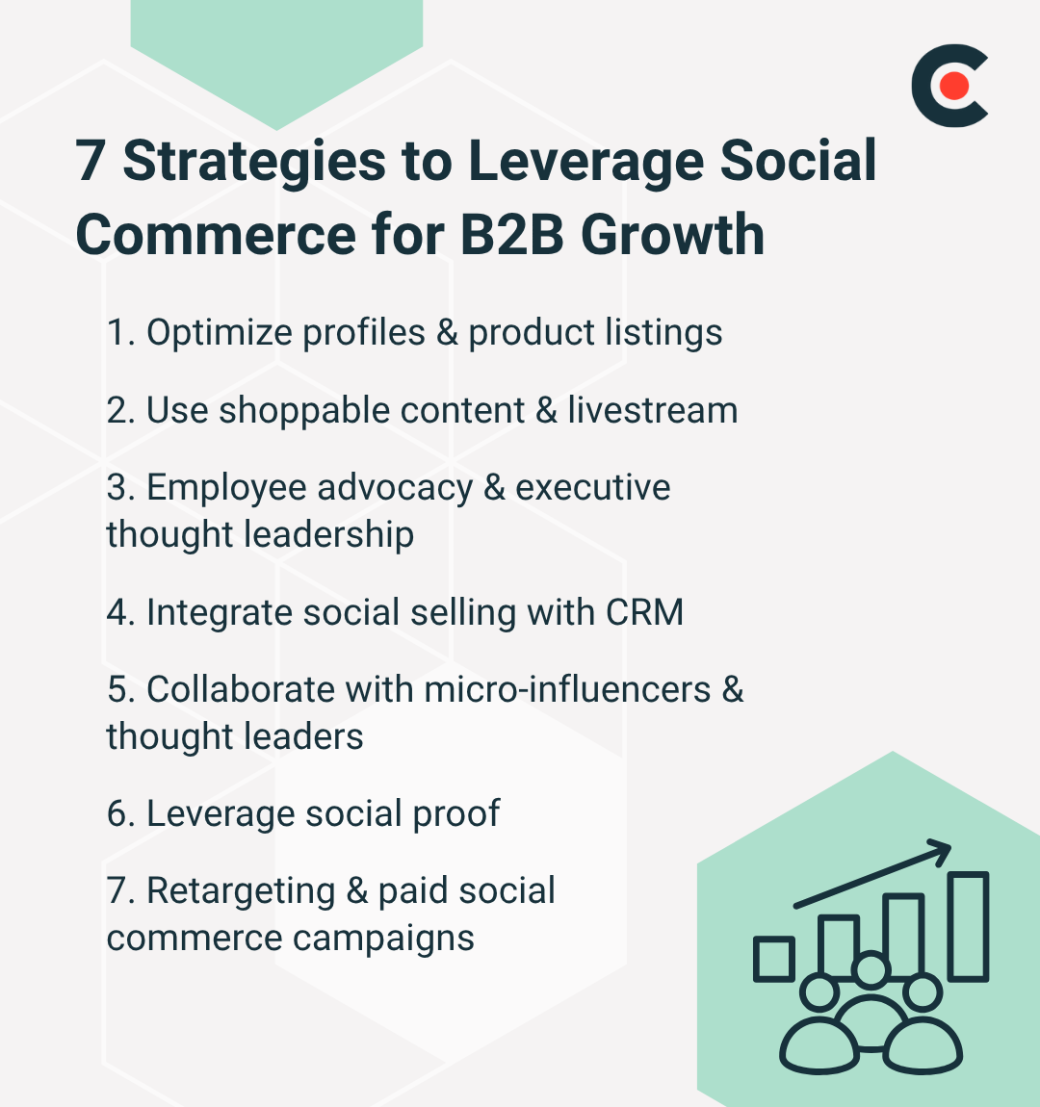
First, optimize your profiles and product listings for conversion. That means adding contact details to your company page, sharing key details on product pages, and driving engagement through product videos, case studies, and featured testimonials.
The key idea to note here is that your company, employee, and product pages may need to be redesigned with social commerce conversion in mind. You don’t want to work hard to capture attention with great content only to lose it through unengaging company pages. These are becoming like a digital storefront that you need to take good care of to continue attracting shoppers.
Next up, look for ways to pair content with product. You can do that with livestreamed product demos, behind-the-scenes streams, and Q&A sessions. You could also:
You can pair these organic posts with shoppable content on TikTok and other platforms. That way, your social feed continues generating leads while giving those users a way to explore your products directly in their app. You can look up more social commerce examples on Clutch if you’d like some help with design.
Many B2B companies that leverage social commerce do so through posts on employee pages. These can come across as more authentic than posts shared from the company account, boosting engagement. It’s why Iulia Vasciuc, CEO of ScaledOn, recommends, “…empower[ing] your employees, power users, partners, and industry experts to share insights, success stories, and thought leadership tied to your brand—organically.”
You can encourage high-level employees to begin sharing their unique perspectives on the industry to generate brand engagement. This may include, but is not limited to:
Think creatively about how you can leverage your employees and their thought leadership effectively.
You’ll also want to integrate your new social commerce strategy with your customer relationship management (CRM) platform. This will help your brand leverage social media data to support its broader sales process.
For example, you can plug engagement data from LinkedIn into your CRM platform. Then, set up automated triggers to follow up with leads who take actions like commenting on a company post. This can help you turn a social media follower into a more active prospect who's closer to conversion.
Without CRM integration, insights from social media platforms can diffuse unequally across your team. A group in marketing may discover a useful trend, but wait a few days to share it with sales. At that point, it could already be too late to capitalize on the buzz. This can lead to missed opportunities and lost sales.
You may also want to collaborate with influencers as part of your social commerce strategy. This can help you tap into existing audiences that are likely to appreciate your brand or its products. The strategy can add to your brand’s credibility, expand your reach, and lead to more sales. But only if you partner with the right influencers.
Look for pages that regularly post about your company, its industry, or something else relevant to your mission. You may also want to use an online influencer marketing database to refine your search.
One of the reasons why social commerce is effective is that people tend to trust other people more than they trust brands. That makes social proof another critical part of a successful strategy. If you're not familiar with social proof, it's a psychological phenomenon that essentially means people tend to copy what other people do.
You can leverage that fact to support your marketing goals in multiple ways. For example, you can share case studies with leads, illustrating how one of their peers benefited from a partnership with your brand. You could also explore strategies to get people talking about your brand on social media.
Chris Cozzolino, CEO & co-founder of Uptown Creation, explains further: “Incorporate social proof throughout the buyer's journey by regularly sharing case studies and client results, focusing on building relationships rather than transactions with each interaction moving prospects closer to becoming clients.”
Once a few posts gain traction, it could spark others to talk about your company, too.
Finally, you can get more out of social commerce sooner by pairing organic strategies with paid campaigns. The first step in that process is using platform data to create custom audiences. For example, you might want to build audiences of users who have previously visited a page, watched a video, or attended an event.
Once you have that custom audience, you can begin targeting it with paid ads. You can show these users lead magnets, consultation offers, sponsored posts, and other content designed to reignite their interest in your brand.
Most of the platforms covered in this article have native ad formats that are perfect for this. For example, you can use LinkedIn Lead Gen Ads to reconnect with users in a format they’re already familiar with. Just make sure to track campaign performance so you know when you need to adapt.
Social commerce has evolved into a valuable tool for B2B sellers. It can help your firm find more leads, create loyalty, and drive sales — but only with the right strategy, informed by company-specific data.
Jaye Cowle, CEO at Launch Online, says, “B2B brands win in social commerce by leaning into their expertise and making it easy to act.”
So, how are you making it easier for your leads to act? That’s the question to ask when building your strategy. It could take time to find an answer, which is why most experts recommend starting small with social commerce before scaling strategies that work.