Evaluating an Marketing Agency in the AI Search Era
AI search has completely changed how people interact with online content. When an AI summary appears at the top of search results, Google users only click a...
Updated January 22, 2026

As businesses begin sharpening their marketing strategies for 2026, shifting trends and emerging technologies are redefining how budgets are planned. Clutch surveyed marketing professionals to explore their insights on key investments, challenges, and opportunities in the year ahead.
As organizations begin planning their 2026 budgets, marketing, however, is undergoing a transformation of its own. But this change is driven less by fiscal constraints and more by the rapid rise of AI and shifting industry dynamics.
Marketing and advertising are evolving fields, with certain areas expanding, others contracting, and new platforms and tactics emerging.
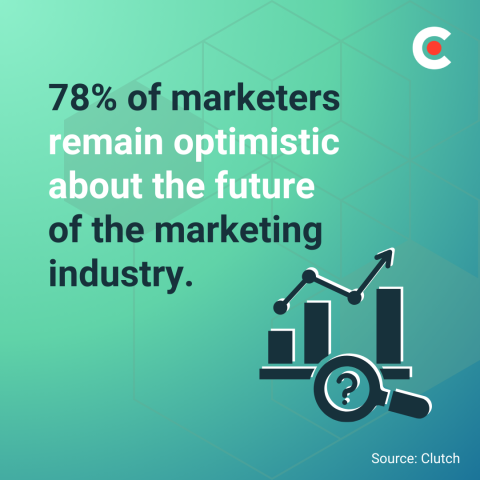
To understand how businesses are navigating these changes, Clutch surveyed 337 marketing professionals in November 2025 about their marketing and advertising budget planning. Our data reveals that 60% of small businesses plan to increase their marketing budgets in 2026, driven by investments in content marketing and digital advertising. Despite economic pressures and changes, 78% of marketers remain optimistic about the future of the industry.
This survey examines how businesses are adjusting their investments, the outlook for upcoming plans, emerging challenges, and the new opportunities marketers are pursuing.
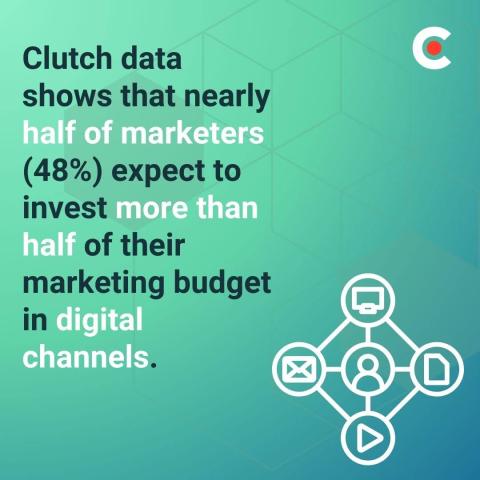
Marketing budgets are increasingly flowing toward digital channels, reflecting both evolving business practices and broader economic pressures. Our data indicates that nearly half (46%) of marketing professionals expect more than half of their marketing budget to be allocated to digital platforms in 2025.
This emphasis on digital is driven in part by cost considerations. Over a third of marketers report shifting their spending toward lower-cost digital channels, including social media, digital advertising, organic content, and email marketing. These channels offer more measurable returns on investment, allowing marketers to track performance closely and justify spending in uncertain economic conditions.
The move toward digital also aligns with the growing demand for agility. As ROI pressures mount and business conditions change, marketers are reevaluating how they allocate budgets, focusing on channels that offer flexibility and scalability.

“Be very open minded to reallocating resources throughout the year, each quarter really,” said Jason Ogden, President of Syrup Marketing. “This mindset gives you the control you really want without sacrificing results by reactively cutting investment.”
With the marketing landscape continually shifting, teams must remain prepared to adjust their media mix and budgets quickly, ensuring they can respond to emerging trends while maintaining efficiency.
Looking ahead to 2026, marketers are focusing on areas that drive both engagement and measurable results. According to our report, the top areas for planned marketing investment include content marketing and SEO, digital advertising, branding and creative development, and sponsorships and strategic partnerships.

Content remains a cornerstone of marketing strategies. Our data shows that 45% of marketers are planning to invest in content marketing & SEO.
Investments in blogs, videos, articles, and content optimizations aim to drive engagement and improve discoverability.
In a 2024 study, 40% of business executives stated that they expected to produce 3-5x more content than the prior year, with nearly 50% publishing content daily.
By creating valuable, search-optimized content, marketers can attract and retain audiences while building authority in their industries.
Over 40% of marketers (43%) are planning to invest in digital advertising.
Digital advertising remains a top priority, encompassing PPC, paid social, display, programmatic, and search engine marketing. Digital ads are a reliable channel for both short-term conversions and long-term audience growth due to their precision targeting and adaptability.
Building and maintaining brand equity is critical, which is why marketers continue to invest in brand identity, creative campaigns, and messaging.
Forty-one percent of marketers plan to invest in branding & creative development in 2026.
Strong branding shapes consumer loyalty, perception, and advocacy. It also helps companies differentiate themselves from competitors.
Partnerships are being leveraged to expand reach, enhance credibility, and tap into new audiences.
Sponsorships & strategic partnerships (35%) are another avenue that marketing professionals plan to invest in in 2026.
These initiatives can include community programs, co-branded campaigns, and influencer marketing.
Strategic partnerships enable marketers to combine their strengths, extend their influence, and create unique customer experiences that truly stand out.
While each of these channels serves distinct purposes, successful marketing in 2026 will require an integrated approach.

“Businesses are getting smarter with how they spread marketing spend,” said Charlie Marchant, CEO of Exposure Ninja. “It’s less about pouring everything into one channel, and more about making sure you’re investing in both short-term wins like paid ads and longer-term assets like content and brand visibility.”
Marketers must balance investments across channels, ensuring that content, advertising, branding, and partnerships work together to support both short-term performance and long-term growth.
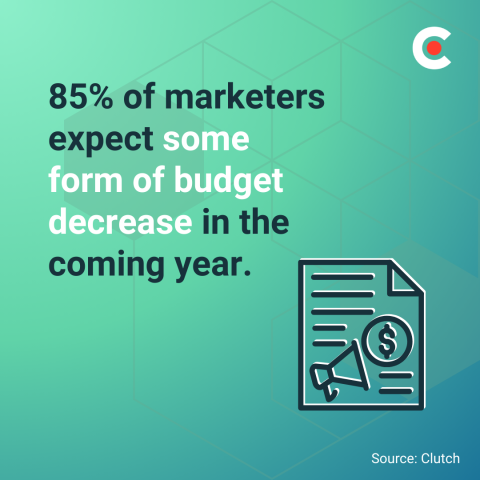
Economic pressures and evolving business priorities are prompting marketers to reassess their budget allocation strategies for 2026. Most marketers (85%) expect some form of budget decrease in the coming year.
For those planning changes, traditional media, such as TV, print, radio, and out-of-home, appear particularly vulnerable. About a third of marketers anticipate budget adjustments plan to decrease spending in these channels.
High costs, less measurable ROI, and lower flexibility compared to digital alternatives make traditional media an easy target for cuts. This likely does not include investment in CTV advertising, as more companies are looking to expand in that channel with the consistent prominence of streaming and better options for ad targeting and personalization.
The trends with traditional media underscore the importance of careful media strategy. As budgets tighten, marketers will need to prioritize channels that deliver both performance and adaptability.
“Traditional will still exist, but it’s no longer the anchor. It’s now the add-on,” said Keith Kakadia, CEO of Sociallyin.
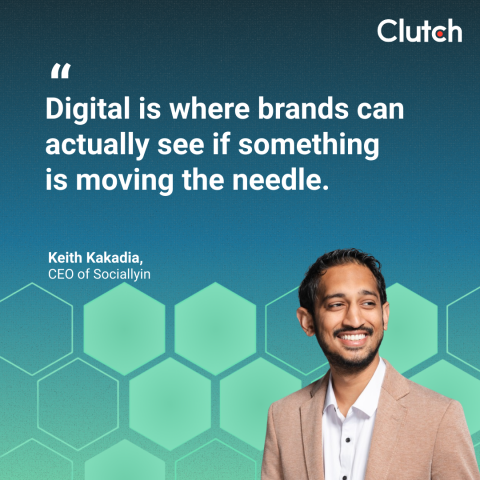
“Digital is where brands can actually see if something is moving the needle.”
By reevaluating traditional allocations and embracing more cost-effective, measurable options, businesses can maintain marketing impact while navigating economic uncertainty.
Additional Reading: ‘Is OOH Advertising Dead?’
AI is rapidly becoming a standard component of marketing toolkits, but there is a slight disconnect. Our data shows that 61% of marketers are already using AI for media planning, data analysis, and personalization.
However, 83% of marketing professionals expect to spend less than 20% of their marketing budget on AI-driven tools, suggesting that businesses view AI as a cost-effective supplement rather than a major budget item.

“AI will continue to eliminate mediocre, ‘corporate-sounding’ content and empower teams to produce higher volumes of engaging thought leadership tied to actual people,” said Chris Cozzolino, Co-Founder & CEO of Uptown Creation.
AI is transforming key areas of marketing:
Despite widespread adoption, marketers are cautious about large budget commitments to AI.
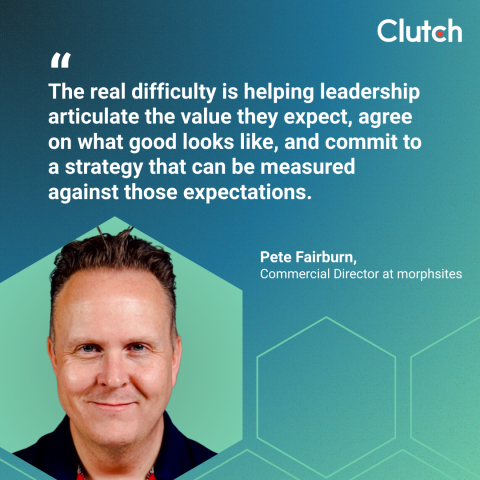
“As the year progresses, businesses will recognize that cutting too far, or relying on AI without a solid strategy, often leads to weaker performance in lead generation and revenue,” said Pete Fairburn, Commercial Director at morphsites.
Many see it as a supplement to existing processes, improving efficiency, reducing labor costs, and enhancing decision-making without requiring massive investments.
This approach enables businesses to test AI tools gradually, while also highlighting the need for education and strategic planning to fully leverage AI’s potential.
Cozzolino continues, “The companies that win will combine AI-powered efficiency with human-led storytelling from founders and employees. In a world of infinite AI output, authenticity becomes the competitive moat.”
As AI becomes more ingrained in everyday marketing operations, companies that can balance adoption with thoughtful investment will be better positioned to drive performance and innovation without overextending budgets.
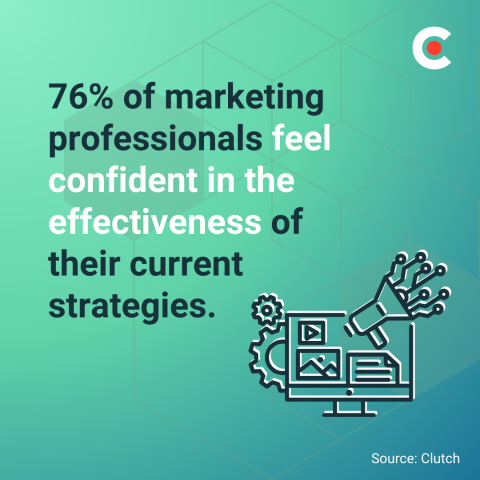
Marketers generally feel confident in the effectiveness of their current strategies, with 76% reporting confidence that their marketing mix supports organizational metrics and goals. This confidence stems from thoughtful allocation of resources, carefully designed campaigns, and the proven performance of selected channels.
However, translating that confidence into leadership approval presents a notable challenge. About 34% of marketing professionals cite aligning marketing goals with measurable business outcomes as their biggest hurdle in justifying spend. This difficulty often arises from:
Even experienced marketers who are confident in their strategies need structured processes to make a persuasive case. Clear KPI definitions, transparent reporting, and strong cross-functional collaboration with teams can bridge the gap between strategic confidence and budget approval.
When marketing spend is directly tied to business outcomes, securing buy-in becomes significantly easier.
Our data found that 72% of marketers believe their leadership team is supportive of new initiatives, highlighting a strong sense of optimism within the marketing space. This suggests that when ideas are presented thoughtfully and strategically, gaining executive buy-in is highly achievable.
“The real difficulty is helping leadership articulate the value they expect, agree on what good looks like, and commit to a strategy that can be measured against those expectations. That responsibility sits with agencies and internal teams,” said Fairburn.
Marketers consistently report that the key to securing support lies not just in the idea itself, but in how it is communicated. A well-structured pitch that clearly outlines potential outcomes, aligns with business goals, and anticipates leadership concerns can significantly increase the likelihood of approval.
Here are some best practices for securing buy-in from leadership:
Most marketing professionals feel confident that their innovative ideas can receive backing if communicated effectively. With careful consideration and strategic presentation, turning a concept into leadership-supported action is well within reach.
As businesses prepare for 2026, the marketing landscape is undergoing a pivotal shift that is marked by stronger reliance on digital channels, evolving investment priorities, and the growing influence of AI.
“Marketing in 2026 will be dominated by brands that put real people front and center,” said Cozzolino.
Despite economic pressures, our data from marketing professionals shows that they remain optimistic, with most planning to adjust their budgets and deepen their investment in tools and strategies that offer measurable impact.
Success in 2026 will depend on both strategic clarity and the ability to communicate value. With leadership teams largely open to new initiatives, marketers who present strong proposals and demonstrate adaptability in an evolving landscape will be well-positioned to drive results.
Clutch surveyed 337 marketing professionals in the U.S. during November 2025 about their insights for marketing and advertising budgets and planning for 2026.
Of the respondents, 52% of respondents were male and 48% were female.
13% of respondents were ages 18 to 29; 36% of respondents were ages 30 to 44; 51% of respondents were 45 and older.
When determining your plan for advertising, complete the following:
To learn more about advertising budgets, check out our article on “How to Make an Advertising Budget” and download our customizable template.
When determining your budget for digital marketing, complete the following:
To learn more about digital marketing budgets, check out our article on “How to Make a Digital Marketing Budget” and download our customizable template.