
How to Use Claude Code if You're Not a Developer
Learn how to use Claude Code to build your own AI agents without a coding background, including setup, first steps, and safety tips backed by Clutch data.
Updated May 29, 2026

Marketers use agentic AI in a wide range of marketing activities, including but not limited to automating customer engagement, personalizing content, optimizing ads, generating creative assets, enhancing customer service, and driving data-driven decisions. However, human oversight remains necessary for AI agents' ethical, accurate, effective, and brand-aligned use in marketing.
AI has taken over the marketing world. Regardless of the use case, be it personalizing customer interactions or making real-time campaign adjustments, marketers have found uses of AI in almost every aspect of their work.
Seventy-eight percent of marketers believe AI is critical to their long-term strategy. As many as 20% of marketers allocate over 40% of their marketing budgets to AI-driven campaigns.
Looking for a Artificial Intelligence agency?
Compare our list of top Artificial Intelligence companies near you
Of course, it's not all rainbows and unicorns. In a recent LinkedIn survey, 72% of B2B marketers reported feeling overwhelmed by the speed at which AI transforms their roles. Most marketers are struggling to keep up.
They need guidance on how their peers are using agentic AI so that they can take notes.
Oleksandr Andrieiev, CEO of Jelvix, shares some use cases: "In marketing, companies are using AI to automate customer engagement, adjust campaigns based on real-time feedback, and optimize ad spend dynamically."
Those are just a few examples of how marketers apply AI agents in various aspects of their work.
AI agents are intelligent systems that can take actions, make decisions, analyze data, and sometimes predict scenarios without human intervention. In marketing, they assist brands in task automation and campaign optimization.
Agentic AI uses big data, natural language processing (NLP), and machine learning to work. NLP allows AI to understand human commands and respond with meaningful actions, while the data enables pattern identification and decision-making. Machine learning helps AI agents improve their performance over time.
There are three main types of AI agents:
A majority of online users have used a chatbot, which engages with its users in human-like conversation. ChatGPT is a prime example, and so are customer service chatbots on business websites and apps.
Marketers use chatbots to provide instant responses and support to customers.
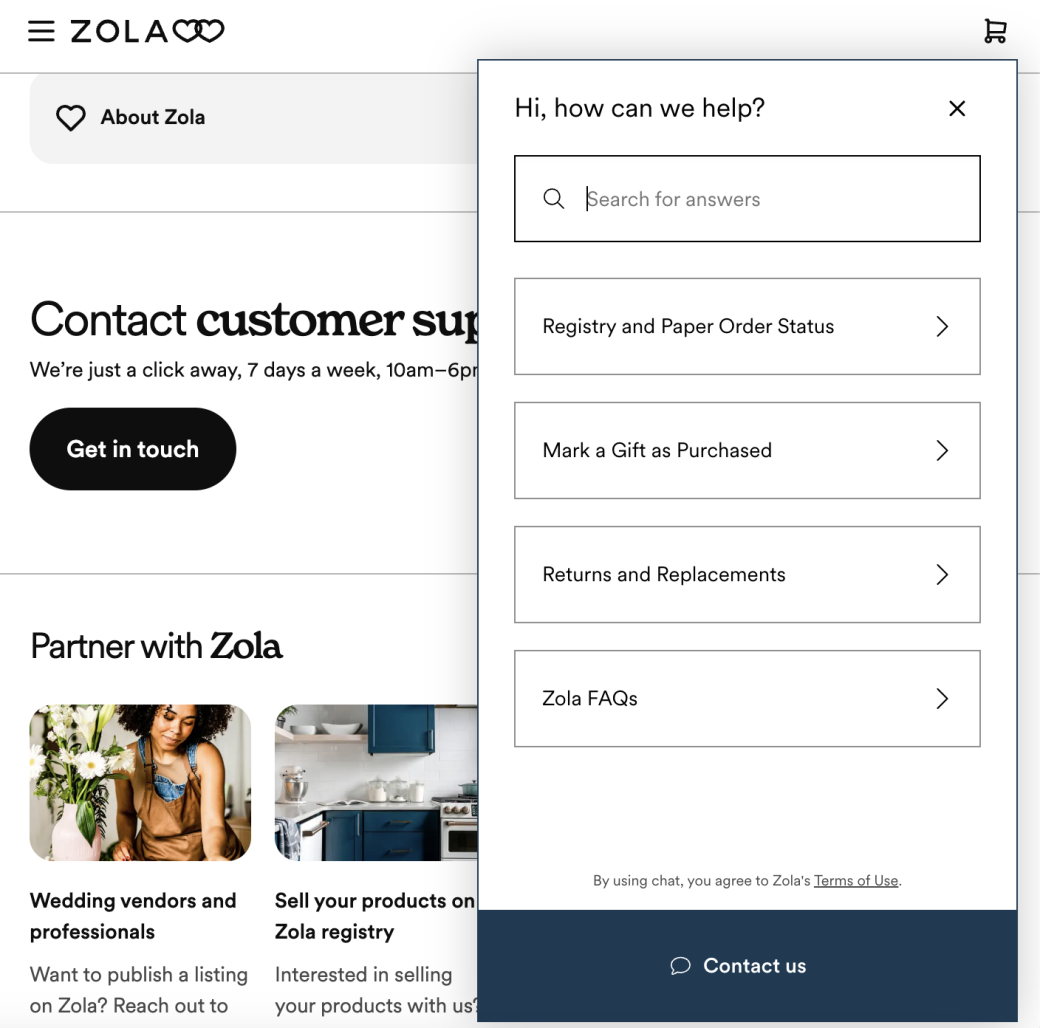
Chatbots have become a powerful tool in marketing, helping businesses engage customers, automate responses, and enhance user experiences in real-time.
As their name suggests, these AI agents analyze massive amounts of data to give an output, which may be a prediction or trend detection. For example, Google's Performance Max uses big data to optimize ad placements, targeting, and bidding. Since it provides output after analyzing millions of ad combinations, the chances of creating effective ads increase significantly.
If you've ever used an AI tool to write content or create a visual, you've encountered creative AI agents. They "create" content, designs, videos, audio, graphics, and music based on input data.

Marketers can use them to scale content production without spending too much time. These tools also supplement human creativity and may be used to brainstorm content ideas.
Additional Reading: 'Dangers of AI Creative'
Customers no longer want to be treated with a generic, one-size-fits-all approach. They want personalized experiences and expect brands to know their preferences. McKinsey research found that 71% of customers want personalized interactions, and 76% are frustrated if this doesn't happen.
The good news is that AI can help meet this expectation. AI agents can process vast customer data to recommend products or content to prospects, including browsing history, past purchases, and engagement patterns. Have you ever wondered how streaming services like Netflix always manage to suggest something you might like? That's AI at work.
Besides product recommendations, agentic AI can also personalize email and content marketing. Brands can use AI to segment audiences and create personalized content versions for each group. AI tools also facilitate A/B testing and can predict the best times for engagement based on historical data.
More importantly, AI agents can allow marketers to adjust their real-time strategies based on analyzed data. For example, if an ad isn't performing, the AI agent can automatically shift the budget to a better-performing version to minimize losses. Such a level of agility is not possible without AI and can boost marketing ROI.
One of the most common uses of agentic AI is to create content, mainly due to the accessibility and lower price point of these tools. In an agentic AI vs generative AI comparison, the former requires less programming and can learn from data without significant human input.
AI agents can help users write anything from blog posts to social media captions. Marketers can even use them to generate images and videos. They speed up the content creation process so marketers can spend more time on strategic decision-making and customer engagement.
AI can also personalize content at scale. While human copywriters and designers may take days to create unique content for each customer segment, AI agents can generate these variations in seconds.
That's not to say you should leave agentic AI to its own devices. For it to be reliable and effective, AI content must be supervised and refined by humans.
The main concern surrounding AI creativity is that it's not original. AI models use their training data to generate content, so there's always a risk of plagiarism and a lack of diversity. That's why the U.S. Copyright Office has declared that AI-generated content cannot be copyright-protected due to the low requisite level of creativity. Similarly, a study from the University of Exeter revealed that AI-assisted stories lack novelty.
Andrieiev recommends combating this issue with human oversight.
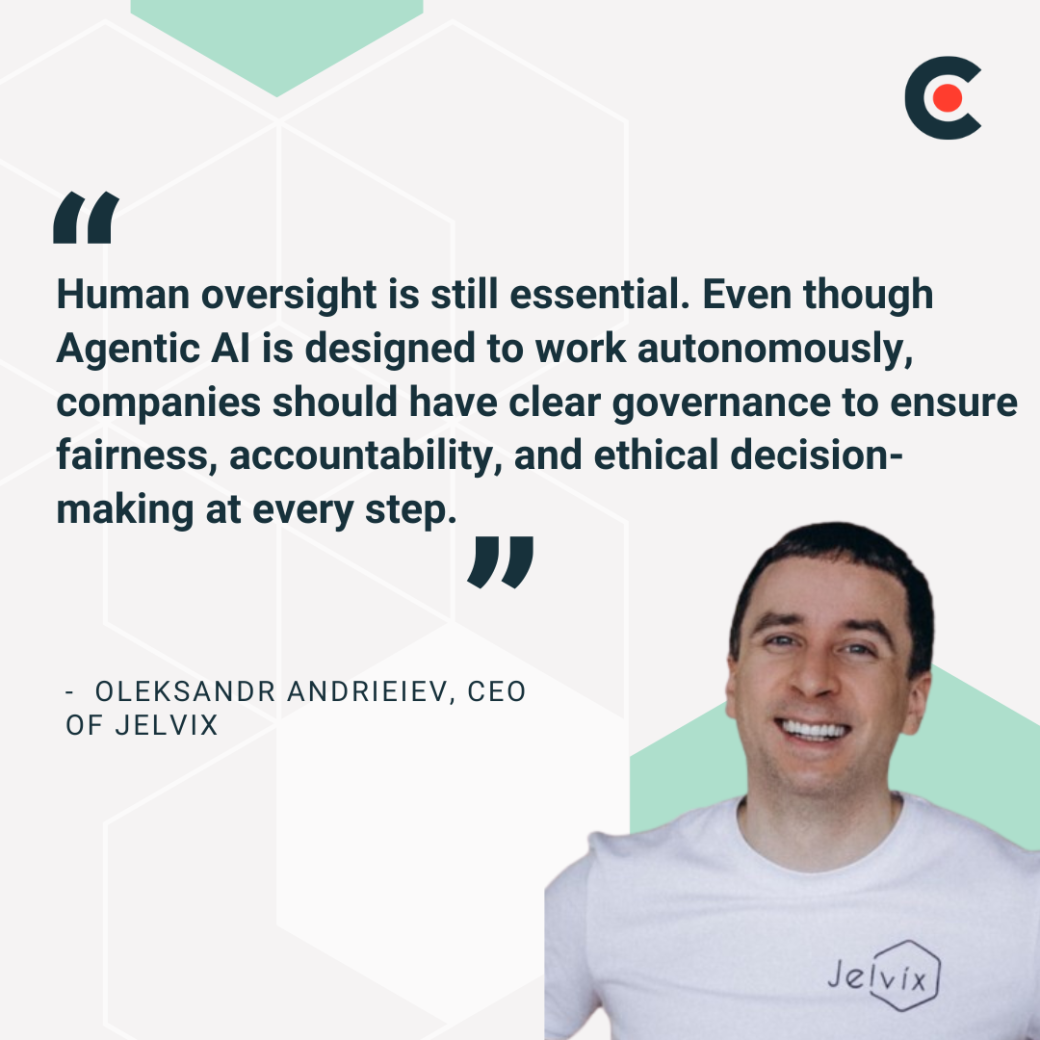
He says, "Human oversight is still essential. Even though Agentic AI is designed to work autonomously, companies should have clear governance to ensure fairness, accountability, and ethical decision-making at every step."
In addition to originality, human marketers should also check the content for biases and inaccuracies. The bottom line is that AI-generated content shouldn't go directly from the AI model to your customer's screens without human intervention.
Modern customers want instant responses and a level of personalization that human support agents may be unable to provide. AI agents then complement human support and enhance the overall customer experience.
The major benefit of AI-assisted support is its 24/7 availability. Agentic AI doesn't need to sleep or take days off. It's always available on your website or app to answer customer questions and troubleshoot issues. Some AI chatbots also guide customers through purchases and can provide recommendations based on their preferences or past interactions.
Customer support chatbots have improved in natural language processing in the past few years. They can understand complex human queries and respond to them accordingly. When needed, they escalate the issue to human support agents.
Even better, these agents learn over time. As Andrieiev shares, "Agentic AI isn't like traditional AI that just processes inputs and gives outputs — it learns from its environment and adapts its strategies over time."
The learnability of AI agents makes them useful for social media support. These agents can monitor customer comments and mentions to gauge what people are saying about your brand. They can then respond to these comments or bring urgent matters to human agents' attention.
Take Brandwatch's AI for an example. Iris, the platform's AI assistant, can understand conversations about your brand and notice spikes in engagement on your social media profiles. So, if there's a negative comment on your Instagram profile or a complaint thread on X, you can address it immediately.
Marketers must stay on top of trends and industry inclinations to keep their campaigns relevant. Extensive market research is needed to accomplish this.
Marketers used to analyze hoards of data to derive insights. This process overlooked or misunderstood many vital insights. AI agents can now analyze massive datasets and identify patterns in real time. They also forecast demand to prepare marketers for future trends.
For example, an AI agent may conduct behavioral analysis to show how customers interact with a particular product. Marketers can then reach customers on their platforms and angle their marketing strategies to fit new customer behaviors.
AI agents can also predict future shifts. They use economic indicators, search behavior, and historical sales data to forecast which products may gain popularity and how customers may respond to new campaigns. With this information, marketers can be well-prepared for any changes in the market before they even take place.
It's not surprising that marketers may be overwhelmed by how AI advances. However, the key isn't to fear AI but to embrace it thoughtfully. AI agents are powerful tools but require human oversight to maintain originality, ethical responsibility, and strategic alignment.
Since they're here to stay, marketers should consider their long-term potential. Agentic AI can help brands adapt to consumer demands in real-time and deliver tailor-made campaigns for more meaningful connections.
The sooner you start incorporating AI into your marketing strategies, the better. The future of marketing isn't about replacing humans with AI. It's about marketers and AI working together to create smarter, more impactful strategies.