
How UGC Video Ads Outperform Traditional Creative in Paid Social Campaigns (With Real Examples)
Learn why UGC video ads outperform traditional creative in paid social, with real examples, best practices, and proven strategies.
Updated March 10, 2026

Short-form videos occupy a central position in the attention economy, influencing how consumers watch, engage with, and connect. This report unpacks fresh data behind those behaviors.
In an environment where a quick clip can catapult a dance or even a pet into global fame overnight, one thing is clear: attention is the most valuable asset for people looking to “make it” online.
Looking for a Video Production agency?
Compare our list of top Video Production companies near you
From viral challenges to trending tutorials, today’s digital and video landscape thrives on who can capture and keep audience attention. This phenomenon lies at the heart of what’s known as the attention economy: a marketplace where human attention is treated as a highly sought-after resource.
With millions of videos uploaded daily, brands and creators compete not just for views, but for moments of genuine engagement. To better understand how consumers interact with this fast-moving format, Clutch conducted a survey in October 2025, gathering responses from 483 consumers about their habits and perceptions of short-form video content.
The findings reveal just how deeply short-form video has become embedded in modern media consumption: 95% (447 respondents) reported that they watch short-form videos regularly and enjoy doing so, while 71% said that they engage with this type of content at least once a day.
This report will explore these behaviors in depth, unpacking why short-form video resonates so strongly, and discover which patterns drive consumer engagement. It will also examine how brands can leverage these insights to refine their video strategies and keep their consumers’ attention spans.
When it comes to short-form video, the name of the game is efficiency. Videos need to capture attention quickly and deliver value just as fast. Despite the massive popularity of this content format, most consumers aren’t spending hours scrolling.
Our survey found that 66% of consumers spend 45 minutes or less each day watching short-form videos. This suggests that while short-form content dominates digital attention, it still occupies a relatively contained slice of daily screen time.
Interestingly, the context of viewing matters just as much as the content itself. The majority of respondents (67%) reported watching short-form videos primarily during downtime at home, whether that’s winding down after work, relaxing on the couch, or multitasking during everyday routines.

This pattern reveals that short-form video is often a low-effort, high-reward activity: something consumers turn to for entertainment, distraction, or a quick burst of inspiration without heavy commitment.
Viewers are likely engaging with short-form videos not necessarily to seek out specific information, but to fill brief moments of leisure or transition. These “micro-moments” of attention create powerful opportunities for brands. When a video seamlessly fits into the natural rhythm of someone’s day, it’s more likely to spark genuine interest.
Consumers may not dedicate long stretches of time to short-form video, but they frequently return to it. For businesses, this highlights the importance of creating content that resonates immediately.
Additional Reading: ‘How to Create a Video Production Budget’
Not all short-form videos are created or watched equally. While nearly every social platform now offers some form of bite-sized video, a few clear leaders have emerged in shaping how or where consumers spend their scrolling time.
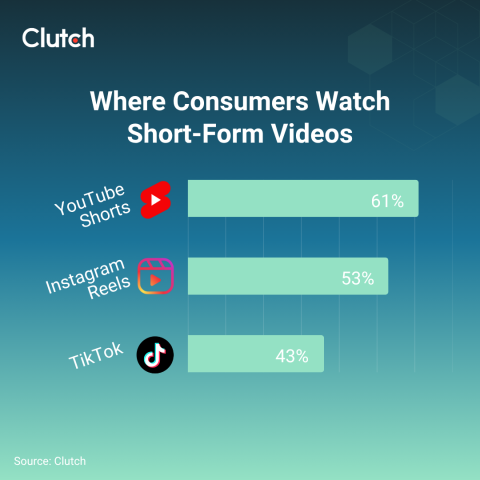
Our survey found that YouTube Shorts leads the way with 61% of consumers watching regularly, followed by Instagram Reels (53%) and TikTok (43%).
Each platform has carved out its own niche in the short-form video landscape, catering to distinct viewing habits and content preferences.
“Audience behavior differs slightly by platform — TikTok can skew more experimental, Reels can be more aspirational and 'lifestyle-focused,' and YouTube Shorts can lean educational/utility,” said Marlowe Stone, Co-Owner + Co-Founder at 336 Productions.
YouTube’s long-standing dominance in the video space gives Shorts a built-in advantage as it’s part of a platform users already trust for entertainment, learning, and discovery.
Our 2025 survey on shoppable content for YouTube was the top platform for discovering and researching products.
One short clip can lead to a full-length tutorial or related video.

This makes Shorts especially popular for educational and how-to content, as well as quick product demos or expert advice.
Instagram’s power lies in its social connectivity and visual storytelling. Reels feel native to the app’s established culture of sharing everyday moments, aspirational content, and lifestyle trends.
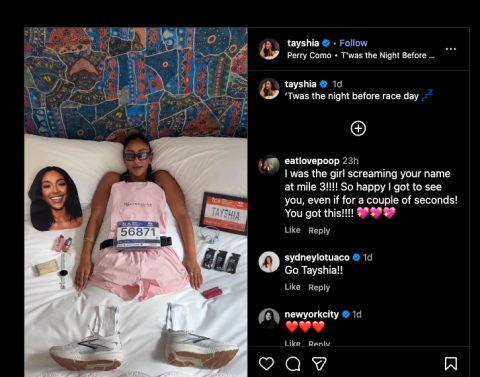
For many users, Reels are a social entertainment experience. A way to both consume and share content that fits neatly into conversations with friends or communities.
TikTok continues to define what “viral” means in the attention economy.
The integration of music and trend-driven format makes it the platform of choice for users seeking spontaneity and creativity.
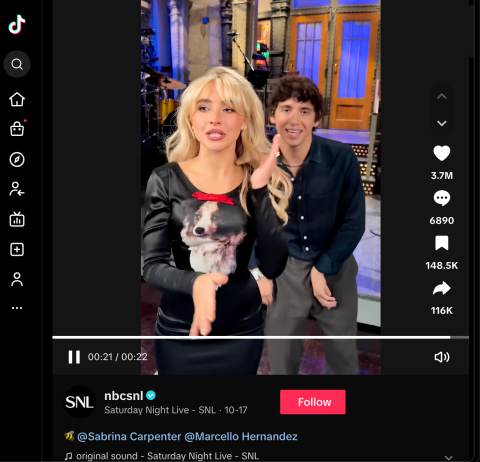
TikTok’s content feels more experimental and unpolished, which appeals especially to younger audiences.
“If you're not using the trending audio you saw 10 minutes ago, you’re too late,” said William Nye, Chief Growth Officer at Caffeine Marketing. “The trend cannot be ignored!”
Together, these platforms illustrate the diverse motivations behind the consumption of short-form videos.
In the era of endless scrolling, attention has become one of the scarcest resources online.
Only 9% of consumers fully pay attention while watching short-form videos.
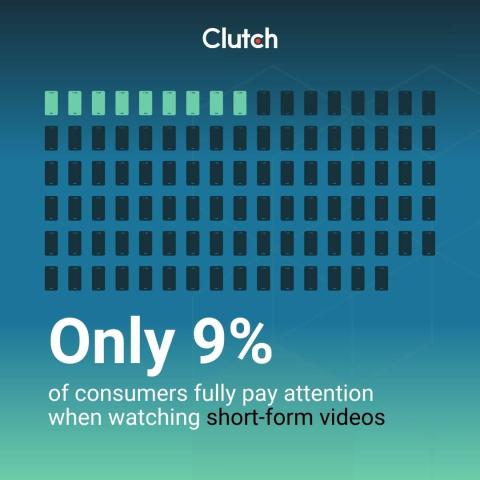
In other words, most people aren’t giving content their undivided attention; they’re multitasking. Cooking dinner, texting friends, commuting, watching Netflix – all while swiping through clips on their phones.

This multitasking behavior underscores the high-stakes nature of the “attention economy.” In fact, 88% of consumers say that a video needs to grab their attention in 30 seconds or less.

That slim timeframe represents the critical moment in which curiosity is either sparked or lost.
“The first seconds aren’t about explaining — they’re about earning attention,” said Gabriela Garcia, Demand Gen Specialist at Boundify.
Getting engagement in those first few seconds requires clarity, creativity, and emotional pull.
Successful videos often:
For example, a home improvement brand might open with a “before” shot of a dull room and then immediately cut to a dramatic reveal, such as “Watch this bedroom go from dated to designer in 15 seconds.” Viewers are encouraged to stay until the end.
These viewing habits mirror broader shifts in the attention economy: consumers are increasingly selective, focusing only on content that immediately delivers value, emotion, or novelty.
In today’s landscape, 30 seconds isn’t just a time frame. It’s a make-or-break moment that determines whether a viewer keeps watching or scrolls to the next viral trend.
When it comes to stopping the scroll, humor and intrigue reign supreme. Our survey found that over half of consumers (55%) say that they will pause their feed if a short-form video makes them laugh or immediately sparks curiosity.
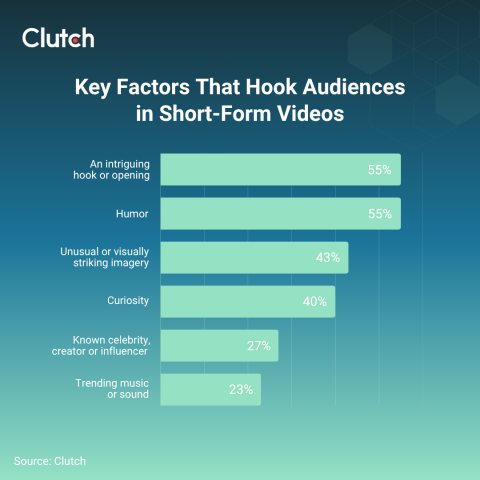
In a sea of similar content, that first moment often determines whether a viewer keeps watching or keeps scrolling.
Humor, in particular, creates instant emotional connection. A quick joke, relatable situation, or playful self-awareness makes content feel human and shareable.

An intrigue-driven opening, like a surprising question or unfinished story, can also compel viewers to stay.

But what viewers respond to isn’t just the content; it’s who’s delivering it and how. Data shows that 44% of consumers prefer casual, authentic videos from independent creators rather than polished brand spots.

These videos feel spontaneous, conversational, and real – the opposite of scripted advertising.
At the same time, 80% of consumers say they pay more attention when they feel like they’re being spoken to directly.
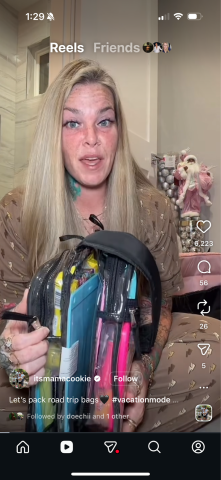
This includes tone, eye contact, and even subtle cues, such as addressing the viewers directly with specific wording.
In the attention economy, viewers aren’t just seeking entertainment; they’re looking for real, human connection, even in ad content.
“Authenticity is the foundation; humor and informality are tools. If it feels natural, it connects. If it feels forced, it breaks trust,” said Garcia.
Stone agrees, “Viewers are drawn to content that feels human, imperfect, and emotionally real. Humor, natural behavior, micro-expressions — those are the signals that tell the brain 'this is real,' and audiences can identify disingenuous messaging instantly.”
Brands can learn from creators by striving to lead with emotion, maintain a conversational tone, and blend humor with value.
Short-form video is also influencing how consumers make purchasing decisions.
“From the script stage, the very first thing you need to focus on is the viewer’s problem, not your branding,” said Victor Blasco, Co-Founder at Yum Yum Videos.
More than half (55%) of consumers have interacted with a brand (followed or engaged) because a video caught their attention, underscoring the direct link between attention and action in the short-form space.
When a video stands out in a crowded feed, it can spark curiosity, conversation, and ultimately, conversion.
“Your short-form video must serve as the highest quality appetizer that proves your upcoming main course is worth the commitment of a 'Follow' button,” said Nye.
Our data also shows clear potential for purchase behavior: 42% of consumers say they’ve purchased a product or service after watching a brand’s short-form video. This demonstrates that attention-grabbing, well-crafted content can have a direct impact on buying decisions.
However, there’s a generational gap, with 45% of Gen Z respondents saying they haven’t even considered making a purchase after watching a brand video.
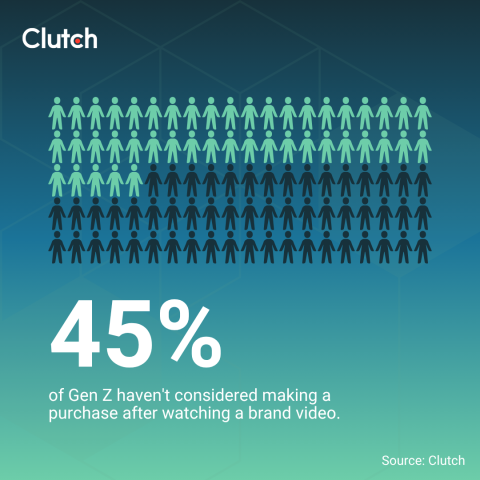
For Gen Z, brand trust and authenticity remain key prerequisites before converting interest into purchase. This suggests that younger audiences may engage more for entertainment and inspiration than for immediate transactions.
“People buy from people they believe in,” said Blasco.
If a brand video is genuinely entertaining or humorous, 64% of consumers, regardless of age, say they would follow or subscribe to that brand’s account.

This highlights a major opportunity for brands to think creatively with their video marketing strategy. An entertaining brand video doesn’t just sell; it builds ongoing relationships that keep consumers coming back for more.
“Anything that educates, entertains, or emotionally connects tends to move the needle,” said Stephen Conley, Founder & Creative Director at Gisteo. “The sweet spot is when a short video teaches something useful and makes people feel something.”
In today’s attention economy, the path from view to purchase is rarely a linear one. It’s built on moments of delight, curiosity, and trust.
Additional Reading: ‘How to Choose a Video Production Company’
The rise of short-form video has redefined how consumers interact with content and how brands must think about visibility and engagement. Attention may be limited, but it’s far from unreachable.
“In a flooded economy, brand loyalty is the only non-algorithmic defense you have,” said Nye.
The attention economy rewards those who respect it. The future of short-form video belongs to those brands and creators that create not just for views, but for value.
Consumers crave content that entertains, and they reward it with loyalty. While only a fraction of viewers give their full attention to every single clip, most are still willing to connect with brands that deliver value in those first 30 seconds.
Clutch surveyed 483 consumers in the U.S. during October 2025 about their views on short-form video content.
Of the initial respondents, 52% of respondents were female and 48% were male.
8% of respondents were ages 18 to 28; 36% of respondents were ages 29 to 44; 56% of respondents were 45 and older.