
How UGC Video Ads Outperform Traditional Creative in Paid Social Campaigns (With Real Examples)
Learn why UGC video ads outperform traditional creative in paid social, with real examples, best practices, and proven strategies.
Updated December 11, 2025

Viewers make snap judgments as they scroll through short-form videos — often in only a few seconds. These four methods will help you break through the noise and convince scrollers to stick around for your content.
After another way too stressful day, you flop down on the couch for some quality scrolling time. Your fingers start swiping as though they're running a marathon, with videos of goofy dogs and the latest viral dance whizzing across your screen. Occasionally, a video piques your interest. You pause long enough to watch it before getting back into your relentless rhythm: swipe, swipe, swipe.
Sound familiar? When social media users get into the zone, they often consume only a few seconds of each video. In fact, TikTok estimates that viewers can "watch" 260 videos in less than 35 minutes, an average of 8 seconds per video. That means brands only have a few seconds at most to grab the attention of scroll-happy users.
Looking for a Video Production agency?
Compare our list of top Video Production companies near you
To better understand scrolling habits, Clutch recently surveyed 483 consumers about their thoughts on short-form video. Our data revealed that users are most likely to stop scrolling for videos that open with a fascinating hook or a humorous content. "Open" is the key here. If you put those elements too late in your content, most viewers will swipe right past.
Drawing on Clutch data, this article analyzes four effective strategies for maximizing viewer engagement and retention with your short videos.
If you turn on a documentary or the latest superhero film, you probably wait at least a few minutes to see if you like it. However, people have much less patience with short-form content. If creators don't capture their attention in the first few seconds, they'll simply keep scrolling.
That means the opening of your video matters more than everything else. Over half (55%) of consumers will stop scrolling if a video has a compelling hook, according to Clutch data.

Great hooks don't necessarily have to be dramatic or look like something out of a Christopher Nolan film. The main goal is to make the viewer say, "Wait, what?" and keep watching. That might involve sharing a surprising fact or asking a rhetorical question. Relatable scenarios can also grab attention, as long as you make their relevance immediately clear.

Duolingo is one brand that's mastered the art of the hook. One of its most popular videos begins with a person dressed as the company's green bird mascot holding up a finger to its beak in a shushing gesture. This image is so unexpected and mysterious that it immediately stops viewers in their tracks. Another video begins with the tantalizing caption, "Since TikTok is actually getting banned, there's one more secret I have to share with you." This clip immediately engages viewers by playing on a confessional trend that was popular in January 2025.
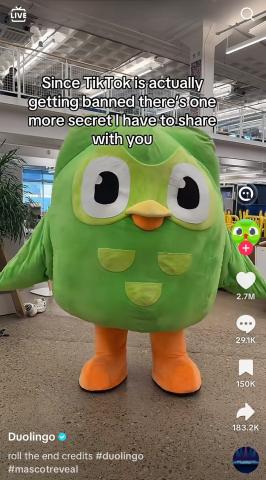
Follow in Duolingo's footsteps with these best practices for creating hook-worthy videos:
Viewers have diverse interests, so experiment with various hooks to determine what resonates best with your specific audience. Gen Z might love a zany scenario or meme reference. For busy moms, a messy living room could be an all-too-familiar setting.
The data is clear: Users love funny short-form content. According to the Clutch survey, 55% of consumers will stop scrolling for humorous videos.

Humor helps customers associate your brand with positive feelings. Laughter activates the pleasure centers in the brain, giving people an instant mood boost. It also reduces stress and anxiety. When your short-form content amuses viewers, these (literally) feel-good moments strengthen your emotional connection.
Funny videos are also highly shareable. When someone sees a video that fits their sense of humor or reminds them of a friend, they're much more likely to share it. Post a video of a grumpy French bulldog, for instance, and your shares may skyrocket as viewers send it to Frenchie lovers.
Humor comes in many different flavors. Some people love situational humor with unexpected or over-the-top scenarios. In this amusing McDonald's Reel, someone dressed in the giant purple Grimace costume boards a plane to "McDonaldland" while baffled travelers stare.
Relatable humor pokes fun at everyday situations. A pet company might share a video of a frazzled dog owner running out of bags on a walk or realizing their dog's beloved squeaky toy has exploded in the washer. Many people also enjoy lighthearted satire, as long as it's not mean-spirited.
These tips will help you use humor effectively in your short-form videos:
Humor isn't universal, so test your short-form videos with a few different audiences before posting.
Users see a whirlwind of visuals as they scroll social media, so you'll need to go the extra mile to stand out. Our survey found that 43% of consumers will stop if a video has unusual or striking visuals.

The most eye-catching videos don't just shock or baffle viewers. They tell a story in only a few seconds. For example, this Liquid Death video parodies the infamous chest-burster scene in Alien by showing a can of Cereal Criminal bursting out of a box of Fruity Pebbles.
The narrative? That this new drink tastes just like its "mother" — the cereal box it exploded from.
Content like this works because it focuses on storytelling, explains Gabriela Garcia, Demand Gen Specialist at Boundify: "Creativity isn’t about chasing trends — it’s about having a point of view and showing it consistently."

Use these strategies to create truly arresting imagery:
For the best results, put your most stunning or intriguing imagery in the first five seconds of your video.
Four out of ten (40%) consumers will stop to watch a video if it has an element that piques their curiosity. To increase your views, you want to make users say, "Huh, what's that?"

Invite watchers to linger by presenting an open-ended scenario, such as the beginning of a car detailing video or a home transformation. Or tease them by starting with a cliffhanger and rewinding to the start of the situation. Simple open-ended questions can also seem novel.
Visuals also matter for curiosity-driven narratives. Open in media res — aka in the middle of the action — then flash back in time. Or start with an unusual visual that will stand out in user feeds.
This Red Bull video alternates clips of athletes training with jaw-dropping stunts, such as skating down the world's largest ramp.

This format encourages viewers to stick around to see how the seemingly easy training activities translate into extreme sports.
No matter which type of short-form video you come up with, these tips will help you grow your views:
Following the top brands in your industry can also help you understand what consumers like.
There's no guaranteed recipe for racking up views with short-form video. However, Clutch data shows that four elements tend to drive the most viewer engagement: a top-notch hook, humor, eye-catching visuals, and anything that piques curiosity.

Above all, focus on building emotional connections with content that stays true to your brand voice. As Victor Blasco, Co-Founder at Yum Yum Videos, puts it, "You can have a visually stunning, engaging video that perfectly explains what you do, but if it feels fake or insincere, it won’t build trust."
Get started by picking one of the methods from this list to experiment with. Once you understand how to engage your audience one way, you can branch out to other approaches. Variety is key to attracting eyeballs and keeping them watching.