
How UGC Video Ads Outperform Traditional Creative in Paid Social Campaigns (With Real Examples)
Learn why UGC video ads outperform traditional creative in paid social, with real examples, best practices, and proven strategies.
Updated December 11, 2025

Short-form video content is everywhere these days, with many consumers watching it every day. Learn why this kind of media has such a hold on us and how your brand can use it to its advantage.
Short-form video content is everywhere, and almost everyone is watching it. Consumers who are not on dedicated short-form video apps, such as TikTok, still watch plenty of these clips on Instagram Reels or YouTube Shorts. Gone are the days of the three-hour movie, and in are binge sessions of a dozen or more 90-second videos.
What is it about this content that draws us in so intensely and keeps us scrolling for hours? To find out, Clutch recently surveyed 438 consumers about their thoughts on short-form video.
Looking for a Video Production agency?
Compare our list of top Video Production companies near you
Their responses offer valuable insight into why this type of content is so addictive. Learn tips and tricks that come straight from consumers' brains, along with guidance on how your brand can use human psychology to make your content stand out.
Short-form content grabs our attention for reasons ingrained in our biology and exacerbated by modern life. Understanding these tricks can boost learning retention and strengthen your brand.
Instant gratification, sometimes referred to as delay discounting in psychological literature, is the human tendency to opt for short-term, immediate rewards over waiting for a larger reward that takes longer. It's a crucial survival strategy for hunter-gatherers. When fresh water and good food are scarce, you should snap up what's available as soon as you see it.
However, even in our modern society, where the internet is always available and next-day delivery is ubiquitous, we're still driven to seek immediate rewards.
TikTok uses our natural inclinations toward instant gratification to keep us scrolling, and other social media apps work similarly. The fast pace, novelty, and instant feedback loop of giving and receiving likes keep us engaged, long after we ought to put the phone down.
With numerous apps, multiple streaming services, and real-world activities available, consumers' attention has become a valuable and monetizable commodity. Social media apps generate billions from the attention economy, and brands must now compete for even 30 seconds of a consumer's time. There's simply too much going on.
People are aware that companies are competing for their eyeballs, which makes short-form content more appealing. Unlike a longer video or a lengthy blog, a 30-second video isn't a considerable investment of time. Having to watch a full YouTube video to get the info they want might put a user off, whereas watching a YouTube Short feels more doable.
The modern attention climate has given rise to micro-learning, or the concept of educating in short bursts. While 90 seconds isn't long enough to learn anything complicated, it's more than enough time to spark interest in a subject or get across a neat fact.
This style of learning is a great way to beat the forgetting curve, which says that six days after training, you'll only retain about 25% of what you've learned. By receiving short bursts of structured learning frequently, you can reinforce information before it is forgotten.
A Clutch survey found that 95% of consumers watch short-form videos, with 71% doing so on a daily basis. Consumers list four main reasons for their enthusiasm, with each answer offering key insights for brands.

Clutch's data shows 66% of consumers enjoy short-form video content because it's quick and easy to watch. The ideal short-form content has a low time investment but a high reward, whether that's learning a new fact, having a good laugh, or emotionally connecting with a story.

Because short-form video content is so easy to watch, consumers also find it very easy to binge. One study found that TikTok users spend an average of 46 minutes per day scrolling through videos and open the app eight times a day.
Brands should strive to create concise content with an immediate payoff. Strip down your content to the essential message. If you need to include more information, consider using the caption function to display descriptive text on the screen. Also, you can shave a few seconds off by making sharper cuts when you edit. There's a reason influencers use these tricks in their short-form videos.
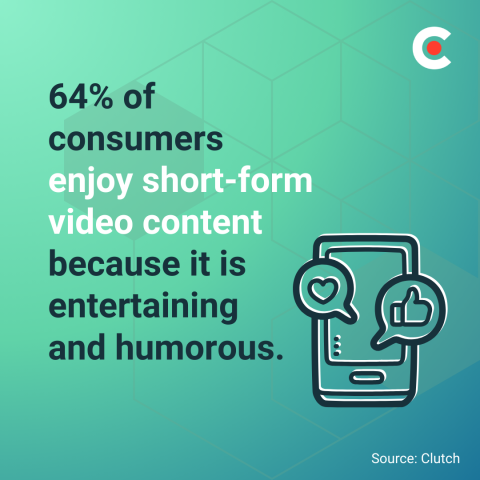
According to Clutch's survey, 64% of consumers enjoy short-form content because they find it entertaining and humorous. When time is short, humor, surprise, and creativity can get your point across better than a complicated explanation.
In fact, the stripped-down nature of short-form video means it can evoke emotions more intensely than a longer video might. Instead of the slower rise and fall of a longer video's narrative, a short-form clip gets in all the charged highlights.
Consumers are more inclined to share content they emotionally connect with, which means companies can spread brand awareness across a platform with one successful short-form video that evokes a laugh or touches the heart. Brands shouldn't be afraid to incorporate humor and playfulness into their videos.
Don't be afraid to jump on viral trends and get a little silly, or even a little sappy. Show off your brand's fitness wear by taking part in a dance challenge, or showcase a new spice blend by suggesting a romantic recipe to use it in.
Clutch found that 45% of consumers enjoy short-form content that teaches them something new. Microlearning is a great way to achieve a sense of accomplishment without disrupting your schedule. Sure, you probably won't learn how to make a multi-course meal from a TikTok video, but you could pick up a simple knife trick you can use when cooking dinner that night.

A micro-learning video can be a great jumping-off point, especially for viewers willing to get hands-on to apply their skills. When planning your video, focus on providing real value by teaching one fact or hack that encourages viewers to learn more.
For instance, a sporting goods store with a running club could create a short-form video highlighting a few effective stretches that can be done with no equipment. Engaged consumers may try the stretches, and some may sign up for the club to learn more.
Modern consumers are as savvy as ever. Most people alive today have been watching commercials since they were small children, and they can spot a heavy-handed sales pitch from a mile away. Instead of advertising, many consumers turn to social media to learn about new products.
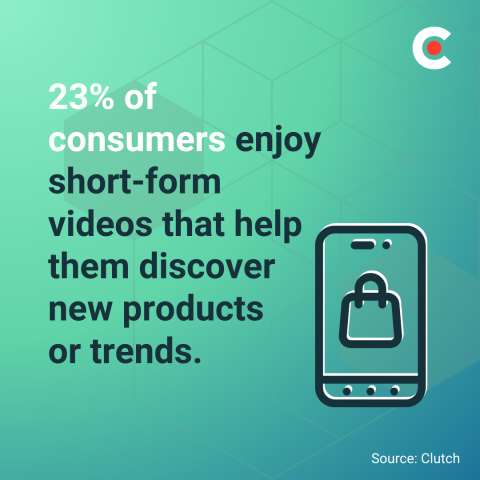
Of consumers surveyed, 23% enjoy short-form content because it helps them discover new products and trends. Clutch found that 64% of viewers say they'll like or subscribe to a brand if they see something they like.
What consumers don't want from you is a traditional advertising experience. Focus on brand authenticity and making content that your prospective viewers would like to share.
For instance, you could demonstrate your brand's food product by using it in a recipe, without making an explicit pitch. Instead, encourage viewers to make their own spin on the recipe and post their results in a video. User-generated content doesn't have to be complicated; it just needs to be compelling.
To succeed with short-form video, brands must create instantly engaging, shareable content. Stand out with these key strategies.
Insincerity and phoniness are never a good look for your brand. Short-form video content should stay true to your natural voice and personality.
Give your target consumer what they want to hear. Brands catering to an older clientele don't need to use slang for young people, while brands selling mostly to the younger generations shouldn't jump on every viral nostalgia trend.
Failure to maintain authenticity can have significant impacts on brands. One Clutch survey found that 48% of consumers would stop buying from a brand if its marketing felt inauthentic. Most brands find it better to focus on a small customer niche rather than going for broad appeal and missing the mark with the audience that matters most.
When it comes to short-form video, time is your most valuable commodity. Every word and image needs to pack a punch, especially since only 9% of consumers say they pay full attention while scrolling through short-form content. And 88% say they'll scroll away if they don't see something they like within 30 seconds.
One way to combine a solid hook with a strong ending image is a time-lapse video. A home improvement brand could start a video by teasing the transformation of a space with text on the screen. Then a time-lapse edit shows how the improvements unfold, culminating in a beautiful space and an intriguing example of the value of the brand's products.
Consumers pay a premium to avoid ads while watching streaming video. They don't want another ad from you while they're scrolling through short-form videos.
To avoid looking like just another skippable commercial, make the primary message of your content educational or entertaining. For instance, you can use your video to demonstrate your product and put the purchase link in the description or at the end of the video.
Create the kind of content that you would be inclined to share with your friends and followers. If you do that, consumers will be happy to carry your brand's message to others.
Anyone who has spent time on social media can tell you that each platform has a distinct vibe. There's overlap for sure, but what TikTok users are looking for isn't always what Instagram users want to see, and vice versa.
Before posting, take the time to research how your brand voice aligns with the platform. Because Instagram Reels are integrated with photos and stories within the app, they're ideal for sharing small parts of a larger story. TikTok videos are more standalone, so that can be a better choice if you're looking to go viral.
Many brands repurpose short-form content for use on multiple platforms. While that can be effective, it's best to do your research before cross-posting.
The power of short-form content lies in its ability to quickly entertain, educate, and connect with viewers. Brands that understand human psychology, utilize niche storytelling, and employ community-driven content can make consumers feel understood and empowered, driving engagement.
Short-form video content is set to dominate the future of social media and marketing, even with the introduction of AI enhancements. Brands need to be ready and know how to express their authentic brand voice in this addictive medium.