
How UGC Video Ads Outperform Traditional Creative in Paid Social Campaigns (With Real Examples)
Learn why UGC video ads outperform traditional creative in paid social, with real examples, best practices, and proven strategies.
Updated December 11, 2025

Short-form video may be universal, but how different age groups watch it isn’t. New Clutch data reveals sharp generational splits in preferred video platforms — insights brands should use when shaping their marketing strategy.
Almost everyone, from teens to grandparents, watches short-form videos. However, how each age group consumes this media format varies dramatically. A recent Clutch survey of 483 consumers shows clear generational divides about where different age groups prefer to consume short-form content.
As a marketer, these video preferences should guide your content development strategy. The better your content style, tone, and platform match the habits of the audience you’re targeting, the more likely your message will reach them.
Looking for a Video Production agency?
Compare our list of top Video Production companies near you
Every age group consumes short-form media, but where and how they consume, it and what they consider “watchable” splits sharply by generation.
Younger audiences, especially Gen Z, treat video as a rapid-fire discovery engine. Constant swiping and trend-driven formats (such as dance and meme variants) hold their attention because they want to express their personality and participate. That’s why platforms built around trend cycles and creator-driven culture, like Instagram and YouTube, perform so well with this group.
On the other hand, older demographics that grew up with analog media, like Gen X and Baby Boomers, lean toward clarity and usefulness. Research shows they watch longer portions of videos, gravitate toward practical educational topics, and watch videos with fewer interactions compared to younger viewers. As such, platforms like YouTube Shorts and Facebook Reels — which often feature more informational, utility-driven content such as cooking videos, “did you know” explainers, political and historical breakdowns, and travel vlogs — tend to be more popular with these groups.
These behavioral differences impact everything: attention spans, the duration viewers stay with a clip, their perception of credibility, and whether they engage in the first place. As a marketer, you need to be familiar with each group’s preferences to target them effectively.
According to our survey, 55% of Gen Z primarily watch short-form videos via Instagram Reels and YouTube Shorts.

Both platforms cater to their generational preferences: fast, visually dynamic content built around trends, memes, challenges, and formats that anyone can replicate. Unlike older generations, Gen Z isn’t just passively watching — they’re also actively remixing and responding, making Reels and Shorts feel less like “channels” and more like ongoing conversations.
Here are some tips for engaging Gen Z:
An example of a brand that has successfully targeted Gen Z is none other than Duolingo, the language-learning app with a green owl mascot.
Their Reels and Shorts succeed because the brand behaves like a creator: unfiltered mascot chaos, slang, trend-aware humor, and content that loops cleanly for higher watch times. The brand’s videos don’t feel like ads; instead, they feel like something Gen Z would have made themselves, which is precisely why they work.
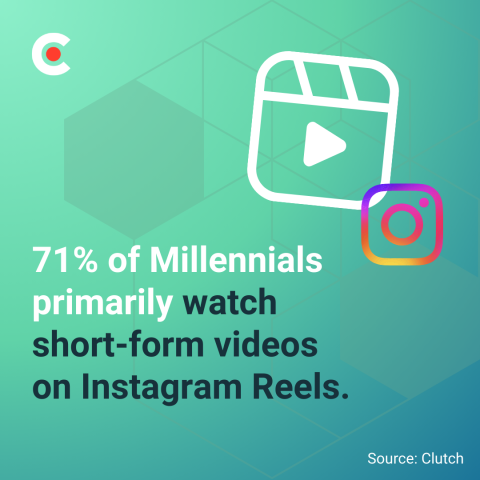
Clutch data reveals that 71% of millennials primarily watch short-form videos on Instagram Reels, making it their clear platform of choice.
This isn’t surprising, since Reels check off all the millennials’ preferences: lifestyle-focused content, shareable visuals, and a mix of entertainment and informational content.
Follow these best practices to engage Millennials on Reels:
A brand that has successfully captured the attention of Millennials is Pinterest. According to Statista, their user base is dominated by women aged 25 to 34, which falls within the Millennial range.
This isn't surprising, since the platform’s core aesthetic revolves around lifestyle inspiration, practical step-by-step ideas, and clean, cohesive visuals. All of these mirror the exact content style that performs best with Millennials on Instagram Reels.
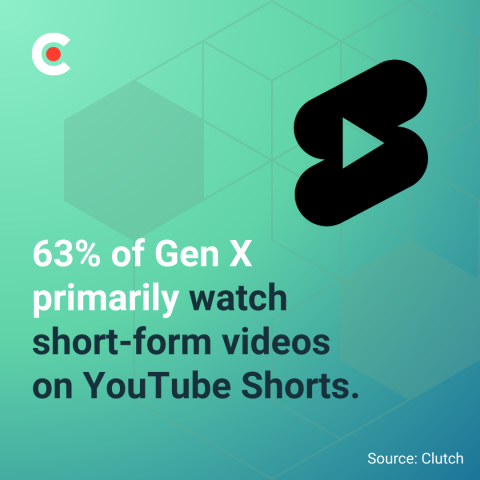
Clutch’s findings show that 63% of Gen X primarily watch short-form videos on YouTube Shorts.
This tracks with how older generations who grew up with analog media gravitate towards more informative content, such as woodworking videos, “how to fix a leak” content, or “how to earn more through stocks.”
Best practices for engaging Gen X on YouTube Shorts include:
If you want an example of a brand that does all of this well, look no further than Home Depot. Their YouTube Shorts often show quick, practical demonstrations, such as seasonal maintenance reminders and bite-sized how-tos that show value in seconds. This format aligns closely with how Gen X typically uses YouTube: to learn something or get straightforward guidance without trend-driven distractions.
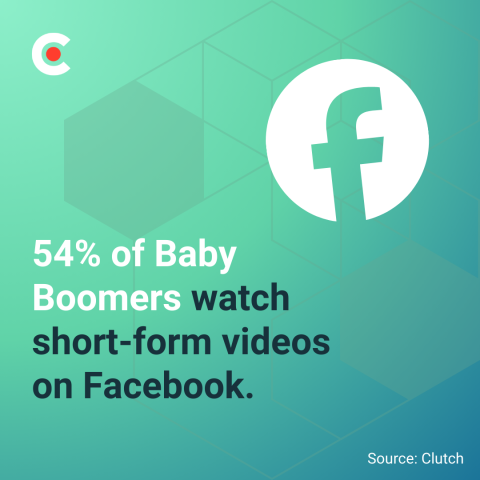
According to our latest Clutch survey, 54% of Baby Boomers primarily watch short-form videos on Facebook, making it one of the best platforms for reaching this demographic.
Boomers like Facebook Reels because much of the content there is informative, nostalgia-driven, and community-focused. Like Gen X, they respond well to content that teaches them something (think historical explainers and personal finance breakdowns), offers familiar emotional touchpoints, and comes with readable captions.
Follow these tips to make video content accessible and trustworthy for older viewers:
AARP is a good example of how to reach Baby Boomers on Facebook Reels. Their short-form videos employ straightforward advice and clear, high-contrast visuals with large text and captions, precisely the format that older viewers find easy to follow.
In one Reel, for instance, an older woman explains how she avoided a gift-card scam, a topic that's relevant to many Boomers. The readable on-screen text and practical guidance make the content feel genuinely trustworthy and useful.
While different generations all watch short-form videos, they don’t use the same platforms or respond to the same styles. Each age group has its own preferences and expectations. So your business needs to tailor a strategy for each age group so you can create content that fits your audience’s expectations.
Creating different strategies for each age group is a lot of work. Consider streamlining your workflow by repurposing one idea across multiple platforms. For example, a 30-second product demo can be edited into a fast, punchy version for Gen Z on Reels, a slightly slower, more polished walkthrough for Millennials, a clear, value-first how-to for Gen X on YouTube Shorts, and a steady, captioned version with larger text for Boomers on Facebook.
This way, you get to keep the core message, video, and audio content. You simply need to adjust the pacing, framing, and tone to align with the audience’s instincts and habits.
Brands can’t rely on a one-size-fits-all approach.