
How to Define Brand Values That Guide Every Business Decision
Brand values are the principles that guide company decisions, define what a brand stands for, and shape how it treats customers, employees, and partners.
Updated July 14, 2026

As AI floods branding and marketing, consumers are pulling in the opposite direction. A new Clutch survey reveals that real people and their human characteristics are becoming the strongest signals of trust. Here’s what’s actually connecting consumers in an AI-saturated market.
Artificial intelligence is now woven into every layer of branding and marketing. But as AI-generated content floods these channels, something counterintuitive is happening: consumers are increasingly drawn to what feels genuinely human and real.
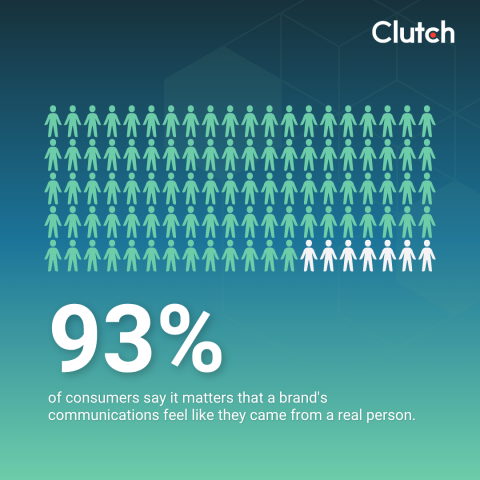
Clutch’s latest data makes the stakes clear. More than half of consumers (55%) view a brand less favorably once they can tell AI produced the creative, and an overwhelming 93% say it matters that a brand’s communications feel like they came from a real person – not a machine.
Looking for a Public Relations agency?
Compare our list of top Public Relations companies near you
That tension raises a practical question for every brand navigating this moment: as the line between human-made and machine-made content blurs, what’s actually connecting with people? Where does authenticity come from, and which signals of “realness” do consumers respond to most?
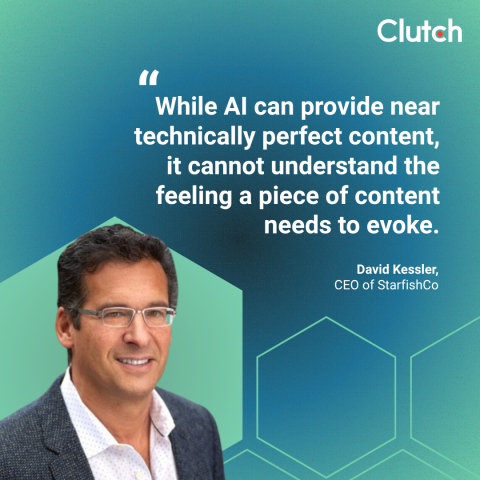
“While AI can provide near technically perfect content, it cannot understand the feeling a piece of content needs to evoke," said David Kessler, CEO of StarfishCo.
To find out, Clutch surveyed 408 consumers in June 2026 about how they perceive and respond to branding and marketing content and where they draw the line between what feels authentic and what feels artificial.
Before a brand can win trust on social media, it has to clear a harder bar: getting noticed at all. Nearly half of consumers (47%) don't follow brands or executives on social media. That reframes the challenge for marketers — the first contest isn't between personal and corporate branding, it's earning any attention in the first place. A sizable share of the audience has simply opted out of brand content.
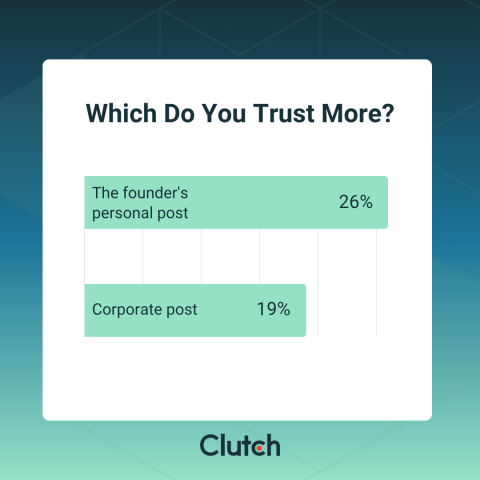
But for the consumers who do engage, a clear pattern emerges: people outrank institutions. Asked which type of social post they trust more, 26% chose a founder's personal post over the 19% who preferred a corporate brand post. Once attention is earned, a human voice carries weight that a logo can't.
When consumers do engage, founder content tends to read as more direct, accountable, and authentic than corporate messaging. A personal post comes with a visible author and a real personality behind the words.
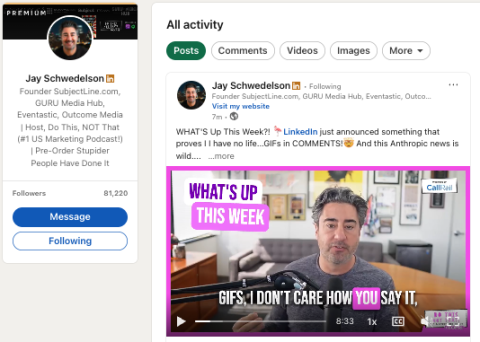
That visibility creates a trust signal that polished corporate communications, by design, often smooth away. People want to know there’s a person standing behind what a brand says.
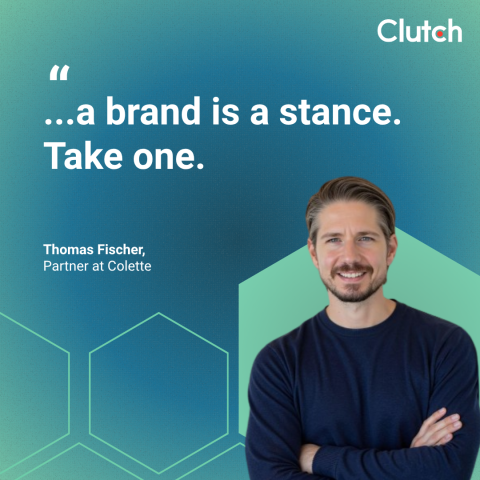
“Strong brands come from one or two people, not a committee of thirty…” said Thomas Fischer, Partner at Colette. “By the time it clears every department, it’s been sanded down to whatever no one could object to.”
The takeaway isn’t that founder-led branding should replace corporate branding. Rather than treating the two as competing strategies, brands may benefit from viewing them as complementary.
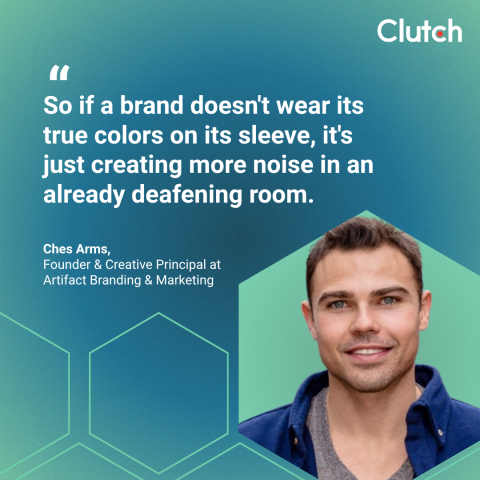
"The most important human signal to preserve is having an opinion…,” said Ches Arms, Founder & Creative Principal at Artifact Branding & Marketing. “So if a brand doesn't wear its true colors on its sleeve, it's just creating more noise in an already deafening room."
The founder builds trust, and then the brand scales it.
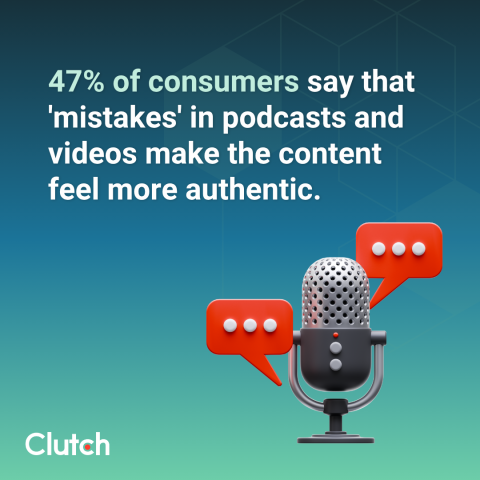
When a podcast or video host stumbles over a word, laughs unexpectedly, or wanders off-script, 47% of consumers say it makes the content feel more authentic and likable.
In other words, imperfection is an asset, not a liability, for brands. Among consumers who watch branded content, the loose, conversational style is outpacing the tightly scripted one. The very moments brands work hardest to edit out may be exactly what’s connecting.
For years, branded content has been optimized in the opposite direction, with smooth delivery and carefully controlled messaging. But consumers appear to be rewarding something different.
Consumers don’t equate perfection with trustworthiness. Small imperfections, like a verbal stumble or a slight tangent, can make a piece feel more genuine and less manufactured than a flawless take ever could.
"Honesty is the new originality. It takes courage to show mistakes and imperfections, but that vulnerability is precisely what builds a genuine emotional bond with consumers,” said Catalin Armeanu, Co-Founder of ARMEANU Creative Studio.

Human moments create emotional connection.
Laughter and hesitation are difficult to fake convincingly. That’s precisely why they work: they read as cues that the interaction is real. A scripted line can be written by anyone or anything, but a spontaneous reaction signals a person.
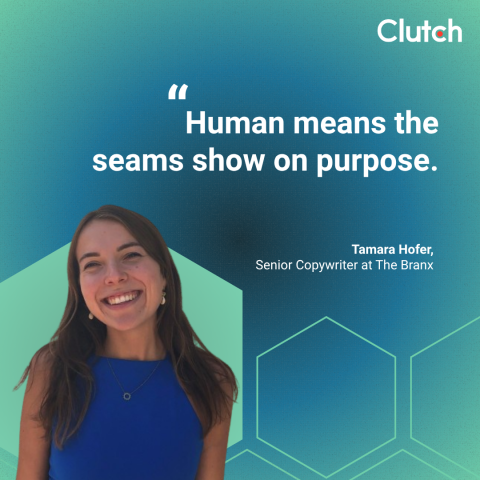
“Human means the seams show on purpose,” said Tamara Hofer, Senior Copywriter at The Branx.
It doesn’t mean abandoning preparation or professionalism; it means creating a space for natural conversation and moments that reveal personality.
As AI-generated content grows increasingly polished and predictable, those spontaneous human moments may become even more valuable as signals of authenticity.
Consumers don’t want “casual” everywhere. The right style, it turns out, depends heavily on the category.
Ask people how a local restaurant or coffee shop should present itself, and the answer leans overwhelmingly human.
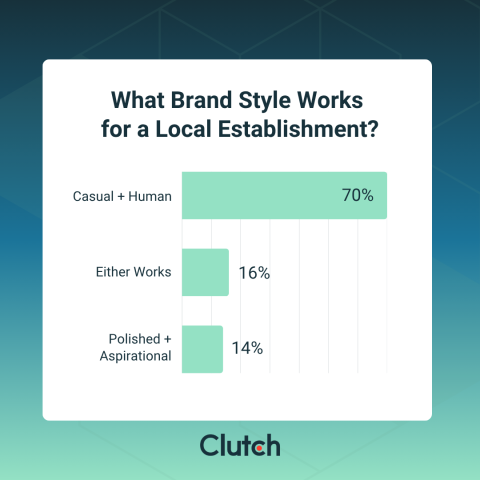
Ask about a luxury fashion brand, and the expectation shifts in the opposite direction.
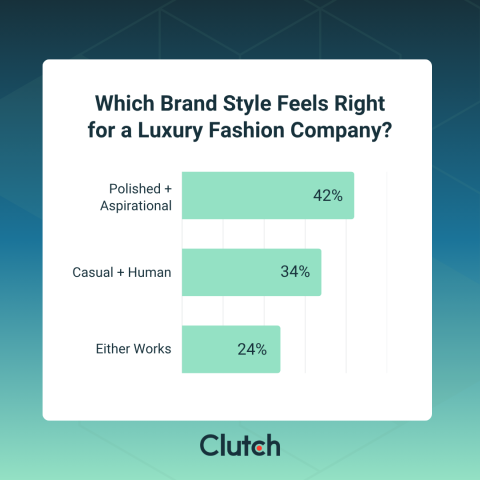
Those two numbers tell the story. Sixty-nine percent say a casual, human style feels right for a neighborhood cafe, while for luxury fashion, it flips toward polished at 41%. The same off-the-cuff style that makes a local shop feel inviting can undercut a luxury label that trades on aspiration and craft.
The takeaway isn’t that one aesthetic is universally better than the other. It’s that consumers expect a brand’s style to align with the role that brand plays in their lives. A coffee shop is part of someone’s daily routine; a luxury house is an occasional indulgence. Each carries different expectations, and consumers read “authenticity” differently in each context.
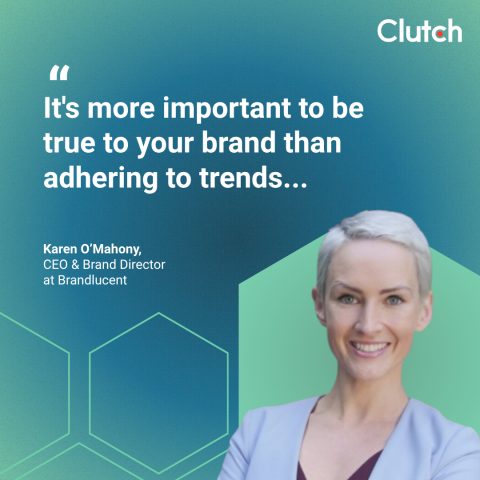
"It's more important to be true to your brand than adhering to trends… what comes across disingenuous is when a company that is quite formal in how they work tries to be casual across brand touchpoints, it's jarring and not what the customer experience is actually like,” said Karen O’Mahony, CEO & Brand Director at Brandlucent.
The strongest brands aren’t necessarily the most polished or most casual. They’re the ones whose presentation feels appropriate for their category and their audience. These brands are fluent in the visual language their customers already expect.
Consumers reward human-centered branding, but they also expect brands to understand their role. The challenge isn’t choosing between authenticity and aspiration. It’s understanding how authenticity should show up within a specific category.
As AI-generated designs and art continue to grow, brands need to think critically about where and how they use them. There’s a clear divide in how consumers respond to the source of a brand’s visuals.
When people learn that a brand’s visuals were hand-illustrated by a human, favorability rises sharply, with 78% of consumers feeling more favorable.
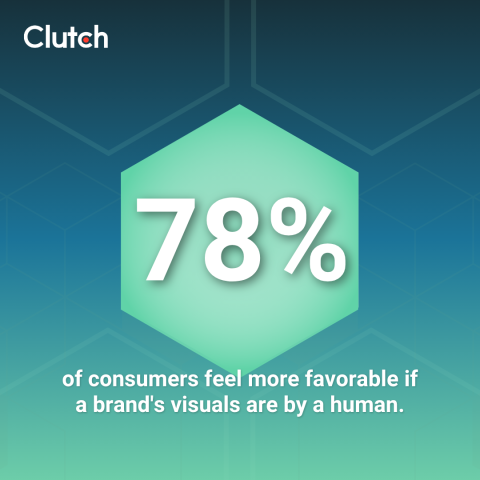
But when those same visuals are disclosed as AI-generated, the reaction moves in the opposite direction, with 55% feeling less favorable.
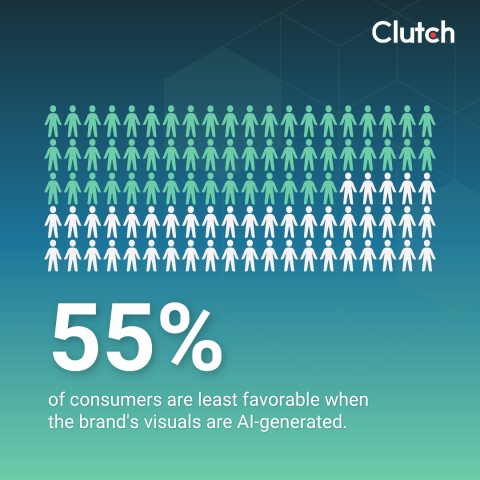
Hand-drawn illustrations signal time, skill, creativity, and craftsmanship. Consumers appear to attach value not only to the finished work itself, but to the effort it took to create it. The human hand behind the work is part of what they’re responding to.
As AI makes it easier to generate visual assets instantly, the creator's identity becomes part of the story. Knowing that a person made something, which requires intention, hours, and talent, changes how consumers perceive it. The same image can land very differently depending on who, or what, they believe produced it.
With AI design tools becoming more common, brands face a strategic choice: lean on AI primarily for efficiency, or keep investing in creative work that visibly reflects human craftsmanship.
“The more AI lowers the cost of building, the more valuable human craft becomes…,” said Hofer.
The data suggests craft isn’t just an aesthetic preference. For brands where trust and perception matter, the human hand may be worth protecting and worth disclosing.
In an AI-generated world, the strongest loyalty driver isn’t a sleeker product or a sharper tagline. It’s the people.
When asked what would make them more loyal to a brand in an increasingly AI-driven environment, consumers’ most common answer was seeing real humans visibly behind the brand (36%).
That pattern holds across nearly every trust signal in the survey. When asked which campaigns stick with them most, nearly half of consumers point to those featuring real customers telling their own stories.

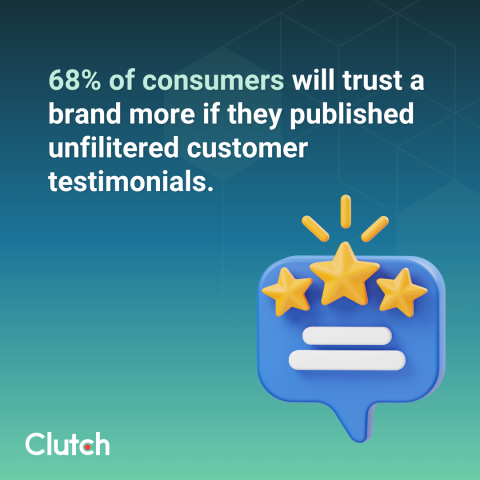
Sixty-eight percent of consumers say they’d trust a brand more if it published unfiltered testimonials, including critical reviews, not just the glowing ones.
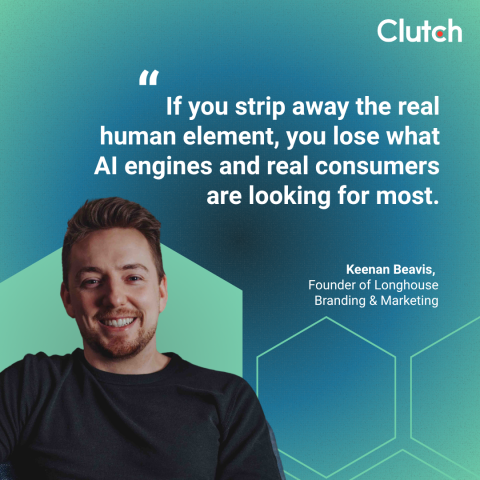
"The most critical human signals to keep are real people and real, lived experiences… For brands, this means your content must be rooted in genuine human taste and perspective. If you strip away the real human element, you lose what AI engines and real consumers are looking for most,” said Keenan Beavis, Founder of Longhouse Branding & Marketing and the Author of the AI SEO book, AnswerMapping.
Across every measure, consumers reward brands that make people the focal point. Real customer stories outperform polished brand narratives, and visible human presence reduces skepticism rather than inviting it. The willingness to show unfiltered feedback, flaws and all, signals confidence: a brand that isn’t afraid of criticism is one consumers can believe.
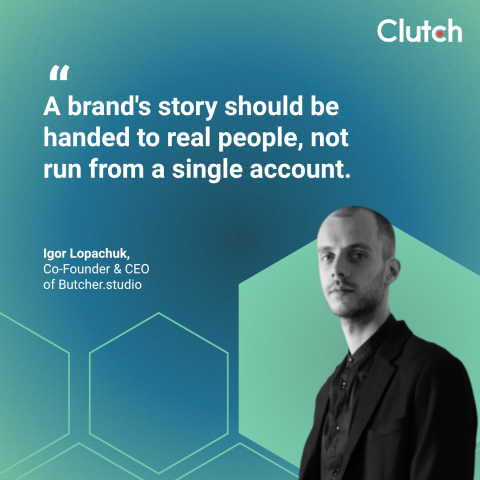
"A brand's story should be handed to real people, not run from a single account… and the strongest of all is the client. They speak about the brand from the outside, and so they can say what a brand simply cannot say about itself,” said Igor Lopachuk, Co-Founder & CEO of Butcher.studio.
Many companies pour significant resources into refining brand messaging, polishing campaigns, and optimizing content. This research suggests a simpler approach: make real people more visible.
In practice, that could mean:
The brands that earn trust in an AI-saturated marketplace may be the ones that make human participation impossible to miss.
In a marketplace flooded with AI-generated content, consumers are gravitating toward what feels unmistakably human. They trust founders over logos, but they’re tuning out brands and executives who haven’t earned their attention. They reward the unscripted moment over the polished take, and expect a brand’s style to fit the role it plays in their lives.
Consumers attach real value to human craft, feeling markedly more favorable toward visuals made by a person than by a machine. Across every measure of loyalty, the same signal rises to the top: real humans, visibly behind the work.
For brands, that’s both a challenge and an opportunity. AI can help create content at scale, faster and cheaper than ever before, but it can’t replace the trust that comes from real people behind the work. The temptation to automate everything is real, and the data suggests there’s a cost to giving in to it completely.
The opportunity lies in resisting that pull where it counts. As the digital world becomes increasingly automated, the brands that stand out may simply be the ones that feel unmistakably human.
“In an AI-saturated market, the only thing worth owning is a position a competitor can’t….a brand is a stance. Take one,” said Fischer.
Human creativity, once a given, is becoming a unique asset for brands that consumers will remember.
In June 2026, Clutch surveyed 408 consumers about their thoughts on branding in the rise of AI.
In terms of demographics, 49% of respondents identify themselves as male, with 51% reporting as female.
12% of respondents were ages 18 to 29; 35% of respondents were ages 30 to 44; 53% of respondents were 45 and older.