
How to Define Brand Values That Guide Every Business Decision
Brand values are the principles that guide company decisions, define what a brand stands for, and shape how it treats customers, employees, and partners.
Updated July 14, 2026

Brands often spend hours creating flawless content, but consumers tend to prefer off-the-cuff, unpolished takes. Here's why unscripted content builds trust and how to make it part of your campaigns—without trying too hard.
Control and professionalism have always been the default for branded video and audio. Your team may spend hours planning shots and coaching subjects to hit all the right talking points. And when it's time to edit, you laser in on any imperfections and correct them. Everything is flawless.
That's not necessarily what your audience wants, though.
Looking for a Public Relations agency?
Compare our list of top Public Relations companies near you
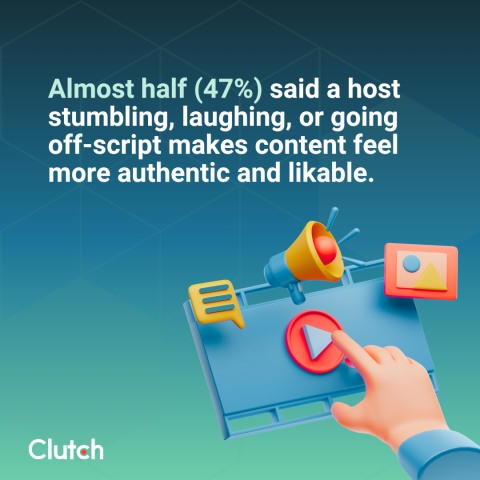
In June 2026, Clutch surveyed 408 consumers about how they perceive and respond to branding and marketing content. Almost half (47%) said a host stumbling, laughing, or going off-script makes content feel more authentic and likable.
That means all the imperfections you work hard to edit out may actually be what connects most with your audience. The good news is you don't have to wait for someone to forget their line or sneeze during a take. You can build that looseness into your marketing on purpose.
This guide breaks down why unscripted content works and how it can help build stronger relationships. We'll also explain how to loosen your scripts while avoiding a few common traps.
Your content represents your brand, so it's only natural to want it to look polished. Production teams feel the same way. After all, they've been trained and rewarded for creating high-quality video and audio.
That often leads to carefully controlled content. You script every line, so all your talking points sound just right. Then your speakers rehearse them until they have the perfect tone. During editing, your team tweaks the lighting and smooths the audio to perfection.
This impulse makes sense. For years, customers have equated high production value and clear messaging with professionalism and brand safety. The more polished the content, the more trustworthy the brand seemed.
Today, though, that instinct may be working against your content's main job: connecting with consumers. When content looks too polished, it can all feel a bit performative. Inauthentic, even. That may push away customers craving genuine connections.
Of course, that doesn't mean you should stop polishing your content completely. Quality still matters, especially as more brands turn to digital marketing. However, you should question whether your reflex to polish might be erasing something more authentic.
According to our data, 47% of consumers say off-script brand content feels more genuine and likable. That means those imperfect moments you're tempted to edit out are often an asset, not a liability.
This desire for more genuine content is part of a larger shift in how audiences view brands. As more AI-generated videos flood the internet, many consumers are gravitating toward human content.
In fact, Animoto's State of Video 2026 survey reported that 78% of consumers trust videos with real people, while 36% say AI-generated content makes them lose trust in a brand. The same survey found that 79% of consumers have made a purchase decision based on a video they saw on social media. If your content feels human and genuine, it might positively influence those decisions.
HubSpot’s 2026 Social Media Trends Report reinforces this trend. It found that 77% of social media marketers say authenticity is more important than production value when creating content.
The Staples Baddie (also known as Kaeden Rowland) is one example of the benefits of authentic vs. polished content. She began filming short, unscripted content about the retailer's products and services. In one popular TikTok video, she shows how the store helps customers make colorful paper chains.
Another ASMR-style video demonstrates how to make custom paper stamps.
Viewers often expressed their surprise at the range of services the company offers. In the stamp video, one viewer commented, "Someone at Staples is trying to keep the store relevant but forgot TO TELL people they do this stuff." By showing customers what the company offers, the Staples Baddie has helped spark renewed interest in its services.
Rowland films these brief videos on her smartphone, often with odd angles and jerky camerawork. She narrates them in conversational, unscripted language. While creating a custom stamp, for instance, she announces, "I'm slowly getting into my business girlie era."
As of July 2026, the Staples Baddie's unscripted content has earned 17 million likes on TikTok. One article even praised her for "reviving interest in Staples."
Authenticity is key. Customers respond positively when they feel like they're getting real, unfiltered glimpses into your brand. Instead of automatically cutting the moments that don't go according to plan, pause and consider whether they're sending an authenticity signal to your audience.
Thanks to AI, anyone can create a script with a prompt and a free ChatGPT account. That's not always a good thing. In a 2025 Clutch survey, 33% of consumers said AI worsens their perception of a brand, while only 16% said it improves it.
In this new era of AI skepticism, it doesn't always matter where the content came from. Anything that seems too perfect or scripted may set off alarm bells for customers, even if it's 100% human-written.
By contrast, unscripted content like a laugh or a hesitation is hard to fake convincingly. That signals the presence of a real human, which may help build trust.
That doesn't mean you should intentionally create lower-quality content. Spontaneity is the greatest difference between scripted and unscripted. When people chuckle or make an offhand comment, it reads as human and sincere. These small details are what signal that a human is actually there, not a perfectly recited message.
Nyx Cosmetics is one company that often shares unscripted content from customers and influencers. A recent Instagram post shows behind-the-scenes footage of five women dancing on a set and makeup artists dabbing gloss on their lips.
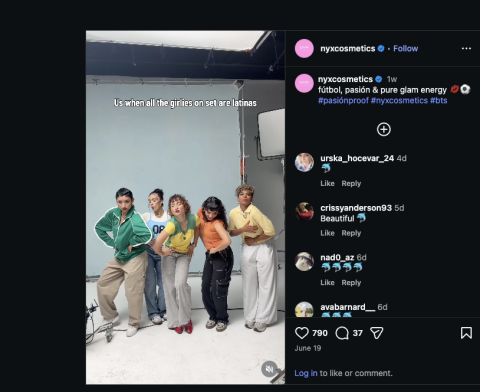
As upbeat music plays, the women laugh and jokingly wave bottles of lip gloss like perfume. Their playful behavior makes the scenes feel casual and spontaneous while still showcasing the products through close-ups of their brightly colored lips.
Moments like these signal that a human is behind the content, not a robot. That can help you connect with customers who prefer content that feels genuine and undeniably human.
While unscripted content has clear benefits, resist the urge to try to manufacture it. For example, if you write an awkward pause or add a misspoken word into your script, viewers will probably sense that it's staged.
"Manufactured imperfection is just a new kind of performance," warns Thomas Fischer, Partner and Brand Strategist at Colette. "Audiences read it fast."

In other words, don't treat rawness as a gimmick or a trendy film technique. Customers are skeptical, and they may lose trust in your brand if your content comes across as manufactured. It's better to have a polished take than one with an obviously planned "mistake."
For a cautionary tale, consider McDonald's recent social media misstep. In February 2026, CEO Chris Kempczinski posted a video of himself eating the new Big Arch burger for lunch. While he tried to seem enthusiastic, critics pointed out that he only took a tiny bite of the burger and seemed confused about how to eat it. He also referred to it as a "product."
The clip went viral after Irish influencer Garron Noone roasted it on TikTok, saying, "This man does not eat at McDonald's" and "The man doesn't even know how to hold a... burger." Soon, other creators began posting parody content, and other fast food CEOs even responded with their own burger-eating videos.
The backlash against the McDonald's video reveals the dangers of manufacturing unscripted content. While Kempczinski tried to make his lunch seem like an off-the-cuff moment, his awkward behavior made viewers question whether he actually ate his own brand's food. The result was an odd video that felt inauthentic and drew attention for the wrong reasons.
The takeaway is that you can't fake spontaneity in the script or editing bay. However, you can create the conditions for it upfront. For instance, you could film reaction videos with real customers who genuinely like your products or record street interviews.
Honesty is key. Aim for spontaneity without deceiving viewers or lowering your production quality. After all, authentic isn't the same as sloppy or fake.
While you shouldn't try to manufacture unscripted content, you can certainly create space for authentic moments to happen.
Start by providing opportunities for real conversation and unrehearsed responses. This could be as simple as using open-ended prompts, such as "What stands out to you about this product?" or "How has this service affected you?"
Resist the urge to stop tangents, too. If one of your speakers tells an anecdote or comes up with something unexpected, see where the conversation takes them. Maybe they'll say something that reflects your brand personality or makes viewers laugh.
Recording fewer takes can also help you strike the right balance between raw vs. polished content. If you ask your team to keep reshooting scenes, their delivery may start to feel forced or inauthentic. On the other hand, limiting the number of takes will make everything seem less rehearsed.
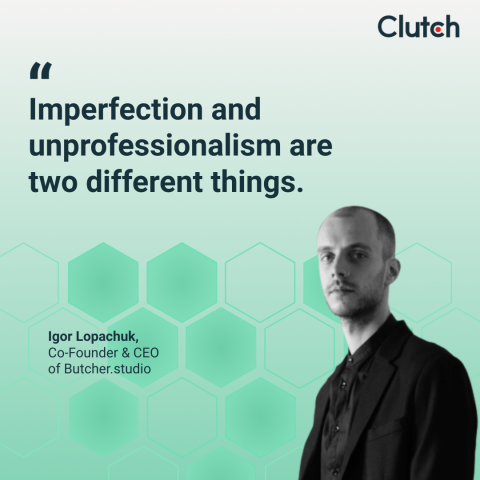
Of course, you shouldn't abandon the underlying fundamentals of great content. As Igor Lopachuk, Co-Founder & CEO of Butcher.studio, explains, "Imperfection and unprofessionalism are two different things. Deliberate roughness on top of strong work makes a brand feel alive."
Encourage your production team to maintain high standards. For instance, they should still use clear audio, even if what people say is unscripted. Otherwise, your audience might not understand your content.
Your content should also have a real point and reflect genuine expertise. Invite industry specialists to join an informal chat, or record real customers. When your team gets a real moment, they should protect it during editing instead of erasing it.
And keep polish for the moments where it matters. If you're addressing a PR crisis or explaining technical product details, scripted content may get your point across more effectively. Some brand personalities may also be better suited for a more professional tone.
User-generated content is another way to provide authenticity without requiring any extra effort from your team.
For years, brands have focused on creating smooth, highly controlled content. However, our data suggests that customers are turning away from sleek brand content. 47% of respondents said they find a stumble, laugh, or off-script moment more authentic and likable.
Before you edit out a long pause or dropped product, stop to consider how your audience will perceive it. Maybe the moments you typically cut could help you create a stronger connection. By building this looseness into your content from the beginning, you can create more natural content. Then be sure to save those takes in the cut, so your viewers can get to know your brand personality on a deeper level.