
How to Define Brand Values That Guide Every Business Decision
Brand values are the principles that guide company decisions, define what a brand stands for, and shape how it treats customers, employees, and partners.
Updated July 14, 2026

Customers judge brands by how consistently they act, more than what claims they make. If brand promises and behavior don’t match, customer loyalty could drop fast.
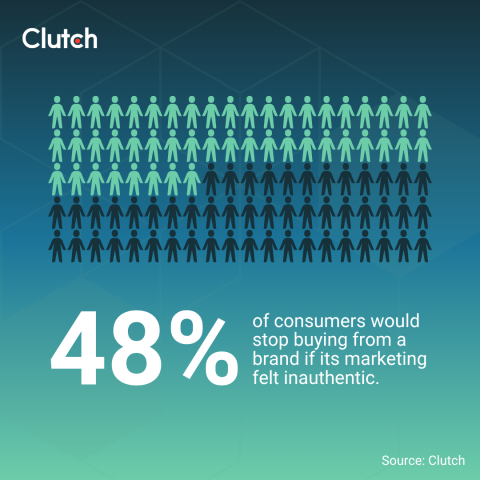
Lack of brand authenticity is what consumers see when a brand's communications, actions, or content stop feeling like they came from real people. The cost is direct: 48% of consumers would stop buying from a brand whose marketing feels inauthentic. And in 2026, a new gap is widening the risk — Clutch's June 2026 survey of 408 consumers found that 93% say it matters that a brand's communications feel like they came from a real person, and 55% view a brand less favorably once they can tell AI created the work.
Looking for a Public Relations agency?
Compare our list of top Public Relations companies near you
Brand authenticity has always been about closing the gap between what a company says and what it does. In 2026, a second gap has opened: the one between human-made and AI-made communications. This article breaks down what triggers a sense of inauthenticity — from mismatched messaging to undisclosed AI — and how brands rebuild trust by making real human presence impossible to miss.
Quincy Samycia, CEO and founder of The Branded Agency, puts it this way: “If you've been living your brand truth consistently, your audience gives you the benefit of the doubt when things get messy.”
These days, social feeds surface contradictions quickly, and people vote with their wallets. In such a fast-paced social media environment, brand authenticity serves as both a risk control and a lever for growth.
Inauthentic branding emerges when a brand's actions and internal decisions don't match the values or commitments it publicly makes. The following patterns illustrate how it often occurs and what to look out for next:
Mismatched messaging occurs when what you say doesn't align with who you are. The discrepancy can be about brand values or even tone in marketing messages.
People online now have more information available to them than ever. If the mismatch occurs, they may compare your words to media campaigns and watchdog reports. When they catch a gap, they call it out.
JCPenney's attempted rebranding under CEO Ron Johnson illustrates how mismatched messaging can deter loyal shoppers. For years, the store was renowned for its affordable clothing and home goods, offering constant coupons and major sales.
Johnson attempted to transform it into a more upscale brand with trendy layouts and a “fair and square” pricing plan that eliminated most discounts. The new look and ads suggested a stylish, higher-end store, but regular customers still expected deals and familiar sales. Many felt the store was no longer for them and stopped shopping there. Sales dropped sharply.
When your message promises values that your operations can't back up, customers sense the gap. The fix doesn't start in the marketing department. It starts with how policies, merchandising, hiring, and vendor choices line up with the values you convey.
Performative values appear when you say you care about a cause, but your business decisions feel as if those values are just for marketing attention.
The test is simple: Track if your brand reflects the advertised values even after the marketing campaign is over.
Lululemon’s "Be Planet" sustainability campaign shows how acting performatively can erode trust. The company promoted itself as climate-conscious in its branding. But advocates pointed to the company’s growing carbon emissions and questionable supply chain.
Canada's Competition Bureau has even opened an investigation into whether the company's environmental claims mislead shoppers..
Performative tactics erode trust because people often perceive them as evidence that marketing is prioritizing style over substance. Instead, a company's values must also be visible in policies and governance that last beyond a single post or press release.
Tone-deaf campaigns occur when a brand attempts to engage with a major cultural moment but misunderstands or misinterprets the public’s sentiment.
One infamous case involves Pepsi’s 2017 commercial with Kendall Jenner. It showed the model joining a street protest and calming a standoff by handing a police officer a can of Pepsi.
However, the audience felt that it played down real protest movements. So Pepsi pulled the ad within a day and apologized. This error in judgment turned a planned message of unity into a glaring example of tone-deaf marketing.
Airbnb's 2017 "Floating World" email campaign is another classic: water-themed stays promoted with copy like "stay above water" sent at the same time Hurricane Harvey was flooding Texas and displacing more than 30,000 people. The campaign was tone-deaf in retrospect — but the disconnect was happening in real time, and audiences saw it immediately. Airbnb apologized and offered free stays to evacuees through its disaster response program.
The marketing takeaway is practical. If your actions convey strong societal signals, a mismatched response or one-sided campaign can be perceived as tone-deaf and trigger backlash that lingers.
An inconsistent brand voice occurs when your brand presents itself in one way on one channel and acts completely differently elsewhere.
Remember, your voice is not only ad copy. It's also messaging and branding that are visible in product updates, support replies, and social posts. When there's a major inconsistency in brand voice between places, people start to question whether your company is genuine.
The rebrand of Twitter to X is a recent example.
The company unveiled a new name and an ambitious vision for an "everything" app. Yet many parts of the product and site still used the old Twitter terms and visual cues.
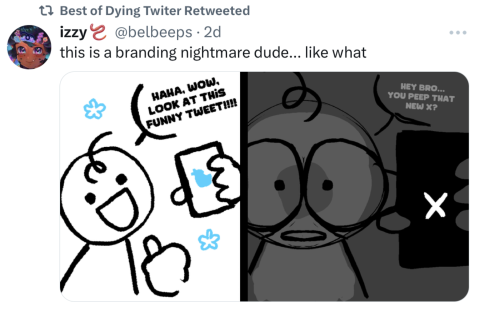
Users saw the X logo in some places and the familiar bird logo in others, which created confusion about what the platform was and what it wanted to be.
Clear brand voice guidelines that cover every channel help prevent this. When teams share a single voice and set of rules, your brand appears more stable and trustworthy over time.
Undisclosed AI content is the newest trigger of perceived inauthenticity — and the fastest-growing. Clutch's June 2026 survey of 408 consumers found that 55% of consumers view a brand less favorably once they can tell AI created the work. The damage isn't from AI itself. It's from the discovery: a piece of content that read as personal turns out to have been mass-produced, and the trust that came with the original framing collapses retroactively.
The trigger fires across formats:
The mitigation is structural, not stylistic: label AI-assisted content where it appears, keep humans visibly responsible for anything attributed to a person, and use AI to scale work humans do rather than to replace the human presence itself.
For a full playbook on this, see Clutch's AI in Branding guide.
Clutch's June 2026 survey of 408 consumers found that 93% say it matters that a brand's communications feel like they came from a real person. That's nearly universal — and it's a meaningful lift from the era when production polish was the dominant signal of brand quality. As AI raises the floor on production speed and consistency, "feels human" becomes the differentiator.
The signals consumers parse fall into two clear buckets:
Human vs. AI-Coded Brand Signals
| Reads as human | Reads as AI-generated |
| Named author with a specific point of view | Generic byline ("Marketing Team") or no byline |
| Specific examples, named entities, particular dates | Vague generalizations, "in today's world," "in the digital age" |
| An opinion the author is willing to be wrong about | Hedged, both-sides-of-the-issue phrasing throughout |
| Customer stories with names, photos, and verifiable outcomes | Anonymous testimonials or stock-photo "case studies" |
| Founder or employee content with personality | Uniformly polished tone across every channel |
| Acknowledged mistakes, posted corrections, public follow-ups | Crisis silence followed by carefully worded statements |
The implication for brand teams is direct: AI can scale the work, but the byline, the point of view, the specific examples, and the willingness to be visibly accountable have to stay human. That's not a stylistic preference — it's what 93% of consumers said they look for.
You can act early to prevent inauthentic communication that hurts the brand. Use this checklist to spot early warning signs:
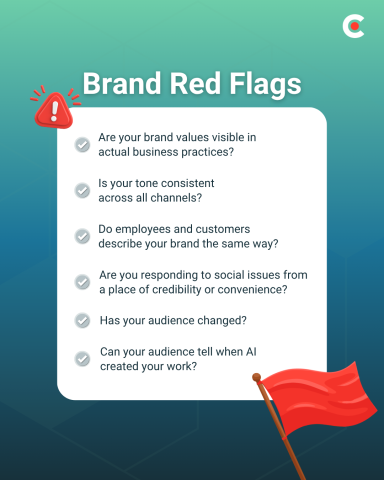
Following a checklist like this helps catch the red flag earlier. For instance, you can analyze a campaign before launch and then align your teams accordingly to take the right steps.
You can't rebuild authenticity with a one-off campaign. It takes clear choices and consistent actions.
This effort is worth it. Research indicates that loyal customers protect brands they see as credible. In a crisis, that support from customers buys time to explain a decision or correct a mistake.
The following tips help connect a committed brand identity with the marketing message:
Start with the company culture. Aligning culture and messaging often means policy change, not just a marketing copy rewrite.
For example, if recruiting targets do not reflect your inclusion goals, a diversity claim will sound like nothing more than PR. When a value matters, fund it. Hire for it. Tie management bonuses to it.
When internal culture and external messaging match, the brand feels genuine.
When it comes to establishing authenticity, honesty is often more effective than spin. People are more likely to accept imperfect progress when leaders are honest. Aim to keep your customers clearly informed about the company's current position and the next steps.
If you have promised better inclusion and your hiring data still falls short, explain what you are doing this quarter to improve diversity and what's next. Post updates on specific improvement steps the brand is taking. Also, create a regular schedule for publishing your progress so the story doesn't vanish after the first announcement.
When controversy arises, address it promptly with facts and follow up. Strong crisis responses do a few things well:
People can disapprove of an action but still respect the way you operate when you communicate clearly and take responses customers can see.
Authenticity grows when a brand listens before it speaks. You should be paying attention to:
Then close the loop. Let people know that you listened and made changes as a result. When customers see their input reflected in product updates or policy revisions, they're more likely to perceive the brand as genuinely responsive and caring.
Chasing viral attention is tempting. However, the better approach is to select a few key values and consistently express them over time. Long-term consistency reduces the chance that a single failed campaign will define the brand.
Inauthentic brands that make big claims without a credible history invite scrutiny. Effective trust-building takes time and effort:
Integrate these strategies into the company culture as a foundation for creating long-lasting brand authenticity.
When 93% of consumers say it matters that a brand's communications feel like they came from a real person, the operational implication is that human presence has to be a deliberate, visible asset — not a residue of how content used to be made.
Practical moves that make human presence impossible to miss:
Build these into your content operations and the human signal becomes a structural feature of the brand, not a moment that has to be manufactured each time.
Brand authenticity is a measurable advantage. According to our brand loyalty survey of 416 consumers, nearly half (48%) say they would stop buying from a brand they perceive as inauthentic — a direct link between credibility and revenue. Clutch's June 2026 survey of 408 consumers adds the AI-era layer: 93% want communications that feel like they came from a real person, and 55% downgrade their view of a brand once AI is detectable in its work.
The examples in this article — Airbnb, JCPenney, Lululemon, Pepsi, Twitter→X — show how fast credibility erodes when a campaign feels inauthentic. The good news is that the fix has a clear shape:
Building brand authenticity is ongoing work that shapes how you market and how you make decisions. The reward is long-term loyalty and the ability to weather bad news without losing your customer base.
Five common triggers: mismatched messaging (what the brand says doesn't match what it does), performative values (commitments that show up in marketing but not operations), tone-deaf campaigns (engaging with cultural moments the brand misreads), inconsistent brand voice (the brand presents itself differently across channels), and — new in 2026 — undisclosed AI content (consumers find out the work wasn't human-made). Clutch's June 2026 survey of 408 consumers found 55% view a brand less favorably once they can tell AI created the work, making AI disclosure a top-five trigger alongside the traditional four.
They compare a brand's claims against its behavior in places the brand doesn't control. That includes review sites, employee posts, news coverage, social media reactions, and competing brands' takes. In 2026, AI detection is part of that pattern — consumers look for the tells of AI-generated content (generic bylines, uniformly polished tone across channels, anonymous testimonials, vague language) and downgrade their trust when they find them. Clutch's June 2026 survey found 93% of consumers say it matters that a brand's communications feel like they came from a real person.
Undisclosed AI content does. AI content used transparently — to scale work, draft, transcribe, or accelerate — generally doesn't, as long as humans remain visibly responsible for what's attributed to them. The damage comes from the discovery: a piece of content read as personal turns out to have been mass-produced, and trust collapses retroactively. Clutch's June 2026 survey of 408 consumers shows the size of the risk: 55% view a brand less favorably once they can tell AI created the work. The fix is disclosure plus structural human presence — real bylines, founder content, named customer stories, and a clear AI-use policy.