Lead Quality vs. Lead Quantity: Why B2B Teams Are Rethinking Their Funnel in 2026
Bigger buying committees and tighter budgets are forcing B2B teams to rethink lead quality vs. quantity. Here's how top teams rebalance the tradeoff in 2026.
Updated May 29, 2026

Building brand loyalty is a valuable objective for most companies. Why? That’s easy to answer: researchers say finding a new client is five to six times more expensive than retaining an existing one. The harder question to answer is: how do you do it?
One growing strategy is influencer marketing. This is a strategy where brands partner with individuals who have a loyal following to promote products or services and build trust with target audiences. It is a powerful way to help your business improve loyalty by leveraging the connections influencers have with their audiences.
According to Wynter, only 34% of Software-as-a-Service B2B marketers use influencer marketing today, but 31% plan to start soon. So why wait any longer to develop your own strategy?
Looking for a Digital Marketing agency?
Compare our list of top Digital Marketing companies near you
Clutch recently surveyed consumers about brand loyalty and found interesting insights about what consumers actually think about image. Data indicates that 50% of consumers will abandon a brand they perceive as inauthentic, and 62% of those consumers believe that brands prioritize image over genuine value. For businesses seeking to develop their own influencer marketing strategy, it is essential to consider this.
This guide will get you started with step-by-step instructions, metrics for tracking progress, and experts’ tips for success.
To unlock the full loyalty-building benefits of influencer marketing, you'll need a well-defined strategy. These six steps will guide you to create your own plan for influencer success.
First, choosing the right creator partnerships is essential to building loyalty. Scott Emalfarb, Founder and CEO of Fresh Content Society, recommends “looking for creators who are already speaking to your audience and feel like a natural fit in your niche.”
Michael Kuzminov, CEO of HypeFactory, agrees, sharing, “The creator’s tone of voice and content should align with the brand and complement its image.” He suggests “paying close attention to… how naturally [a creator’s] content aligns with the brand’s values.”

Before contacting creators, it’s important to understand the different value propositions of macro and micro influencers:
Many companies use a strategic mix of both types of partnerships to support their marketing goals.
Companies typically get more benefits from long-term, ongoing relationships than a one-off post from an influencer. Kuzminov says, “The modern audience needs time and consistency to make a purchase. Regular mentions of the brand by the same creators will consolidate the message and image of the brand in the minds of the audience.”
You can’t get the same level of audience buy-in from one-off posts without any follow-up. The key is knowing how to form partnerships with influencers that last.
Keith Kakadiam, CEO of Sociallyin, recommends starting this process as soon as a new relationship is established. He suggests, “Brands can customize [a] welcome package or do something extra for the influencer to make them feel like they aren’t just getting a check.”
You may also want to offer ongoing incentives to creators. For example, some companies:
These incentives align your sales performance with the amount creators earn, increasing your odds of building long-term relationships.
When it comes to content creation, you can share samples of successful posts to let creators know what’s worked in the past for your brand.
“When they’re fully aligned, the image isn’t just surface-level marketing, but it becomes evidence of what the brand actually stands for, and customers can feel the difference,” said Quincy Samycia, CEO + Founder of The Branded Agency.
When aligned with the company values, some of the most effective influencer marketing posts include:
However, it’s important to give influencers a degree of creative freedom when designing your campaigns.
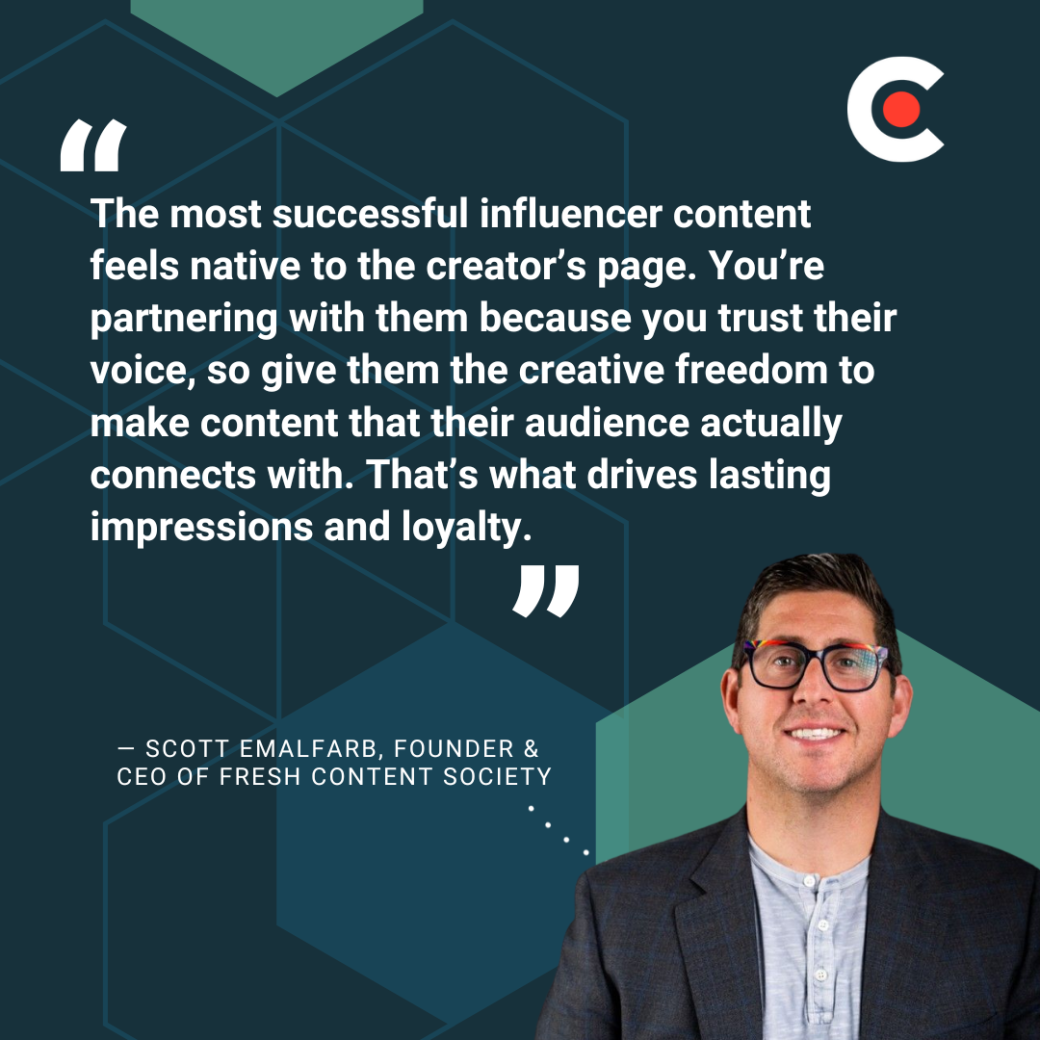
Emalfarb says, “The most successful influencer content feels native to the creator’s page. You’re partnering with them because you trust their voice, so give them the creative freedom to make content that their audience actually connects with. That’s what drives lasting impressions and loyalty.”
Influencers understand their fans better than anyone. So why not let them leverage that understanding to benefit your company?
You’ll get better results when a creator’s community actively participates in your campaign. Encourage this by:
Emalfarb says this is how you build campaigns that create loyalty: “When brands collaborate with creators in meaningful ways…it invites the audience into something bigger. That’s how you build community, not just clicks.” So for best results, try to include an element of audience participation in your influencer marketing strategy.
Encourage followers to engage directly with the content through interactive campaigns such as polls, challenges, giveaways, or user-generated content contests. When audiences feel like active participants rather than passive viewers, they form a deeper emotional connection with both the influencer and your brand. This not only boosts engagement rates but also fosters a sense of community and trust—key ingredients for long-term brand loyalty and organic reach.
Another effective strategy is to tie your existing loyalty program to your influencer campaigns. For example, creators can share a behind-the-scenes look at your most exclusive rewards to increase their appeal and encourage sign-ups.
You can also use influencers to spread the word about:
Regardless of how you do it, the goal of these campaigns is to advertise the value that customers get from being loyal to your brand.
Ads expand the reach of your audience, giving you a better chance to attract new potential customers. They can be useful when you have a successful influencer post that you want a larger audience to see. Kakadiam recommends, “running some paid ads to drive engagement, and then responding to all comments.”
Comment on viewer responses to help your brand leave an impression, encourage re-engagement in the future, and earn new followers to feed the top of your marketing funnel.
Influencer partnerships can build up and reinforce these key elements of brand loyalty:
Keep these foundational elements of customer loyalty in mind as you design your influencer campaigns. You’ll want to focus on relationships that promote as many of them as possible. If you have trouble reconciling that with your strategy, it may be worth consulting with a marketing agency for personalized guidance.
After establishing your influencer marketing strategy, the next step is measuring the impact it has on brand loyalty. There are many ways to do this, which come down to tracking the key performance indicators (KPIs) that matter most to your business.
Kuzminov says, “We track audience engagement in the comments, analyze the sentiment of these interactions, and observe how long the audience continues to engage with content mentioning the brand.”
Emalfarb recommends “tracking referral traffic, follower retention, branded search volume, and repeat purchases.” He clarifies, ”Loyalty isn’t always loud, but the signals are there.”
You can use tools like Google Analytics, Sprout Social, and Zendesk to track the metrics that matter most for your goals. Those may include:
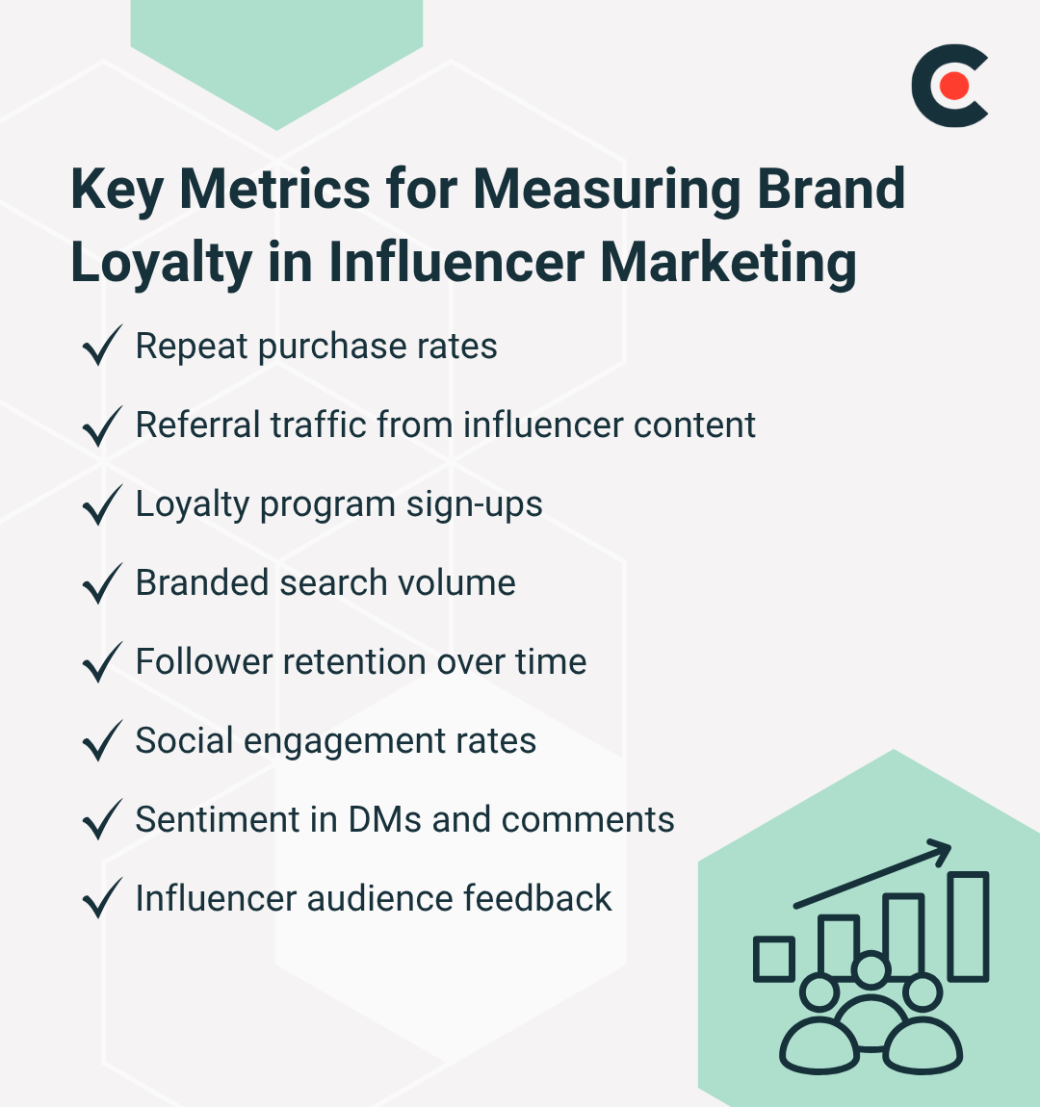
To start, make a note of where these metrics stand today, and compare that to where they end up at the end of an influencer marketing push.
If you don’t see results, it could be a sign of a problem in your strategy. You may need to review what brand loyalty is to your brand and rework the kinds of relationships you build accordingly.
Over time, you can refine your strategy and see improvements by keeping an eye on your crucial KPIs.
One way to get ideas for your campaigns is to review how other companies have succeeded. Here are five case studies that demonstrate what you can do with influencers:
These are just a few examples of how companies have used influencer marketing to create loyalty. You can follow a similar approach or design a new one from scratch. The key is understanding what will resonate best with your target audience.
You can get more out of influencer partnerships by taking advantage of the unique benefits of different social platforms:
As you develop strategies for each platform, remember to interact with posts from your brand account. This builds the customer-brand-influencer marketing triangle, reinforcing the connections between your brand, the influencer, and their community.
Some companies outsource the process of building loyalty through influencer marketing to a dedicated influencer marketing agency. Doing so can benefit your brand by giving it access to:
Social media marketing can look very different from one sector to the next. So when partnering with an agency, look for one that has experience in your industry. You should also prioritize those with strong creator relationships and transparent pricing.
As part of your interview process, try asking questions like:
You're looking for an agency that can answer clearly and confidently.
Authenticity, consistency, and community remain the pillars of lasting brand loyalty—and the data makes this clearer than ever. When 50% of consumers will abandon a brand they perceive as inauthentic and 62% believe brands prioritize image over real value, influencer marketing can’t afford to be just flashy or superficial.
With the right approach, social media influencer marketing can reinforce trust, demonstrate real substance, and strengthen genuine connections between your brand and its audience. The key is to focus on long-term partnerships with influencers who align with your values and can communicate your brand’s purpose in a relatable, human way.
If your schedule doesn’t allow you to manage these efforts directly, consider partnering with an influencer marketing agency. The right agency can help you craft a custom strategy, identify authentic voices that resonate with your target audience, and execute campaigns that build loyalty across every platform your customers visit.