
How to Define Brand Values That Guide Every Business Decision
Brand values are the principles that guide company decisions, define what a brand stands for, and shape how it treats customers, employees, and partners.
Updated November 20, 2025

Brand loyalty is far from dead, but it takes more than a buy-10-get-one-free rewards card to earn it. Lasting relationships are built on trust, which means providing your customers with greater transparency at every step.
The internet has turned everyone into an amateur detective, and there are eyes — and cameras — everywhere. That means people are more skeptical and informed than ever, especially when it comes to brands. Manipulative marketing tactics, such as the jewelry brand Trugala's fake viral discounts, have made consumers all the more wary.
Brand transparency helps you overcome this natural skepticism. It involves communicating openly and honestly about every aspect of your products and operations. That includes everything from where you source materials to how you handle returns.
Looking for a Public Relations agency?
Compare our list of top Public Relations companies near you
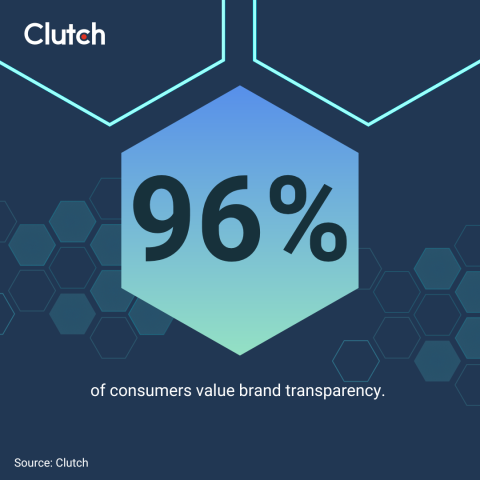
In a recent Clutch survey of 416 consumers, 96% said they value brand transparency.
This article breaks down what this concept means in the digital era and explains how your brand and creators can utilize it to cultivate a loyal customer base.
Brand transparency goes beyond telling the truth about your products — it touches every part of your business:
At the core, staying honest and authentic with your customers helps keep your brand on their good side across all these aspects.
You might assume that customers will automatically trust your business unless you give them a reason not to, but that's not the case. You have to earn their confidence, and that starts by making honesty and openness core parts of your business:
Even the most candid companies aren't always 100% transparent. That's not necessarily because they're hiding something nefarious. They may simply not realize that their customers want to know about certain things.
Consider how transparent you are about your own practices, such as:
Of course, you don't need to spill trade secrets or share all your financial documents with the public. However, look for areas where you could shine more light on your operations without jeopardizing your company.
Do you go the extra mile to support your employees' mental health? Share some of your initiatives with your audience. On the other hand, if one of your products malfunctions and injures someone, issue a warning promptly. When you share both the good and the bad, customers will respect your willingness to be honest.
Open dialogue is the key to any good relationship. You don't want to bombard your audience with silly messages, but keep them informed about the things that matter.
Use your communication channels to share important updates and news. Send a monthly newsletter with announcements and behind-the-scenes content. Social media can also give customers glimpses into your company. Spotlight your recycling campaign or share a video of workers assembling products.
Communicate with your customers, too. Give them multiple ways to contact you, such as social media messages and online chats. Answer their messages promptly and honestly. The same goes for reviews. If someone says you sent them a broken product, apologize publicly and make it right. Little gestures like these go a long way to improving your brand perception and building mutual trust.
Your employees are the face of your brand, so give them the tools they need to show it in the best light.
Make sure your entire team understands your company's values and mission. When employees genuinely believe in your guiding principles, they can embody them authentically as they interact with customers.
One of Chewy's core values is "We WOW our customers with an exceptional, memorable, and reliable experience, every time."
Its employees put this into action by sending customers flowers and bereavement cards when their pets pass away. This type of communication doesn't require much time, but it shows that the brand genuinely cares.
Create an internal culture of transparency as well. Offer regular opportunities for employees to share feedback, such as town halls with brand leaders. You should also clearly explain key decisions, challenges, and product updates to staff. When your team understands what's going on, they can practice transparency with clients and each other.
Even the most diligent brands can make serious mistakes. Perhaps your new product isn't performing as well as you expected, and customers are leaving negative reviews. Or your marketing team unintentionally shared something insensitive.
Resist the urge to hide or downplay your error. That won't solve the problem, and it will make it seem like you're trying to sidestep responsibility. Instead, openly admit what went wrong and take concrete steps to fix it.
Does your new bookshelf break as soon as someone sets a textbook on it? Offer a refund or free replacement brackets, and stop selling the product until the issue is resolved. If your team made a social media gaffe, sincerely apologize and explain how you'll implement more sensitivity training.
Taking accountability shows your brand has integrity and genuinely cares about your audience.
"Trust isn't built with taglines, it's built with proof," explains Quincy Samycia, CEO and founder of The Branded Agency.

When your audience knows they can count on you to make things right, they're more likely to overlook mistakes and stay loyal.
Digital tools can help you shine more light on your operations.
Blockchain technology is one way to practice transparency. Any brand can claim to use ethically sourced ingredients or adhere to fair labor practices, but it's not always easy for shoppers to verify those claims. With blockchain, customers can track every step in your supply chain. That helps build loyalty. AI is also helpful, if used correctly.
Online communication channels also keep customers informed. Ask your founder to host an "Ask Me Anything" session on Reddit or a live Q&A on Facebook. These events let your audience learn more about your business in an informal setting. You can also use social media to share your brand's ups and downs, so followers know they're not just seeing polished marketing.
When it comes to transparency, nothing beats cold, hard data. Gather metrics related to your company's goals, and share your milestones and achievements with customers.
Data is much more trustworthy than vague claims. "We volunteer with the community" could mean anything, but "Our staff donated 450 hours this quarter to local shelters" shows your impact.
Similarly, you could share how many pounds of paper you've recycled this year or how much you've increased worker pay. Concrete numbers demonstrate that your business is transparent and accountable, resulting in a more positive brand perception.
To maintain a strong relationship with customers, transparency should be a central value of your company's long-term culture.
As technology changes, so will customer expectations. Over 60% of US consumers already believe that the media should disclose the use of AI-generated content, and they likely expect brands to do the same. Companies that share sustainability metrics and real-time data may gain a competitive edge over less forthcoming brands.
New laws could also require brands to practice transparency. One example is the California Consumer Privacy Act, which gives customers more control over how businesses use their data.
Brand transparency isn't a trend or something you can dabble in; it's a fundamental aspect of a company's identity. It's a core part of any customer relationship. When clients know that they can trust your brand to do the right thing, they're more likely to keep supporting you.
Don't try to reveal everything at once. Start small by auditing your existing transparency, and pick one or two areas to focus on this quarter. To improve communication, consider creating a monthly newsletter or posting behind-the-scenes Instagram Reels. Or publish metrics about your sustainability or volunteering projects. Branch out to more areas slowly over time, and watch your relationships flourish.