7 Tips For Designing Web Forms
Clutch surveyed 502 web users about what they actually want from form design. Here are 7 data-backed UX principles that reduce abandonment and improve...
Updated April 23, 2026

New survey data reveals the top web design mistakes pushing customers away, and what to fix before they bounce.
Web design can make or break the online shopping experience. Shoppers are less tolerant of slow sites, unclear product info, and confusing checkout flows. These frustrations may seem harmless, but they can lead to big money being left on the table.
This report uncovers what digital experiences consumers find most irritating, how those design missteps affect trust and conversions, and what e-commerce businesses can do to keep people from clicking away.
Looking for a Web Design agency?
Compare our list of top Web Design companies near you
When websites frustrate shoppers, they don’t stick around. Even small annoyances – like a pop-up or an unexpected fee – can be enough to derail a purchase. According to our survey, the most common complaints are tied to transparency, convenience, and trust.
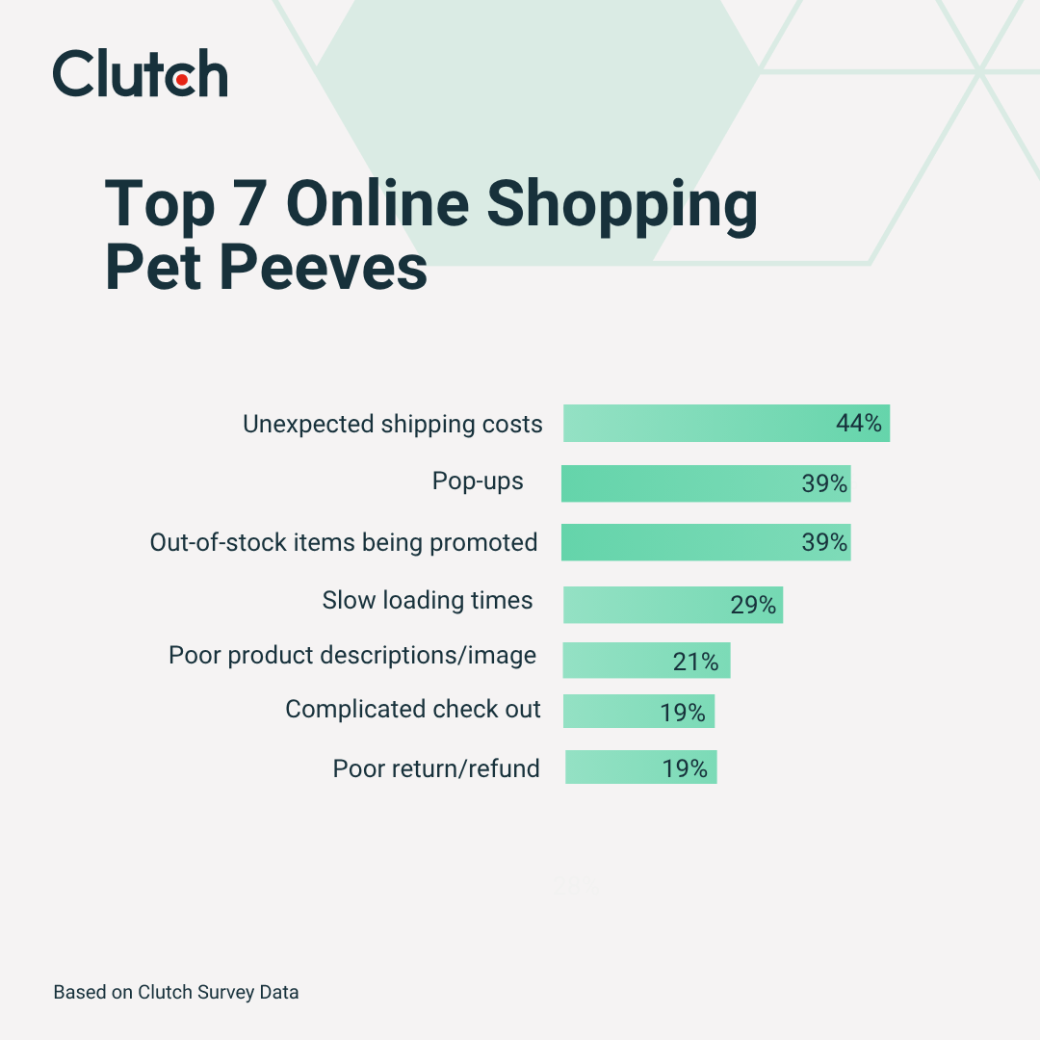
For many consumers, surprise shipping costs top the list. Often, these issues stem from unclear order fulfillment strategies that leave shoppers unsure about fees or delivery timelines. Roughly 44% of shoppers say unexpected delivery fees are their number one pet peeve. Close behind are pop-ups and out-of-stock items still being advertised, both cited by 39% of respondents.
Other common frustrations include:
These inconveniences can add up to a disjointed experience that drives shoppers away.
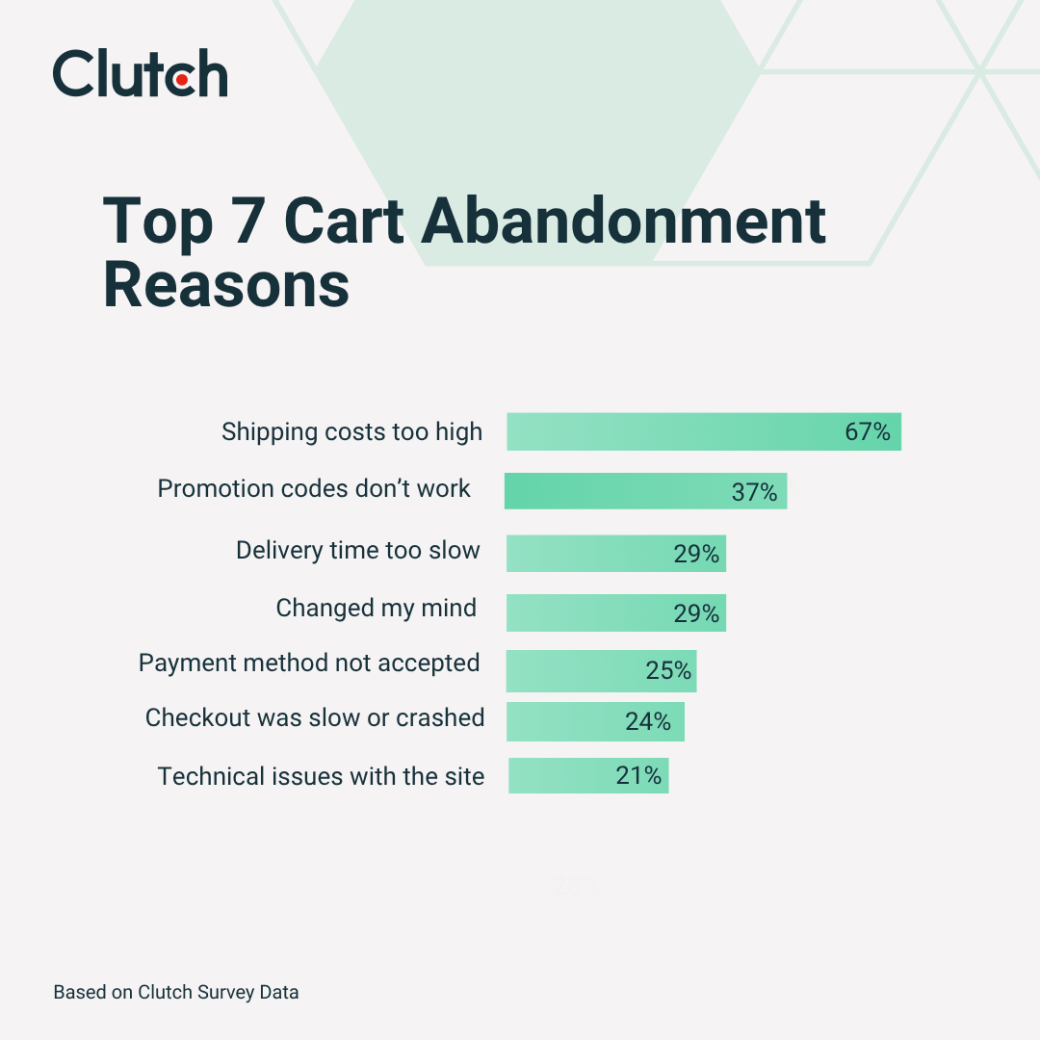
Bad design doesn’t just annoy users, it changes how they shop. Our survey showed 67% of online consumers say they’ve abandoned a cart due to high shipping costs. Another 37% left after finding that promo codes didn’t work.
Issues that require customers to make even a quick fix have a real impact:
Shoppers expect a seamless process from start to finish. Anything that introduces confusion, surprise fees, or added steps increases the risk of losing the sale. A smarter location-based e-commerce strategy could help surface more relevant payment, shipping, and currency options upfront.
Design isn't just about aesthetics. It directly influences whether a shopper sticks around, completes a purchase, or leaves the site entirely. The data shows that poor design decisions can cost brands real conversions.
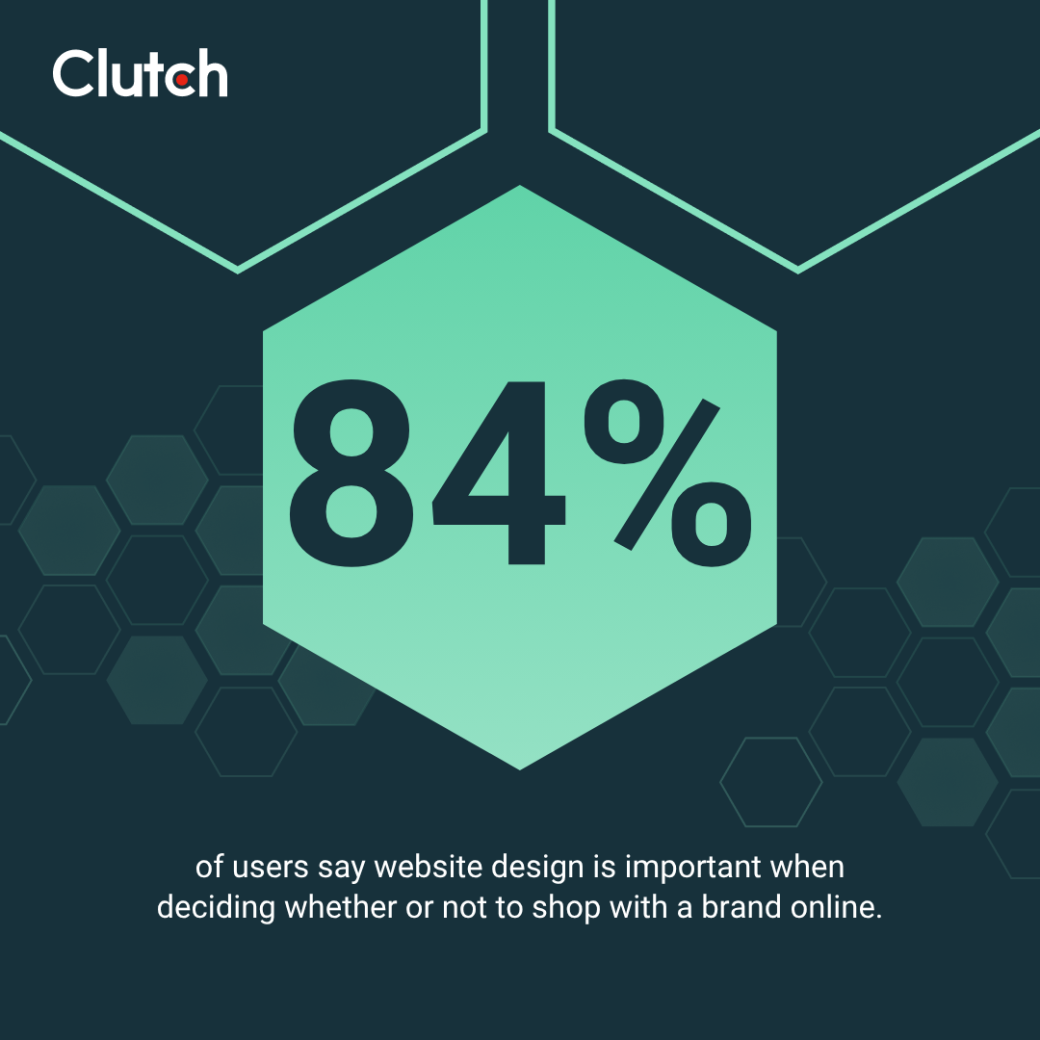
Shoppers are paying close attention to how a site looks and functions, which makes investing in expert web design services more important than ever. Our survey showed 42% of consumers say website design is very important when deciding whether to shop with a brand. Another 42% say it’s somewhat important. That means for 84% of users, design plays a meaningful role in trust and decision-making. For teams focused on optimization, this conversion rate guide offers practical steps to streamline user journeys.
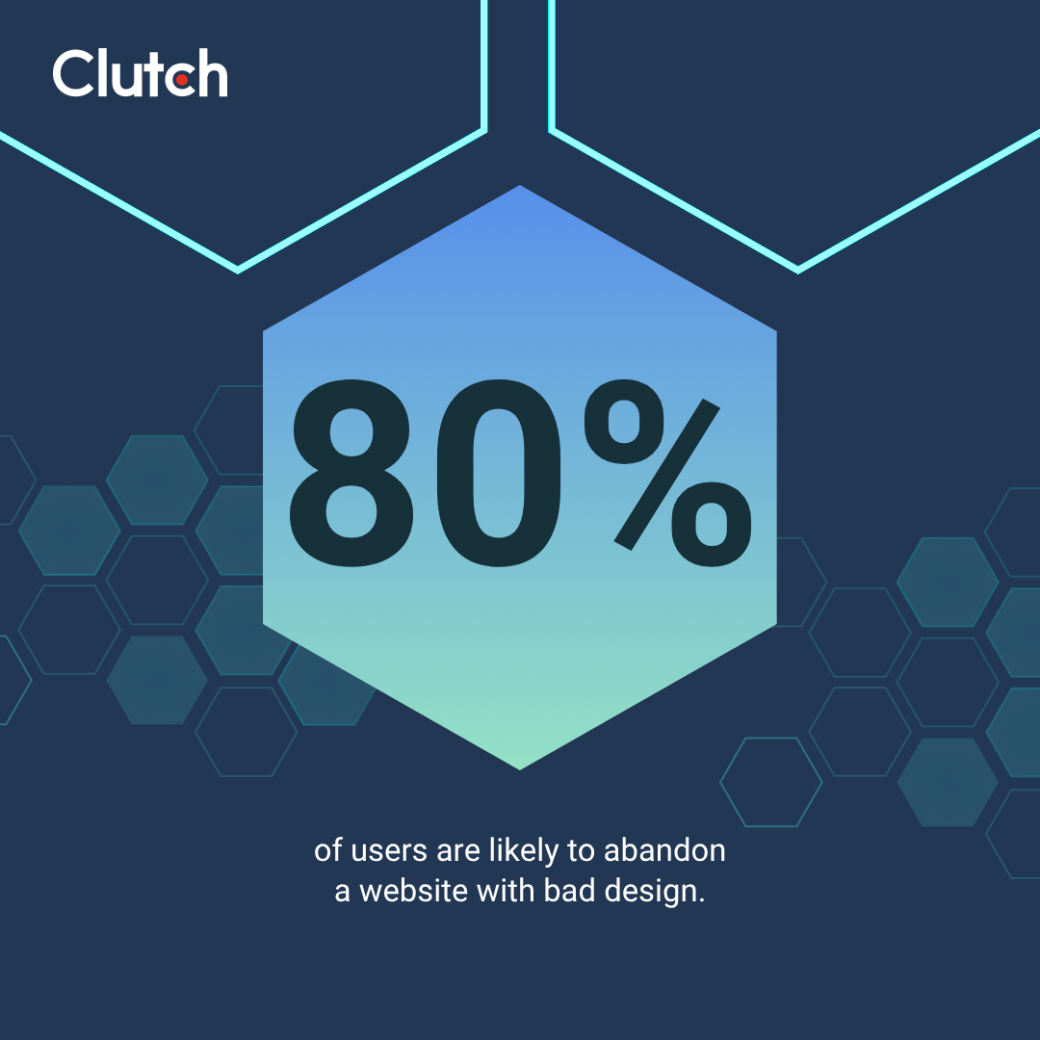
When the design doesn’t deliver, users walk away. Almost 80% of shoppers say they’ve abandoned a website due to poor design, even when they wanted the item.
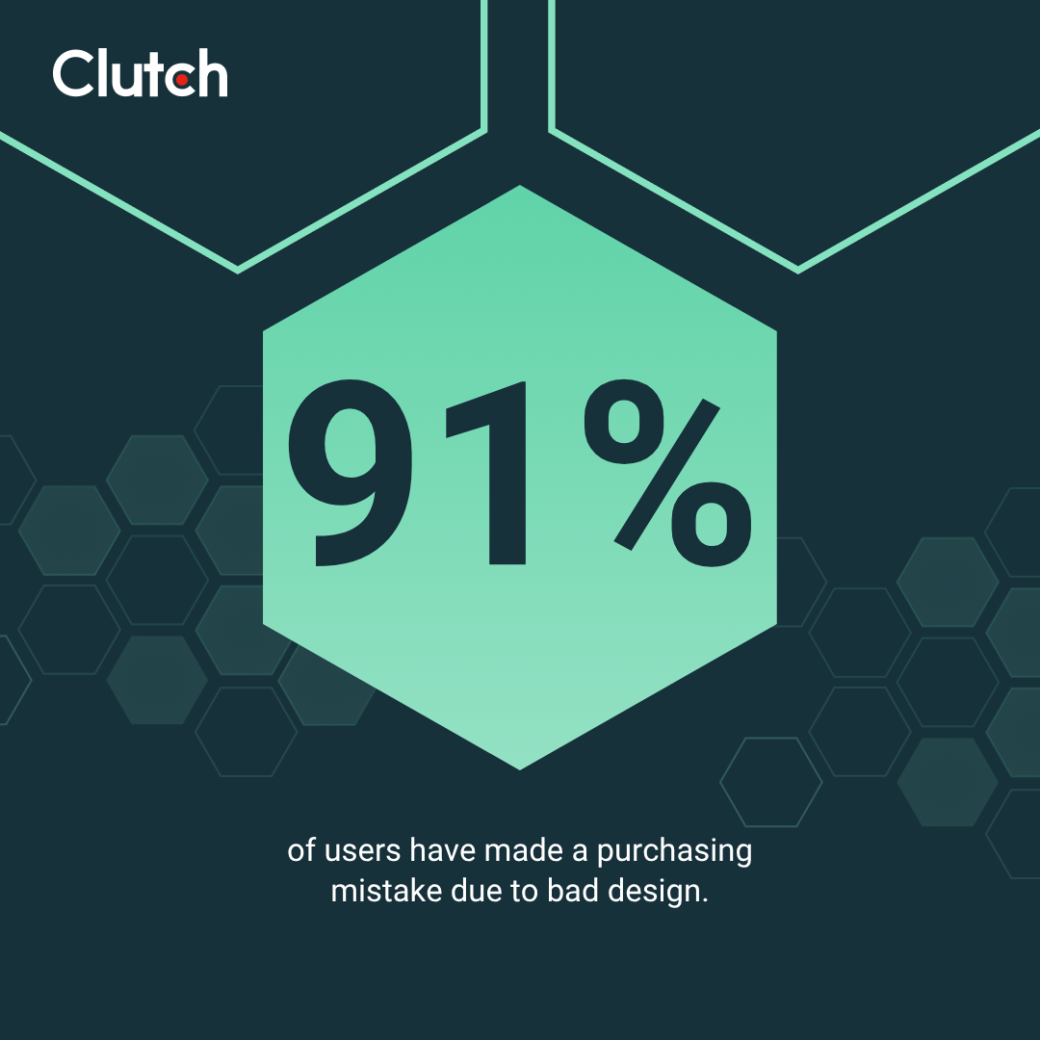
It’s not just about abandonment – poor UX often leads to errors. 91% of shoppers say they’ve made a mistake while shopping online because of bad design. That includes ordering the wrong size, choosing the wrong item, or missing key product info.
Half of those affected say it’s happened once or twice. Another 22% say it has happened multiple times. For e-commerce brands, every error increases the chance of a return, refund, or lost customer. Staying on top of current web design trends can help brands identify what shoppers expect before issues start costing conversions.
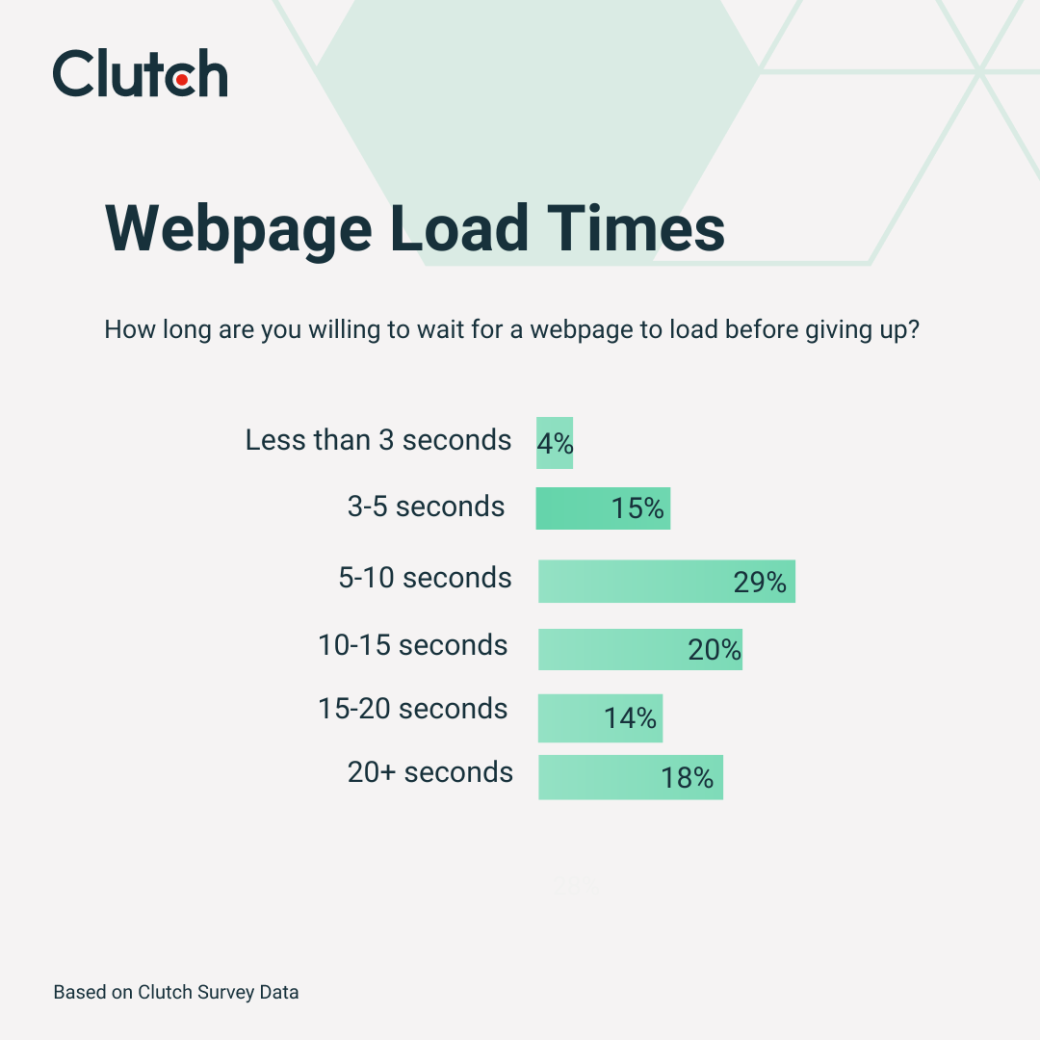
Page speed is another critical factor for consumers. At 10 seconds, you could lose half your customers, making site performance just as important as layout or checkout flow.
When someone’s buying from a site for the first time, they’re looking for signs that it’s safe to follow through. Some details help build that trust right away. Others do the opposite and make shoppers think twice.
The most important feature shoppers look for is a secure checkout process. Of those surveyed, 60% say seeing SSL encryption, trusted badges, or other security indicators makes them feel confident buying from a new site. A clear return or refund policy is next on the list, mentioned by 48% of respondents.
Other trust-building elements include:
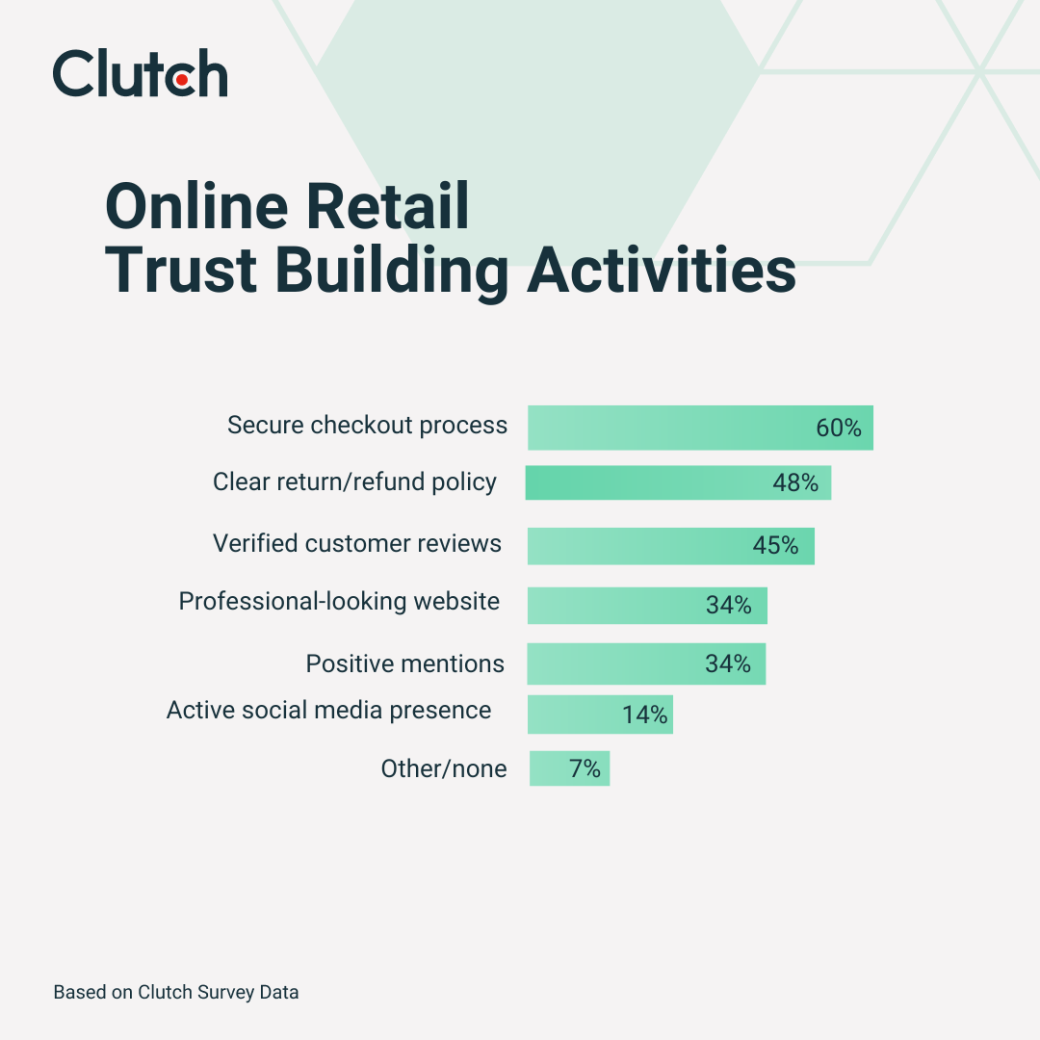
Together, these features send a message that the business is credible and customer-focused. These two traits are essential for converting first-time visitors into long-term buyers. Looking at e-commerce design examples can offer insight into what makes a shopping experience feel intuitive and trustworthy.
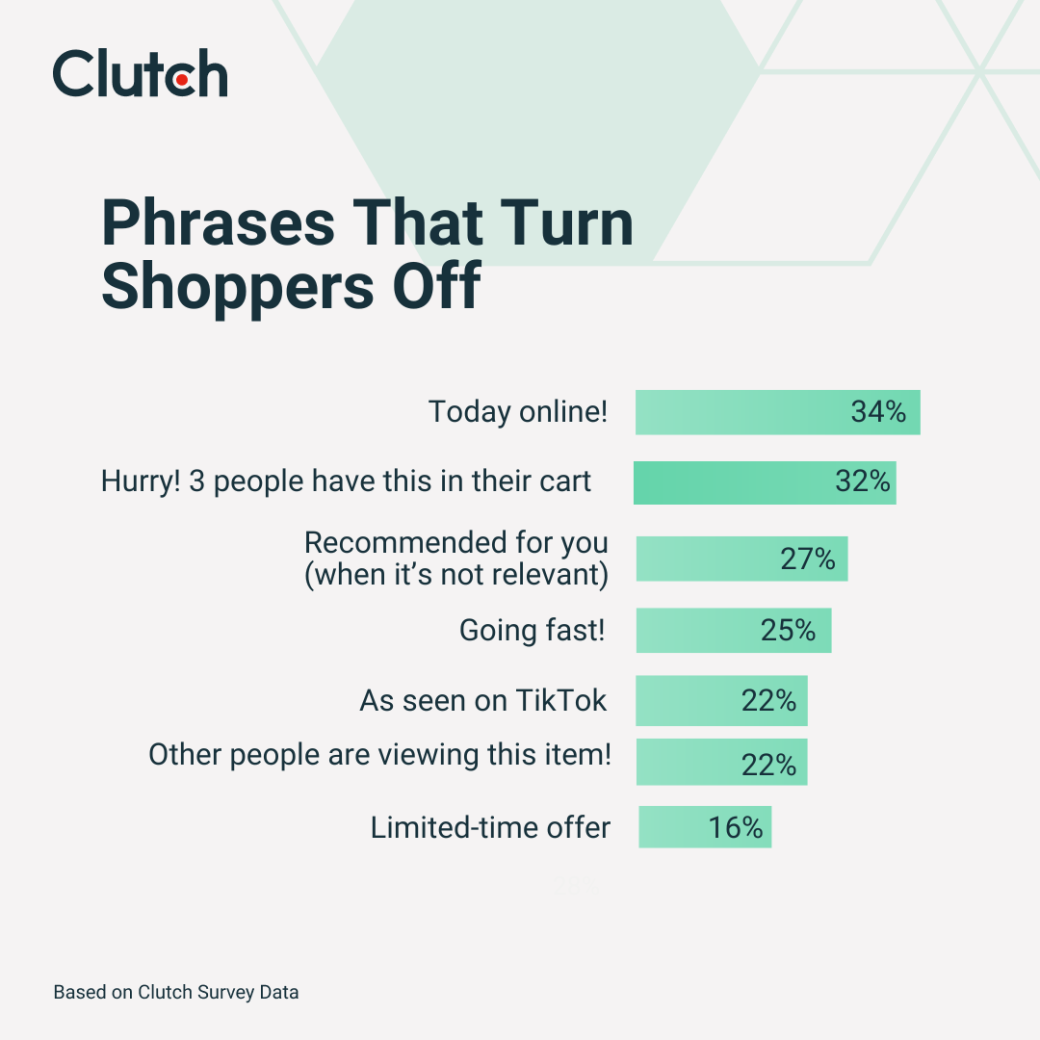
Just as some design choices build trust, others instantly erode it. Consumers are increasingly skeptical of sales language that feels manipulative or overly pushy. For example, 34% say the phrase “Today only!” makes them wary of a product.
Other turnoffs include:
These phrases may be intended to drive urgency, but for many shoppers, they come across as gimmicky or insincere. Trust is hard to earn and easy to lose when the copy feels more like pressure than value.
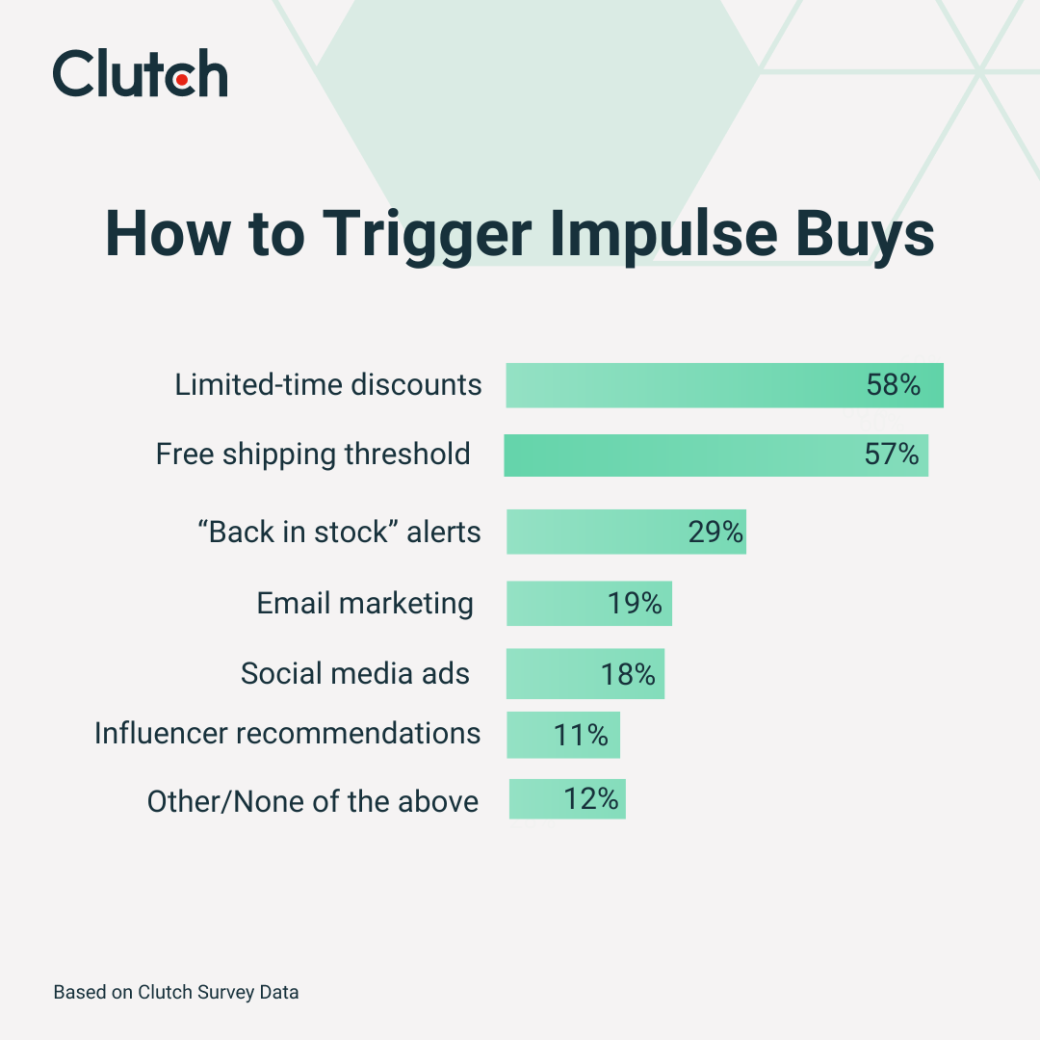
Impulse purchases aren’t random. They’re often driven by smart design choices and well-timed offers. Our survey results show that certain strategies are far more effective than others when it comes to nudging shoppers toward an unplanned buy.
The most compelling triggers are rooted in savings and convenience. Nearly 58% of shoppers say limited-time discounts prompt them to make an unplanned purchase. Almost as many (57%) are motivated by free shipping thresholds, such as offers that unlock delivery once a spending minimum is met.
Other effective nudges include back-in-stock alerts, which were cited by 29% of shoppers. These notifications serve as helpful reminders, especially for high-demand or sold-out items, and can quickly turn interest into action once availability returns.
Online shoppers don’t need much of a reason to walk away. If the site feels clunky, if the fees catch them off guard, or if the product info leaves them guessing, they’ll often give up. These things don’t seem big on their own, but they add up fast.
People want to feel confident when they shop. That doesn’t just come from deals or ads, it comes from an experience that works. The smoother and more straightforward the process is, the more likely shoppers are to hit “buy” and come back again later.
Interested in hiring an expert for your e-commerce design? Explore Clutch’s list of top web design companies.
This report is based on a survey conducted on June 12, 2025, using the online polling platform Pollfish. We surveyed 1,500 U.S. consumers between the ages of 18 and 99 who shop online at least once a month.
The sample included:
Participants were asked a series of multiple-choice and single-selection questions about their experiences, frustrations, and preferences when shopping online. Quotas were applied to ensure a balanced distribution across demographic segments. All respondents were required to complete the survey in full to be included in the final analysis.
The findings provide insight into consumer behavior and sentiment around e-commerce design, usability, and purchasing decisions in 2025.