It stings every time it happens. Customers reach the checkout page on your site and possibly even provide their information, only to abandon their cart right before completing their purchase.
Does this sound familiar? If it happens on your e-commerce site, you are not alone. According to new Clutch survey data, 84% of shoppers regularly leave the checkout process before completing a purchase.
High cart abandonment rates should signal that something is wrong, and it’s impacting conversions.
Looking for a User Experience agency?
Compare our list of top User Experience companies near you
However, retailers can reduce abandoned cart rates and recover lost sales by building customer trust throughout the checkout process and proactively implementing abandoned cart recovery techniques.
This article will explore the primary reasons customers abandon their carts based on results from a recent Clutch survey, and then offer specific, actionable strategies e-commerce brands can implement to reduce their shopping cart abandonment rates and optimize conversions.
Key Takeaways: Customers Shop on Their Terms, Not Yours
- Online shoppers expect transparency, and 67% of them have abandoned carts due to unexpected shipping fees.
- Visual reassurance significantly increases customer trust, and 60% of online shoppers consider visible security features, such as SSL certificates and trust badges, essential.
- Most customers have a favorite payment option. Data indicates that 25% of them will abandon their cart if their preferred method isn’t accepted.
- Customer-friendly return and refund policies reduce purchase hesitation. About 48% of shoppers check for return and refund policies before making online purchases.
- A clean, professional web design is a smart investment. Almost 80% of shoppers have abandoned a website due to poor design, even when they wanted an item.
Tactic #1: Be Transparent About Shipping Costs
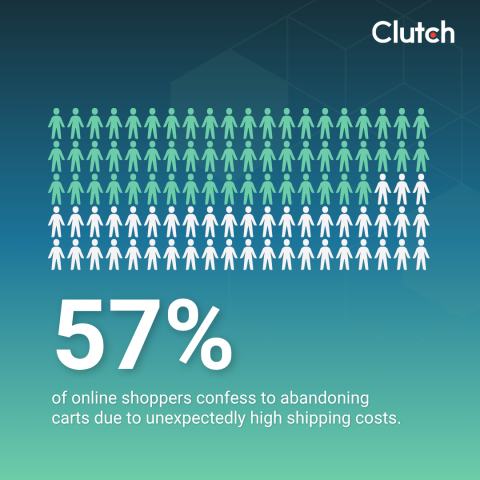
Customers expect transparency and don’t appreciate surprise fees. Hidden shipping fees are especially frustrating, and 57% of online shoppers confess to abandoning carts due to unexpectedly high shipping costs. Even more importantly, a 2026 Clutch survey found that 68% consider unclear or hard-to-find pricing an immediate deal-breaker.
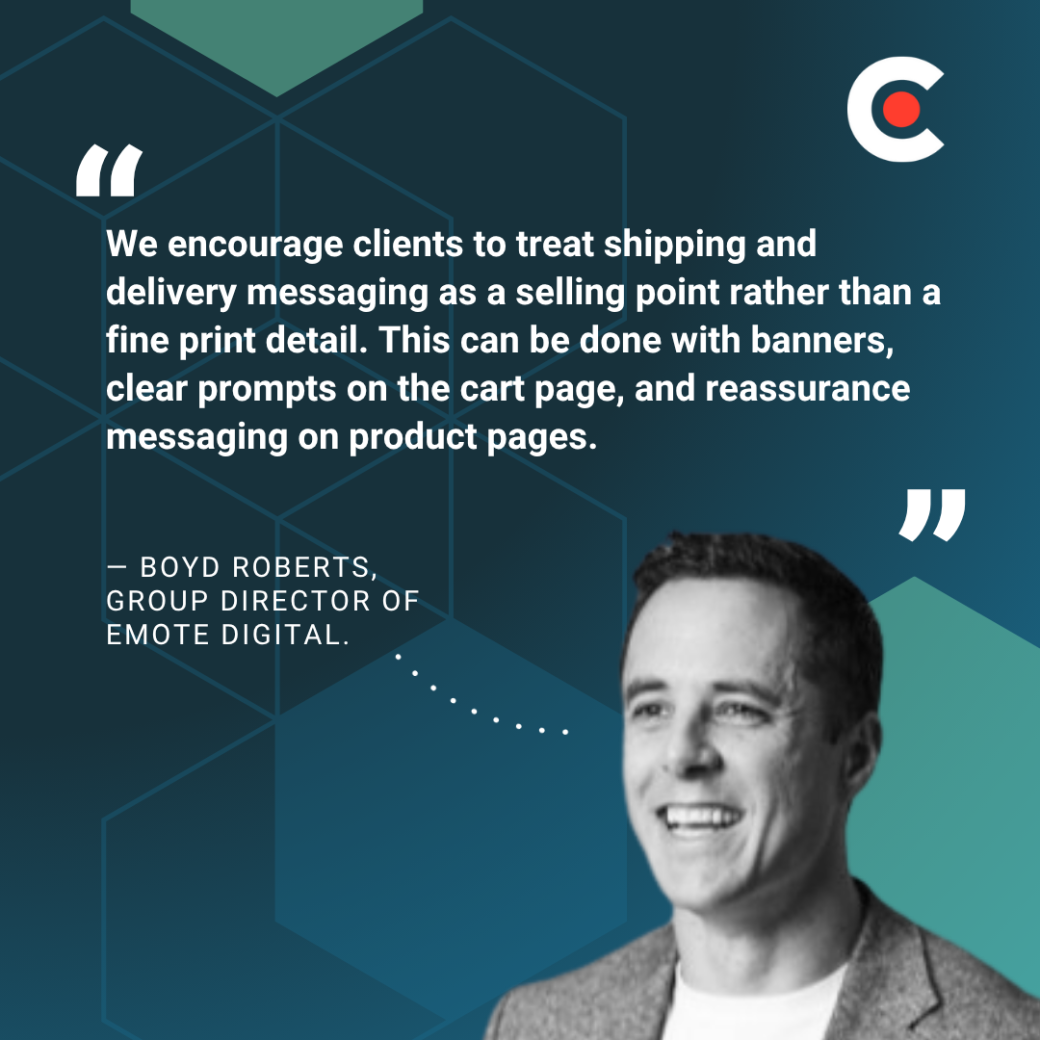
“We encourage clients to treat shipping and delivery messaging as a selling point rather than a fine print detail,” says Boyd Roberts, Group Director of Emote Digital. “This can be done with banners, clear prompts on the cart page, and reassurance messaging on product pages.”
Valentina Chiriacescu, Chief Commercial Officer of eCommerce Today, suggests using specific phrasing, such as “free shipping on all orders over $50,” to “remove uncertainty, reduce cognitive overload, and help the customer feel confident enough to complete the transaction.”
Free shipping thresholds motivate 57% of online shoppers to make qualifying purchases. When strategically implemented, this tactic can be an effective way to encourage impulse buying or upsell while reducing your cart abandonment rate. Adding a free return policy further strengthens customer motivation by eliminating purchase risks.
Even if free shipping thresholds and free return policies aren’t feasible for your business, disclosing shipping fees up front will build trust and help reduce cart abandonment. Monika Upadhyay, Assistant Manager of Digital Marketing at Mavlers, recommends "displaying estimated costs and delivery times on product pages and in the shopping cart summary early on to avoid surprises."
Tactic #2: Offer Speed and Clarity in Delivery
Delivery speeds vary widely among online retailers. However, large retailers that can offer same-day or next-day delivery have altered customer expectations. As a result, 29% of online shoppers won’t complete a purchase if the delivery is slower than they are accustomed to.
Some retailers skirt this issue by providing faster delivery options such as:
- Expedited shipping and delivery for additional fees
- In-store pickup for online shoppers who want to get their purchases quickly
Once again, transparency is what customers expect. Providing accurate delivery estimates and shipping speeds upfront creates realistic expectations.
Tactic #3: Fix Broken Promo Code Experiences
Customers quickly become annoyed when they visit a retailer’s site to make a purchase, specifically because they were prompted to do so by a promotion or coupon, only to find out at checkout that their coupon code doesn’t work.
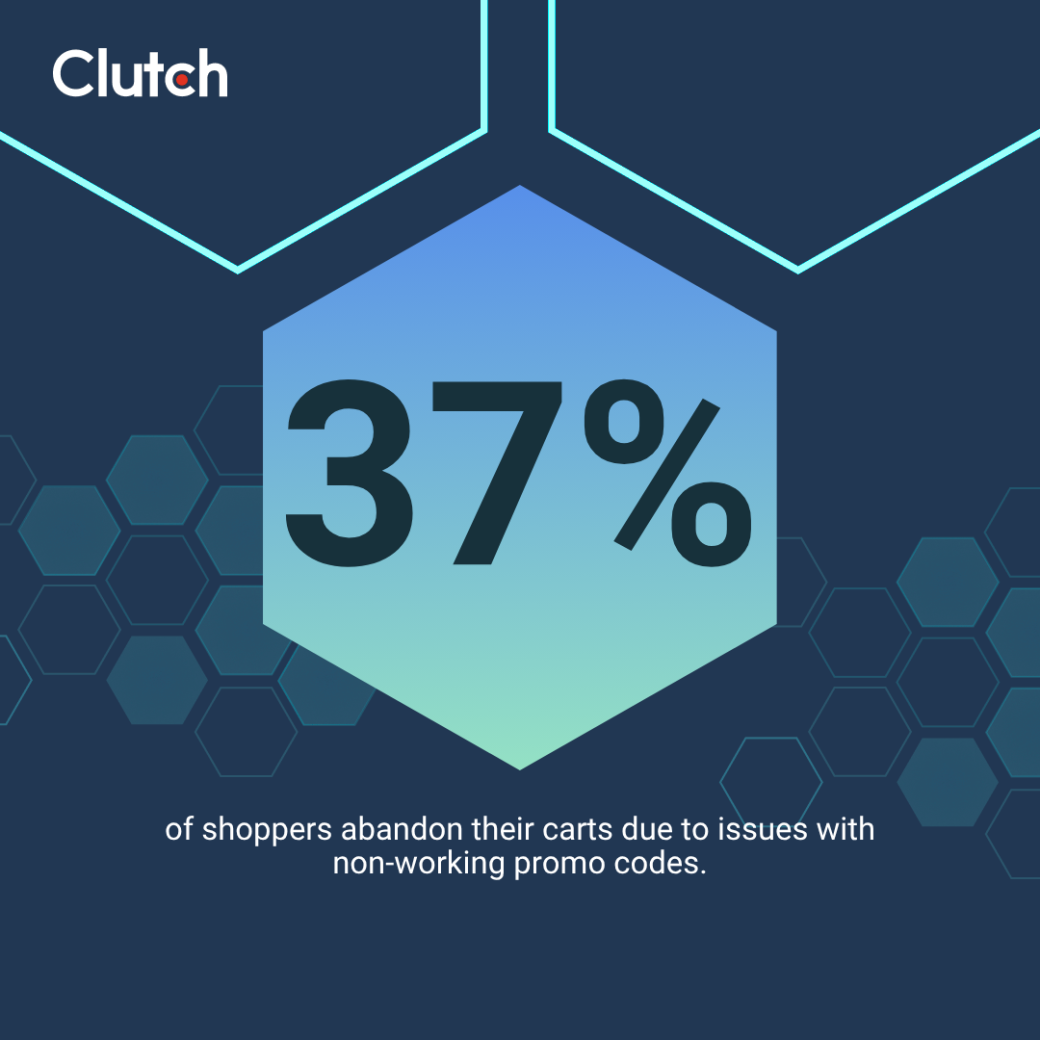
Issues with non-working codes lead to 37% of shoppers abandoning their carts. Worse yet, the frustration these customers experience often causes them to lose trust in the retailer and take their business elsewhere.
The best way to prevent poor customer experiences with promotional codes is to:
- Display valid promotional codes prominently in a banner at the top of the page
- Clearly state and ensure that all codes are automatically applied at checkout to prevent customers from leaving your site to search for codes and possibly not returning
The less effort it takes for a customer to take advantage of your promotional offer, the more likely they are to complete the purchase.
Tactic #4: Optimize for Seamless Checkout
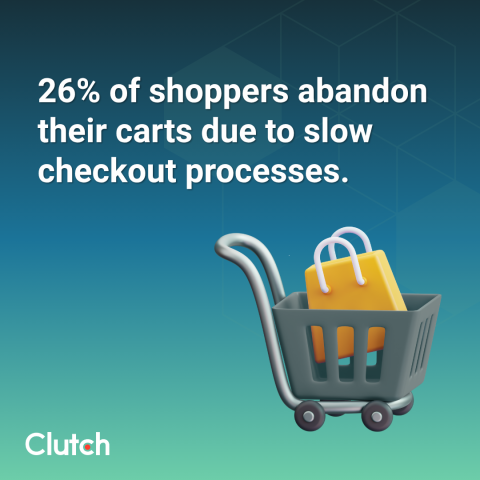
Customers are easily irritated. Slow checkout processes lead to 26% of shoppers abandoning their carts before completing their purchases.
“The checkout process should feel like a natural conclusion to shopping rather than a new obstacle course,” says Roberts. “I am a strong advocate of single-page checkout with minimal fields and clear next steps.”
Checkout processes should be fast and easy — in fact, 47% of consumers say 3-4 steps is their absolute limit before they will abandon a cart.
One way to simplify the checkout process is with a mobile-first approach. This allows customers to complete purchases on their phones as easily as they can on larger devices. Minimizing the number of required form fields, especially for returning customers, is another way to improve the checkout page design and streamline the process.
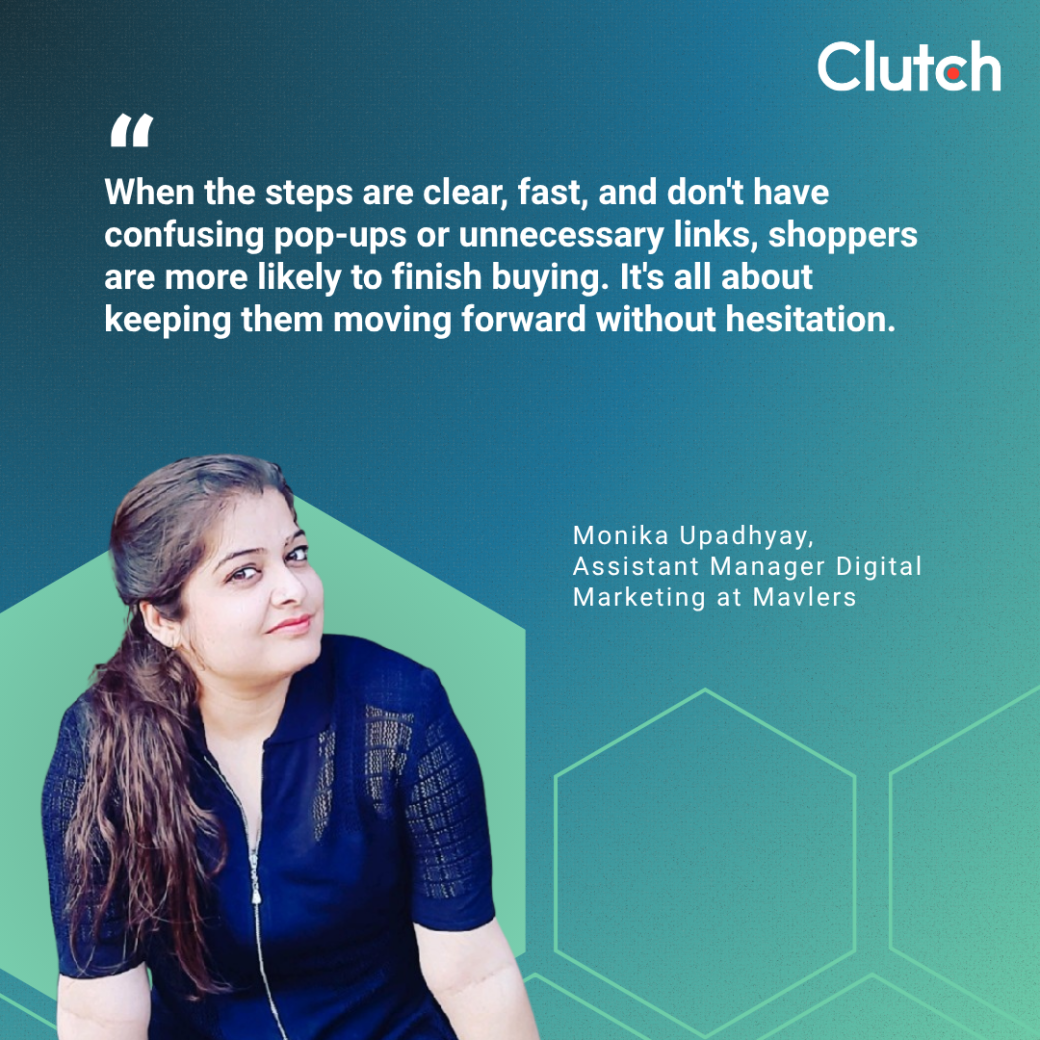
“When the steps are clear, fast, and don't have confusing pop-ups or unnecessary links, shoppers are more likely to finish buying,” notes Upadhyay. “It's all about keeping them moving forward without hesitation.”
Tactic #5: Prominently Offer a Guest Checkout
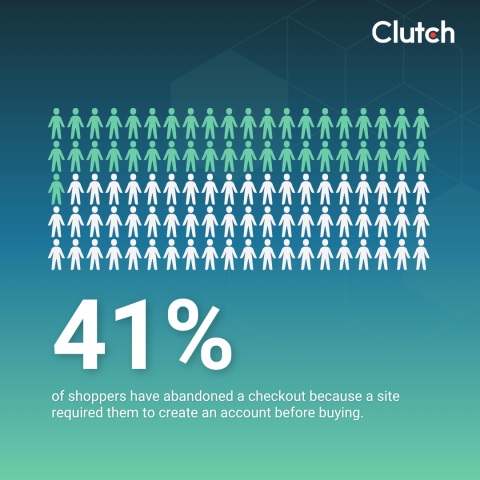
Forced account creation is costing retailers more than most realize. According to new Clutch survey data, 41% of shoppers have abandoned a checkout specifically because a site required them to create an account before buying.
The resistance runs deep. Only 12% of shoppers actually prefer creating an account at checkout. Another 29% always choose guest checkout when it's available, and 38% will only create an account if there's a clear benefit attached.
Upadhyay cautions that forcing customers to have an account creates a significant hurdle. In some cases, it reduces customer trust.
Consider offering and prominently displaying a guest checkout option. This will allow shoppers to make purchases without needing to complete a customer profile.
Tactic #6: Provide a Secure Checkout Experience
Customer trust is essential for e-commerce. Shoppers are wary of scams and scammers. They must trust a site before they will provide their credit card information. Visual reassurance goes a long way toward easing customer doubts, and 60% of online shoppers consider visible security features essential.
Upadhyay suggests clearly displaying well-known security badges (like SSL certificates and payment logos) at checkout to help customers feel confident and secure in their purchase.
Tactic #7: Accept a Wide Range of Payment Methods
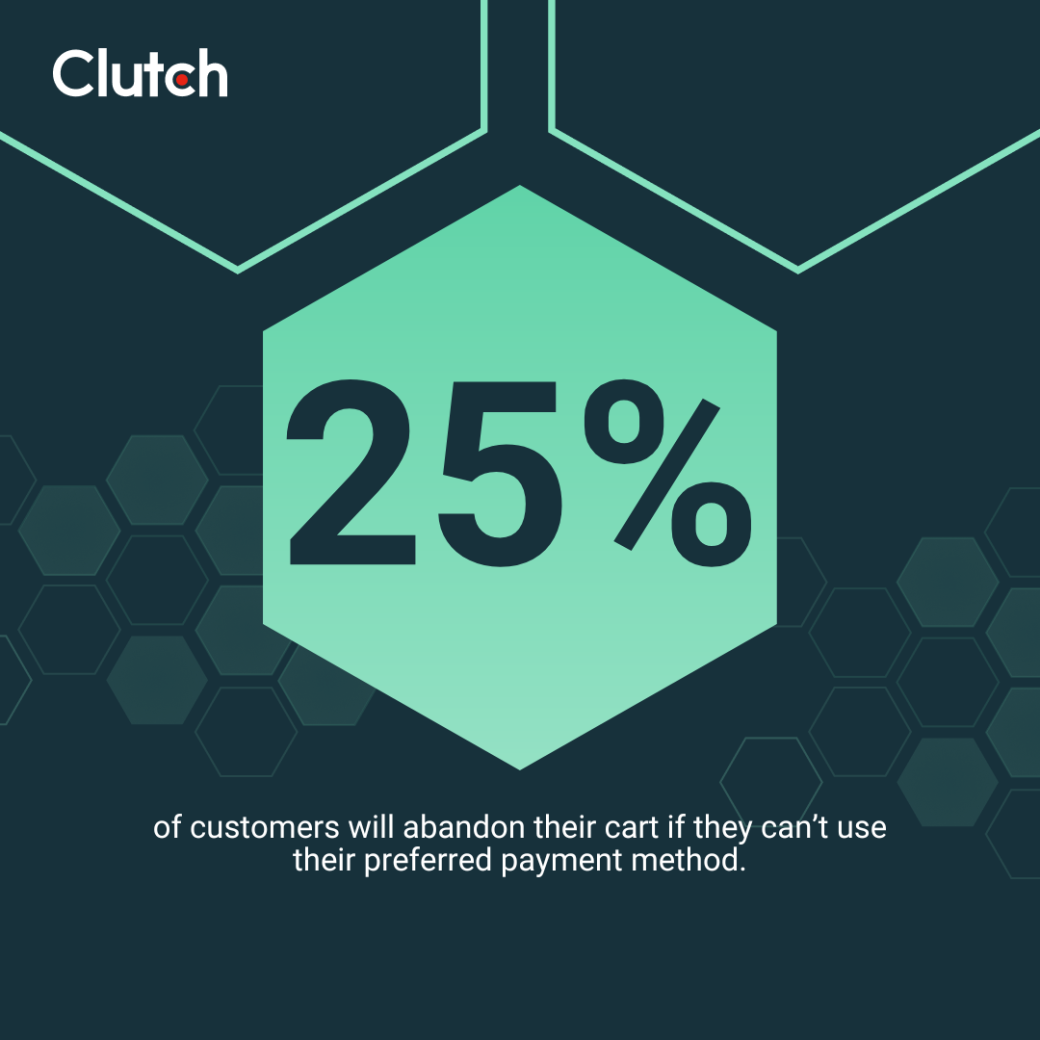
Customers today are used to a wide range of payment options. Most have a favorite, and 25% of them will abandon their cart if they can’t use their preferred method. To reduce shopping cart abandonment, online retailers should accept most credit and debit cards as well as digital wallets. Payment plans, like Affirm, should also be offered if possible.
Tactic #8: Include a Clear Return and Refund Policy
Making a purchase based only on a picture and a product description requires shoppers to take a leap of faith. Oftentimes, the picture doesn’t adequately reflect the item. Due to the inherent risks, effortless returns are crucial for online retailers.
Notably, 48% of shoppers check for return and refund policies before making online purchases. These policies differ greatly among online retailers, and those with customer-friendly policies have a better chance of making a sale and securing future sales.
To reduce purchase hesitation, businesses should strive to offer the most customer-friendly return and refund policies they can afford. The best ways to eliminate customer doubts are to:
- Ensure return and refund policies are visible from the cart or at checkout
- Highlight tactics such as free returns and prepaid shipping labels before the point of purchase
Tactic #9: Use Smart, Timely Abandoned Cart Emails and SMS Messages
When a customer abandons their cart, don’t assume the sale is permanently lost. Recovering lost sales is possible. Smart, timely email sequences are an effective tool for recovering abandoned carts.
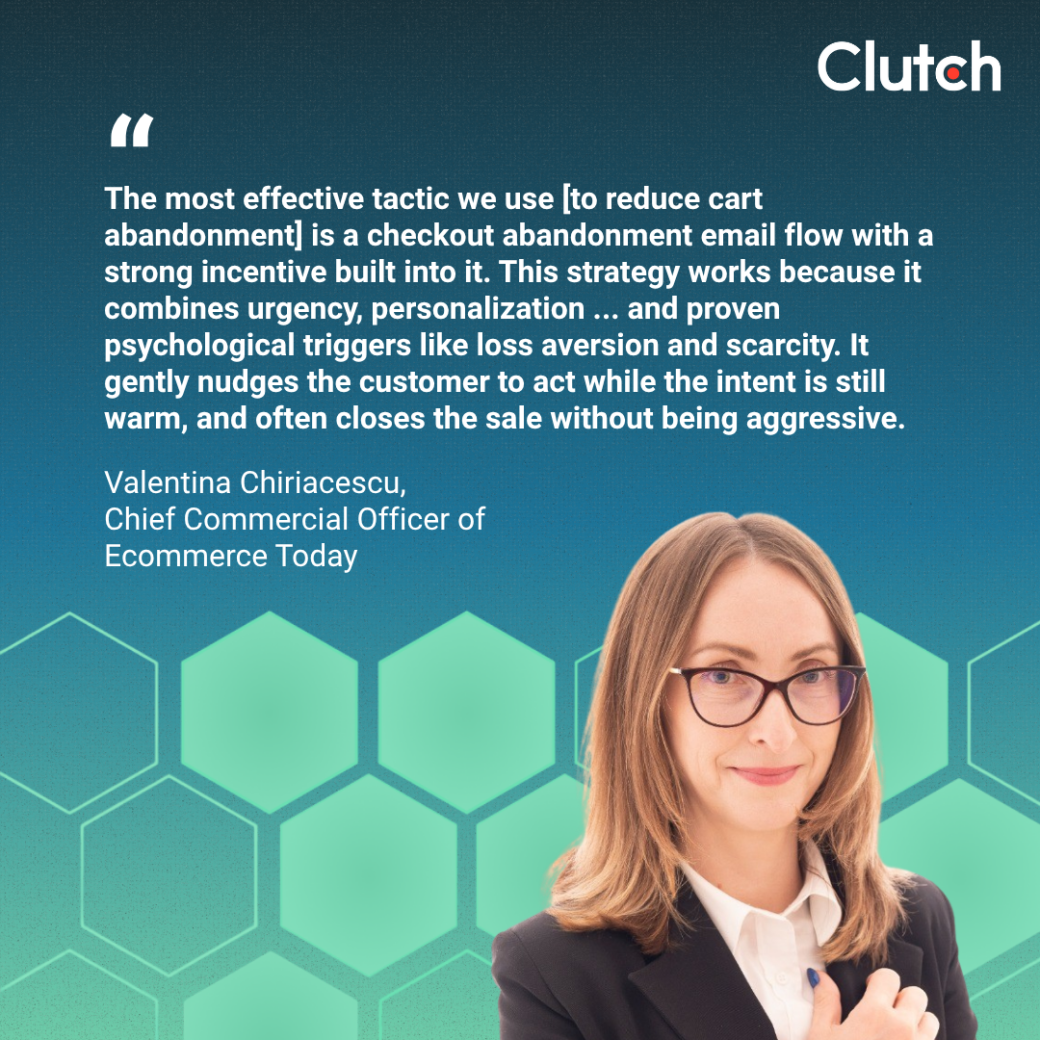
Chiriacescu recommends offering a strong incentive, such as a limited-time discount, in a three-part email sequence. “This strategy combines urgency, personalization, and proven psychological triggers like loss aversion and scarcity,” she says. “It gently nudges the customer to act without being aggressive.”
Roberts, who also encourages the use of abandoned cart email series, advises that “copy for the email sequences must feel personal and human, not generic or automated.”
Be strategic in determining when to send abandoned cart series so that the reminders are perceived as helpful rather than annoying. Ideally, the customer should receive three follow-up emails timed as follows:
- Email 1: Within 1-3 hours
- Email 2: 24 hours later
- Email 3: 48–72 hours later
Depending on the brand, SMS messages can be used as an alternative or supplement to emails and can be sent less frequently.
Tactic #10: Have a Clean, Professional Web Design
Online shoppers are technically savvy. They expect your site to have eye-catching visuals and an effortless checkout flow. Many won't tolerate slow-loading sites or those that aren't mobile-responsive. They quickly become frustrated by technical glitches and insist that sites work seamlessly across devices, allowing them to switch between platforms while shopping.
The user experience has become so important that:
- 84% of users consider website design an important factor when deciding to shop with a brand online
- 80% of shoppers have abandoned a website due to poor design, even when an item they wanted was available
- 64% say poor or no product photography is an immediate deal-breaker
- 63% say no visible contact information is enough to make them leave.
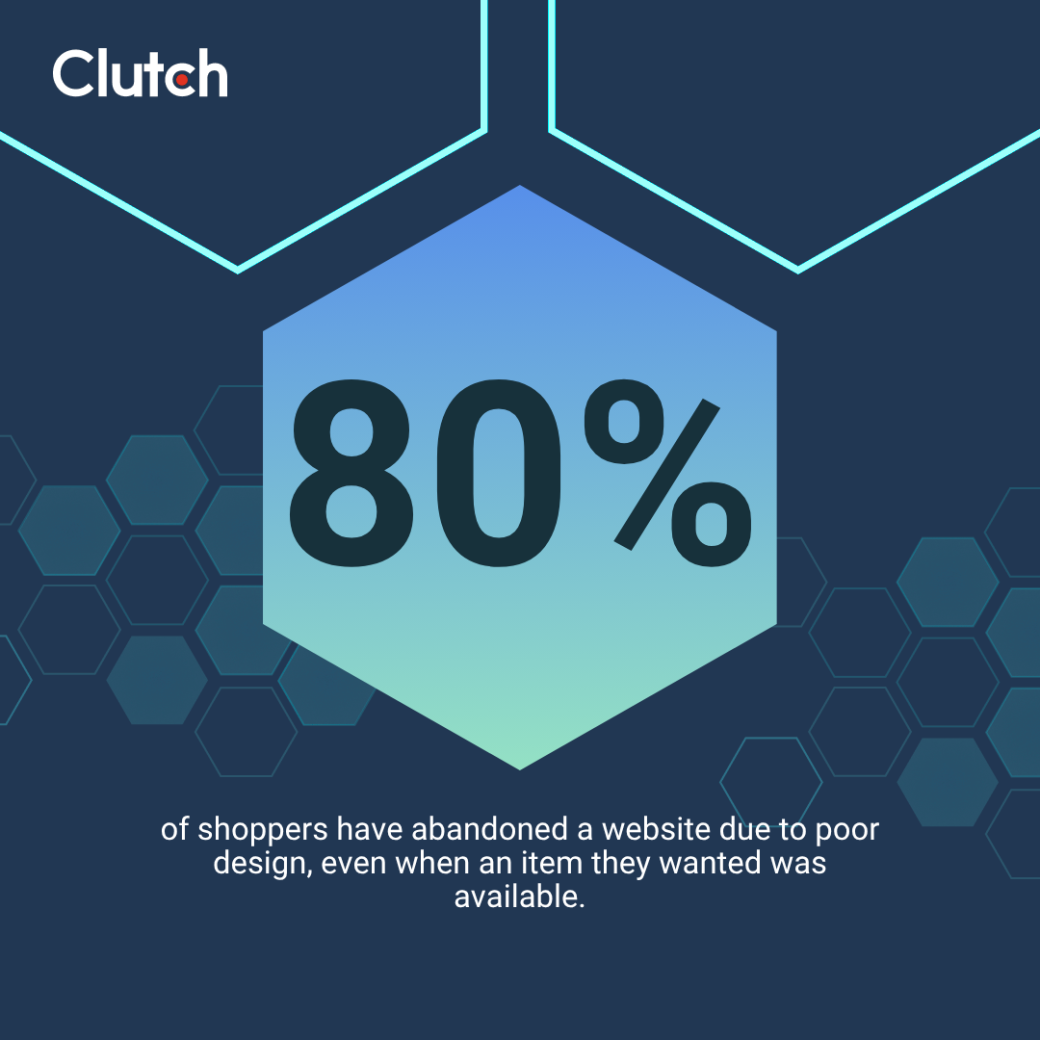
A website redesign or refresh can help a brand reduce its cart abandonment rate.
A clean, professional web design is a wise investment. “Keep your website's design consistent, professional, and free of errors,” advises Upadhyay. “A good-looking site is a key sign of trustworthiness.”
Final Thoughts: Guide Your Customers from Checkout to “Thank You for Your Purchase”
A seamless customer experience will push customers over the finish line and get them to click that all-important “buy now” button. From the moment they visit your site until they check out, they must have a sense of trust, transparency, and simplicity.
Your job as the retailer is to remove any lingering last-minute doubts. Implementing the cart abandonment solutions and tactics described above will help you address and resolve the main reasons shoppers abandon their carts and turn browsers into buyers.
Want expert help improving your checkout flow? Explore top web design firms on Clutch.
About the Author
Jeanette Godreau
Senior Content Marketing Specialist at Clutch
Jeanette Godreau crafts in-depth content on web design, graphic design, and branding to help B2B buyers make confident decisions on Clutch.
See full profile