7 Tips For Designing Web Forms
Clutch surveyed 502 web users about what they actually want from form design. Here are 7 data-backed UX principles that reduce abandonment and improve...
Updated February 13, 2026

When it comes to writing copy for your business, what's going to be more persuasive to customers: the same manipulations and fake urgency they see everywhere? Or honest, compelling copy that speaks to the unique value your products can offer?
Businesses often rely on urgency as a tactic to prompt customers to act and make a purchase. However, poorly written copy can push customers away rather than pulling them in. If you get your copywriting wrong, you may see higher bounce rates, more cart abandonment, and damage to your brand credibility.
This guide is designed to help you avoid specific e-commerce phrases that can damage customer trust and provide stronger alternatives for your copy. Soon, you'll be writing content that attracts and persuades customers so you can grow your sales.
Looking for a Web Design agency?
Compare our list of top Web Design companies near you
Customers have realized that brands aren’t always being honest when they allude to scarcity or time constraints. In fact, a third of shoppers (34%) say companies using the phrase “Today only!” makes them wary of a product.
Since many scammers and low-quality sellers use false tactics like these, it’s understandable that customers are suspicious.
Valentina Chiriacescu, Chief Commercial Officer of E-Commerce Today, explains that “What doesn’t work is vague fear tactics like 'Hurry! Going fast!' without evidence. Customers are savvy — they’ll sniff out hype that’s not backed by substance.”
Steve Pogson, Founder and Digital Strategy Lead of First Pier, agrees and adds, “Fake countdown timers or 'Only 1 left in stock!' tricks repeated across the whole site are going to do more harm than good."If your copywriting relies on fake scarcity or other lies, you can lose a customer's trust (and sales) forever.
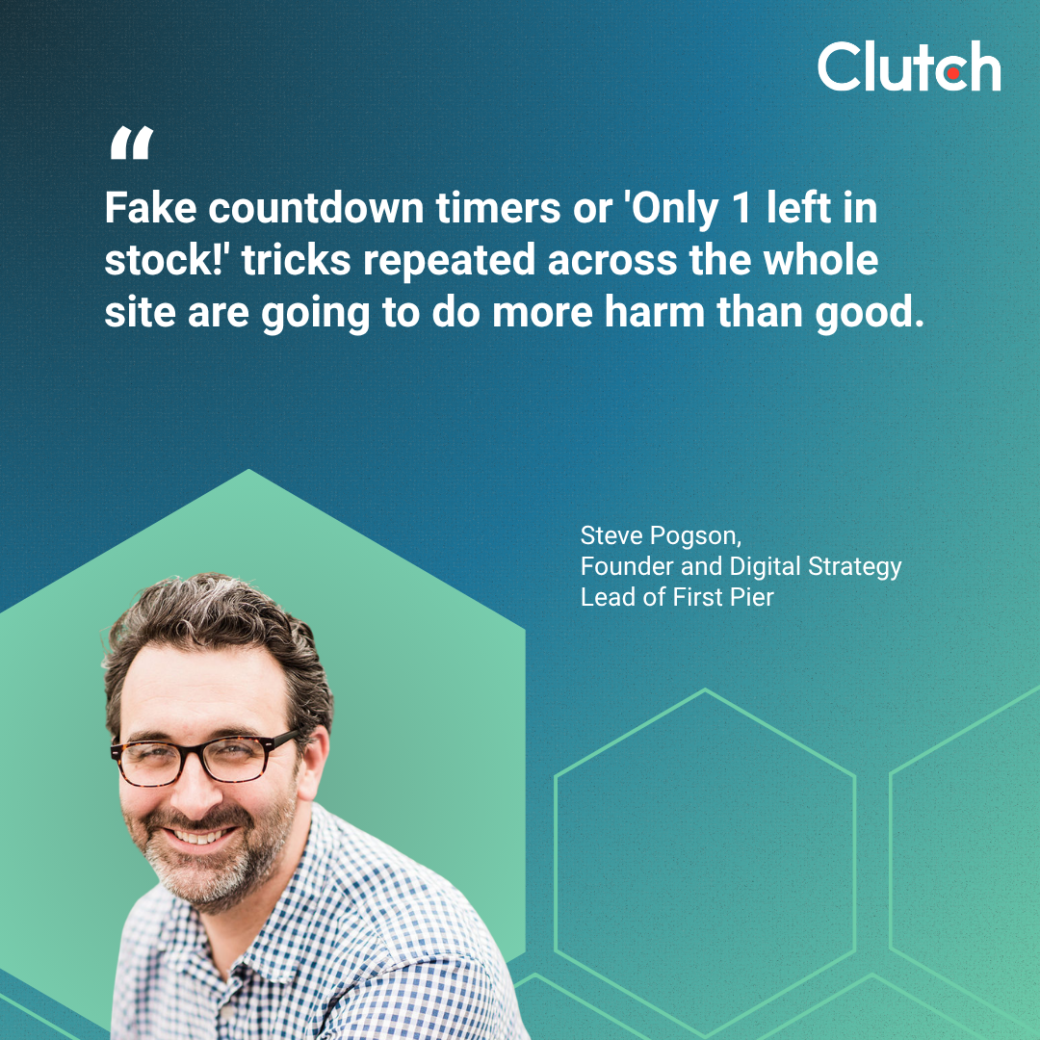
Relying on fake scarcity or other lies can make you lose a customer's trust (and sales) forever.
If your copywriting is going to reference urgency, make sure it’s 100% honest.
Pogson explains that your urgency should come from real data, such as “inventory levels, seasonal availability, and shipping cutoff times — to create meaningful urgency.”
Then, you can sometimes use phrases like, “‘Only 3 left,' 'Restocking soon,' or ‘Order within 2 hours for same-day processing,’ to help shoppers make a decision without feeling pressured,” Pogson concludes.
Chiriacescu suggests, “pairing urgency with visual cues like real-time stock counters or countdown timers. These micro-UX details help reinforce urgency without ever crossing into hard-sell territory.”

Additionally, try to limit your urgency-focused copy. Only use urgency when there’s a very good reason. Otherwise, your customers might get sick of this tactic.
Trying to manipulate your customers never pays off in the long term, especially in promotional materials. Many of them will see through it and decide your brand isn't trustworthy.
So what does manipulative copywriting for products look like?
Monika Upadhyay, Assistant Manager of Digital Marketing at Mavlers, argues that copy “becomes manipulative if these triggers are based on lies (like fake scarcity or fake high original prices). The goal is to help customers buy something they genuinely want, not to trick them.”
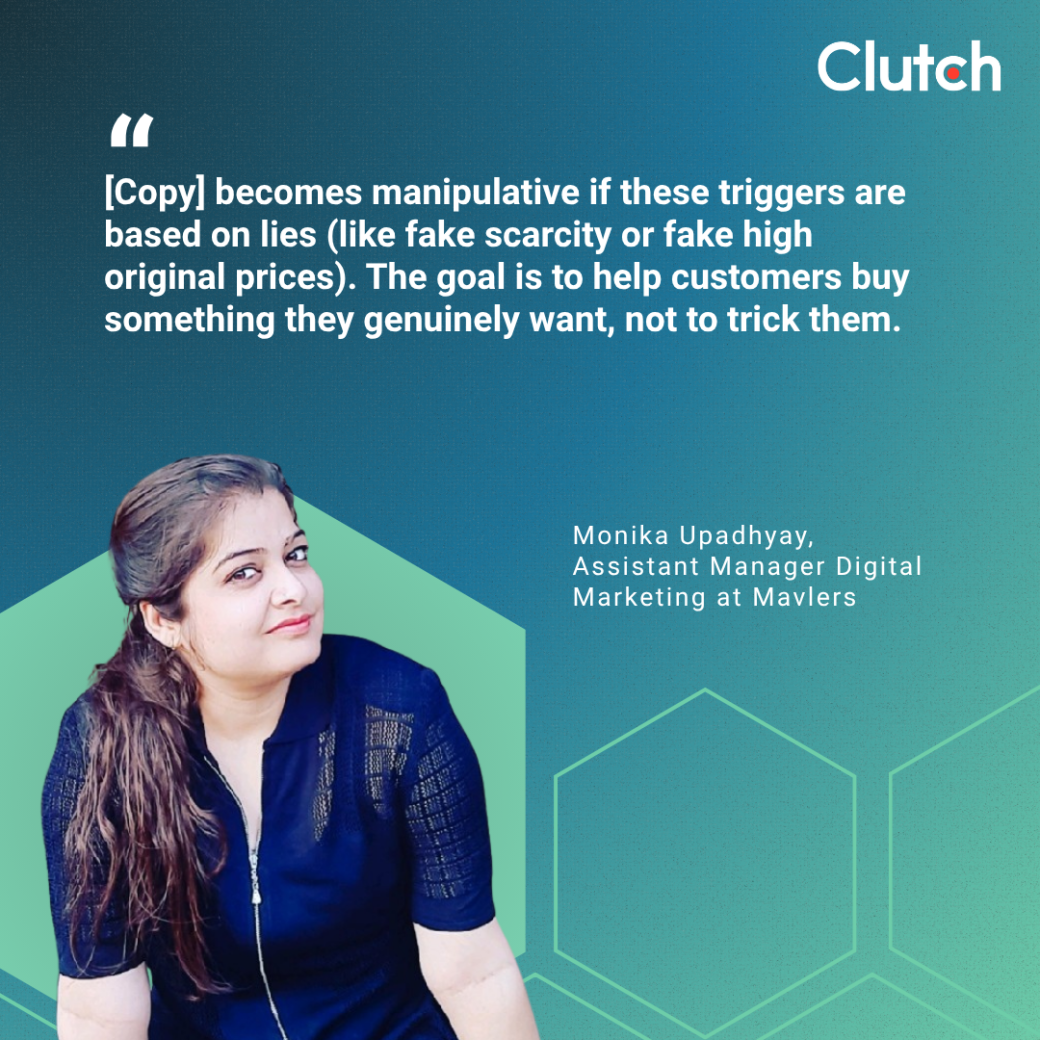
Instead of exploiting negative emotions in your retail copywriting, focus on positive ones. Tapping into those emotions in your web copy creates a much better feeling for your audience than fear or nervousness.
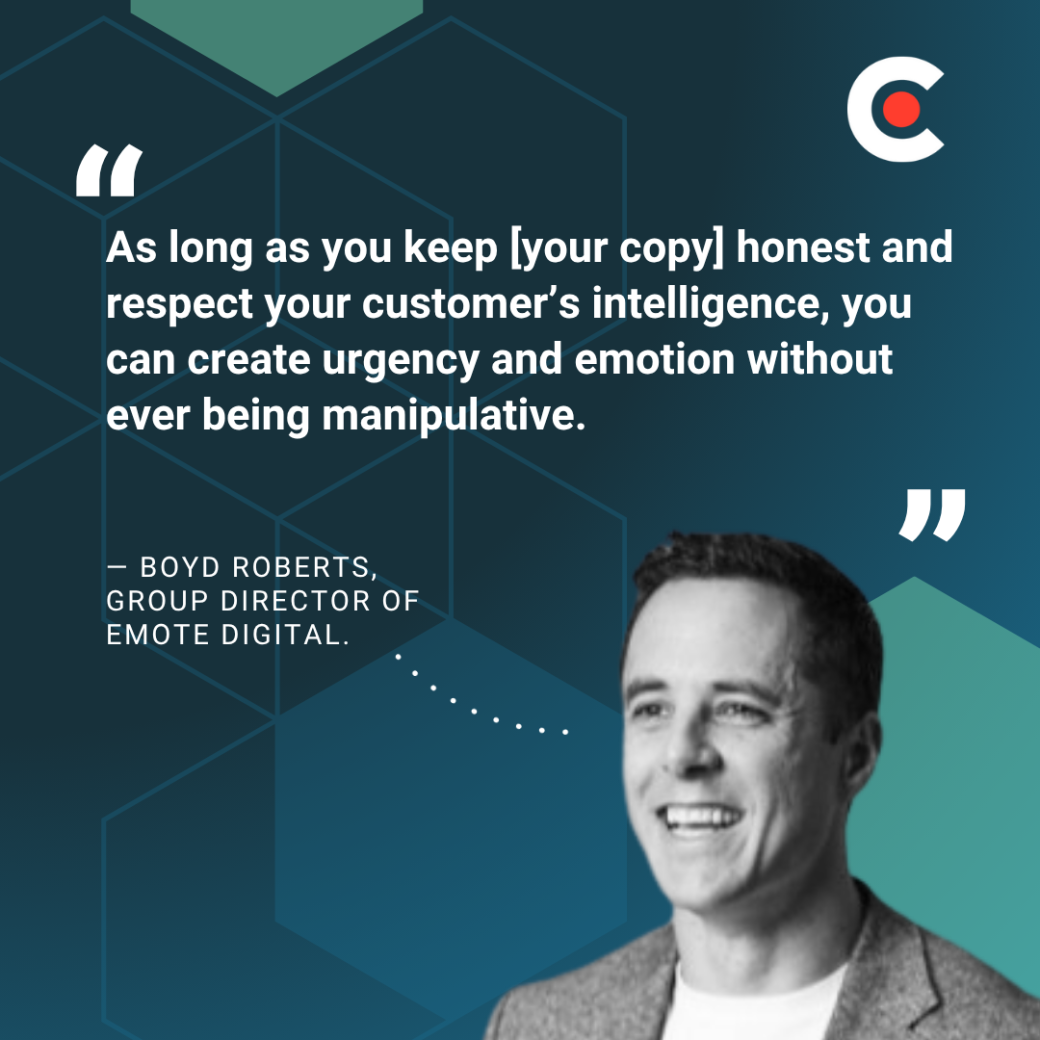
Boyd Roberts, Group Director of Emote Digital, shares, “The most effective triggers tend to be positive emotions such as joy, a sense of belonging, and the idea of a small personal reward.”
Chiriacescu echoed Robert’s thoughts on positive website copywriting, emphasizing that brands should focus on effective emotional triggers to encourage impulse buying, such as:
She notes, “When used authentically, these triggers drive engagement and sales without feeling manipulative.”
Boyd agrees and concludes, “As long as you keep it honest and respect your customer’s intelligence, you can create urgency and emotion without ever being manipulative.”
Brands will claim all sorts of things to try to make their e-commerce content writing more persuasive. However, these inflated claims, when not backed by evidence, can actually have the opposite effect by making customers suspicious.
For example, about a quarter of consumers say the phrase “As seen on TikTok” makes them wary of a product. Another common example is using “X people are viewing this” banners with no proof. Many sites still use these tags on their product pages, but customers have seen them so often—with little to back them up—that they’ve stopped taking them seriously.
Similarly, when brands share generic or obviously templated testimonials, customers often see right through that. They'll ask themselves, "Why isn't this business sharing honest, in-depth testimonials?" They may even come to the conclusion that brands share these generic testimonials because they don't have any genuine ones and the business isn't actually trustworthy.
Customers are naturally inclined to follow what other people do, and shopping is no exception. If you can show that other customers had positive experiences with your products, your website copywriting for products will be much more persuasive.
Chiriacescu says, “We advise brands to use real social proof.”
But what does real social proof look like? Consider incorporating these examples into your e-commerce website content writing:
Take the best examples of people loving your products and share them with potential customers. Make sure you can back up their authenticity so people visiting your site have more reasons to trust your business.
E-commerce is constantly evolving, which means your copywriting needs to adapt, too. Don’t fall into common e-commerce copy tactics like fake urgency, because they’ll hurt your brand more than help it in the long run.
As Pogson puts it, “Think about urgency as a way to inform, not manipulate.”
In 2025, good e-commerce copywriting should focus on strategies like:
| Bad | Good | |
| Urgency | “Only three left!” (When there’s actually more stock) | “Hurry, the flash sale will only last 24 hours, so grab your favorites soon!” |
| Hype or Social Proof | "Get the product blowing up TikTok: Available now!” | “With [#] five-star reviews, this product stands out for X, Y, Z reasons.” |
| Emotion | “Don’t be left out. Everybody’s got one, so buy your product today!” | “With [#] five-star reviews, this product stands out for X, Y, Z reasons.” |
Other brands may try to manipulate customers with fake scarcity or urgency, but that’s not the best approach. Being honest and authentic in your e-commerce copywriting is key to more trust and, ultimately, more sales.
Focus on sharing real social proof, tapping into positive emotions, and using legitimate urgency to achieve the best results from your copy. And if you get stuck crafting authentic and persuasive copy, hire a web design agency to help.