
How to Define Brand Values That Guide Every Business Decision
Brand values are the principles that guide company decisions, define what a brand stands for, and shape how it treats customers, employees, and partners.
Updated June 17, 2026

Digital PR and AI marketing aren't competing strategies; one earns the trust that makes the other actually convert.
There's a version of this conversation that eventually happens in every marketing team. Someone pulls up a dashboard. Someone else mentions a publication they want to land a story in.
And then the room sort of fractures, half the people thinking in terms of media relationships and pitch angles, the other half thinking about attribution models and conversion rates.
Looking for a Public Relations agency?
Compare our list of top Public Relations companies near you
Both sides are right. Neither side is entirely talking about the same thing.
This is a strategy problem. And it doesn't resolve until you stop asking which one works better and start asking what each one actually does.
Digital PR is the sustained work of making your brand credible and visible in places you don't own and can't pay to dominate:
These connections between your brand and people who matter to your buyers are built over months, sometimes years, and are very hard for a competitor to replicate in a quarter.
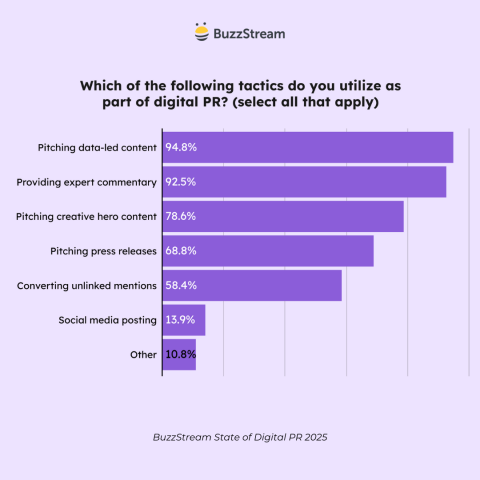
John Mueller from Google has said digital PR is "just as critical as tech SEO" for some sites. He's not wrong.
Google's own guidance is explicit that links remain a signal in how content is discovered and ranked. But the more interesting point isn't about SEO. It's about what kind of authority you're building.
A backlink from a credible outlet does two things: it signals to search engines, yes, but it also signals to every human who reads the article that someone worth trusting thought your brand was worth including.
That second effect compounds. It's why companies that have done consistent digital PR for three years have a market position that companies with three years of ad spend frequently don't.
The tradeoff is time. If you pitch something good today, you might get coverage in six weeks.
If you build a relationship with a beat reporter, you might become their go-to source over the course of a year. This is not a channel for people who need to show ROI in a quarter. It just isn't.
At its core, AI marketing is pattern recognition applied to decisions that used to require human guessing. Like:
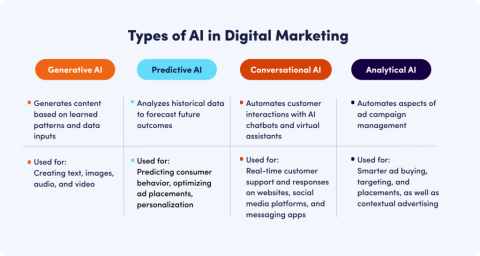
But this work requires something that most teams underestimate: good data. AI tools find patterns.
If your data is patchy, biased, or simply not capturing what you think it's capturing, the patterns you find are wrong.
You'll optimize toward the wrong users, personalize the wrong messages, and score the wrong leads as high-priority. The technology doesn't save you from bad inputs. It just executes on them faster and on a larger scale.
There's also the voice problem.
AI is very good at optimizing. It is not naturally good at saying something true and unexpected that resonates emotionally.
That gap matters more in some categories than others, but in any B2B market where buyers are skeptical and trust is scarce, it's a real ceiling.
Health is the clearest example. Men researching TRT online aren't converting because an ad followed them around the internet. They're converting because something, a credible article or a third-party mention, made the decision feel safe.
B2B companies tend to underinvest in digital PR and overestimate what AI-driven efficiency can do for them when they haven't built authority first.
The reason is structural.
In most B2B buying decisions, the buyer doesn't make the purchase alone. There's a committee.
Multiple people with different priorities are all googling your brand, looking for third-party signals that you're legitimate and for evidence that companies like theirs have made this work.
You cannot buy those signals. You cannot automate your way into a position of credibility that a buyer's CFO will find reassuring during a quick check before signing a contract. That position is earned.
The same dynamic plays out across B2B software categories. Teams evaluating contract management software, for instance, are running independent searches on every shortlisted vendor long before a sales conversation begins.
Mike Miller, General Manager of Elkhorn Heating, Air Conditioning, Plumbing & Electrical, runs a home services company serving residential and commercial customers across its region.
Miller says, "Every customer we've ever lost to a competitor came down to one thing: they trusted the other company more before the first phone call was made. You can run ads all day, but if someone searches your name and finds nothing credible backing you up, you've already lost half the room."
E-commerce is different.
The buying cycle is shorter. The decision is lower-stakes. AI-led personalization, triggered messaging, and programmatic retargeting move numbers in ways that are visible and measurable within weeks.
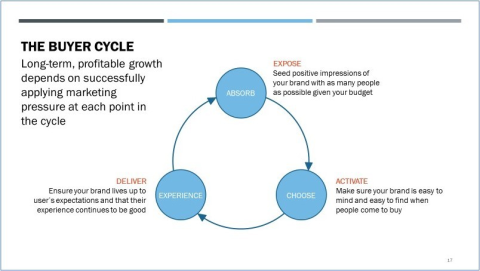
That doesn't mean PR is irrelevant. It matters enormously for launches, for cultural moments, for creator-led discovery.
But day to day, AI earns its budget in e-commerce in a way it doesn't yet in enterprise software or financial services.
Ryan Beattie, Director of Business Development at UK SARMs, is a specialist e-commerce retailer operating in a niche where consumer trust and product credibility are non-negotiable.
Beattie said, "In this space, a mention from a source people already trust is worth more than any paid placement we've run. Customers are doing their research before they ever hit the site. By the time they arrive, the decision is mostly made, and what shaped it happened somewhere else entirely."
Startups building categories that don't quite exist yet often need digital PR first. Before the demand is there to capture, you have to explain the why:
AI is extremely good at capturing and converting demand. It is not good at creating it.
That work is still fundamentally human: storytelling, relationship-building, making the case in places people trust.
David Kolodny, co-founder of Wilbur Labs, owns a startup studio that has built and scaled multiple companies from the ground up.
Kolodny says, "When you're launching something genuinely new, the instinct is to go straight to performance channels, set up the ads, build the funnel, measure everything. But if the market doesn't understand the problem you're solving yet, there's nothing for those channels to capture.
The foundational work of getting the right people to write about you, speak about you, and reference you has to come first. It's not glamorous, and it doesn't show up cleanly in a dashboard, but it's what makes the paid work actually work."
It's constantly cited in these conversations. AI-powered personalization turned into a PR moment. Individualized listener data becomes shareable content.
The campaign earns massive organic coverage and social buzz every year. It's elegant and real.
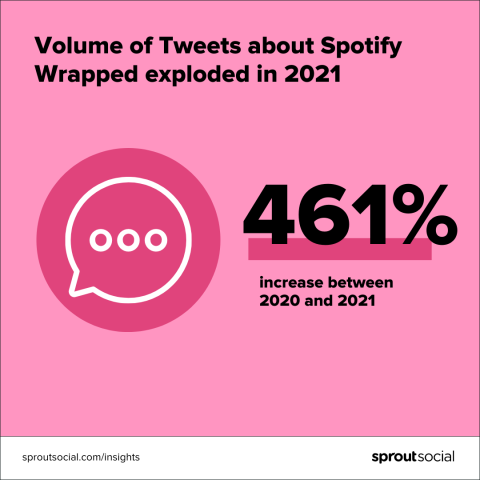
It's also a product with 600 million users and a brand strong enough that the campaign generates earned media at scale simply by existing.
The lesson from Wrapped is not to use AI to personalize a PR campaign. The lesson is that the best moments often live at the intersection of genuine data insight and human storytelling instinct.
The data told Spotify what was true about each listener. The storytelling decision was what to do with that truth and how to frame it as something worth sharing.
Most teams can do a version of this:
Apply sentiment analysis to your coverage, see what's resonating, and adjust.
PR programs are hard to measure in ways that satisfy quarterly reviews, so the budget goes to things that produce cleaner numbers.
This is a real problem.
You can use brand lift studies, share-of-voice tracking, coverage quality scores, referral traffic from high-authority domains, and direct type-in traffic as a proxy for brand recognition.
You can triangulate. But you cannot produce the kind of clean, last-click, revenue-attributed reporting that AI optimization channels can.
And yet the thing AI-optimized channels often lack, especially in any market where trust is a meaningful part of the buying decision, is exactly what digital PR builds.
So the teams that cut PR when they can't measure it precisely often find, a year or two later, that their paid programs are working harder and harder for the same conversion rates.
Jeff Zhou is the CEO of Fig Loans, a fintech lender built to give underserved borrowers access to fair, transparent credit.
Zhou says, "The brands that earn trust in financial services aren't the ones with the biggest ad budgets. They're the ones that show up consistently in places people already trust — a news piece, a credible mention, a recommendation from somewhere that isn't a paid placement.
That's what moves a skeptical borrower from 'I've heard of them' to 'I'll actually apply.' You can't retarget your way into that."
If you are trying to establish authority in a new market, launch a product in a category where buyers are skeptical, or repair a damaged reputation, digital PR is the priority, and AI is the support structure.
If you want durable growth over three to five years, the question isn't which to choose.
It's how much of each, in what order, given where your brand actually sits today, not where you'd like it to sit.