10 Actionable Link Building Tactics to Build Brand Authority & Legitimacy
Discover 10 actionable link building tactics to boost brand authority and rankings. Learn how quality backlinks build lasting trust in the AI search era.
Updated May 26, 2026

Social media and SEO might seem like separate spheres, but they overlap more than you think. Discover how to use social media signals to improve your brand’s online visibility.
Businesses often treat search engine optimization (SEO) and social media marketing as distinct strategies. You may even have separate specialists managing each: one who’s a keyword whiz, and another who’s a TikTok connoisseur. It’s a logical approach. After all, that ridiculous meme you shared on Facebook has nothing to do with your website rankings, right?
Yes and no.
Looking for a SEO agency?
Compare our list of top SEO companies near you
Indeed, search engine algorithms don’t directly consider social media when ranking content. You could have a million YouTube followers and still get banished to page 12 of the search results. But that doesn’t mean social media engagement is useless. Signals like comments and reshares affect SEO in subtle ways.
“Improved SEO is a powerful ancillary effect of a strong social media presence,” explains Eric Elkins, CEO of widefoc.us. “Not only can it enhance your domain authority, but it can also push competitors down in rank by having branded social channels take up more real estate — along with the website — on search pages.”
In other words, social media signals and SEO can strengthen your online presence. Here’s how to get started.
Your audience can interact with your social media content in many ways. A TikTok user might stitch your video with a response, while Redditors can upvote and comment on your posts. You’ve probably heard marketers refer to these actions as “engagement.”
They show that users care about your content instead of just mindlessly scrolling past.
However, these interactions also send important signals to search engine algorithms. It’s not a popularity contest — at least, not exactly. Instead, algorithms may use these actions to understand if your content is trustworthy and relevant.
For example, when you Google “learning Spanish for beginners,” a YouTube video from Learn Spanish World appears in the “What people are saying” section.
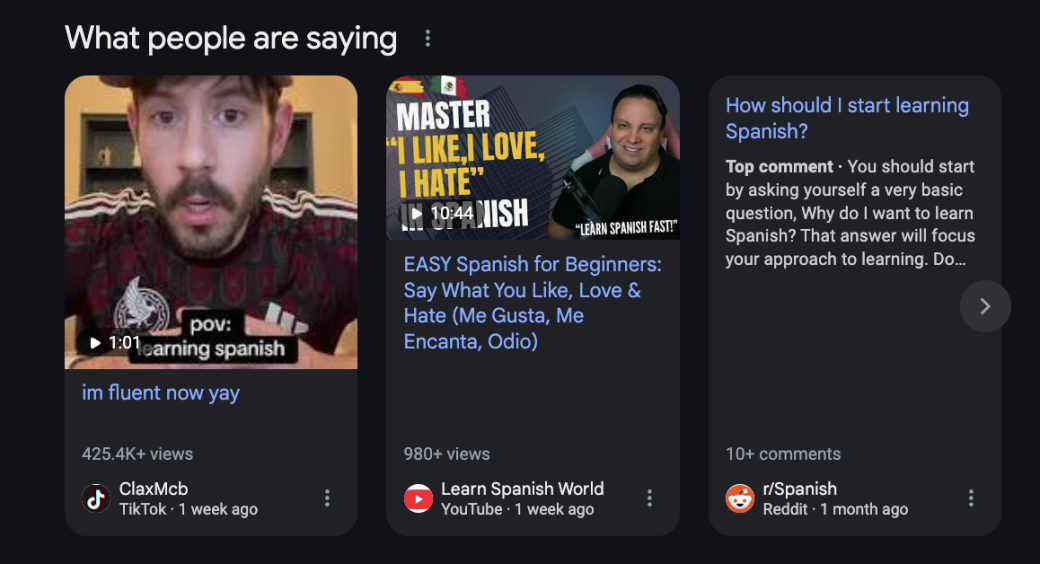
Meanwhile, the company’s website shows up at the top of page three of these results. For a highly competitive keyword, that’s a decent ranking — and it might not be as high without Learn Spanish World’s popular YouTube channel.
While social media signals vary across platforms, here are a few common ones:
There are many simple ways to measure social media signals. Every major platform has built-in tools for tracking engagement rates. For example, Instagram Insights collects metrics like accounts reached and number of views.
You can also see follower growth just by checking your account.
Beyond the platforms themselves, social media analytics software can help you track brand mentions and measure your reach. This data can help you ensure you’re sending enough signals to the search algorithms.
It makes sense that search algorithms don’t directly consider social media engagement. If every 100 likes led to a higher ranking, businesses would build bots or pay users for fake interactions. Soon, social media would turn into one big spam competition.
However, social media can impact your brand’s visibility in three key ways.
When you discover excellent branded content on social media — something that really matches your interests — it’s only natural to want to learn more.
Maybe you saw an adorable sweater that would go great with your skin tone, so you clicked the link in the company’s Instagram bio to explore their website. Or maybe you scrolled away from the sweater at first — you didn’t really need it — but it stuck in your mind. A few days later, you Googled the brand and bought it.
Sharing valuable content can attract users, too. For example, post how-to tutorials on Facebook with a link to your site. Viewers who love your content may click through to find more resources.
These are just three ways social media drives direct traffic to websites. These users are already interested in your brand and are more likely to stick around. That means lower bounce rates and longer average session durations. These two factors help teach search algorithms that your content is high-quality.
It’s always flattering when your existing customers follow your social media accounts. But your organic content and paid ads can also help you reach people who might never discover your brand through other channels.
Most of these leads won’t rush out to buy your products immediately. They might not even follow your account, at least not the first time they see it. However, they could remember your business later when they need something you’re selling. Or they could recommend it to friends or other social media users.
It’s unclear how much these brand mentions influence SEO, and search companies aren't exactly forthcoming. Like Coca-Cola locking away its secret formula, search companies guard their algorithms to reduce competition. However, some employees have acknowledged it can make an indirect difference.
“If [users] can find your website through that mention, then that’s always a good thing,” said John Mueller, Senior Search Analyst at Google, in a 2022 SEO Office Hours session. “But I wouldn’t assume that there’s like some… SEO factor that is trying to figure out where someone is mentioning your website name.”
Of course, what people say about your brand matters, too. Ideally, your business will mostly get positive mentions. A few rave reviews or personal recommendations in Facebook groups can build trust and earn backlinks. Contrastingly, negative mentions could deter users from visiting your website, even if you share great content.
Reputation management tools automatically monitor these discussions across platforms so you don’t have to spend hours scouring social media daily for mentions. This software can also alert you if your brand gets negative feedback. This lets you quickly step into damage control mode — before a full-blown social media crisis.
Social media allows you to interact with people in your community without the pressure of selling them something. For example, you could organize and promote a local festival with other small businesses on social media. Nearby customers might see this content and feel intrigued enough to visit your website, boosting local visibility.
You can also invite your social media followers to write reviews. Reviewers often naturally use local keywords, such as “best gelato in Fort Worth” and “across from the Kimbell Art Museum.” These phrases tell the search algorithms that your business has local relevance, so it’s more likely to turn up in nearby search results.
SEO and social media are kind of like peanut butter and jelly. Each is perfectly tasty by itself. But when you combine them, they bring out the best in each other.
You can’t just share the occasional generic post and expect to see results. You’ll need to create consistently amazing content to get enough social media signals for SEO.
Start with these tactics:
Social media allows users to curate incredibly personalized feeds.
Take the time to research your customers so you understand exactly what they need.
Chewy is one brand that has mastered the art of relevant content.
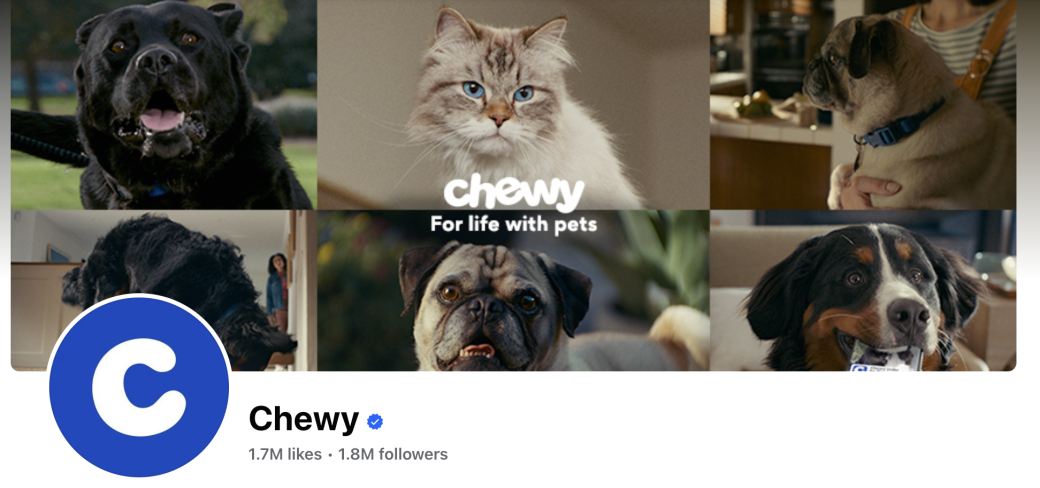
Its Facebook account posts practical advice for customers who want to protect their pets’ health like about food concerns and allergies.
Consider hosting competitions or inviting followers to submit content about your brand. L.L.Bean’s Instagram, for instance, frequently shares photos of adventurous customers decked out in their clothing.
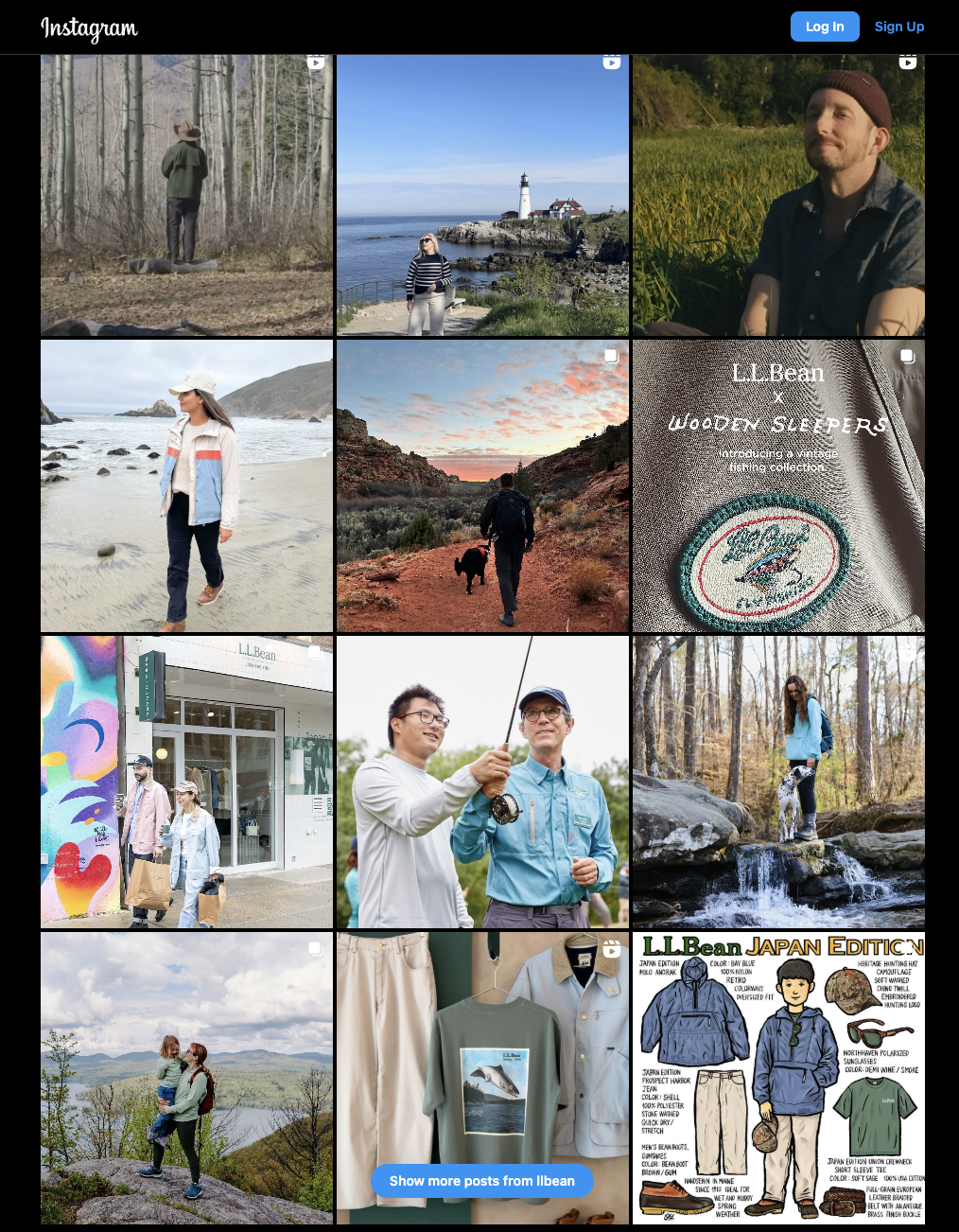
These posts offer social proof — “see, hikers love these boots!” They also reduce the amount of original content you need to generate yourself.
Like fairytale dragons, social media algorithms have a voracious appetite for fresh content. Posting consistently will help you keep the metaphorical beast’s attention and increase the chances that your content appears in user feeds.
Additional Reading: ‘Step by Step Guide to Create Your First Social Media Calendar’
Most importantly, don’t aggressively promote your products and services — it’s a Facebook post, not a cold call. Social media users want to unwind, not be pressured to buy something. Focus on creating quality content that sparks their interest without seeming too salesy.
Like your website, your social media accounts should be accessible and easy to find. Otherwise, you might not get as many signals as you’d like.
Here are a few ways to upgrade your profile:
Building an audience takes time, but you don’t have to do all the legwork yourself. Customers who love your content may feel inspired to share it with their followers. Before you know it, those 20 likes could become 200 or even 2,000.
Of course, some content is more inherently shareable than others. Elkins explains, “We often work with our clients' SEO teams to coordinate the keywords and phrases they're prioritizing — and then infuse those same terms and phrases into social posts and ads, as well as blog posts and anything relating back to the website.”
But it’s not just about keywords. Users are often more inclined to share funny or downright bizarre content. Take Wendy’s, for instance.
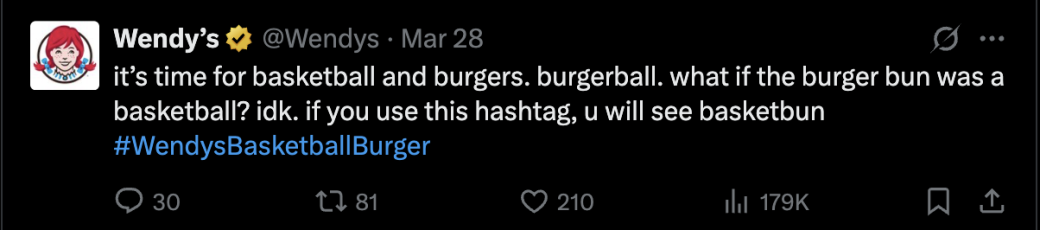
Their X posts often get hundreds or thousands of reposts, which have helped it gain 3.7 million followers.
Because social media signals SEO indirectly, you may not see obvious results, especially at first. Track your progress with these metrics:
Use a social media analytics tool like Hootsuite to measure all these metrics in one place.
Social media and SEO are two sides of the same coin. As your social presence grows, more traffic will flow to your website, and vice versa.
Elkins observes, “By closely aligning organic and paid social content strategy with SEO priorities, everyone is rowing in the same direction.”
As search engines increasingly rely on artificial intelligence, the relationship between SEO and social media is growing. Experiment with posting about your brand on platforms like Reddit and Quora. Who knows? Your content might appeal to the mysterious AI-powered algorithms and be at the top of the rankings.