
10 Actionable Link Building Tactics to Build Brand Authority & Legitimacy
Discover 10 actionable link building tactics to boost brand authority and rankings. Learn how quality backlinks build lasting trust in the AI search era.
Updated April 24, 2026

Search engine optimization isn't just about rankings; it's about shaping how your brand is perceived and remembered. Companies like Apple and HubSpot have mastered branded SEO by controlling their entire search narrative, from customer reviews to product features, building lasting authority through consistent brand presence across search results.
The SEO branding process involves optimizing content, managing your online reputation, and strategically acquiring backlinks. You can strengthen brand visibility with the right strategies to build trust and authority. Let's understand branded SEO and how to use it to your advantage.
Work with the leading SEO agencies on Clutch. Find the right partner for your business.
Looking for a SEO agency?
Compare our list of top SEO companies near you
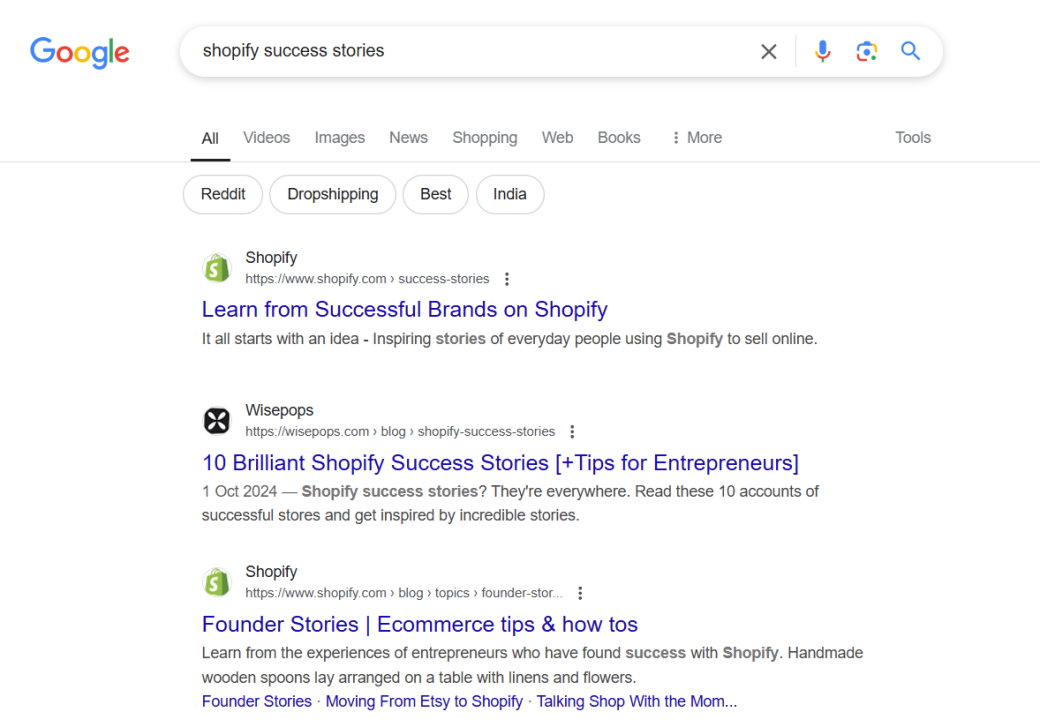
A branded search is any search query that includes your company name or its variations. For instance, when someone searches "Notion", the search engine will present different results such as:
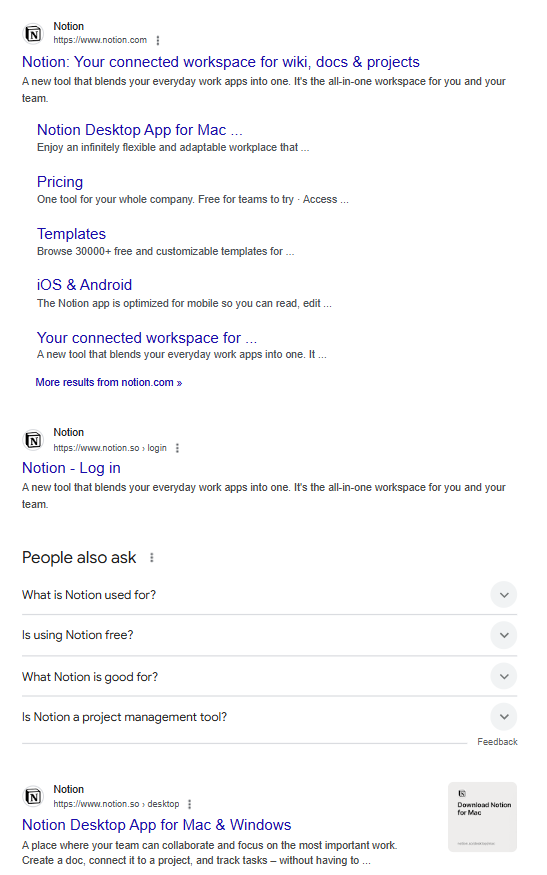
Branded SEO optimizes your visibility for these brand-specific searches, ensuring you control how your brand appears in search results. Any search term that doesn't include your brand name or its variations (like "cloud storage" or "file sharing software") is considered non-branded.
According to Draven McConville, a startup entrepreneur and tech investor, "SEO and brand building work best when they're fully aligned. While many startups chase quick SEO wins and low-hanging fruit, the real value comes from creating content that both ranks well and authentically represents your brand voice. Focus on solving your target audience's problems first, and both search visibility and brand trust will follow."
In other words, branded SEO helps you build a strong brand presence across search engines that aligns with your overall brand strategy. This improves visibility and helps convert brand-aware searchers into loyal customers.
SEO and branding work together to amplify your online presence. Strong SEO practices improve your brand's visibility in search results, while a strong brand reputation signals search engines that you're a trusted authority.
Consider how Google treats established brands differently. When users search for "Apple support," Google displays multiple site links, knowledge panels, and direct answer boxes – features typically reserved for highly trusted domains. Apple has earned this position through years of building brand trust and implementing strategic SEO branding practices.
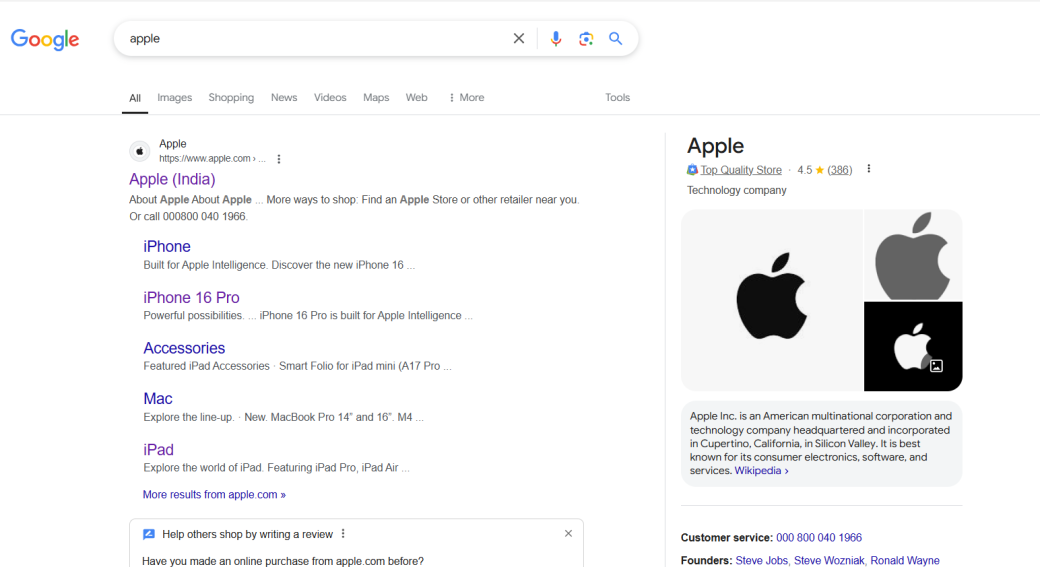
In simple words, the relationship works both ways.
SEO increases brand exposure by placing your content in front of targeted audiences.
For example, HubSpot's strong brand presence helps it rank for competitive terms like "marketing automation," while its high search rankings continuously reinforce its brand authority in the marketing space.
SEO branding directly impacts your bottom line. With 85% of Gen Z preferring to buy from familiar brands, branding in search results is more important than ever.
Think your brand name alone guarantees search visibility? Think again. When users search for your brand, they're already interested in what you offer - they're just steps away from becoming customers. Without proper optimization, these high-intent searchers will find information about your brand from competitors or third-party sites.
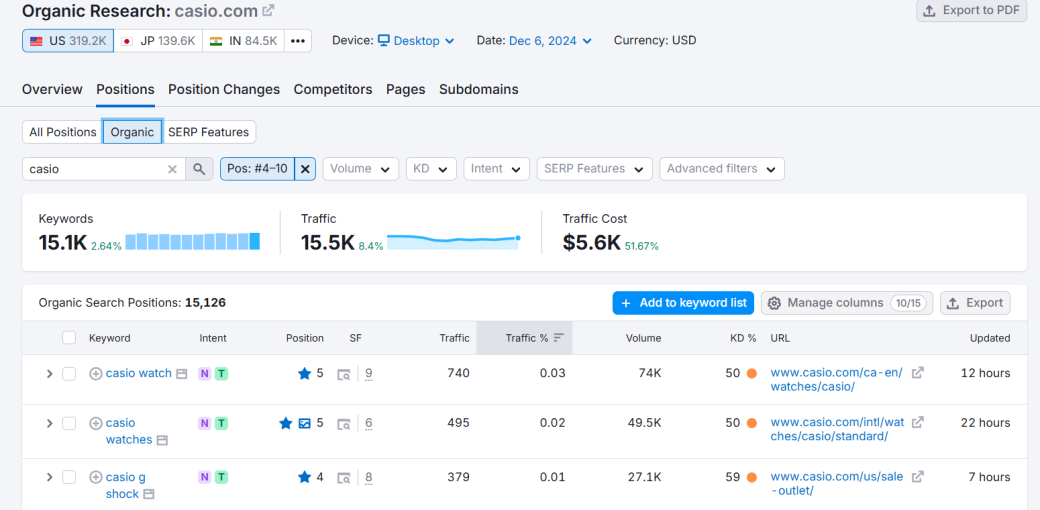
Take Casio, for instance. Despite being a household name, they miss out on thousands of branded searches like "Casio watch" or "Casio G Shock," where other websites rank higher. In fact, according to Semrush, there are over 15k keywords where Casio doesn't rank in the top 3 in the US (as of 16th December 2024).
Strong branded SEO delivers measurable benefits.
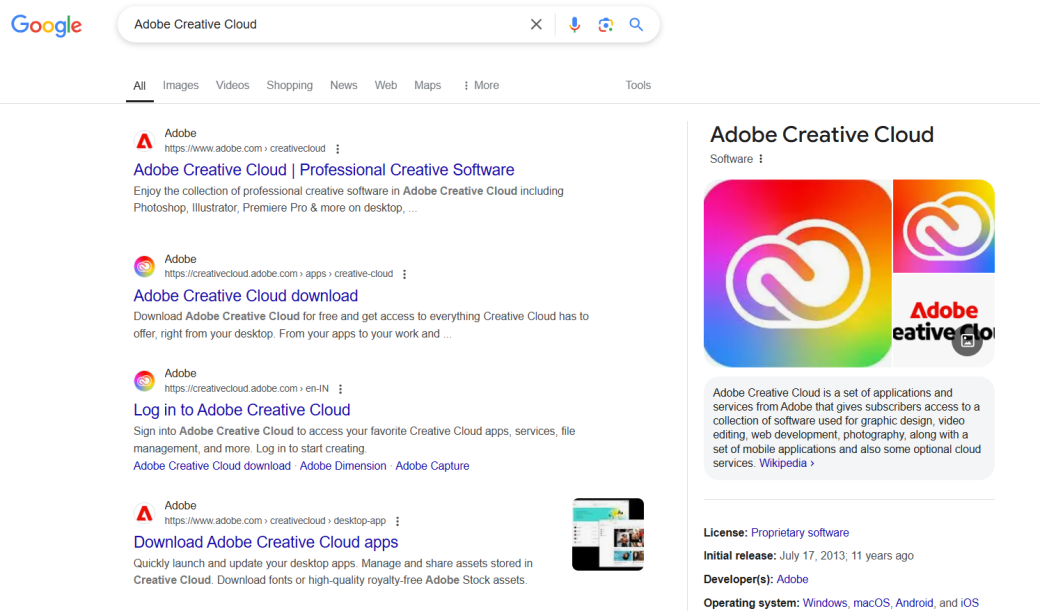
So, while you create SEO strategies for 2025, don’t forget to include tactics for branded SEO that improve brand awareness and build authority in your industry.
The core branded SEO strategies include keyword optimization, high-quality content creation, acquiring quality backlinks, and social media integration. Let's understand these SEO for branding strategies.
Effective keyword optimization goes beyond ranking for generic terms—it positions your brand for intent-driven searches that connect directly with your audience's needs. Targeting branded keywords ensures your audience encounters your solutions at the right touchpoints. Follow these four keyword optimization tips to improve your SEO branding.
To connect with a specific intent, incorporate branded keywords like "Slack integrations for remote teams" or "HubSpot CRM features for small businesses."
These targeted optimizations ensure your website appears at critical decision points in the customer journey and pushes them down the sales funnel. Additionally, analyze brand-specific keywords regularly to understand the competition and optimize your strategy accordingly.
High-quality content demonstrates thought leadership, builds trust, and effectively develops long-term relationships by solving customer challenges. Besides, well-crafted resources keep your brand relevant and competitive in the industry. Follow these best practices when creating content for your branded SEO.
Ensure you align your content calendars with product releases and industry events to capture interest. And don’t forget to conduct regular content audits to identify gaps and opportunities for updating existing blogs with fresh insights.
A strong backlink profile from reputable sources enhances your brand's authority and improves search rankings. Securing links from relevant and trusted websites reinforces credibility and attracts qualified traffic. Here are some tips to acquire quality backlinks.
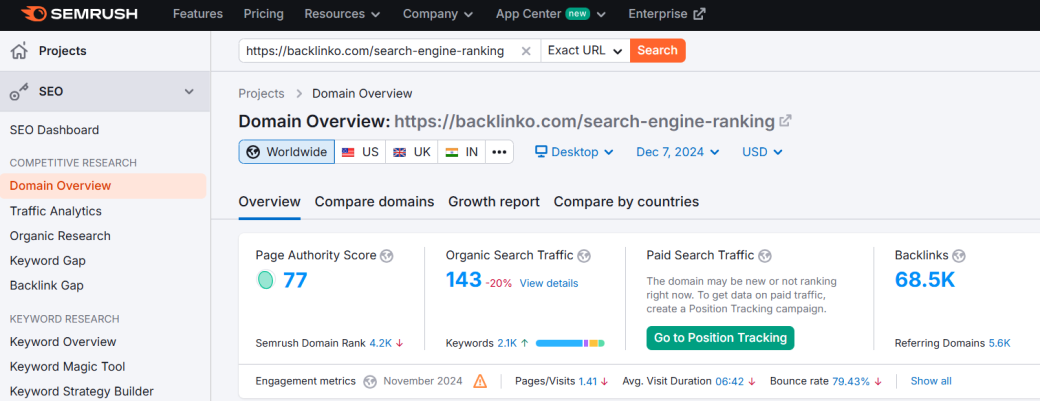
Source: Semrush
While you create backlink strategies, track competitor backlink profiles to find untapped partnership opportunities and potential guest posting sites, since they’re already linking to websites in your niche, it could be easier to secure backlinks from them.
For businesses operating across regions or targeting specific markets, local SEO helps your brand maintain relevance and capture local demand. This is especially vital for B2B organizations with sales offices or region-specific events.
However, the technical side of local SEO requires careful attention to structured data and markup to dominate regional search results. Emphasizing this point,
Mushfiq Sarker, CEO of a law firm SEO and digital marketing agency, shared a tip about local SEO optimization, "When optimizing pages for local SEO, be sure to add local business schema markup, try to include as much information as possible in the schema, it could be addressed, aggregate rating, area served, credential, phone, email, service offered, etc. We've noticed around a 10-15% increase in CTR comparing rich results vs traditional organic listing in our experiments with different law firm websites. However, this strategy can be implemented across the board in other services like B2B, SaaS, and more. "
These technical optimizations, combined with region-specific content and engagement strategies, amplify your visibility in search results.
While Google doesn't directly use social signals for rankings, a strong social media presence drives engagement, encourages link sharing, and boosts brand visibility. For example, when HubSpot shares a new marketing study on LinkedIn, industry publications often cite and link to their research.
However, social media continues to evolve with new platforms and changing user behaviors. And, you must adapt your strategies to meet these shifting dynamics while maintaining consistent engagement across established channels.
A good online experience is essential for retaining visitors and improving search visibility. Technical SEO ensures your website is fast, mobile-friendly, and accessible—factors directly impacting rankings and user experience. When improving technical SEO, focus on these factors.
While you optimize your website for mobile and technical SEO, keep an eye on Google Algorithms to understand what’s new and plan your strategies accordingly. These updates often focus on user experience metrics that shape how search engines evaluate and rank content.
Building upon the technical foundation we've discussed, user experience directly impacts both search rankings and brand perception. While technical SEO ensures site performance, thoughtful UX design converts visitors into customers by demonstrating your commitment to user satisfaction through clear navigation, fast loading times, and intuitive interfaces.
For example, a B2B platform offering cloud services gains trust when its site provides easy access to pricing, product comparisons, and customer success stories without delays or clutter. Such efficiency reflects the brand's commitment to delivering value, even before purchasing a product.
From an SEO perspective, search engines prioritize websites with fast load times and mobile-friendly designs. A well-designed user experience reduces bounce rates and increases time on site—key metrics that search engines use to evaluate your brand's authority and relevance.
Now that you've implemented these branded SEO strategies, you'll need the right tools and metrics to track their impact. Here are the essential metrics and tools to monitor your brand's SEO performance.
Track these metrics consistently and adjust your SEO strategy based on the insights you gather. It also helps identify which tactics work best for your brand and where you need to focus your optimization efforts.
Even the most well-planned brand SEO strategies can stumble if not executed carefully. Here are crucial mistakes to watch out for and how to avoid them.
Remember, most SEO mistakes happen when teams chase quick rankings without considering their brand’s long-term reputation. Creating quality content, acquiring backlinks, and maintaining technical excellence take time, but these efforts compound over time.
SEO for branding goes beyond traditional search optimization. It shapes how your brand resonates across search results. Effective SEO branding requires a strategic combination of branded keywords, quality content, relevant backlinks, and technical optimization.
When implemented effectively, branded SEO reduces ad spend, drives high-intent traffic, and builds lasting authority. However, tracking brand search performance and customer feedback is essential to refine your strategy and avoid pitfalls like over-optimization or inconsistent messaging.