
How to Define Brand Values That Guide Every Business Decision
Brand values are the principles that guide company decisions, define what a brand stands for, and shape how it treats customers, employees, and partners.
Updated July 14, 2026

Disclosing AI use can tank a brand's reception, but staying silent risks something worse: getting caught. New data from a survey of 408 consumers demonstrates when AI disclosure builds trust, when it backfires, and how to make the right call for your brand.
AI-generated creative is no longer a novelty in marketing. It's the default mode of production at most agencies and in-house teams, which forces every brand to make a difficult decision: admit that AI helped create the work, or stay quiet and hope no one notices. Unfortunately, getting caught usually causes more reputational damage than AI disclosure itself would.
In June 2026, Clutch surveyed 408 consumers about how AI-made versus human-made branding influences their brand perception. Fifty-five percent of consumers feel less favorable toward a brand once they can tell AI made the creative; only 24% feel more favorable. The reverse is true for human-created material: 78% of those surveyed said they feel more favorable toward a brand that discloses it is hand-illustrated.
Looking for a Public Relations agency?
Compare our list of top Public Relations companies near you
The penalty for AI disclosure in marketing is legitimate, but it’s also lopsided. The data appears to demonstrate that what consumers actually reward isn’t disclosure for disclosure’s sake, but evidence of human craft. Disclosure just happens to be the vehicle that either provides that evidence or fails to do so.
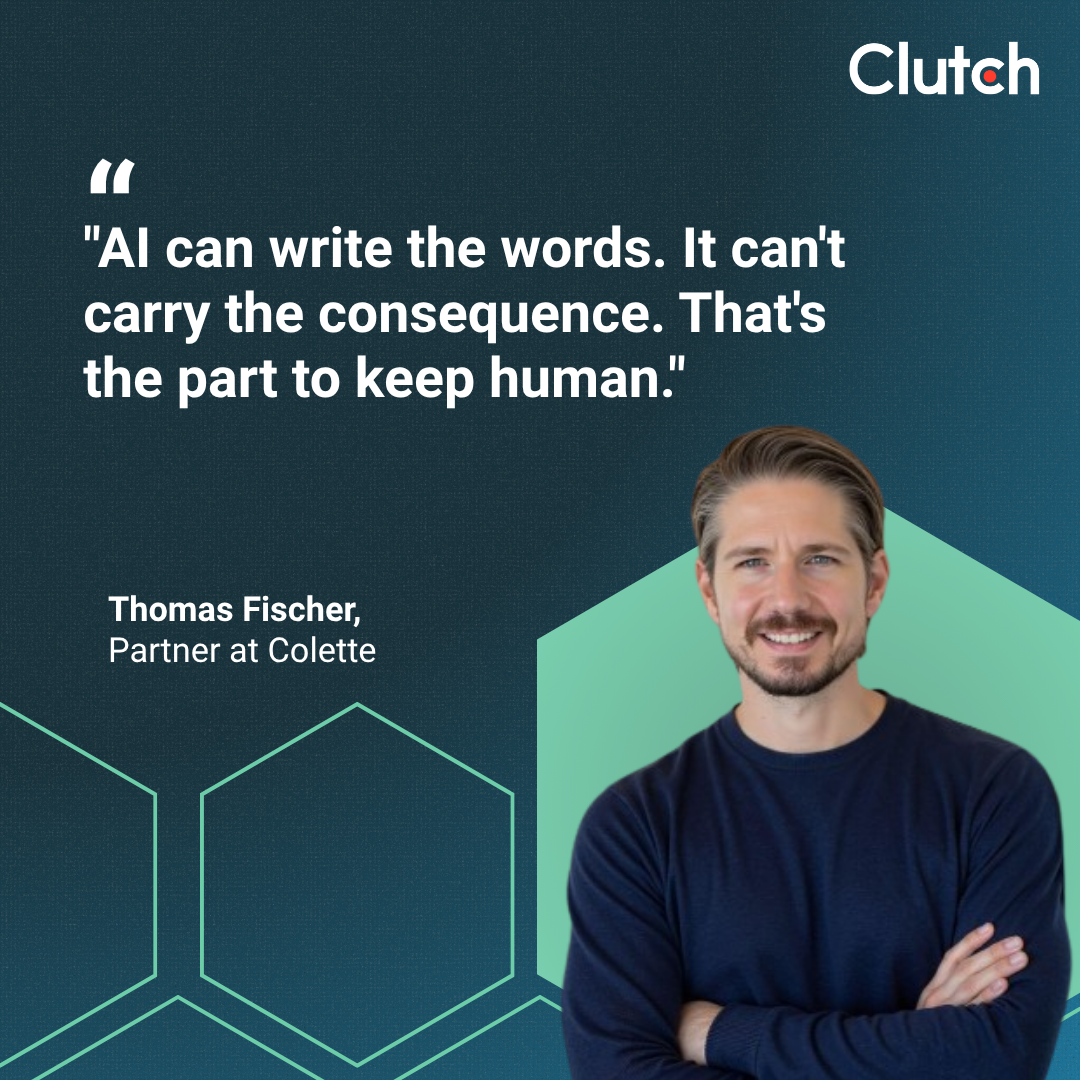
"AI can write the words,” says Thomas Fischer, Partner and Brand Strategist at Colette, a Toronto-based branding studio. “It can't carry the consequence. That's the part to keep human."
So, when should brands disclose their use of AI? We’ll explore the circumstances in which AI disclosure benefits your brand, when it will likely backfire, and how to decide where your company’s work belongs on that spectrum.
Before the strategic question comes the compliance question, and the honest answer is that no single federal law in the U.S. requires AI disclosure. What exists instead is a hodgepodge of various laws and guidelines, with each state and jurisdiction carving out its own rules. For example:
The Interactive Advertising Bureau (IAB) launched the industry's first AI Transparency & Disclosure Framework in January 2026. This is a sign that AI disclosure is morphing from optional to expected, even in areas where the law remains silent.
What can your brand learn from this? It’s simple: Treat compliance as the floor, not your entire strategy. The decisions that truly build consumer trust exist above and beyond the legal minimum.
The regulatory floor explains what brands must do, but it says nothing about what consumers genuinely want. Our June 2026 survey found that 55% of consumers feel less favorable as soon as they detect AI in a brand's creative, while only 24% feel more favorable.
Several other studies from this year add details to the same picture.
IAB's research with Sonata Insights shows a widening chasm between how advertisers think Gen Z and Millennial consumers feel about AI ads and how those consumers actually feel: 82% of executives believe these audiences feel at least somewhat positive about AI-generated advertising, but only 45% of consumers do. That divide grew from 32 points in 2024 to 37 points in 2026.
In its 2026 State of Marketing and AI Report, Canva found that 97% of marketing leaders now use AI in their daily creative work, even though 78% of consumers say they'd still rather see an ad made by a person, even one AI could arguably make better. What’s more, 87% believe the best advertising still needs a human touch.
Cint's research adds a moral dimension. Sixty-three percent of U.S. consumers believe brands have a duty to disclose AI use in marketing campaigns.
None of these amount to a blanket rejection. Sixty-eight percent of consumers in Canva's study say they don't mind AI in advertising when it makes ads more useful or relevant, and the IAB found that disclosure is among the top drivers of consumer attention, behind only high-quality visuals and humorous content.
Consumers lose trust when they feel deceived or sense that something is missing, not necessarily when brands use AI. The risk for brands isn't using AI at all; it's getting caught using it in a way that implies they’re cutting corners.
When surveyed about whether brands should disclose their use of AI, most consumers say yes — that's the AI transparency people claim to want, as the aforementioned data show. However, controlled experiments reflect a more nuanced reality.
Researchers at the Nuremberg Institute for Market Decisions (NIM) showed participants identical ads, labeling some "AI-generated" and others not. The AI-labeled versions ranked worse on every measure that mattered, including lower perceived authenticity, weaker emotional response, and less willingness to click through.
A second NIM experiment in which researchers showed six ads to two groups found the same pattern. Labeling content as AI-generated made people rate it as less natural and less useful, even when the ad itself was identical.
Our findings indicate otherwise: 78% of consumers feel more favorably toward work disclosed as hand-illustrated. Our editorial interpretation is that disclosure isn't a penalty across the board; it depends entirely on what you’re disclosing.
NIM’s experiments documented the same. Telling someone “a machine made this” prompts trust to nosedive, while telling them the same creative is human-made triggers the opposite reaction. The negative trust lever isn't disclosure for its own sake; it's what the disclosure proves about who did the work.
This is the real complexity behind AI disclosure: Rather than a black-or-white policy, it’s a judgment call you have to make about each project.
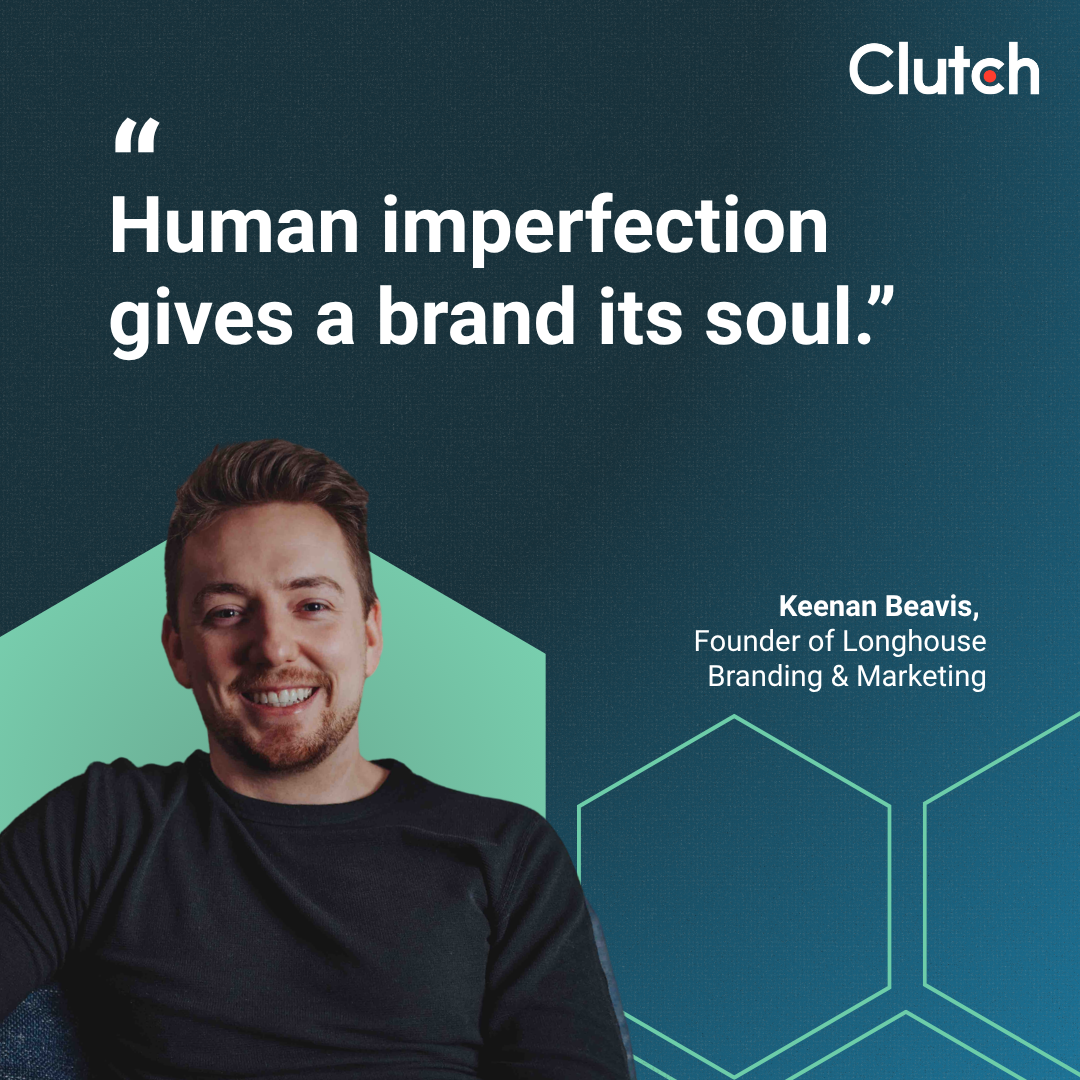
"You should never forgo personality for polish,” says Keenan Beavis, Founder and CEO of Longhouse Branding & Marketing. “Human imperfection gives a brand its soul.”
Before disclosing anything, ask yourself whether the disclosure communicates your brand’s pride in using human craft or reads as an apology for cutting corners. Your answer should fuel your disclosure decision.
The important consideration, rather than whether AI touched a project at all, is whether a reasonable customer would feel deceived if they learned exactly how it was made. That single materiality test allows us to sort most disclosure decisions into three general categories.
Some uses fall squarely on one side of the line. Anything that could lead a viewer to believe a real, identifiable person did or said something they didn't do carries the highest deception and reputational dangers, and brands should disclose it almost every time. Examples include:
The IAB's framework, New York's new law, and the EU's Article 50 all apply to this category, where the deception risk is highest when a viewer might mistake a synthetic performer for a human.
Other uses hardly warrant any consideration. You rarely need to disclose minor, assistive applications of AI. In fact, disclosing them can feel like overkill, as if you announced you used a thesaurus. Some examples are:
Adding an AI disclaimer in these minor cases dilutes the genuinely important AI disclosures, the ones that protect a viewer from being misled about the reality of who or what they're looking at.
This is the nebulous area where most of your consideration belongs. This type of AI usage includes:
For these less obvious examples, the materiality test is essential. Would the customer feel misled, or just mildly surprised, if they knew the full production story? Surprise doesn't require disclosure, but potential deception certainly does.
Effectively disclosing AI-generated content is as much about placement and tone as it is about the words you use or what you’re disclosing. We recommend observing the best practices below.
Terms such as "AI-generated image," “written with AI assistance,” and “AI voice clone” tell the viewer the unvarnished truth behind your creative, while "enhanced with intelligent creative tools" tells them very little and can actually come off as evasive. The FTC Endorsement Guides cover this principle, and it’s important to know that using vague terms can lead to non-compliance fines.
When disclosing AI use, make the disclosure part of the creative wrapper itself, rather than buried three clicks deep on a terms and conditions page.
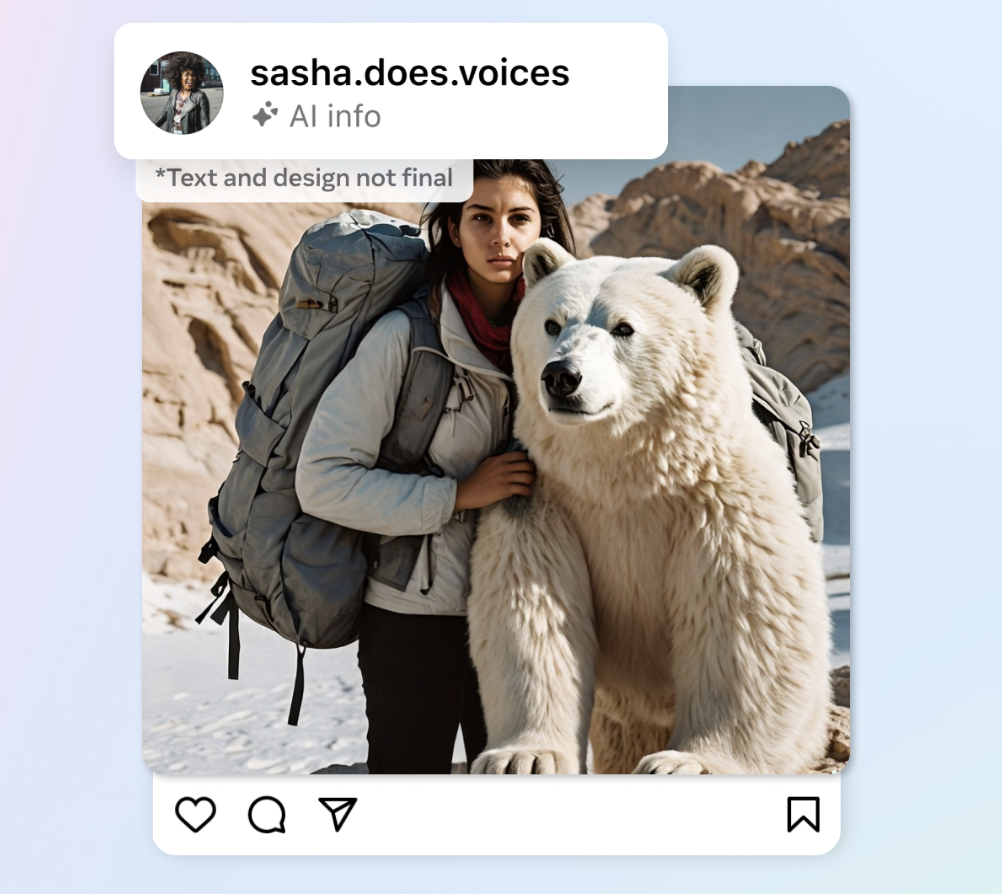
For example, Meta places its "Imagined with AI" watermark directly on the image it describes.
When it released a brand film built with OpenAI's Sora technology, Toys"R"Us included its disclosure in the YouTube caption and description, in an official press release, and on the company’s website. In that case, the company made the disclosure part of the story, rather than a liability tacked onto it.
If it fits your brand, treating "human-made" as an affirmative position works just as well as treating AI use as something to admit.
Aerie built its 2026 campaign with Pamela Anderson around an explicit pledge never to use AI to generate bodies or change the people in their images.
Another example is Le Creuset, which disclosed its AI-free production process before anyone asked, specifically to counter the assumption that the company’s ultra-polished video footage must be synthetic. Both moves turn the disclosure of AI-generated content, or the deliberate absence of it, into a brand asset rather than a confession.
How your brand handles AI disclosure determines whether the same underlying fact reads as confidence or an apology. Told in two different ways, it has the opposite effect.
AI creative stopped being a novelty around the same time it became the default, and that was also when AI disclosure transformed from a compliance checkbox into a strategic decision every brand has to make on its own terms. Eighty-nine percent of advertisers say they disclose their use of generative AI at least sometimes, according to IAB research, but fewer than half say they always do. What this tells you is that most brands are still working this out one ad at a time rather than following a strict, cut-and-dried policy.
The numbers from our survey lend clarity to the decision: 55% of consumers say they feel less favorable when they detect AI use in an ad, while only 24% feel more favorable, and 78% feel more favorable toward work disclosed as illustrated by a human hand.
The bottom line is that consumers don't reward AI disclosure for its own sake. Rather, they reward the human craft that a good disclosure points to. When you disclose in a way that shows the humanity behind the work, the potential penalty turns into a payoff.