Brand attributes are the specific characteristics and qualities of your brand that resonate with your customers and elicit an emotional response. Brand attributes must be clearly defined, consistent, and well communicated. When your brand attributes are easily identifiable, your customers connect with your brand, remember it, and engage with it.
Brand attributes are the specific characteristics — trustworthy, innovative, casual, polished, credible, unique — that define how your brand feels to customers and shape whether they choose you over a competitor. The seven attributes consistently shared by strong brands are relevance, consistency, proper positioning, innovation, credibility, inspiration, and uniqueness, but the right mix depends on your category. Clutch's June 2026 survey of 408 consumers found this directly: 70% of consumers expect a casual, human style from a local restaurant or coffee shop, while 42% expect a luxury fashion brand to lean polished and aspirational. There is no universal "right" set of attributes — there's the set that matches what your audience expects from your category.
This article defines brand attributes, walks through the seven that consistently show up in strong brands, shows how to identify yours, and gives you a category-aesthetic decision framework so you can stop chasing a one-size-fits-all look.
What Are Brand Attributes?
Brand attributes are a collection of characteristics that define a brand’s personality, values, and culture.
Simply put, think of your brand as a person and the brand attributes are the adjectives you would use to describe who that person is. Each person is unique and possesses a range of characteristics, and so does your brand. Your attributes distinguish you from your peers just as a brand’s attributes set them apart from its competition in the market.
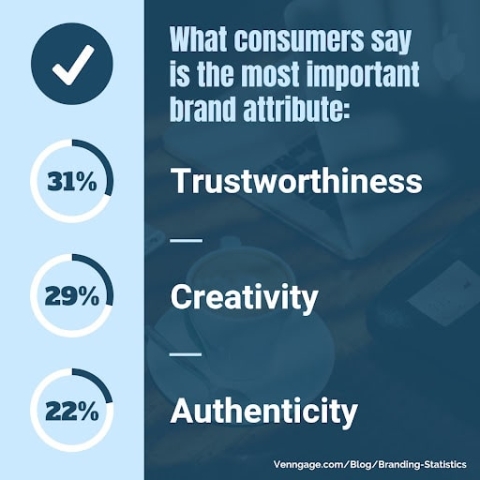
For example, recent studies have shown that trustworthiness, creativity, and authenticity are the most influential brand attributes that contribute to buying decisions.
Source
Brand attributes fall into three overlapping types:
- Functional attributes — tangible features: quality, speed, durability, price. ("Toyotas are reliable.")
- Emotional attributes — the feelings a brand evokes: joyful, calm, cutting-edge, trustworthy. ("Apple feels innovative.")
- Aesthetic attributes — the visual and tonal style: casual, polished, minimal, rustic, luxurious. ("Trader Joe's feels neighborhood-friendly; Hermès feels exclusive.")
Customers are drawn to brands with attributes that resonate with them. When customers choose a brand, they are basically affirming their values or an aspect of their personality that they see in the brand.
Why Are Brand Attributes Important?
Knowing your brand's attributes helps you manage your brand's market positioning. When your attributes are clearly identified, you can align them with your brand's values, objectives, and mission — then build marketing strategies that use the right promotional tools to express them.
Strong brand attributes drive three measurable business outcomes:
- Recognition. Customers can identify your brand quickly across channels — and recognition is the precondition for preference.
- Differentiation. A few sharp attributes pull you out of the "everyone looks the same" crowd. The brand isn't competing on every dimension; it's competing on the ones it owns.
- Loyalty. Consistent attributes over time build the kind of trust that turns one purchase into a relationship and a relationship into global brand recognition.
Brand Aesthetic: The Attribute That Depends on Your Category
Most branding advice treats "authentic and human" as a universal goal — but it isn't. Our survey of 408 consumers found that what reads as authentic depends entirely on the category. For a local restaurant or coffee shop, about 70% of consumers say a casual, human style feels right. For a luxury fashion brand, the lean flips — around 42% expect polished and aspirational instead.
That's a meaningful pattern. A coffee shop using the visual codes of a luxury fashion house reads as pretentious; a luxury fashion house using the visual codes of a coffee shop reads as cheap. Aesthetic isn't a universal taste judgment — it's a category fit.
Category-to-Aesthetic Decision Framework
| Category |
Audience-expected aesthetic |
Signals to lean into |
Signals to avoid |
| Local restaurant / coffee shop |
Casual, human (~70% expect this per Clutch June 2026) |
Handwritten typography, warm tones, founder/team photos, behind-the-scenes content |
Heavy gloss, stock photography, corporate-stiff copy |
| Luxury fashion |
Polished, aspirational (~42% expect this per Clutch June 2026) |
Editorial photography, generous white space, restrained color palette, considered typography |
Casual handwritten elements, busy layouts, "approachable" framing that reads as cheap |
SaaS / B2B software |
Credible, modern, considered |
Clean typography, screenshots over stock imagery, specific customer logos, real metrics |
Hype, overpromise language, generic illustrated mascots without strategic purpose |
| Consumer wellness |
Calm, trustworthy, transparent |
Muted palette, ingredient transparency, real-customer testimonials with names and faces |
Aggressive sales language, before/after stunts that read as miracle claims |
| Fintech |
Confident, precise, secure |
Strong typography, data-rich visuals, named compliance/security signals, real founder presence |
Playful illustration that undermines trust signals, vague claims about safety |
The decision framework: figure out which category you compete in, look at what audiences in that category have been trained to expect, and calibrate your aesthetic attributes to match. You can still be authentic — authenticity and category fit aren't opposites. The point is that the form of authenticity changes. A handwritten chalk menu is authentic at a coffee shop and inappropriate at a Hermès store. Both can be honest expressions of brand truth; they just have to match the category they're in.
How to Identify Your Brand’s Attributes
Defining your brand attributes can help you identify your niche and target potential customers. Additionally, this information can guide business decisions from determining which new services to offer in the future to create new ad campaigns.
Here are some tips to help you identify your brand attributes:
- Know your customers
- Use analogies
- Know what separates your brand from the competition
- Study the emotional response your brand evokes
- Identify words that best describe your brand
1. Know your Customers
Knowing who their customers are helps companies sharpen brand image and target customers more effectively. Build an ideal customer profile (ICP) covering:
- Age, gender, location, income, preferences
- For B2B: industry, company size, budget, sales cycle
By outlining details about your audience, you gain insight into what motivates them and how to best meet their needs. Once you know your customer profile, identify characteristics that align with their interests and values. Customers are drawn to brands whose attributes they can relate to.
2. Use Analogies
It can be difficult for company leaders to look at their brand objectively. To combat this, analogies can be another useful tool when identifying brand attributes.
By comparing your brand to something else, you may be able to discover new traits. For example, you could compare their brands to movie genres. Is your brand more like an action-thriller or a RomCom?
What characteristics does your brand share with them? Think about how to complete this sentence: My brand is like ______________.
3. Know What Separates your Brand from the Competition
What is it about your brand that makes it stand out? By focusing on a few characteristics that resonate with customers, you can position your brand in an overcrowded market. Consider what differentiates your brand from competitors and why customers would choose your business over others. This is your niche, and it helps define what attributes appeal to your customers the most.
4. Study the Emotional Responses Your Brand Evokes
Customers are 8.4 times more likely to trust brands with positive emotional associations and are likely to purchase more from them, according to a study reported by Forbes. Ads that evoke an emotional response can drive a 23% increase in sales.
Known as emotional branding, this approach helps companies differentiate themselves, foster human connection, and develop brand loyalty. Some brands stoke feelings of adventure; others help their customers feel calm.
Consider Coca-Cola, whose current global brand platform — "Real Magic," launched in 2021 and still active — is built around the unexpected moments of human connection that turn an ordinary day into something memorable. Coca-Cola's "Hug" logo refresh, its global "One Coke Away From Each Other" campaign, and its ongoing creative collaborations with independent artists all express the same attribute: real, magic-in-the-everyday human moments.
What emotions do your customers feel toward or associate with your brand? Some companies benefit from focus groups to better understand how they're perceived by their customer base. Just remember to be authentic and portray meaningful values when listing your brand attributes.
5. Identify Words that Best Describe your Brand
Outline what defines your brand. Sit down with your team and create a list of adjectives that describe it.
If your brand was a person, how would you describe that person? Authoritative or heart-felt? Cutting-edge or down-to-earth? To know what a brand is all about, identify your brand's:
- Characteristics
- Core values
- Objectives
- Culture
Your attributes should reflect the values your business has outlined in its mission statement.
7 Attributes That Make a Strong Brand
While every brand is unique, there are several attributes that are consistently used to describe top brands, such as:
- Relevant
- Consistent
- Properly positioned
- Innovative
- Credible
- Inspiring
- Unique
1. Relevant
Brand relevance is defined by how well companies are able to connect with their customers on an emotional level. How essential is your brand to your customers’ way of life? A strong brand not only meets the needs and expectations of its customers, but also adds purpose and value.
Over time, this can reduce customer acquisition costs and increase sales.
However, remaining relevant can be difficult as trends shift and the market changes. Companies that want to stay connected with their customers must be able to:
- Stay focused on what their customers want
- Adapt to changing needs
- Provide superb customer experiences
- Focus on what makes their brand different from their competitors
- Be authentic
2. Consistent
Despite changing markets and stiffer competition, companies must maintain quality across products and services. Customers need to trust that quality and experience will hold regardless of when or where they engage with a brand.
Consider Chick-fil-A's branding strategy. Though controversial at points, they claim a commitment to serving their communities — closing on Sundays for worship, greeting customers kindly, giving employees time off, and creating scholarship and grant opportunities. The result is a culture built around hospitality. Customers know that whenever they visit Chick-fil-A, they'll have a positive experience — and the chain has consistently led QSR loyalty surveys as a result.
3. Properly Positioned
Is your brand targeting the right market? Have you positioned your brand to reach the customers you want to engage? Or is your brand talking to everybody but, in the end, nobody?
A brand that exclusively caters to its target market yields two-way benefits: brand resources are used more efficiently, and the intended customers' needs are especially met, ensuring repeat business.
At a glance, Trader Joe's appears to be just another grocery store chain — but they've carved out a niche as a "national chain of neighborhood grocery stores." Small stores, limited options, brown paper bags, and Hawaiian-shirt uniforms make them feel like a casual local brand. They recruit high-energy and friendly employees to create a consistently positive shopping experience, and they focus on stocking high-quality and organic items. The result is a loyal customer base who'll stand in long lines to buy groceries — and a chain that has consistently ranked among the most-loved grocery stores in the U.S. for years.
4. Innovative
A sustainable brand comes up with innovative products or solutions and fresh marketing concepts. This keeps companies ahead of competitors, positions them as industry leaders, and can drive business growth. Innovation is particularly important for technology companies, but consumer goods, healthcare, and transportation are also heavily influenced by new ideas.
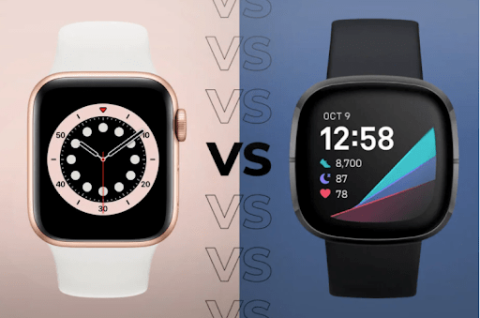
Apple is the canonical example: customers buy AirPods over other Bluetooth headphones and Apple Watches over Fitbits largely because Apple's products work seamlessly together — synching and integration are themselves the innovation. While each Apple product update may not be revolutionary on its own, the way the ecosystem behaves sets Apple apart from Alphabet, Microsoft, and Samsung. Apple has consistently ranked among the world's most innovative companies in annual rankings from BCG, Fast Company, and Boston Consulting Group.
Source: TrustedReviews
Pro tip: To become more innovative, ask:
- Can your brand's products be improved or updated?
- Can new related products be introduced?
- What added value can your brand provide?
5. Credible
Is your brand trustworthy? Strong brands deliver what they promise. When a brand is credible, their customers know that they can rely on the brand to provide the products and services they expect.
People trust businesses that:
- Are transparent about their business practices.
- Hire experts who can speak knowledgeably about their industry.
- Develop professional websites that represent their brands well.
- Ask for endorsements.
- Respect vendors, stakeholders, employees, and potential customers.
6. Inspiring
A strong brand provides value to its customers’ lives beyond the initial benefits of its products. Innovations, advertising strategies, promotions, and processes can have a positive impact on your customers and should motivate them to engage with your brand.
By providing an exceptional service or product, companies turn their customers into advocates.
7. Unique
Finally, the qualities that make your brand special can help you stand out from others in your industry.
Rather than reflecting the same attributes as their competitors, these brands offer something completely distinctive. It could be spectacular quality, great customer service, or stand-alone branding.
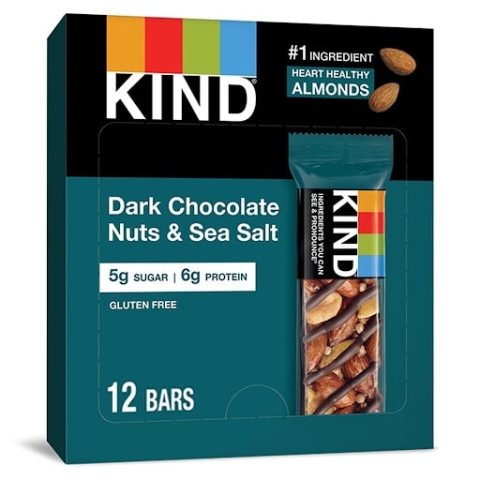
KIND bars, for example, stood out when they first launched because they offered a genuinely healthy granola bar option. Unlike other brands, they provided all-natural, whole-nut-and-fruit bars made from ingredients customers could see and pronounce — and they highlighted this with clear packaging that showed every ingredient.
Source: Amazon
The aesthetic and the product matched: transparent packaging for a transparent ingredient list. The uniqueness came from the alignment.
Brand Attributes Benefit Businesses
Strong brand attributes are essential to market recognition and recall. When customers can identify your attributes easily, they relate to your brand and want to engage with it.
Some attributes — relevance, innovation, credibility — are hallmarks of well-known brands. Others, like aesthetic style, depend on what your category leads consumers to expect. To make sure your brand stands out, identify the qualities that define it and the aesthetic that matches your category. With both clear, you can create better ads, make better-informed business decisions, and target customers more effectively.
FAQs: Brand Attributes
Common brand attributes include trustworthy, innovative, casual, polished, credible, relevant, consistent, unique, inspiring, and properly positioned. They fall into three buckets: functional (quality, speed, durability), emotional (joy, calm, excitement), and aesthetic (casual, luxurious, minimal). Examples by brand: Apple is innovative and integrated; Patagonia is sustainable and credible; Trader Joe's is neighborhood-friendly and casual; Hermès is exclusive and polished. The right attributes for your brand depend on your category and your audience's expectations.
Start with your category. Clutch's June 2026 survey of 408 consumers found that aesthetic expectations vary sharply by category: about 70% of consumers expect a casual, human style from a local restaurant or coffee shop, while around 42% expect a luxury fashion brand to lean polished and aspirational. Match the visual language — colors, typography, photography, layout — to what audiences in your category have been trained to expect. Authenticity isn't a universal aesthetic; it's an alignment between what your brand stands for and the visual codes of your category.
Brand attributes are the full set of characteristics that define your brand's personality — including functional traits (quality, durability), emotional traits (trustworthy, joyful), and aesthetic traits (casual, polished). Brand aesthetic is specifically the visual style — colors, typography, photography, layout — that expresses those attributes. Aesthetic is one type of attribute, not a separate concept. A brand with the attribute "approachable" might express it aesthetically through warm tones, friendly type, and real-customer photography; a brand with the attribute "exclusive" might express it through restrained palette, editorial photography, and generous white space.