
How to Delegate: A Step-by-Step Guide for Agency Owners
Learn how to delegate effectively as an agency owner — what to delegate first, how to hand off work without losing quality, and the hiring sequence that...
Updated February 23, 2026

Blending the right traits and strengths into your company’s core DNA is crucial for ensuring its long-term success and sustaining continuous innovation. In this article, we’ll dive into the 12 strands that businesses and organizations need to integrate for robust growth and unending innovation.
To build and sustain a company with a culture of continuous innovation requires starting with a view of what such an organization would look like. Picture a dynamic, market leading organization that provides purpose, challenge and reward to its team members and substantial value to its customers.
The organization and its members are routinely shedding old processes and replacing them with improved ways of working. The company regularly delivers breakthroughs ranging from gains in efficiency to better products and services.
There are 12 strands of DNA found weaving through these organizations that are constantly nurtured and developed to create and sustain innovation.
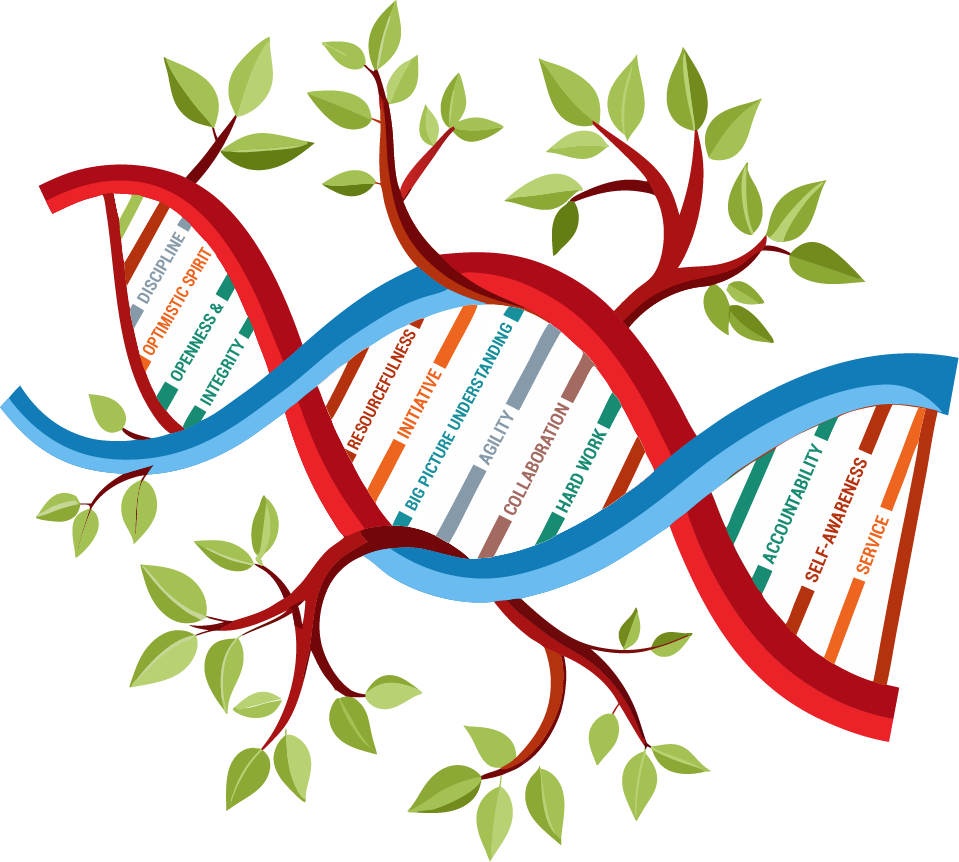
Discipline involves building a culture that intertwines freedom and responsibility within the guidelines of a focused framework. It provides the balance between individual empowerment and the necessity to keep the whole organization headed in the same direction.
Discipline requires a deep sense of how to prioritize, and a willingness to examine and reset these priorities when needed. A disciplined organization eschews the need for bureaucracy and combines the resultant freedom with a sense of self-control and organization that empowers creativity and maximizes company productivity.
“Champions are champions not because they do anything extraordinary but because they do ordinary things better than anyone else.”
- Chuck Noll, 4-time Superbowl winning coach of the Pittsburgh Steelers
Optimism conquers the fear of taking action. Without optimism, it’s impossible to take the risks necessary to create change. Employees with an optimistic spirit are able to roll with the punches and identify opportunities for learning and even greater accomplishments in every setback.
Optimism is contagious and it creates an environment where the team is energized by challenges rather than being stressed out by them. An optimistic spirit also frees its members to have fun at work and not take themselves too seriously.
“If you can dream it, you can do it!”
- Walt Disney
Openness to new ideas and the viewpoints of others is essential and must be paired with a bedrock of integrity. Authentic openness and integrity involves treating others with the respect, dignity, and honesty that enables and results in effective communication and trust-building.
The culture demands directness to solve problems which, in turn, generates innovation. Sharing views and perspectives is the most respectful thing an individual can do – withholding it deprives teammates of insights into solving a problem or seizing an opportunity.
“As I have said, the first thing is to be honest with yourself. You can never have an impact on society if you have not changed yourself. Great peacemakers are all people of integrity, of honesty, but humility.”
- Nelson Mandela
Innovative organizations require a team of resourceful employees. Resourcefulness is a DNA strand of a company in which its people routinely find a way to do things even if they’ve never done them before.
The people on the team are culturally wired that any of these methods are perfectly acceptable: to go around an obstacle, to knock it down, or to ask for assistance in finding the solution collaboratively. By removing barriers, the organization makes growth possible.
“You can’t solve current problems with current thinking because current problems are the result of current thinking.”
- Albert Einstein
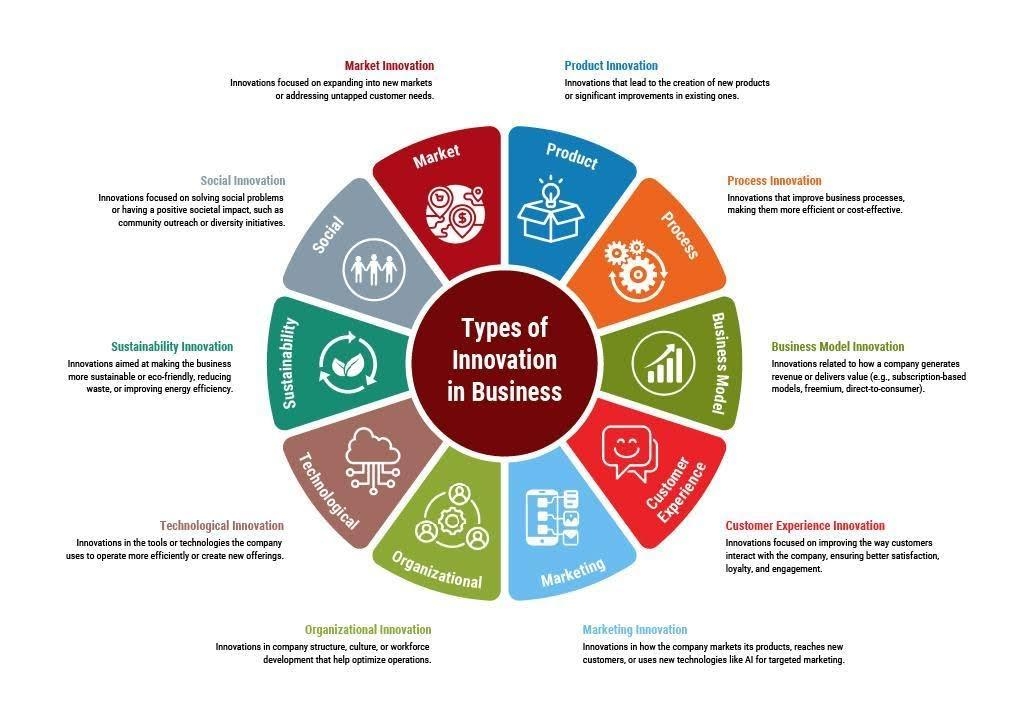
“That’s not my job” is a phrase seldom heard in a culture of continuous innovation. While everyone is conscious of the teamwork and respective roles required to deliver great results, the individual and collective mindset is that “we have what it takes to control our destiny”.
When each team member is dedicated to finding the solution, the impossible becomes possible. Employees create opportunities rather than simply waiting for assignments. They are aware that the only limitations that exist are the ones they place on themselves.
“Whatever you do, or dream you can, begin it. Boldness has genius and power and magic in it.”
- Goethe
In order for innovation to take place, the culture must foster an environment in which each member is provided with the time and resources to deeply understand the purpose and value behind what they are building. This DNA strand creates the possibility that game changing innovation can happen from anywhere in the organization.
An organization that helps prevent silos from forming, spurs innovation and productivity. The ability to build and implement solutions that amaze its customers is dependent on its members' ability to understand and utilize a deep, thorough knowledge of where the business is headed.
“If you are working on something exciting that you really care about, you don’t have to be pushed. The vision pulls you.”
- Steve Jobs
The organization is comfortable with the inevitable ambiguities of a fast-paced environment and flexible in adapting to new challenges. Its members are nimble in adjusting to rapid change, and limber in their thinking in the face of new methods, responsibilities, data, people, and market dynamics.
Agility in technology, process, and attitude results in continuous improvement, innovation, and ultimately, in competitive edge. This quality is a cornerstone of success in staying relevant in this time of exponential rate of change.
“Change is the law of life. And those who look only to the past or the present are sure to miss the future.”
- John F. Kennedy
The company values and exhibits the power and impact of a team approach. Not only are team wins more valuable to the long-term development of the organization, they are more satisfying to its players.
Teams exhibiting this DNA strand draw others into an active, enthusiastic commitment to the collective effort. They build a strong sense of spirit and collective identity by their actions and attitudes. This spirit is often the fuel leading to the invention.
“Alone we can do so little; together we can do so much.”
- Helen Keller
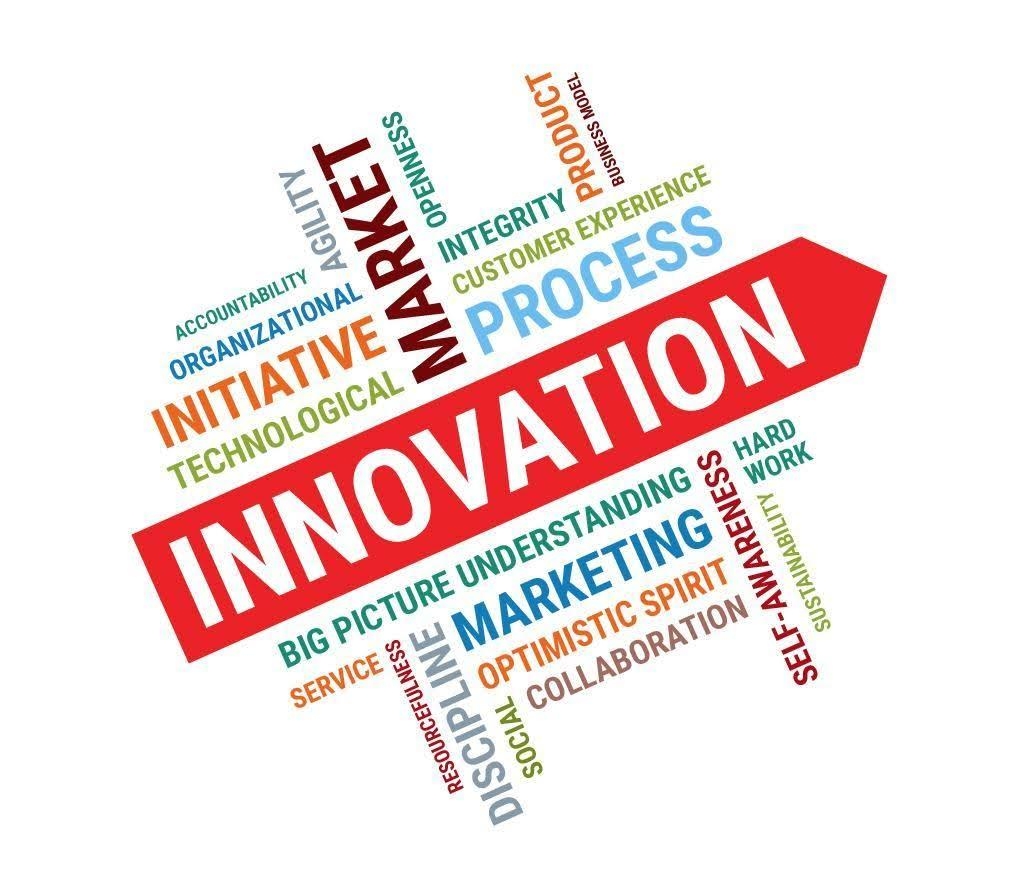
Great ideas and resourcefulness alone aren’t enough. The organization and its members must have the will and commitment to fulfill challenging responsibilities and to go above and beyond.
Sometimes, it's simply hard work that brings the great idea to life. Passion for the mission is critical for this level of dedication to be sustained. Moreover, the members must operate in a culture in which they feel like and behave like owners.
“Look at a day when you are supremely satisfied at the end. It’s not a day when you lounge around doing nothing; it’s when you had everything to do, and you’ve done it.”
- Margaret Thatcher
The substance of this DNA strand is doing what you say you are going to do. Completing commitments produces personal and corporate momentum. When commitments simply can’t be met, accountability requires proactive communication to eliminate surprise.
Tolerating breakdowns in accountability erodes trust and endangers results. This is a simple concept with profound implications both when it is embraced and when it is neglected.
When you commit to a customer or teammate you are saying, “I promise”. The company and its employees take their promises wholeheartedly.
“Responsibility equals accountability, accountability equals ownership, and a sense of ownership is the most powerful thing a team or organization can have.”
- Pat Summit, the most winning coach in college basketball history
Self-awareness allows members to be candid, authentic, and able to speak effectively about their ideas, emotions, and convictions. When each can accurately read and understand themselves, they are able to build trust with others, and achieve their personal goals and the goals of the company.
Being attuned to their “gut”, members often intuit the best path forward in a complex situation. Strengthening this DNA requires a willingness to listen, a capacity for self-reflection, and a healthy dose of humility.
“Don’t let what you cannot do interfere with what you can do.”
- John Wooden, led his teams to 10 NCAA national championships in 12 years
Modeling supportive behaviors defines the service characteristic found in innovative companies. Within a company, service may involve looking for opportunities to free a bottleneck or devising a new approach to a problem that might be occurring in a department or in the company at large.
The members have a mindset to make themselves available to assist teammates and customers alike. The commitment to service fosters a culture where personal development is always occurring and innovation inevitably stems from this growth.
“If your actions inspire others to dream more, learn more, do more and become more, you are a leader.”
- John Quincy Adams
The DNA of an organization consistently generating innovation is not a model of perfection. It is a model of failures, learnings, and growth. The dynamic nature of each of these 12 characteristics results in connections that form breakthroughs that sustain the company and produce a fulfilling and rewarding environment for its members.