
How to Delegate: A Step-by-Step Guide for Agency Owners
Learn how to delegate effectively as an agency owner — what to delegate first, how to hand off work without losing quality, and the hiring sequence that...
Updated March 31, 2026

What roles are heating up for 2026? AI, sales, and customer success take the lead.
As businesses prepare for another year of rapid change, one thing is clear: AI is actively reshaping the workforce and influencing how teams are built.
A new Clutch survey of 1,000 U.S. business decision-makers shows just how far this shift has gone. Nearly half say AI development roles will grow in importance in the next two to three years, more than any other department. At the same time, core roles like digital marketing, sales, and customer service remain top hiring priorities.
This evolution is already being felt in the workplace. Only 27% of companies have avoided restructuring or headcount changes in the past year, reflecting the pressure many businesses face to balance innovation with day-to-day operational needs.
Business leaders are investing in both innovation and stability. While AI hiring trends lead in future-forward hiring, companies are still prioritizing customer-facing roles and essential support teams.
Businesses are concentrating their resources on a mix of growth, innovation, and customer support. The data show a clear emphasis on functions that directly impact visibility, operations, and customer retention.
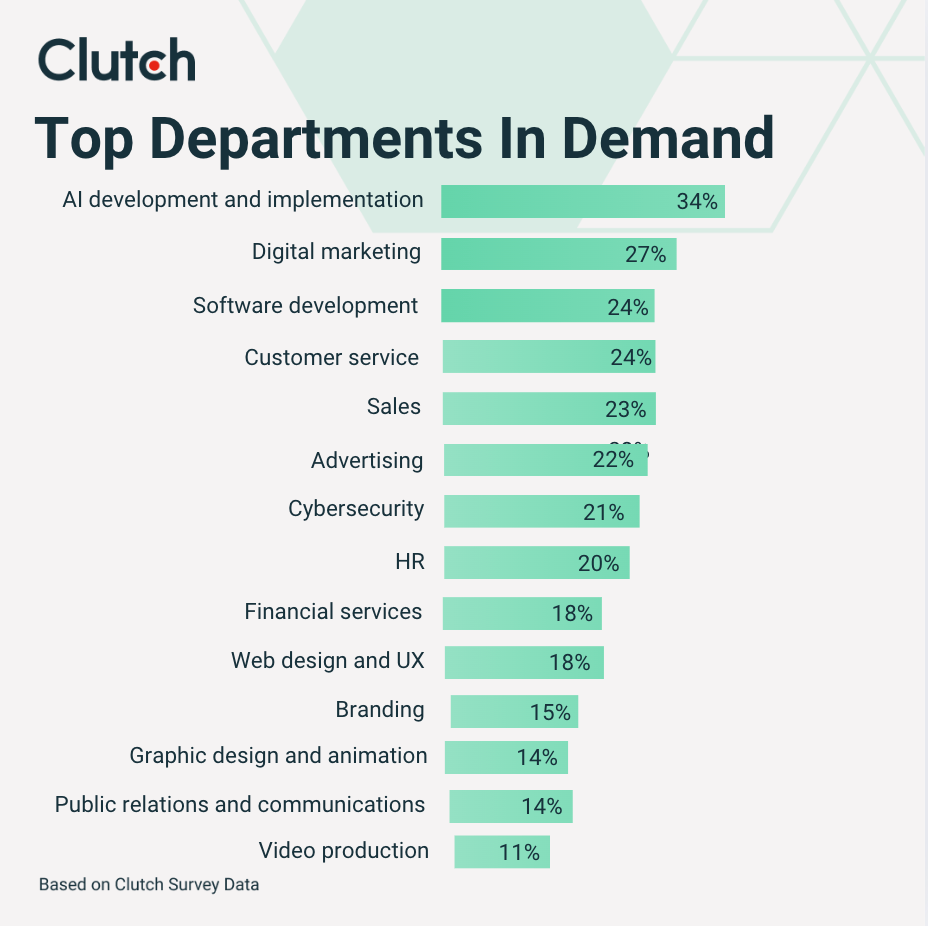
After AI development and implementation, digital marketing is the second-highest area where companies plan to hire or outsource talent, according to 27% of respondents. This includes SEO, content creation, paid media, email marketing, and social media. The priority placed here suggests companies are looking for measurable growth in their online reach.
Software development follows closely behind at 24%, reflecting continued demand for new product builds, app support, and backend upgrades. Simultaneously, AI development and implementation are already a focus for 34% of decision-makers, showing that many companies are actively building or expanding to prepare for an AI-focused future.
Customer-facing departments also remain a high priority. Customer service and sales each accounted for 23%, highlighting that even as companies experiment with automation, they still rely on human connection to close deals and support retention. Advertising rounds out the top five at 22%, with teams investing in PPC, media planning, and performance-based campaigns.
Other roles are receiving less attention. Just 15% of businesses are focused on branding, 14% named public relations as a priority, and only 11% plan to expand or outsource video production. These areas may be viewed as longer-term brand investments or kept in-house to reduce external costs.
This breakdown suggests a clear trend. Companies are investing in roles that drive immediate impact – whether through customer acquisition, technical delivery, or AI integration – while placing creative and promotional efforts on a slower track.
The most important roles for business success in the next year look to cash in on two sides of the spectrum: the productivity of new technology and the human touch of customer-facing teams.
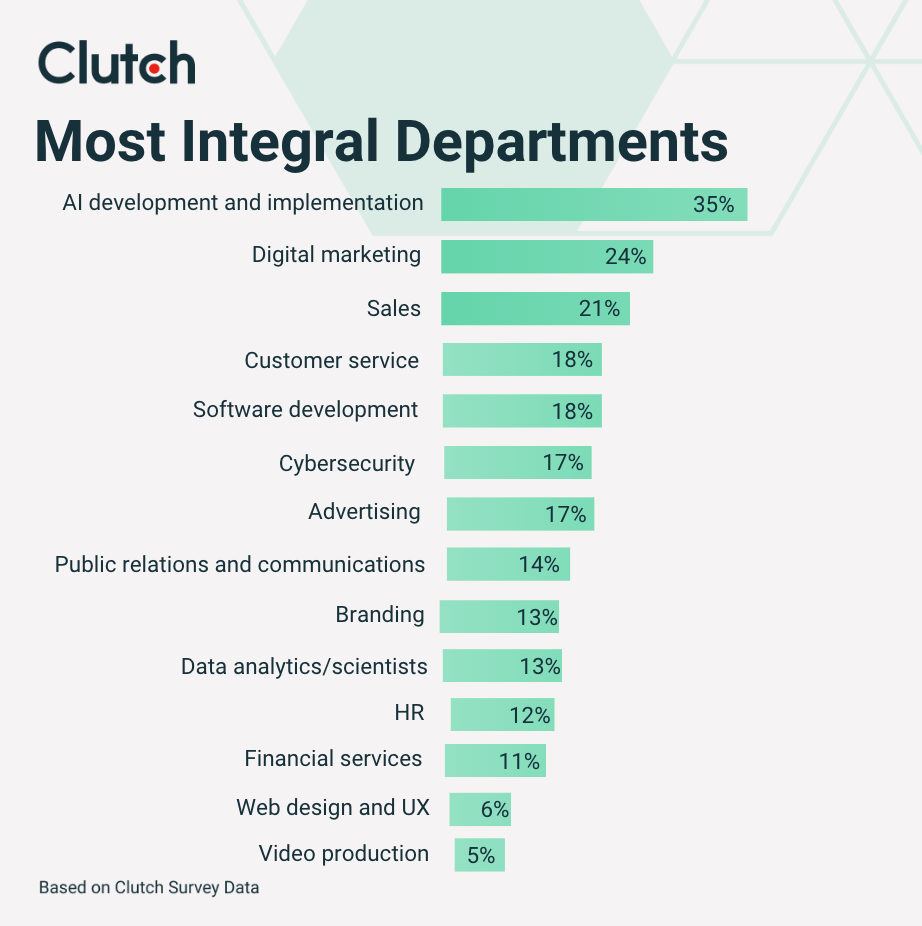
AI development was selected by 35% of respondents as the most integral function, showing that businesses are serious about using technology to improve efficiency, automation, and decision-making.
Digital marketing came in second at 24%, with many companies relying on these teams to boost visibility and attract leads. Sales followed at 21%, highlighting that direct revenue growth is still a top priority.
Behind those, both customer service and software development were named by 18% of leaders as crucial to the business. These departments support product delivery, retain existing clients, and solve real-time issues – which is essential during times of change.
Other key departments included cybersecurity and advertising, which each scored 17%. These functions help protect business operations and drive campaign performance, even as budgets and strategies shift.
The data shows a split between what businesses are building for the future and what they need to maintain today. Technical teams like AI and development support innovation, while sales and customer service keep the business grounded.
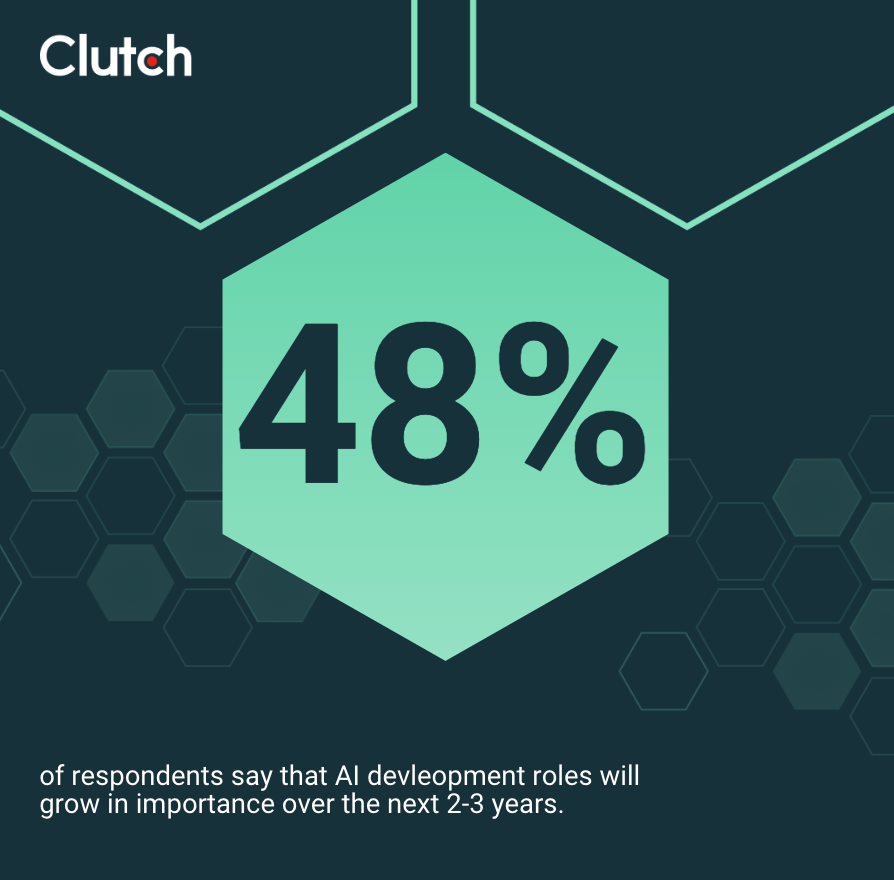
AI is no longer a distant consideration. Many companies are already reshaping their teams around it, and the pace of change is accelerating. Nearly 48% of companies expect these roles to become even more important in the coming years. That’s a higher share than any other department surveyed.
To keep pace, many companies are reskilling for AI from within. 42% have already started retraining employees for AI-related functions, while another 32% plan to begin within the next year. Only 10% report no reskilling plans at all, making that group the minority.
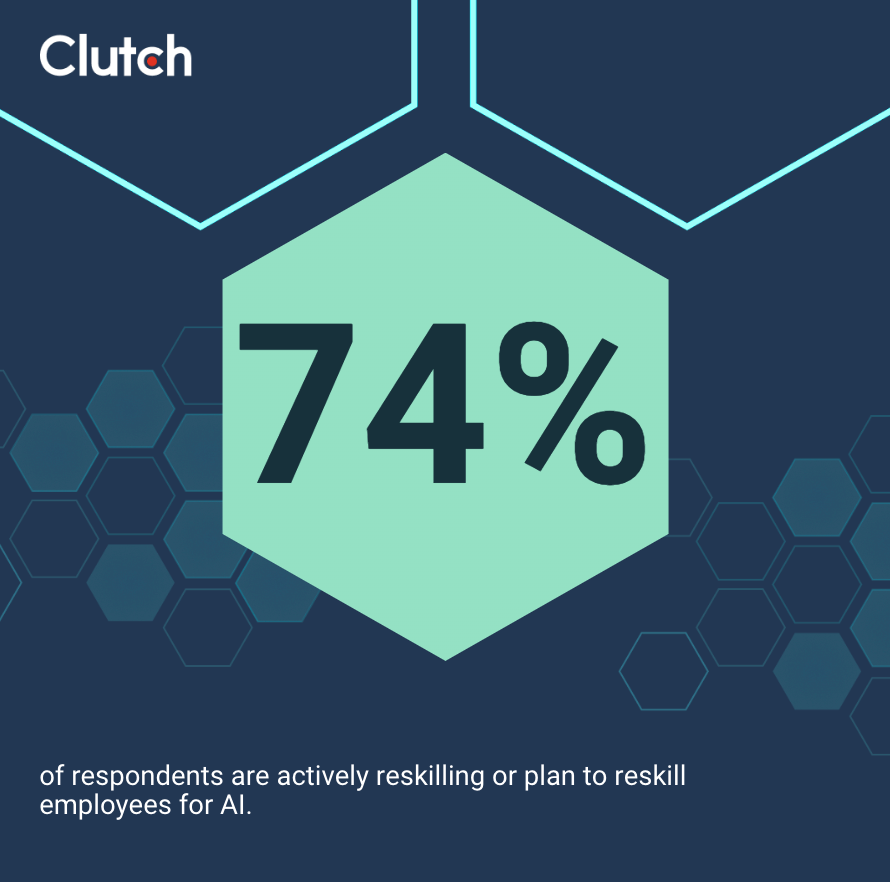
This shift reflects a broader commitment to long-term adaptability. Rather than relying entirely on new hires, companies are working to equip their current teams with the tools needed to stay relevant.
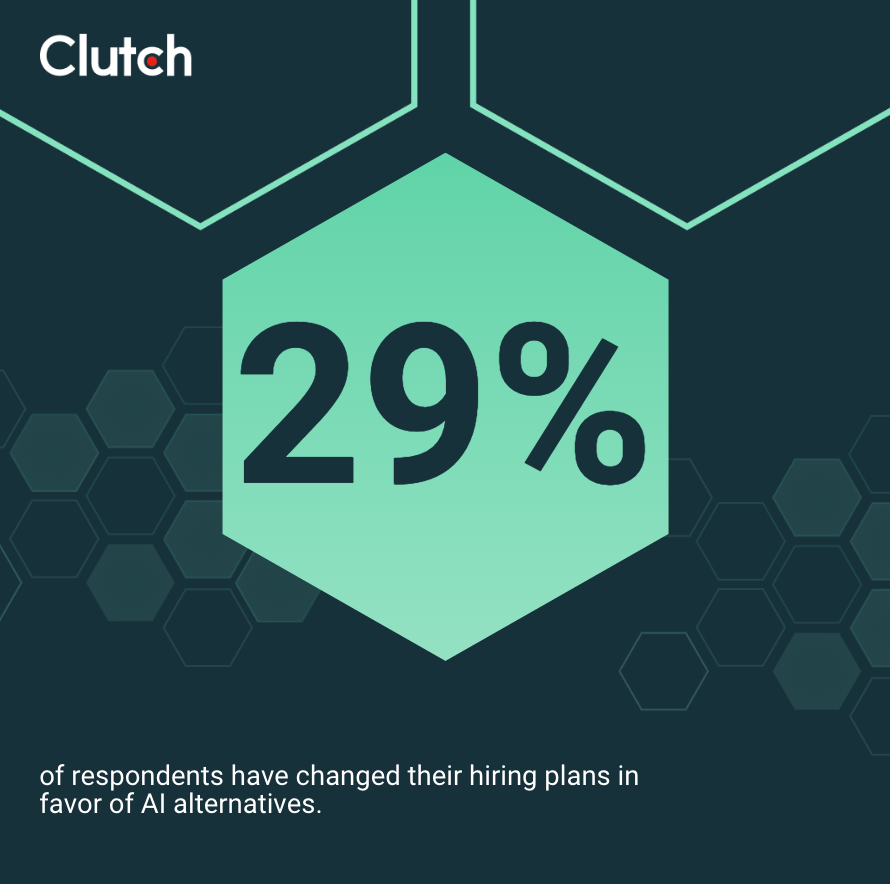
Some businesses have already adjusted course. Twenty-nine percent of respondents said they’ve replaced at least one planned hire or outsourced position with an AI solution, highlighting early examples of roles replaced by AI. A slight majority (54%) said they have not, while 17% remain unsure.
These early changes suggest that AI is influencing hiring decisions at a practical level, not just a strategic one.
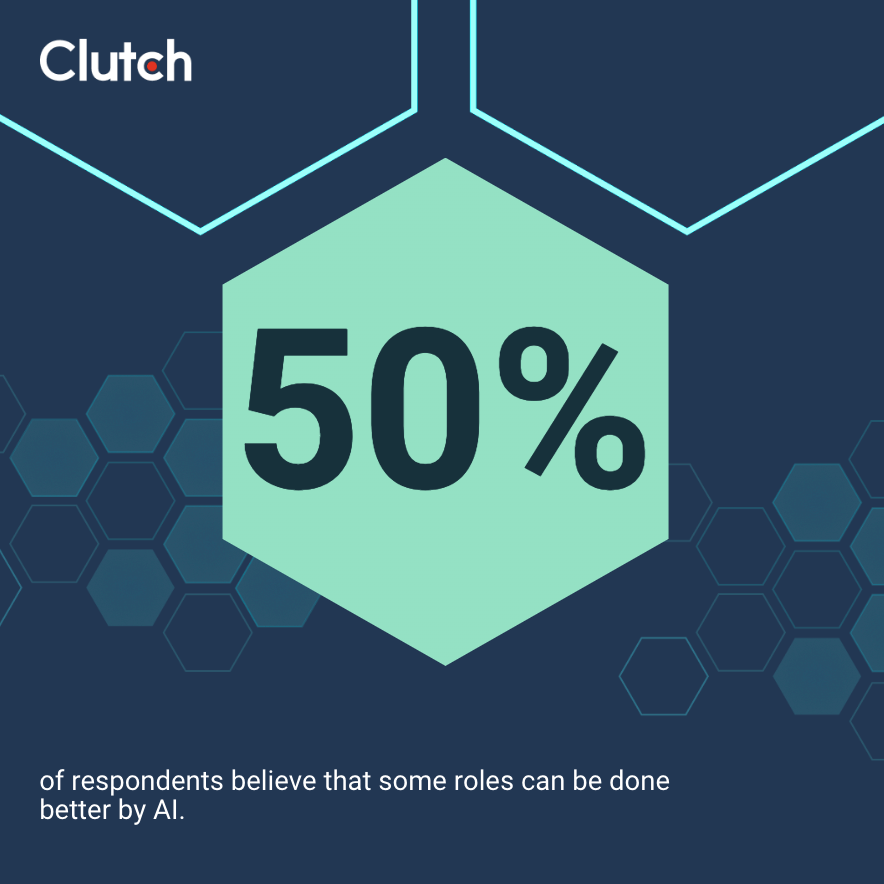
AI may be driving innovation, but it’s also forcing companies to reconsider which roles need a human touch. Half of all decision-makers believe that some jobs can already be performed more effectively by AI.
The data reveals which teams are most at risk, and where companies are already making changes.
The roles most commonly seen as AI-replaceable are tied to data, content, and design. Digital marketing topped the list, with 39% of respondents saying AI could outperform humans in this department. Data analysis followed at 31%, along with software development and advertising, both at 30%.
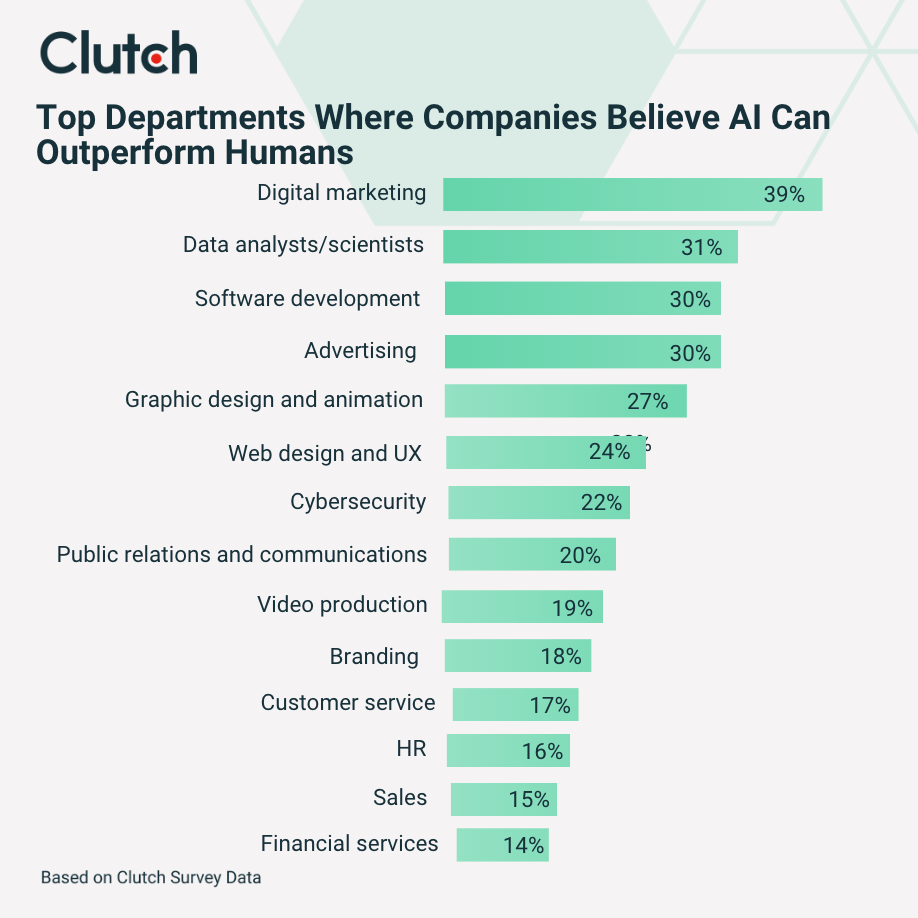
Creative functions are also under pressure. Graphic design was named by 27%, and web design by 24%, suggesting that automation is increasingly seen as capable of generating visual and UI work.
By contrast, far fewer respondents believe AI can outperform humans in sales (15%) or customer service (17%). These areas appear to benefit from emotional intelligence and personal interaction – skills that machines haven’t yet matched.
Some companies have already made hiring changes in response to AI.
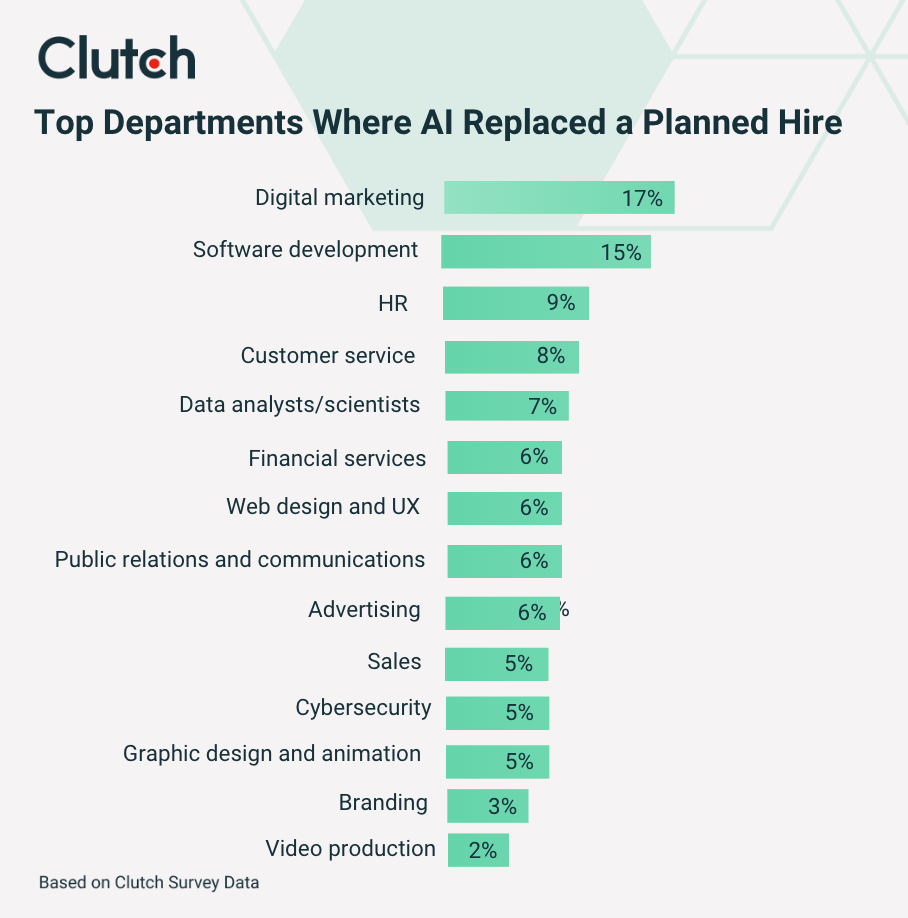
Digital marketing saw the highest rate of substitution, with 17% of companies choosing an AI solution over a planned hire. Software development was next at 15%, followed by HR (9%), customer service (8%), and financial services (6%).
Creative and communications teams were the least affected. Very few respondents said they had replaced planned hires in graphic design (4%), branding (3%) or video production (2%), suggesting these roles may remain more insulated, at least for now. This could change in the future, since more respondents said that they believe AI could outperform humans today in areas like branding (18%), video production (19%) and graphic design (27%).
These shifts come during a period of organizational change. Over the past year, 60% of companies have restructured, reduced headcount, or done both, signaling a broader reevaluation of talent strategy in the face of automation.
While AI is reshaping roles today, business leaders are also looking ahead.
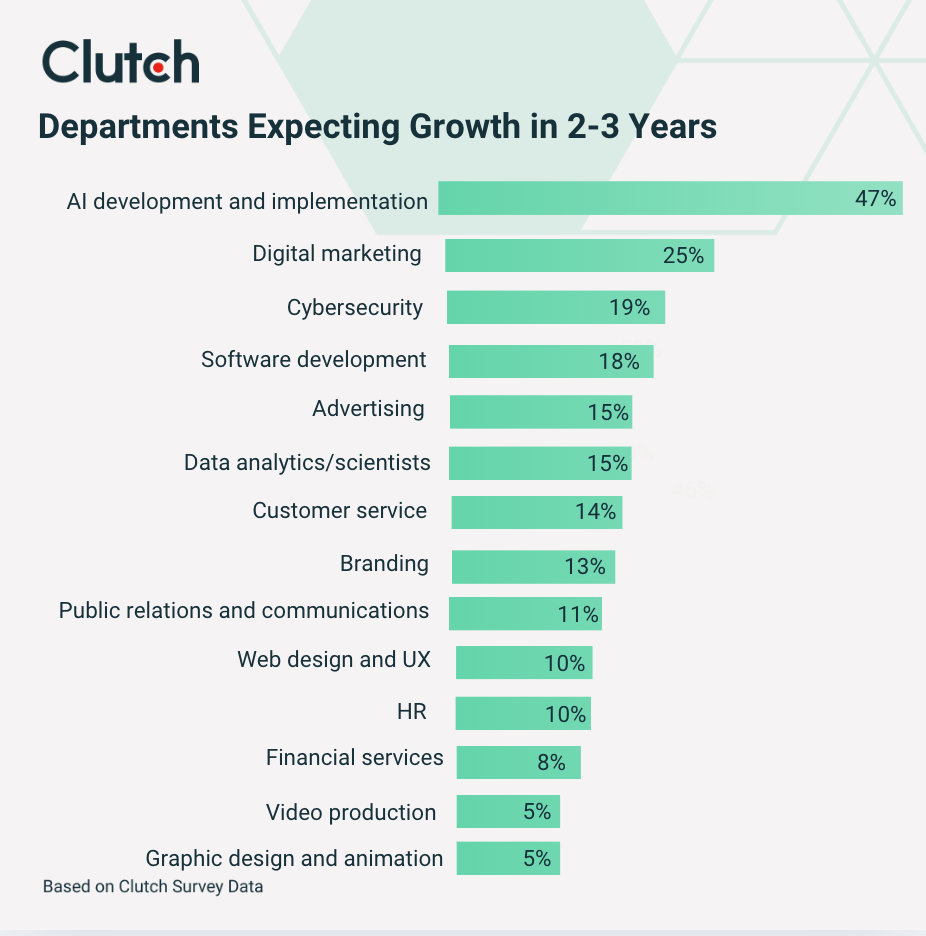
Their predictions offer a clearer picture of which departments are expected to grow, and where uncertainty remains.
Looking to 2026, 48% of respondents believe AI development will continue to grow in strategic importance. That’s nearly double the share of the next most-cited department.
Digital marketing came in at 25%, showing that even with automation, companies still see value in skilled marketing professionals. Cybersecurity followed at 19%, reflecting rising concerns about data protection and risk management.
Roles like sales (18%) and customer service (14%) are also expected to hold steady, reinforcing their value as high-touch, people-first departments. Other areas like HR, software development, and financial services show moderate growth expectations, suggesting stable demand without the same acceleration seen in AI or marketing.
Learn more: 'What 2025's Most In-Demand Jobs Say About the Future of Work'
Despite growing adoption, 29% of leaders said they are still unsure whether AI can outperform humans in any role. This hesitation shows that while confidence in AI is building, skepticism remains.
For many teams, especially in roles that rely on judgment, empathy, or creativity, the question is not whether AI is capable, but whether it should take over. That caution may explain why human-led departments continue to rank high in both hiring and long-term planning.
AI is not replacing the workforce. It is redefining what the workforce is for. As automation takes over repeatable tasks, the value of human roles is shifting toward strategy, relationship-building, and creative problem-solving. That is why functions like sales, digital marketing, and customer service continue to hold firm, even as AI development surges ahead.
These roles thrive not because they resist automation, but because they depend on trust, nuance, and timing. Buyers still want to feel understood. They want real conversations, not just optimized conversions. And they make decisions based on emotion as much as logic, especially when the stakes or the price are high. AI can support these moments, but it cannot replace the human presence that makes them work.
The most forward-looking companies are not just plugging in new tools. They are rethinking how teams operate, reskilling where it matters, and drawing clearer lines between what AI can handle and what people must own. The challenge is no longer just about hiring for skills. It is about designing roles that create real impact.
Our takeaway: Success in 2026 will not come from having more tech or more talent. It will come from knowing which one is right for the job.
Level up your AI skills with our directory of artificial intelligence experts.
This survey was conducted on June 12, 2025, via Pollfish. We surveyed 1,000 U.S.-based professionals between the ages of 18–99 who are involved in their company’s hiring or outsourcing decisions, 583 male & 417 female.