
Task Automation: How to Cut Repetitive Work
Task automation saves time, gets work done faster, and reduces errors. Learn how to automate repetitive tasks step-by-step and how to decide what to automate.
Updated May 26, 2026

AI is changing how companies think about hiring and productivity, but it’s not replacing everyone tomorrow. Some jobs are easier to replace with AI than others, and business leaders are still weighing the risks and rewards. This article breaks down where AI outperforms human workers, where it falls short, and why the future of work isn’t as clear-cut as it seems.
AI didn’t stroll into the workplace quietly. It burst onto the scene, made itself indispensable, and ignited a debate that continues to rage: Is AI replacing jobs? Will it completely replace human workers?
The truth isn’t black and white. Some companies already employ AI for tasks people once handled. Others are using it to support their teams without making staffing cuts. Many remain undecided; not because they don’t see the potential, but because they’re not convinced AI can handle the subtleties that humans bring to the table.
Looking for a Artificial Intelligence agency?
Compare our list of top Artificial Intelligence companies near you
A recent survey from Clutch captured that uncertainty.
When we asked if AI can outperform humans in key roles, 30% of respondents weren’t sure. That hesitation reflects a bigger question leaders are asking themselves: Just because we can use AI for something, should we? And beyond that: What jobs will AI replace, and which ones still need the human touch?
Conversations about AI replacing jobs often start with the roles most vulnerable to automation. If a task follows clear rules or patterns, a machine can likely do it faster than a person.
When we asked respondents where they thought AI could outperform people, three job areas stood out: Digital marketing, data analysis, and graphic design.
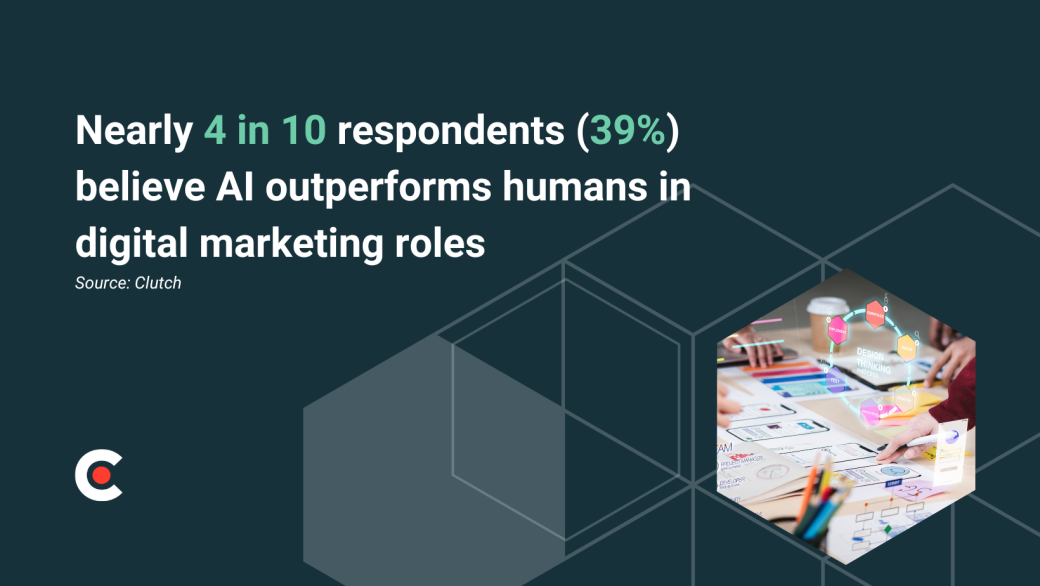
Nearly 4 in 10 respondents (39%) believe AI outperforms humans in digital marketing roles, and they’re not wrong to be skeptical of how fast the tools are moving.
AI can write ad copy, run A/B tests, generate social media content, and even adjust bids in real time based on audience behavior. Platforms like Google Ads already use machine learning to optimize ad placement behind the scenes. Combine that with AI-generated visuals or headlines, and the speed becomes hard to match manually.
But quantity isn’t the same as strategy. AI can churn out five product descriptions in seconds. That doesn’t mean those descriptions will resonate with an audience or match your brand’s voice without editing. Humans still matter when it comes to implication and intent. What AI brings to the table is scale and a pace no marketer can keep up with on their own.
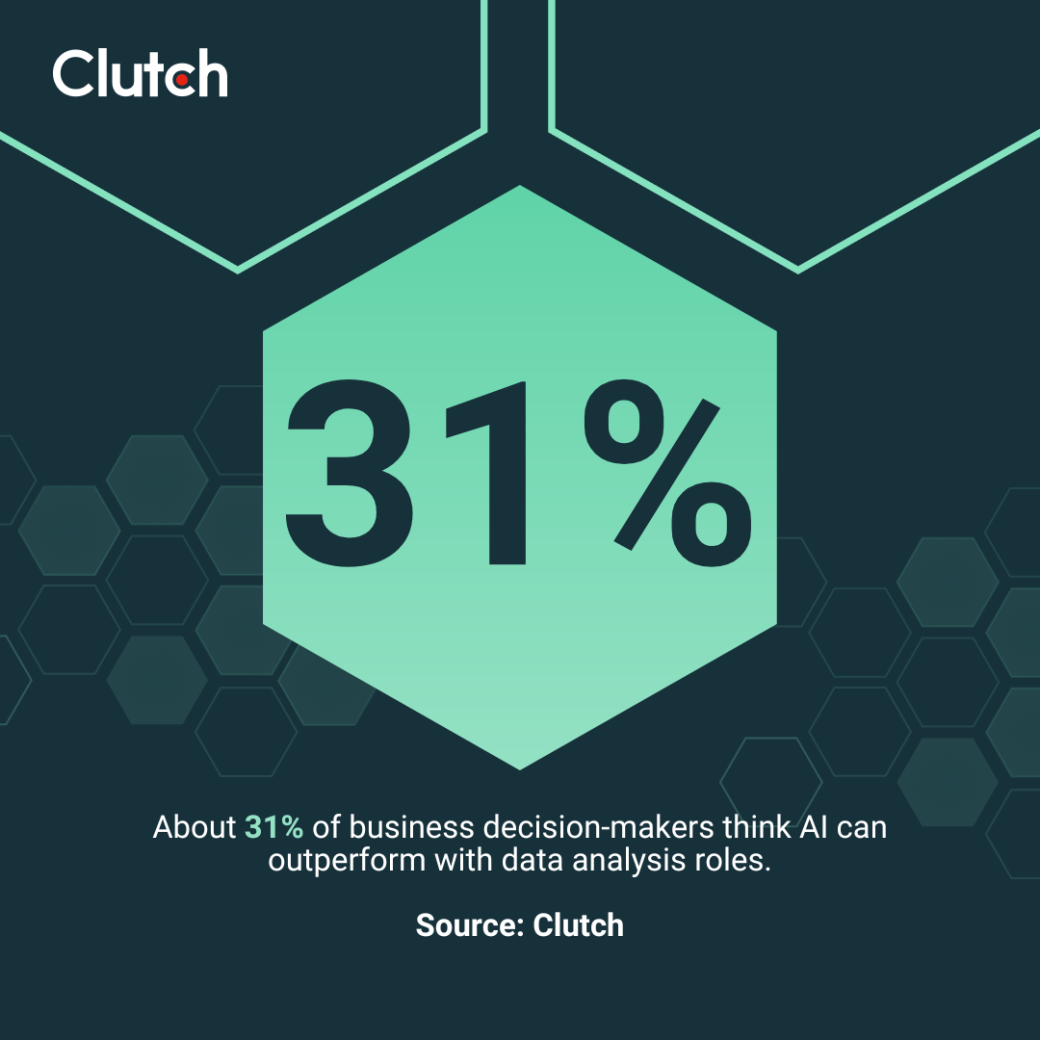
About 31% of our survey participants think AI can outperform humans in roles involving data analysis. That makes sense, especially when big-picture analysis speed matters more than nuanced interpretation.
AI doesn’t get tired, and it doesn’t flinch at massive datasets. It can sift through thousands of records in seconds, spot patterns people might miss, and even flag potential risks or opportunities early. Predictive tools are already helping finance and logistics teams make faster decisions on inventory, pricing, and demand.
Still, someone has to decide what to measure and why it matters. Data doesn’t mean much if the questions behind it don’t serve your business. AI can find trends. It can’t explain the context. That’s still a job for people who understand both the math and the mission.
Read more: 'Reskilling in the Age of AI for Businesses'
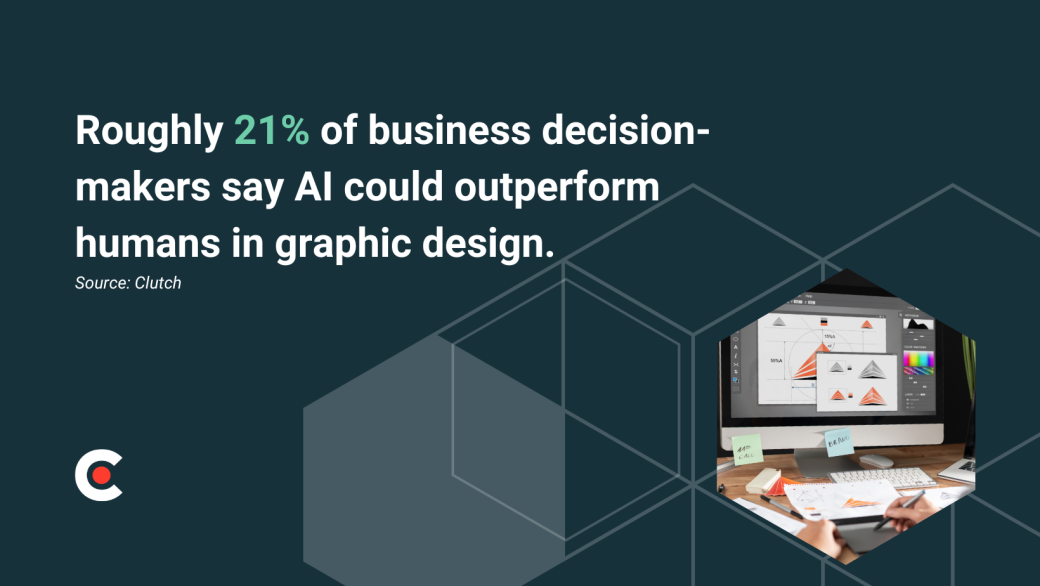
Roughly 21% of respondents say AI could surpass humans in graphic design roles. With generative AI tools like DALL·E, Midjourney, and Canva’s Magic Studio gaining traction, that’s not surprising.
AI’s graphic design abilities are promising. It can:
For teams with tight budgets or short timelines, that speed is a huge asset. However, if you ask any seasoned designer, they’ll tell you that good design requires taste, intent, and clarity. AI can fake those things, sometimes well, but it doesn’t have instincts. It doesn’t know when saying less says more.
When clients want brand consistency or storytelling, they’ll still need someone who understands the big picture.
AI can handle logic and follow rules, but it can’t hold a real conversation, read a room, or build trust. That’s where humans still prevail and why some roles will likely always be harder to automate.
Two areas stood out in the survey where respondents showed doubt about AI’s ability to outperform people: sales and customer service. These jobs rely on more than just information. They depend on timing, tone, and empathy, all things machines struggle to fake convincingly.
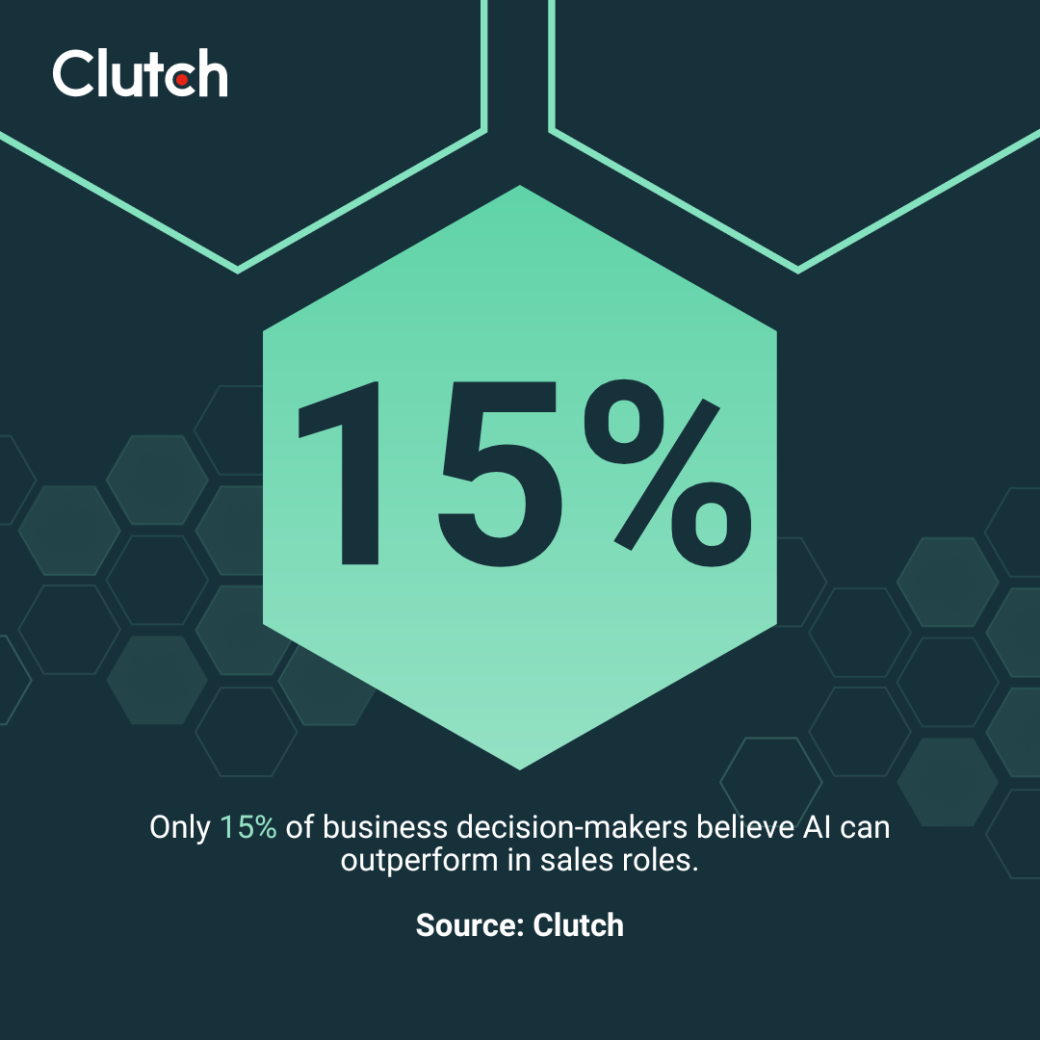
Our survey found that only 15% of respondents believe AI can outperform humans in sales. That number speaks volumes.
Selling requires more than knowledge of product specs or features. Good salesmanship involves listening, asking the right questions, reading between the lines, and knowing when to push and when to pause. Emotional intelligence closes deals, and AI just can’t duplicate that human quality.
Of course, some AI tools can benefit sales teams, which already use AI at different stages of the sales funnel to qualify leads, send follow-ups, or analyze which messages resonate best. When a deal hits a snag, though, or the client hesitates, a bot can’t pivot the way a person can. It can’t adjust the conversation based on mood and tone, nor can it build a connection and rapport over time.
Enterprise-level deals especially depend on human relationships. In these negotiations, the stakes are higher, the questions more probing, and the decisions slower to reach. AI can speed up the pipeline, but the deal-closer still needs a pulse, a brain, and a heart.
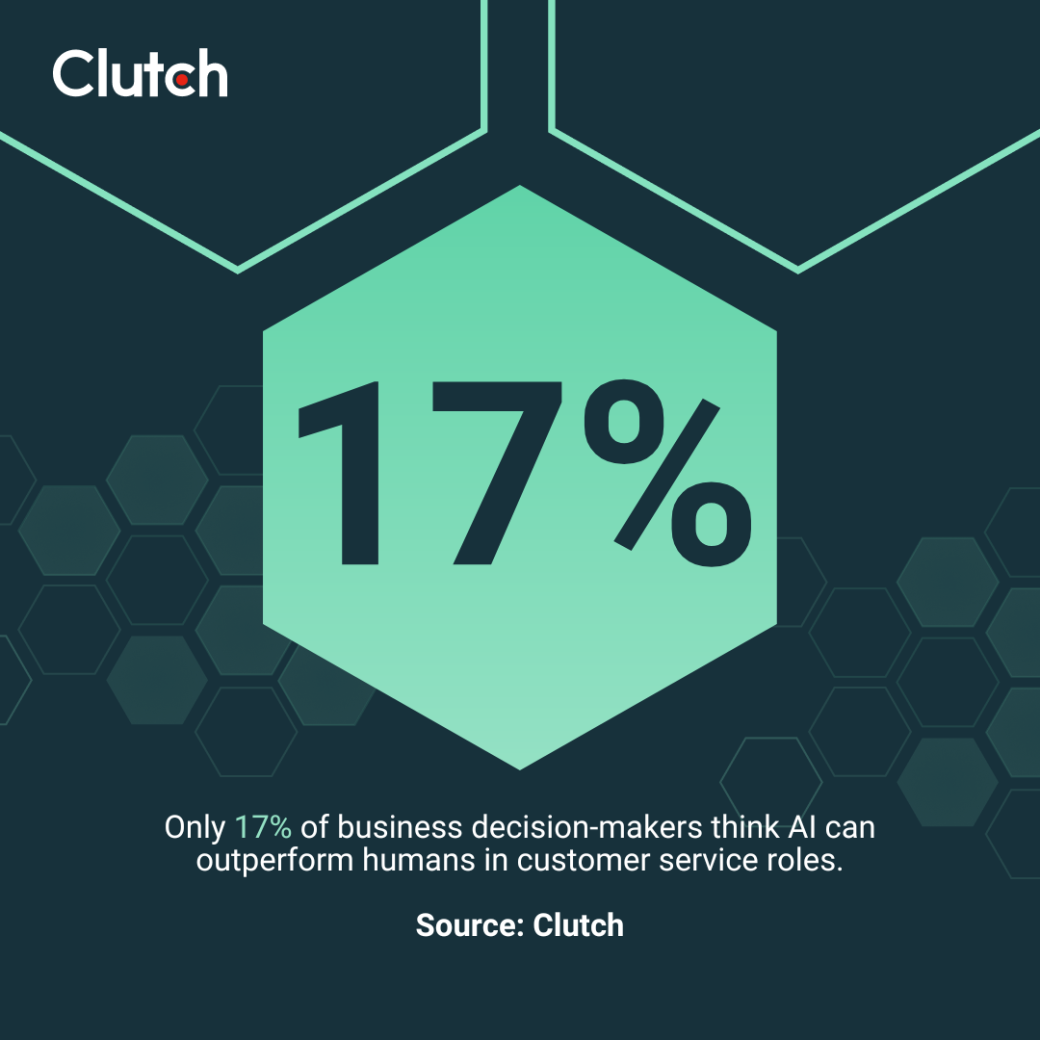
If you’ve ever argued with a chatbot or gotten stuck in an endless phone tree loop, you’ll understand why only 17% of our survey respondents think AI does a better job than humans in customer service roles.
AI can answer simple questions, process returns, resend tracking links, or point people toward a knowledge base. All of those things are fine for relatively inconsequential issues. But the second things get personal, customers want a human being to hear them, understand their frustration, and solve their problem without sounding robotic.
Some companies use hybrid models that employ both human reps and AI support. For example, a bot might collect the customer’s basic info, then hand it off to a human who can use that information to step in and help. That kind of setup works better than turning customer service over to the machines.
Empathy isn’t a plus in customer support roles; it’s essential. A frustrated customer doesn’t care nearly as much about efficiency as they do about feeling heard and understood. That’s the part AI still can’t fake.
Even with all the noise surrounding AI, many business leaders haven’t made up their minds. Our survey found that 30% of respondents weren’t sure whether AI could outperform humans in key roles. Their apprehension comes from watching a technology evolve faster than anyone can fully comprehend, let alone trust.
From lack of transparency to biased training data, some of the uncertainty is technical, some philosophical, but all of it is valid.
Most AI tools are built on fairly opaque systems. You feed AI input, it gives you output, but how it got there isn’t always clear. That makes it tough to trust the results, especially when you can’t audit or replicate them.
AI is improving at a rate that’s hard to keep up with. Tools that were impressive six months ago already feel dated. That instability complicates planning — you don’t want to build a workflow around something that might be obsolete (or broken) next quarter.
AI can remix existing ideas, but without life experience, it can’t create meaning from scratch or take creative risks. That matters in roles that require originality or personal insight.
Machines do well with structured tasks. Throw in a monkey wrench, like a client with conflicting priorities or a system outage during peak hours, and you’ll quickly see its limits. Humans still adapt better when the script falls apart.
AI only knows what it’s been taught. If the data is flawed, the output will be too. That’s a risk in hiring tools, legal tech, healthcare decisions, or anywhere the stakes are high and fairness matters.
For business leaders who aren’t sure whether AI can handle the job, a huge sticking point is whether they trust it enough to take over something that affects revenue, reputation, or relationships. That hesitation slows adoption, or at least forces companies to think twice before replacing humans with machines.
Read more: '35% of Businesses Prioritize AI Integration in 2025'
AI replacing jobs is the fear everyone fixates on, but the reality is more nuanced. Most companies aren’t looking to cut staff just because this tech exists. They want to make their teams more efficient and flexible without losing what makes human work important.
The smartest companies aren’t asking whether to replace people with AI. They’re asking how the two can work together without getting in each other’s way. In most cases, that means using AI to handle repetitive tasks like sending templated emails, sorting, and scanning so that human talent can focus on bigger problems.
Graphic designers now have AI to handle outlines and drafts, but real people still shape the message. Analysts can rely on machine learning to flag trends, but humans decide what to do about them.
Read more insights on the impact of AI on hiring in our full survey report.