Task Automation: How to Cut Repetitive Work
Task automation saves time, gets work done faster, and reduces errors. Learn how to automate repetitive tasks step-by-step and how to decide what to automate.
Updated March 31, 2026

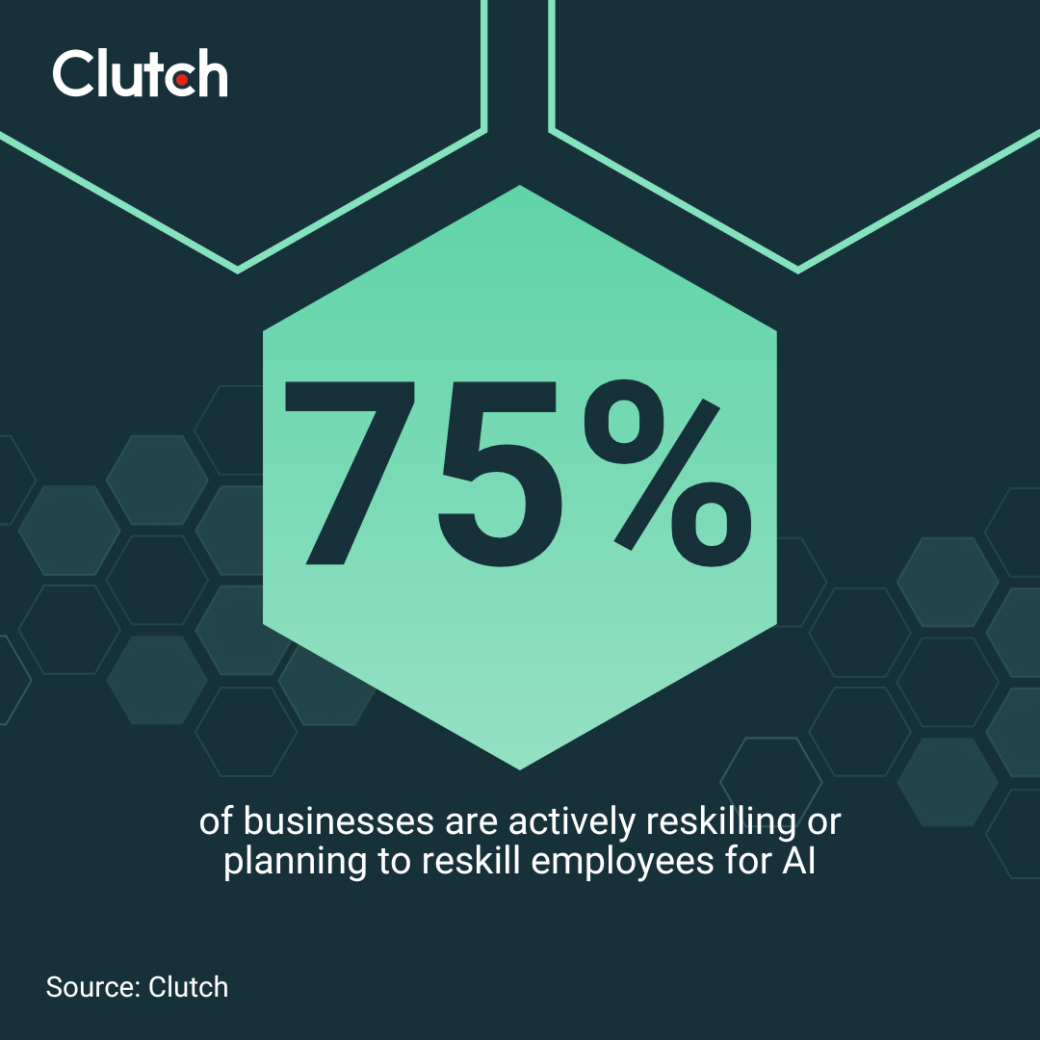
As AI becomes increasingly central to daily business operations, reskilling is no longer optional—it’s essential for IT professionals to stay current and competitive. In fact, Clutch data shows that 75% of businesses are actively reskilling or planning to reskill employees for AI. This article explores how IT leaders can support their teams and adapt to the evolving tech landscape.
Technology is advancing at a shockingly fast pace, even by today's standards, and artificial intelligence (AI) is leading the charge. It's everywhere in the business world now, from everyday chatbots to the project management tools you're using. AI is becoming "table stakes" for knowledge workers.
As opportunistic as these advancements are, they also present the challenge of certain employee skills becoming obsolete.
Looking for a Artificial Intelligence agency?
Compare our list of top Artificial Intelligence companies near you
Clutch surveyed 1,000 business decision-makers on their hiring plans and the impact of AI. The data showed that more than 1 in 4 companies have changed their hiring plans in favor of AI alternatives, which shows that reskilling is becoming a clear priority in the work landscape.
Organizations need to support their IT teams by providing upskilling and reskilling opportunities. In fact, they need to do it rigorously, as many executives believe that tech advancement is outpacing training and the learning curve for employees. Hiring for these skills is also tricky since the demand for AI experts has skyrocketed, and the supply is limited.
In such circumstances, reskilling initiatives for your teams is the best route forward. Clutch data also found that 75% of businesses are actively prioritizing reskilling efforts for their teams.
AI has become such a huge part of IT roles that it is now a segment of its own, called AIOps. It uses machine learning and data science to automate processes and improve efficiency.
One of its key transformations is automated data processing. AI can provide real-time insights to minimize manual intervention. Then, there is predictive maintenance, which allows for proactive issue resolution and minimizes downtime. AI can also enhance decision-making, but for that to happen, IT teams need to be able to use it to its full potential.
Since AI has automated many previously manual tasks, the job responsibilities of IT professionals have also shifted. They need to work alongside AI tools and use them to complement their work. Similarly, there's a demand for skills in AI model management and data analysis to use AI's predictive abilities.
More importantly, IT professionals need to adapt to working with AI instead of against it. Doing this requires a complete change in mindset and skillset. It also means that they need to be comfortable working with large amounts of data and using complex AI algorithms to make decisions.
AI is changing the skills needed for IT roles and prioritizing specific skills over others. While technical skills related to AI are becoming more and more valuable, there's a growing need for people who do not shy away from change and are ready to participate in learning initiatives.
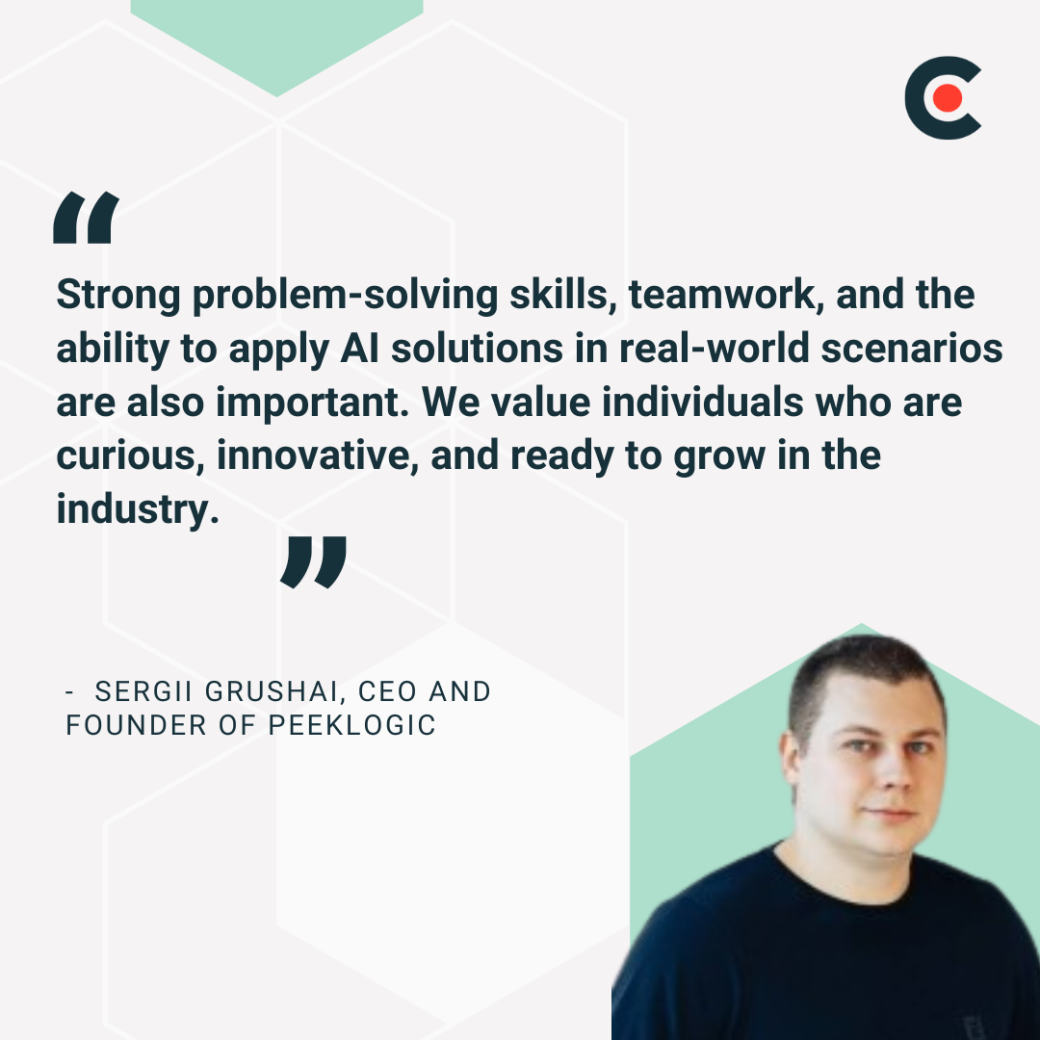
"AI, automation, cloud technologies, and data-driven decision-making are valuable areas of expertise,” said Sergii Grushai, CEO and founder of Peeklogic. At the same time, though, he emphasizes the need for soft skills like adaptability and teamwork to truly be successful, saying, “Strong problem-solving skills, teamwork, and the ability to apply AI solutions in real-world scenarios are also important. We value individuals who are curious, innovative, and ready to grow in the industry."
To prepare for the future, businesses need to look to hire employees that are willing to learn new tools, try new strategies, and work with their colleagues to find modern solutions. "We're looking for tech professionals who are skilled, adaptable, and open to learning," said Grushai. As tech evolves, teams that are able to adjust their strategies and are open to taking on new challenges will be more successful in the long run.
In response to this shift, many organizations are taking action to reskill employees. This widespread investment highlights not only the urgency of developing AI-related competencies, but also the growing recognition that adaptability and a willingness to learn are just as key as technical expertise.
Read more: 'Inside the AI Hiring Shakeup: What AI in Recruitment Means for Your Org'
Reskilling IT teams for the AI-driven world isn't just about a one-time course or workshop. Instead, it has to be a continuous learning process. For that, you need to develop a growth mindset within the organization, which can cultivate a culture where learning is at the root of everything.
Leadership has a massive role to play in this regard. First, your leaders need to lead by example. They should demonstrate that they are continuously learning and updating their skills. Then, they can provide necessary support and resources for employees to reskill and upskill. Budget allocation and dedicated time for learning are reasonable starting steps.
While these steps may seem like a considerable investment at first, the payoff is immense. Companies that offer resources and time to their employees for reskilling see a noticeable increase in productivity, innovation, and employee satisfaction.
You may sometimes need incentives to drive the employees to take up reskilling opportunities. For example, you could offer employees bonuses for completing specific courses or getting certifications. As more and more workers benefit from these incentives, they will create a domino effect. Employees will likely follow suit when their peers update their skills.
As previously mentioned, with AI adoption accelerating, many companies are rethinking traditional hiring strategies. Rather than hiring for every new AI-related need, organizations are increasingly choosing to invest in their current workforce. This shift not only helps close any skills gaps but also strengthens team cohesion and retention by showing employees that the company is committed to their long-term growth.
There are many ways to upskill and reskill your team, particularly if you are looking to incorporate AI into more of your processes. The route you take will depend on the resources available at your organization and your IT team's current level of AI expertise.
A standard method many organizations use is training programs. These are typically offered as online courses or workshops where employees can learn about various AI concepts and applications.
The following options are available to you:
Many organizations use more than one of these options to reskill their IT teams. "Our team explores AI advancements through workshops and various certificates,” explains Grushai. “As a Salesforce-focused company, we encourage employees to earn certifications, with many already obtaining AI Specialist and AI Associate credentials. This ensures we stay ahead in the evolving tech landscape while supporting professional growth. Additionally, we try to attend various workshops and specially organized events."
If managing all these AI skills training paths is overwhelming for your organization, you can partner with a tech organization or education institution. For example, IBM's AI Academy is specifically made for business education and keeps workers' busy schedules in mind.
Read more: 'Is AI Replacing Jobs? Businesses Weigh Tech vs. Human Talent'
You can find a lot of courses online for AI skills training, but it's best if they are hosted on reliable platforms like Udemy and Coursera. For example, Amazon Web Services offers a free course called "Fundamentals of Machine Learning and Artificial Intelligence" on Coursera that learners can take at their own pace.
Similarly, Udemy has several courses offered by AI experts. LinkedIn Learning is also a good resource for expert-led courses on AI and machine learning. However, the lack of certification may not be appealing to some organizations.
Reskilling and upskilling for AI is just as much a collaborative effort as an individual one. One of the most effective ways to do this is through peer-to-peer learning, where experienced team members mentor colleagues who are newer to AI technologies. Mentorship programs can accelerate skill development by providing direct guidance and real-world problem-solving experience.
You can also host internal seminars and knowledge-sharing sessions to allow the flow of information across the organization. Departments can create discussion groups to share new knowledge.
Host regular tech talks or AI-focused brainstorming sessions where employees can share insights from recent projects and discuss challenges. Besides enhancing collective expertise, these sessions also foster camaraderie among team members.
Cross-functional team structures further diversify skills and perspectives. Don't train IT and product development teams individually since it only fosters role-specific upskilling.
Instead, bring together professionals from IT, product development, marketing, business strategy, and data science teams to create an environment where different expertise areas complement each other. It helps develop comprehensive learning rather than keeping knowledge siloed within specific roles.
As companies shift hiring strategies to prioritize AI integration, reskilling through collaborative learning becomes even more important. Peer-to-peer learning, mentorship, and cross-functional collaboration not only accelerate AI knowledge but also allow companies to tap into their talent, reducing the need for costly new hires. This approach makes the organization more agile and future-ready.
An essential part of reskilling your team is realizing that they may have individual career aspirations. For example, some may be interested in machine learning engineering or AI development. Others might want to pursue AI governance in the future. When you acknowledge these differences, you can provide more meaningful and personalized support.
The best way to create personalized learning paths is by combining organizational and individual goals. Suppose your organization currently lacks predictive analytics capabilities, and you need more professionals trained in this area. You can offer mentorship and training programs to individuals interested in predictive analytics. It's a dual win.
As these employees advance their skills, organizations must also provide them with career advancement opportunities. Employees who successfully transition into AI-driven roles may be given leadership positions. You can also expand their responsibilities or give them specialized AI roles.
You want to show your team that reskilling is not just for the organizational benefit. It's also an opportunity for individual career growth and advancement. The mutually beneficial approach will help retain employees and reap long-term return on investment (ROI) for your reskilling investments.
With 75% of businesses actively reskilling or planning to reskill employees for AI, it’s clear that companies are doubling down on internal training rather than relying solely on new hires to meet evolving demands.
As companies rethink their hiring practices in favor of AI-driven alternatives, investing in employee development has become a necessity for businesses in competitive markets.
Prioritizing AI skills training not only prepares your workforce for future challenges but also builds loyalty by showing employees that their growth is a company priority.