
Why Hiring Fast Is Costing You More: The Case for Pre-Vetted Remote Talent
Speed-to-hire may feel like a competitive advantage, but replacement costs, productivity gaps, and re-hiring cycles show up on the balance sheet. Here's why...
Updated May 29, 2026

Business needs and priorities are rapidly evolving in an uncertain economic and technological climate. Among this uncertainty, tech-enabled roles in AI, cybersecurity, and sales show the most promise for continued growth and importance.
Businesses of all stripes are currently navigating an unprecedented storm of macroeconomic and technological uncertainty. On the macroeconomic front, tariffs and other protectionist policies threaten trade tensions that could raise the cost of business inputs and contribute to continuing inflation. Technologically, we remain in the midst of an AI transformation that could lead to a reimagining of the nature of work for nearly every business unit and function.
How can you position your team to adapt in this shifting landscape? The businesses that will be most successful in navigating these uncertain waters will be those that most efficiently allocate their resources towards the most in-demand jobs for 2025 and beyond.
Looking for a Human Resources agency?
Compare our list of top Human Resources companies near you
A Clutch survey recently illuminated this issue, finding that AI, sales, and cybersecurity roles are expected to grow in importance the most over the next two to three years.
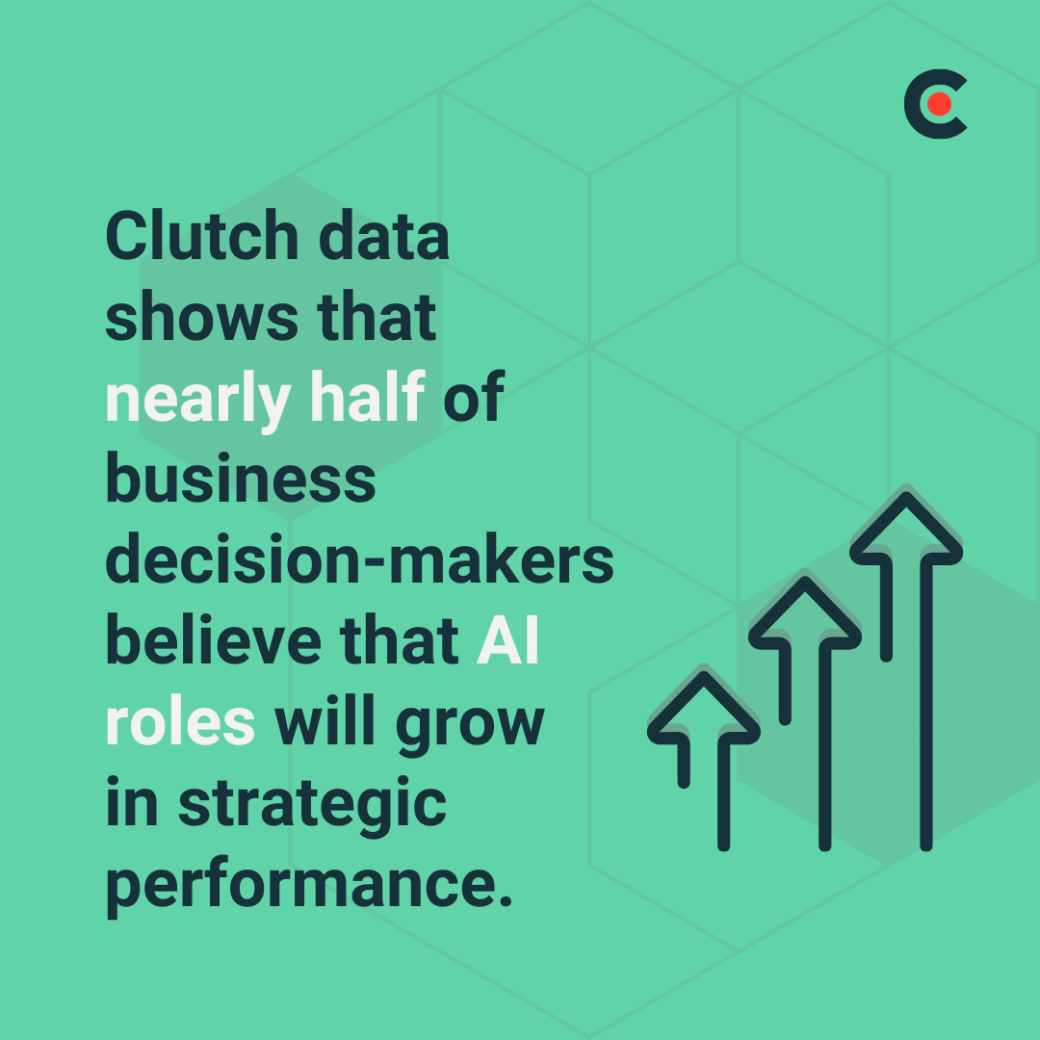
AI development and integration roles led the pack for a majority of respondents. Forty-seven percent of respondents believe that these AI roles will grow in strategic importance at businesses in the near future. With AI quickly maturing from an experimental technology into a mature business solution, long-term AI opportunities could reach as much as $4.4 trillion in added productivity growth potential from corporate use cases alone.
However, harnessing this massive potential will require dedicated roles that develop and integrate custom AI solutions into existing business workflows.
It’s also worth noting that AI skills will not only be important for a few specific roles — they’re becoming foundational across nearly every department.
As AI has daily applications for such central tasks as communication and research, there’s a need for general AI literacy and an understanding of the fundamentals of prompt engineering to be a successful worker in 2025 and beyond.
While AI literacy is essential for all roles, some of the most in-demand jobs that will be at the forefront of bringing the AI revolution from potential to reality include machine learning engineers, AI product managers, and data scientists.
A machine learning engineer builds AI systems, including systems for classification, computer vision, and content generation. This could mean building an AI system from the ground up using nothing but proprietary business data, but more often it means fine-tuning existing models (such as OpenAI’s ChatGPT or Anthropic’s Claude) for specific business purposes.
For example, a retail company might hire a machine learning engineer to fine-tune a language model for automated customer service responses, while a manufacturing firm could deploy computer vision systems to detect quality defects on production lines.
Products need dedicated managers to guide product strategy and direction, and AI products are no different. AI product managers understand the strengths and weaknesses of AI applications and can strategically determine the course of important AI products.
Data scientists are increasingly important in the post-AI revolution. These workers can use AI to process massive quantities of unstructured data, or data that doesn’t come in a neat spreadsheet or other organized format, to help inform data-driven decisions.
Real-world applications include analyzing customer sentiment from social media posts, processing medical imaging data for diagnostic insights, and extracting actionable intelligence from supply chain logistics data.
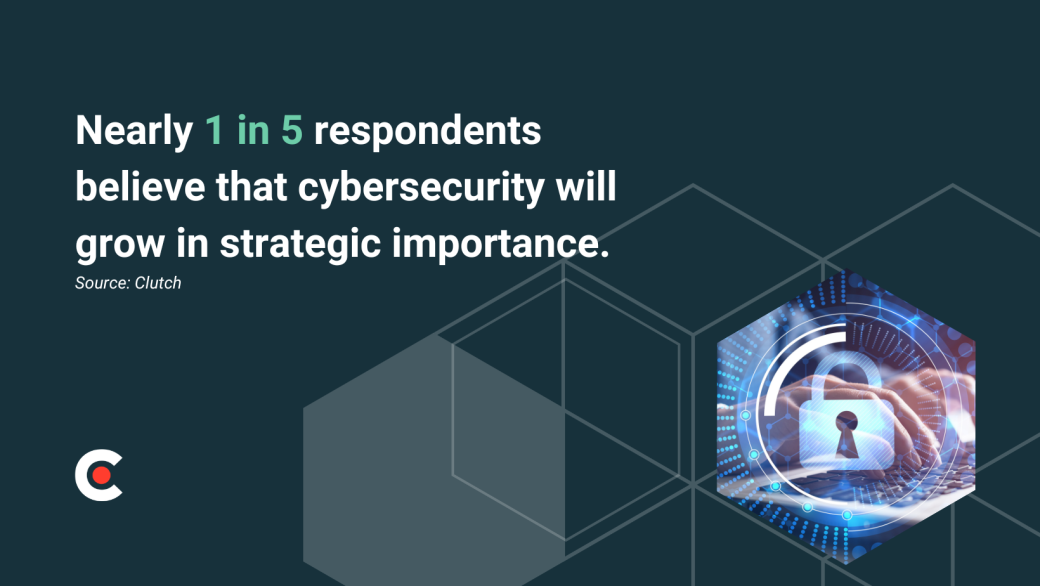
With nearly all business assets and workflows being digitized, it’s no wonder that cybersecurity was the second-most mentioned role in the recent Clutch survey. Nearly 1 in 5 respondents (19%) believe that cybersecurity will grow in strategic importance at companies.
In 2025 and beyond, cybersecurity can no longer be a back-office function that one or two engineers handle. Instead, it represents a pillar for brand reputation, ensuring that your customers’ data is secure and that your services are reliable.
Your digital infrastructure and assets need protection from a dizzying array of increasingly sophisticated threats and hostile actors. This explains why employers are rapidly increasing hiring in key cybersecurity roles such as security architects, compliance analysts, and network security engineers.
A security architect designs and oversees an organization’s overall security framework and infrastructure. They create comprehensive security architectures, develop policies and standards, and build security into systems from the ground up.
Key responsibilities include conducting threat modeling, reviewing security designs, collaborating with development teams, assessing risks, and providing strategic guidance.
These mostly non-technical employees are responsible for ensuring that your security posture meets various legal frameworks and industry standards. For example, if your business is in healthcare, a compliance analyst may monitor compliance with the Health Insurance Portability and Accountability Act.
Compliance analysts conduct audits, assess risks, prepare compliance reports, and work with various departments to implement necessary controls.
Overall, they serve as the bridge between legal requirements and operational practices.
Network security engineers work on the front lines of securing your organizational computer network from cyber threats. They design and implement network security solutions, configure firewalls and intrusion detection systems, monitor network traffic for suspicious activity, respond to security incidents, conduct vulnerability assessments, and maintain security infrastructure.
In general, they ensure networks remain secure while effectively supporting business operations. In practice, they might respond to a distributed denial-of-service attack on an e-commerce site during peak shopping season or implement zero-trust network architecture for a remote workforce.
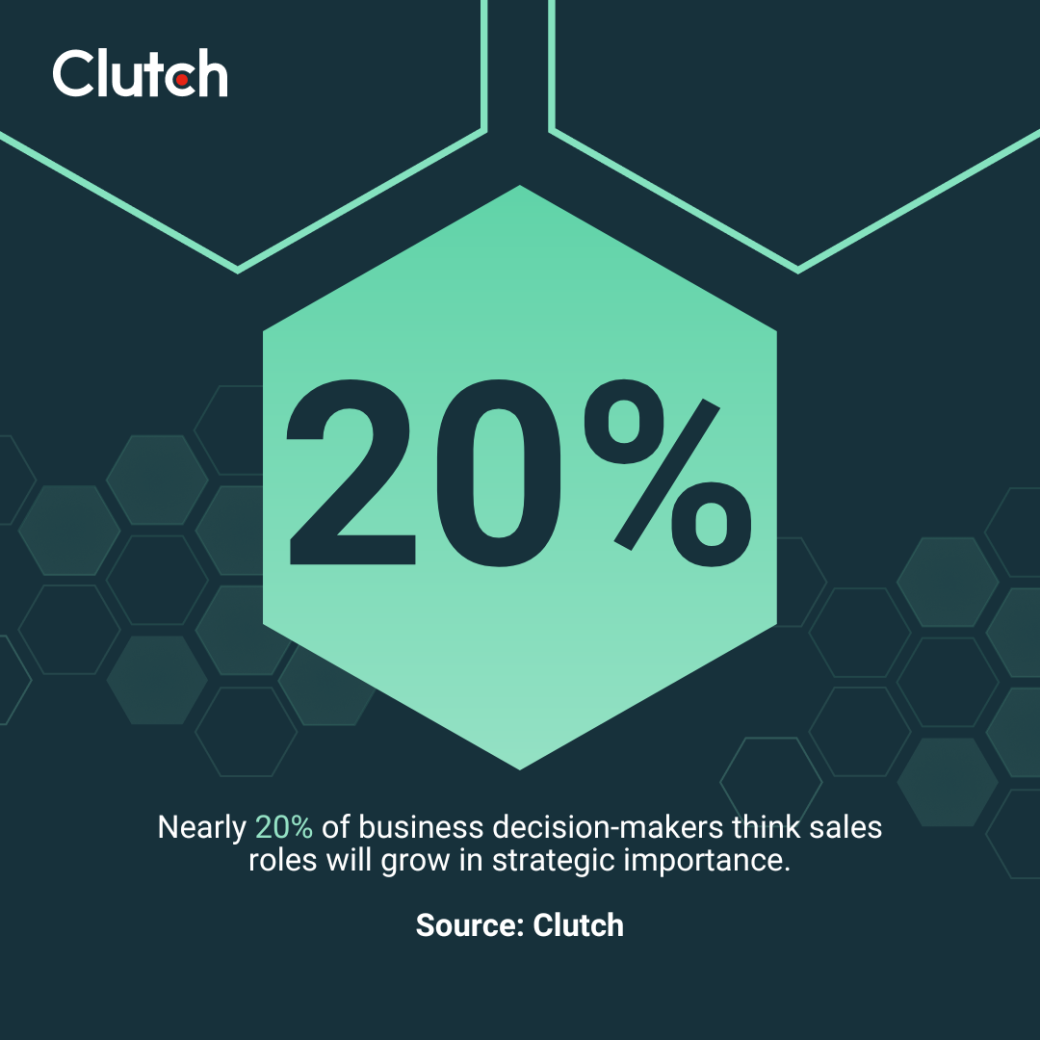
As long as companies produce products and services, there will be a need to sell these products and services to customers. In our survey, 18% of respondents said that sales roles will grow in strategic importance at companies.
But the enduring power of sales does not mean that sales will continue with “business as usual”. Instead, tech-enabled sales tools are opening up opportunities for blending data, personalization, and the human touch in sales roles and growth strategies.
Technical applications, such as predictive analytics tools, customer relationship management software, and sales engagement platforms, will likely have the biggest impact on sales teams in the future.
With accurate predictive analytics, you can get ahead of consumer demand and market shifts, improving your lead scoring, sales forecasting, and customer segmentation. Leveraging predictive analytics requires gathering and processing data on customer activities, sales, and relevant market factors, then using statistical models to detect relationships and correlations in your data.
For example, a B2B software company might use predictive analytics to identify which trial users are most likely to convert to paid subscriptions, while a retail chain could predict seasonal demand fluctuations to optimize inventory and staffing.
Read this: 'Why 1 in 4 Businesses Plan to Outsource Digital Marketing'
CRM software oversees all aspects of the customer lifecycle, from contact management to customer service to communication tracking. You can also integrate modern CRM software into the back-end of your consumer interfaces, such as your website or app, to record customer interactions behind the scenes.
Sales engagement platforms automate and optimize sales outreach activities. They manage communication sequences across multiple channels (email, calls, social media, etc.), track prospect interactions, provide analytics on outreach performance, and help sales teams prioritize leads.
In other words, they streamline repetitive tasks while personalizing engagement to improve response rates and conversion efficiency.
Read more: 'Inside the AI Hiring Shakeup: What AI in Recruitment Means for Your Org'
Growing business roles across AI, cybersecurity, and sales reveal a fundamental tension: The future of work will be tech-enabled, human-centered, and security-conscious. It’s imperative to align your company’s talent strategies with these emerging priorities — or risk falling behind.
What remains clear in an environment of unprecedented uncertainty is that the most in-demand jobs of 2025 aren’t just filling gaps — they’re building the blueprint for tomorrow’s workplace.