
How to Choose a 3PL: 5 Mistakes E-Commerce Brands Make
Learn how to choose a 3PL that fits your channel mix, avoids hidden costs, and scales with your brand. Real selection criteria, and top providers compared.
Updated April 22, 2026

Companies can utilize predictive analytics to forecast customer actions and market shifts, considering previous and existing data. This technique improves lead scoring, sales forecasting, and customer segmentation by making decisions smarter and increasing revenues. Through predictive models, businesses can also refine their sales techniques, economize on resources, and reinforce their market position.
Today, extracting the maximum predictive analytics value has increasingly become important to improve sales plans in B2B businesses. Foresight into customer interactions, their expected behavior, improved resource allocation, and increased returns are achieved through actions already taken and data patterns.
For instance, businesses that use predictive analytics models often achieve their set targets two times more often than market leaders using traditional approaches to analytics. When predictive models are used in the sales processes, the sales actions taken increase productivity and business market share.
Looking for a BPO agency?
Compare our list of top BPO companies near you
Predictive analysis is one of the most useful tools, enabling you to predict trends using historical and overall data sets.
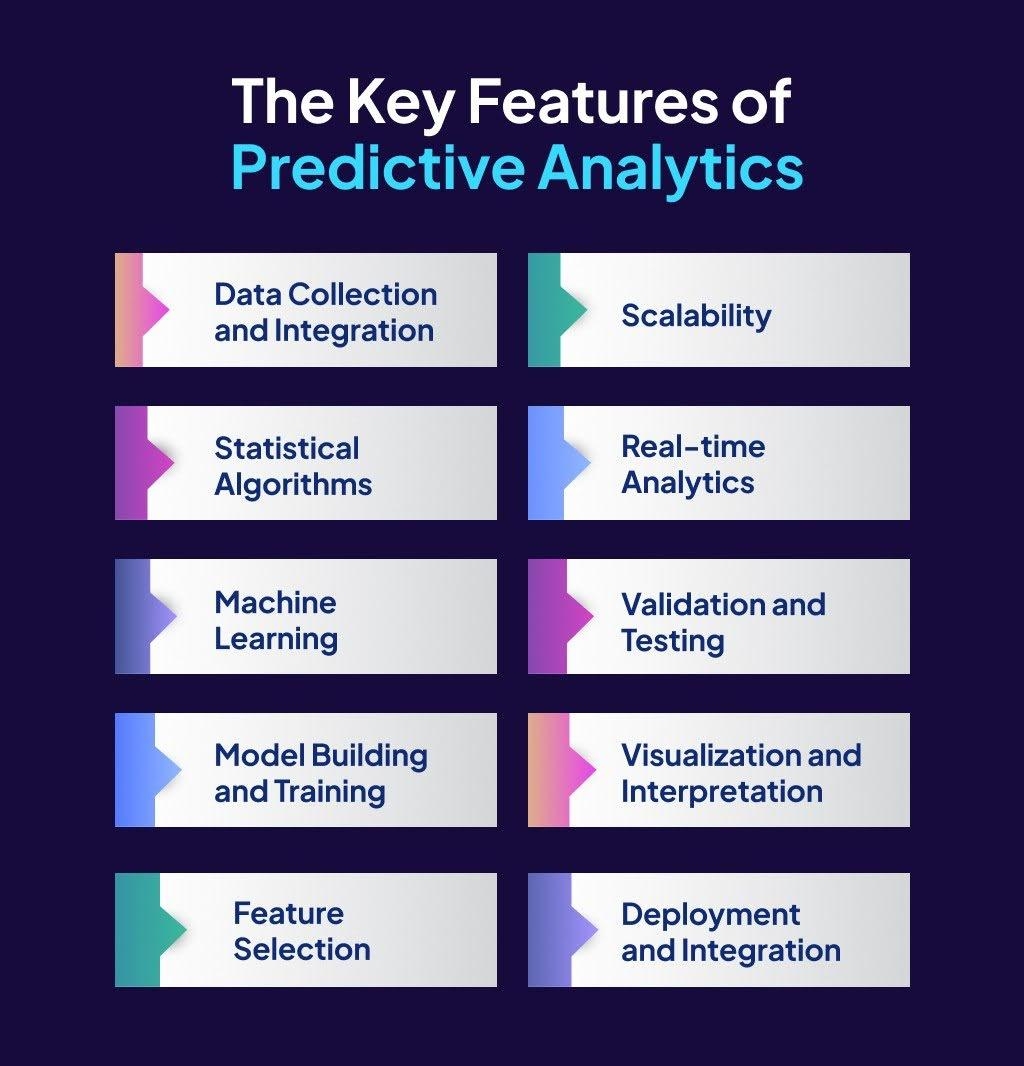
To fully utilize predictive analytics, you must remember these four essential components:
It is important to note that the main component of predictive analysis is relevant data collection. This means you have to capture data that comes from customer activities, market movements, and sales.
As you must realize, the better the data you collect, the better the outcome of your prediction. Set up efficient data collection systems to assist in detecting relational patterns and correlations.
After cleaning, the next step is to remove inconsistencies, such as inaccuracies and missing values, in an organized format. This is all part of the collected data, and it is necessary to polish it. Good data processing guarantees that the predictions made will be beneficial.
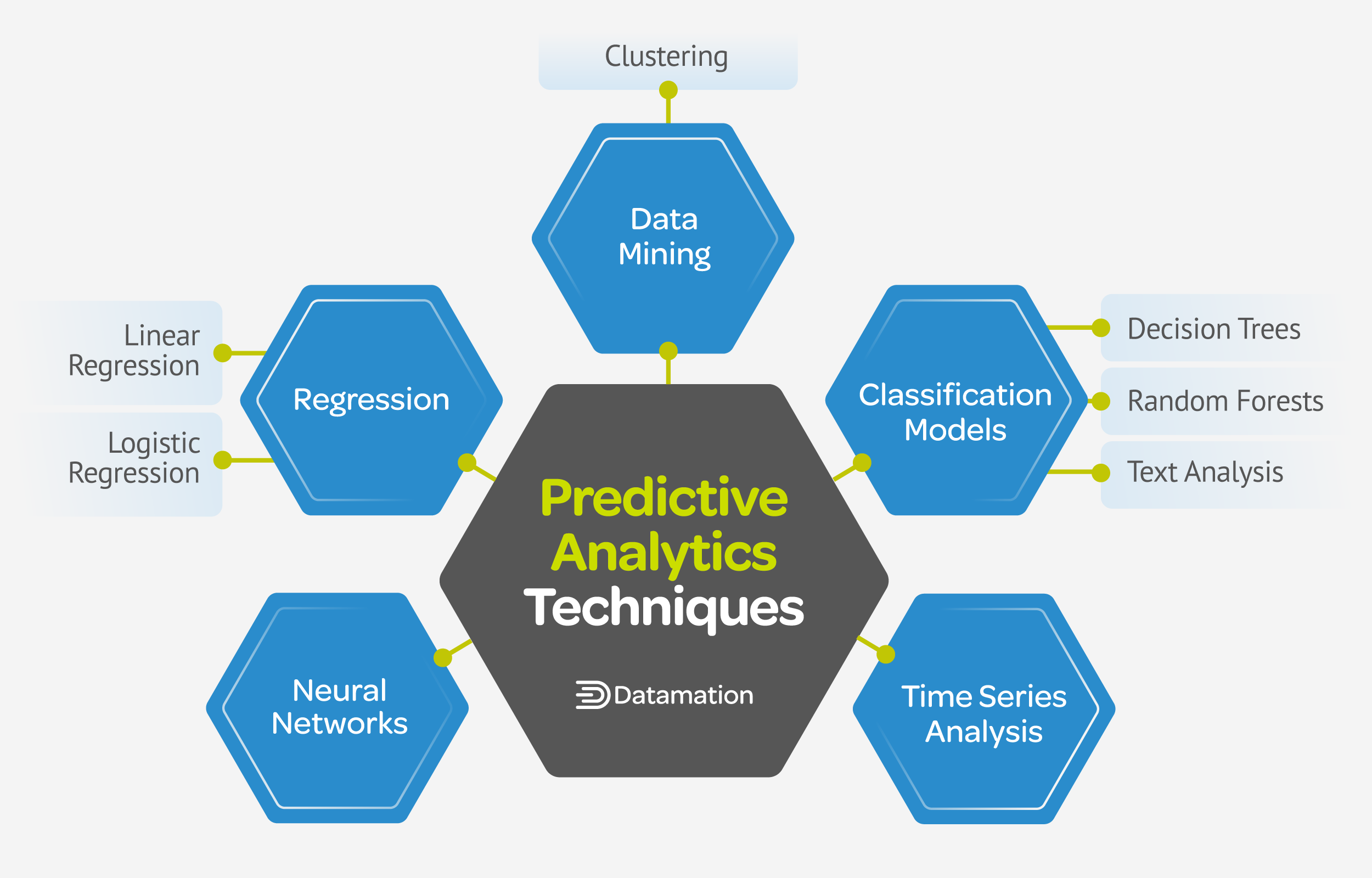
Once you processed the data set, the next step would be to use statistical and machine learning models. With these models, you can easily find relationships and correlations with data and produce accurate predictions. Note that the effectiveness of the modeling technique used will affect the outcome and validity of the prediction made.
Integrate the predictive models into your current systems and processes. This will help you utilize the insights obtained for decision-making and operational efficiency. Ensure that these models are updated and refined periodically to guarantee their accuracy and usefulness.
Rob Franssen, a data analytics manager at a major energy company, shares his learnings: “Throughout my years working with data at ExxonMobil, I've witnessed predictive analytics evolve from basic forecasting to a powerful tool. A model's true value lies in its ability to convert historical patterns into actionable future insights. Essential elements include high-quality data, flexible modeling for scenario analysis, and user comprehension. A black box model may seem impressive, but without user trust and understanding, it remains unused.”
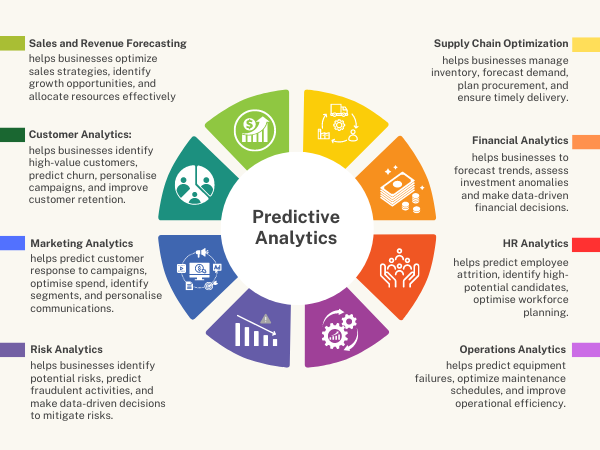
Knowing where to allocate resources for marketing to the consumer can be optimized with predictive analytics. With data that is already collected, analytics allow for a focused marketing approach toward the leads that will actually turn into sales. This essentially allows for better performance rates along with better resource management.
An accurate prediction is extremely important when planning for growth. Using predictive models, historical sales data analysis, and market trends help determine future success. This data enables informed decision-making with staffing, inventory, and budgeting costs so that strategies align with expected demand.
The ability to comprehend the varied needs of client groups is crucial. Predictive analytics assist in identifying certain patterns and subsets of the customer base, which can help segment the customer base. Organizations can then tailor their marketing and product strategies aimed at customers, ultimately resulting in improved customer loyalty.
Addressing these potentially problematic indicators proactively allows for effective strategies to be implemented. Predictive analytics helps retain valuable customers by identifying signs of behavior that show customer gravitation. The level of engagement and experience helps improve and strengthen relationships with customers.
Adopting predictive analytics can dramatically improve your operations across the board. Here’s how:
Analytics processes data from the past and present to give business owners an idea of what to expect, making it much easier to formulate strategies. For example, businesses that applied predictive analytics have drastically improved by up to 20% in decision-making speed. As a business owner, you no longer have to take a leap of faith, as this tool provides foresight and strategic decision-making.
Analytics can identify which leads are most likely to accept your offer, thus allowing sales representatives to work smarter. This change in approach enables companies to improve the conversion rate and increase the effectiveness of resources used, making sure that time and effort are spent where the most results are anticipated. Companies have reported higher acceptance rates by merely changing and personalizing the offers using predictive insights.
Analytics that provide insights into customers' needs and behaviors can greatly help in properly meeting their targets. This ultimately leads to better retention rates and loyalty from customers. For example, being able to accurately foresee post-acute care discharge dispositions in the healthcare space has led to a decrease in inpatient length of stay to an average of 22.22%. This leads to better value and satisfaction from the patients.
When it comes to making market decisions, predictive analytics empowers businesses to react promptly to changes. Those that do so are more likely to achieve greater profitability than their competitors.
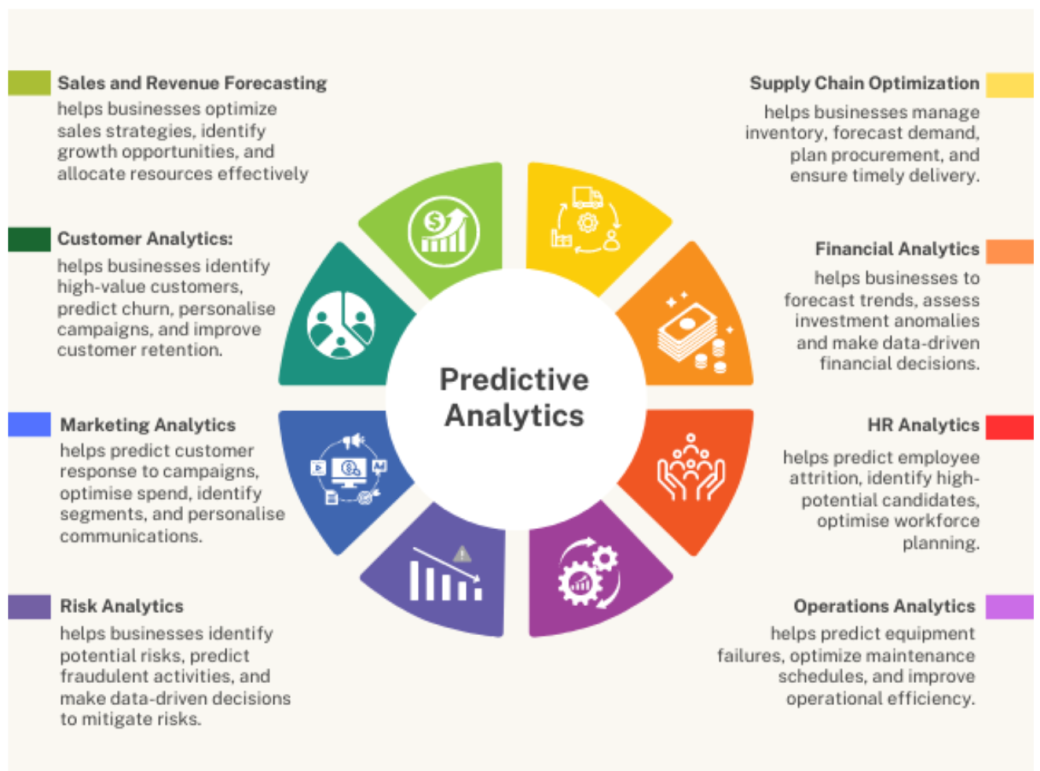
Using predictive analytics as part of your strategy makes both operations and decision-making easier while also improving customer loyalty and giving your business a competitive edge.
Implementing predictive analytics in a B2B sales strategy is an exciting endeavor, but it is one that comes with many challenges. Because of this, it is advisable to plan ahead by considering these four areas first:
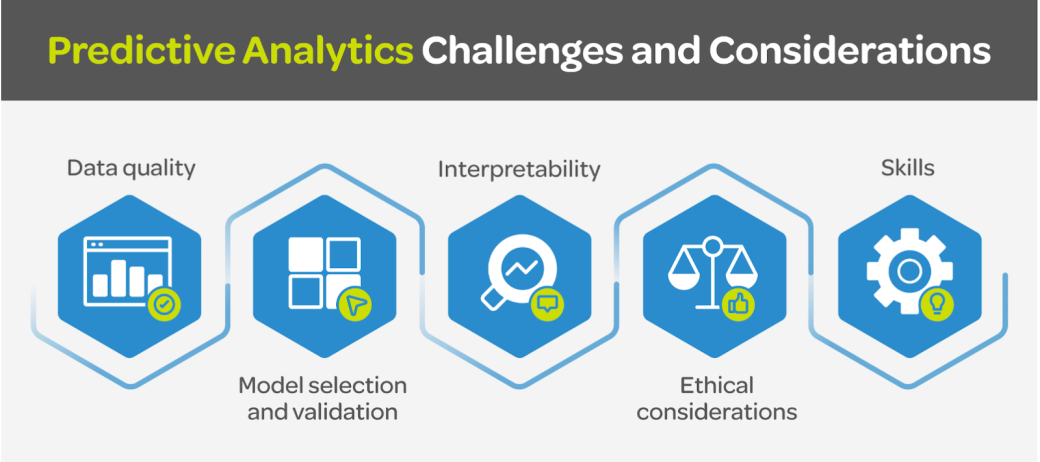
A strong foundation must first be established to effectively build or make changes to infrastructure. In the case of poor data quality, predictive analytics becomes utterly useless. A staggering 47% of organizations have stated that data quality does not meet requirements, which further negates the chances of adopting advanced predictive analytics. The way around it is to:
Focusing on these factors will ensure the foundation of the analytics is sound, reliable, and actionable.
Incorporating predictive models into the existing sales infrastructure is not a simple task. Around 63% of companies face integration challenges with AI analytic tools. To make the process easier:
New technology adoption is often opposed by participants who resist changes to the norm to work the technology around pre-existing structures. To make it favorable:
Data responsibility defines how willing an organization is to trust the usage of information. Remember to audit ethical analytics implementation carefully to ensure expectations are aligned with the ethics of transparency. Help with:
The execution of predictive analytics into your B2B sales plan can dramatically improve efficiency and foster growth. Let’s look at some of the case studies and the insights they offered.
Sales representatives at LinkedIn were struggling because most of their time was consumed with analyzing various data sets instead of selling. To alleviate this problem, they came up with the “Account Prioritizer.” An intelligent engine powered by machine learning that prioritizes selling accounts for sales representatives.
This tool helped automate the prioritization of potential sales accounts and streamline the sales process. As a result, renewal bookings increased by 8.08%.
Insight Gained: Marketing and sales teams can rest assured that predictive tools can automate data analysis, giving them more time to engage with the customers, resulting in increased revenue.
One of India's biggest B2B e-commerce platforms, Udaan wanted to improve its order prediction level. By applying machine learning with an empirical Bayesian methodology, they were able to create a model that accurately predicted buyer orders. These efforts led to an increase in purchase orders from customers by 3x.
Insight Gained: Statistical analysis and machine learning can be combined to develop sophisticated methods for automated demand forecasting that will yield high order completion rates.
Martal Group, which provides lead generation services, sought to improve its efficiency. By integrating AI-based marketing and sales software, they were able to understand customer needs and buying patterns more deeply. This decision resulted in an unbelievable expansion of 762% in their operations.
Insight Gained: Understanding customer-focused AI leads to unparalleled success in lead generation.
The marketing of business is changing with the incorporation of AI in predictive analytics. HubSpot is one of those companies that has integrated AI into their software for better client interaction and sales conversion. products.
Generative AI has brought a paradigm shift in B2B sales by automating sophisticated processes, including lead generation and customer relationship management. Thus, this technology allows you to predict customer needs and goals more reliably and better.
AI and machine learning (ML) technologies are revolutionizing the B2B sales industry. They can analyze large amounts of data, identify emerging patterns, and enable effective customer segmentation and sales forecasting.
For example, automating tedious duties and tasks through AI tools gives your sales team more time to build relationships and close more deals with clients. This increases efficiency and provides value to the customer.
Applying AI and ML-powered predictive analytics in B2B sales will significantly enhance sales processes. Here is how:
In terms of B2B sales strategies, the accuracy and applicability of predictive models heavily depend on how well they are checked and updated with new information, making them more accurate. Constant model evaluation and updating allow businesses to reflect changing market and consumer dynamics. These activities guarantee that accurate sales predictions allow effective planning and continuous competitive advantage.