
How to Define Brand Values That Guide Every Business Decision
Brand values are the principles that guide company decisions, define what a brand stands for, and shape how it treats customers, employees, and partners.
Updated July 14, 2026

Businesses think they have to choose between founder-led versus polished corporate messaging. But the real fight is earning consumers' attention at all — and the data show how to convert that attention into trust once you have it.
An increasing number of marketing thought leaders say "people trust people, not logos," and that founder-led marketing outperforms corporate messaging. Clutch's June 2026 survey of 408 consumers shows that a founder's personal post out-earns a corporate one in terms of trust — 26% vs. 19%.
But a staggering 47% don't follow brands or executives at all, which raises the question: how do businesses reach people if nearly half aren't paying attention?
Looking for a Public Relations agency?
Compare our list of top Public Relations companies near you
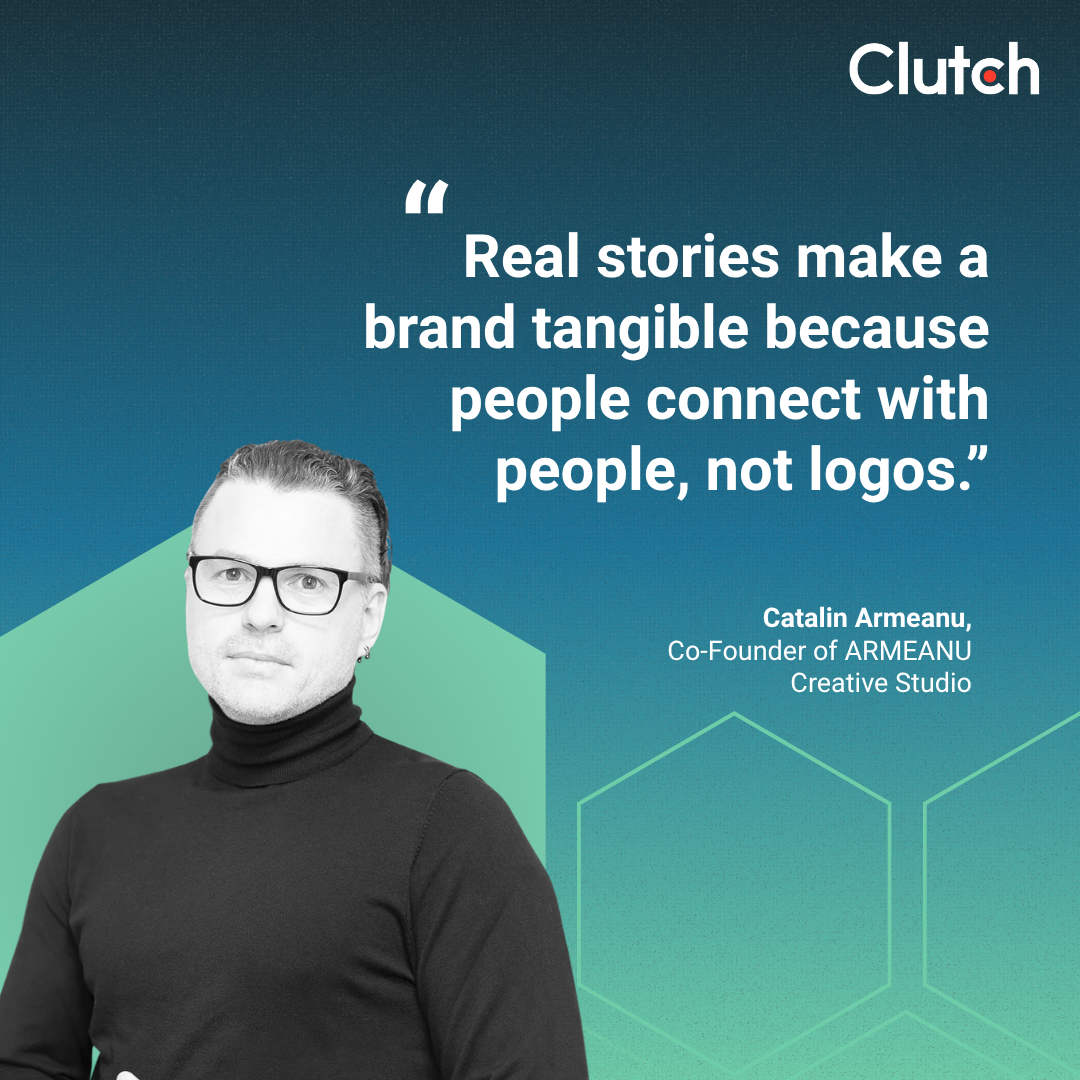
By skipping the founder-led-versus-corporate debate and focusing on how to earn attention in the first place. Once they've done that, businesses can deploy a visible human voice to convert that attention into trust. As Catalin Armeanu, Co-Founder of ARMEANU Creative Studio, says, "Real stories make a brand tangible because people connect with people, not logos."
This guide explains why the founder-vs-corporate framing misleads, what actually earns attention, and how a human voice turns attention into trust.
Most marketers treat the choice between founder-led personal branding and company branding as a binary one. But neither model has access to easy, abundant attention. Per Clutch's survey, nearly half of consumers aren't following either the brand or its executives.
So the real question for marketers isn't "founder or corporate?" It's "how do we get anyone to pay attention in the first place, and what turns that attention into trust once we have it?" Optimizing the founder-vs-corporate split is thus a second-order question, and both models lose if no one is listening in the first place.
According to our survey, among consumers who do follow brands or executives, a founder's personal post out-earns the corporate account in terms of trust, 26% to 19%.
This fits a longer trajectory documented in the 2026 Edelman Trust Barometer, in which trust began shifting away from institutional authorities and toward peers as far back as 2005.
That shift has only deepened since 2023 due to a mix of geopolitical, media, and economic factors, as audiences have retreated further into familiar, trusted circles. Thus, the "people trust people" pattern in the founder-led literature isn't a recent marketing trend; it's downstream of two decades of eroding institutional trust.
Remember, though, that the founder-led advantage is just a small edge, not a sweeping win — and it only matters for the part of the audience already tuned in. For brands, this means that once you’ve got someone’s attention, delivering the message through a person usually works better than sending it through the logo.
One of the most shocking statistics from the survey is that 47% of consumers follow neither brands nor executives on social media, meaning nearly half of the audience is not following any brand accounts.
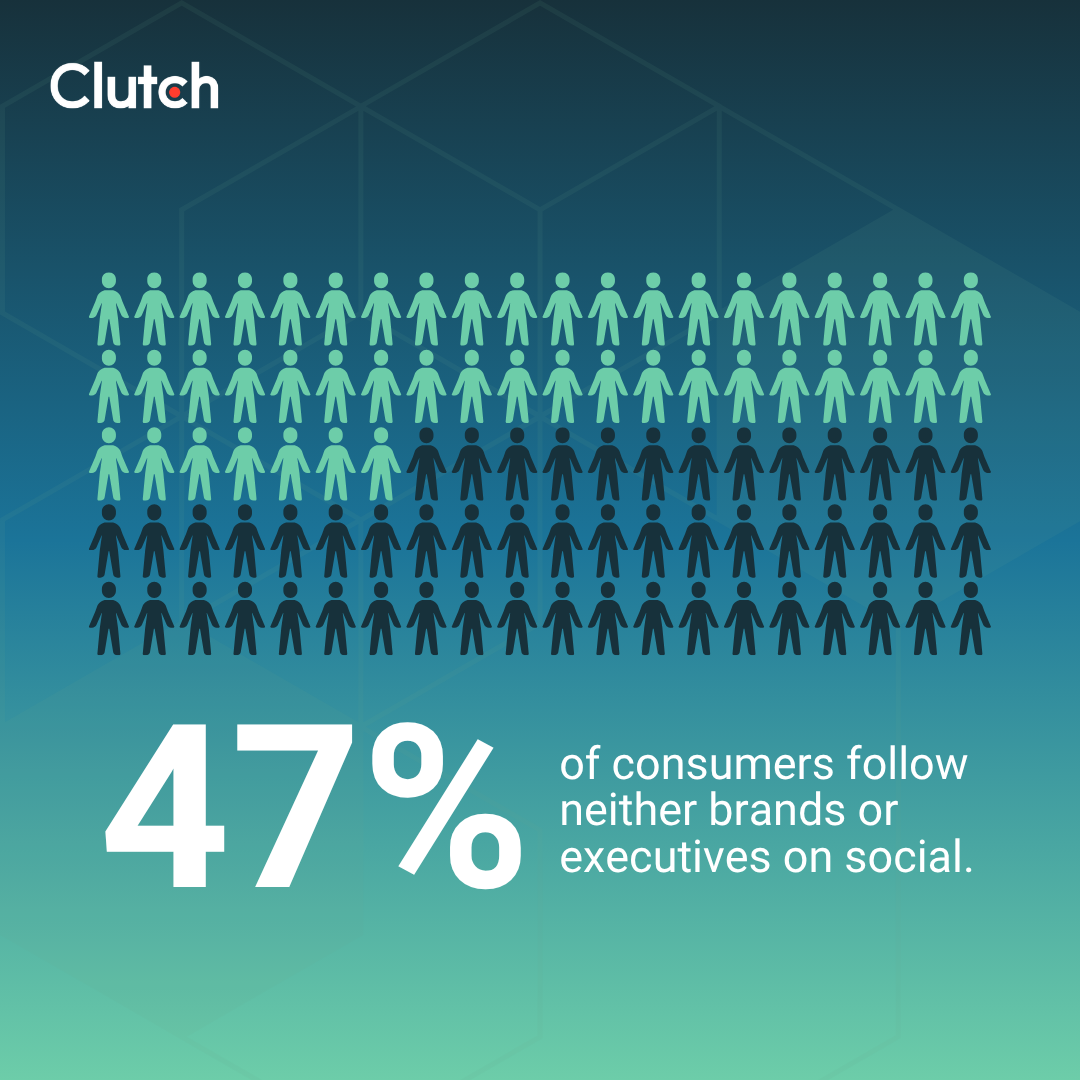
In other words, if you’re caught up in the personal brand versus company brand debate, you’re really just competing for the small group already following someone. The bigger, tougher challenge is capturing the attention of the rest of the audience, which requires finding a completely different way to reach them.
Engagement research suggests the following can help: a consistent, useful point of view outperforms promotion; regular presence beats sporadic bursts; and content that feels native to the platform outperforms content that reads like an ad.
Ultimately, the takeaway for brands is that attention is a scarce resource, and that trust mechanics only matter once you've won it.
Once you've secured consumers' attention, the next step is to convert it into trust by using a visible human voice to spearhead your brand.
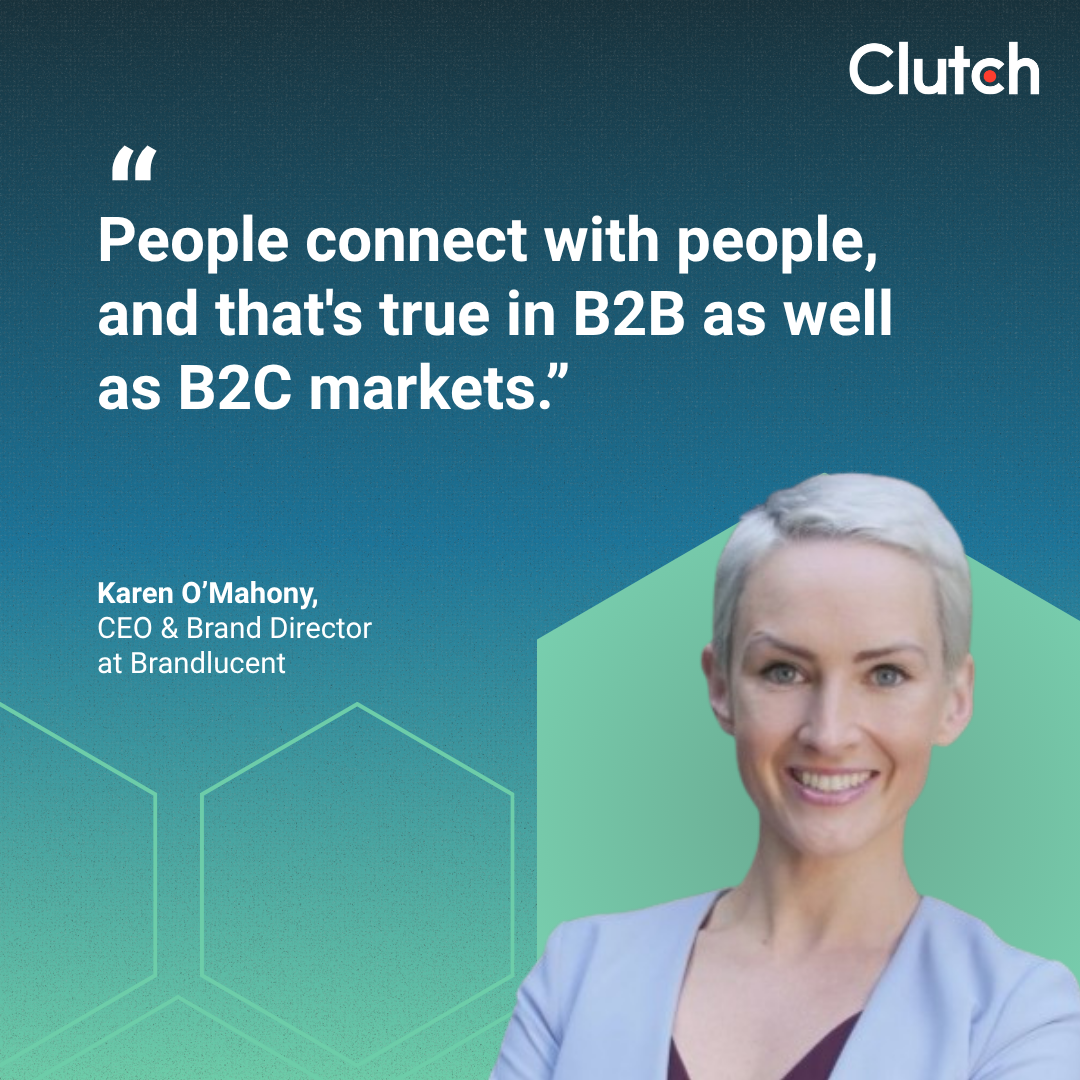
A human figurehead outperforms a faceless corporate account because consumers perceive the figurehead as capable of owning the decision, speaking in the first person, and carrying the cost of being wrong. That's conviction, something a brand account speaking in the corporate "we" can't replicate. As Karen O'Mahony, CEO & Brand Director at Brandlucent, puts it: "People connect with people, and that's true in B2B as well as B2C markets."
The wider survey data backs this up: 36% of consumers name the presence of visible, real humans behind a brand as their top loyalty driver, and 93% say it matters that communications feel like they come from a real person.
In short, a human voice is the conversion layer between attention and trust. The logo rarely does that work on its own.
To earn attention authentically, lead with a recognizable perspective and genuinely useful content rather than thinly-disguised product pitches.
Don't let marketing ride all on one person. Pair the founder with distinctive, recognizable brand assets so trust travels even when the founder isn't in the room, and so the business isn't exposed if that one face goes quiet, leaves, or becomes a liability.
Give the brand voice to more than just the founder. Employees and, especially, customers carry weight too — real customer stories usually outperform polished brand narratives.
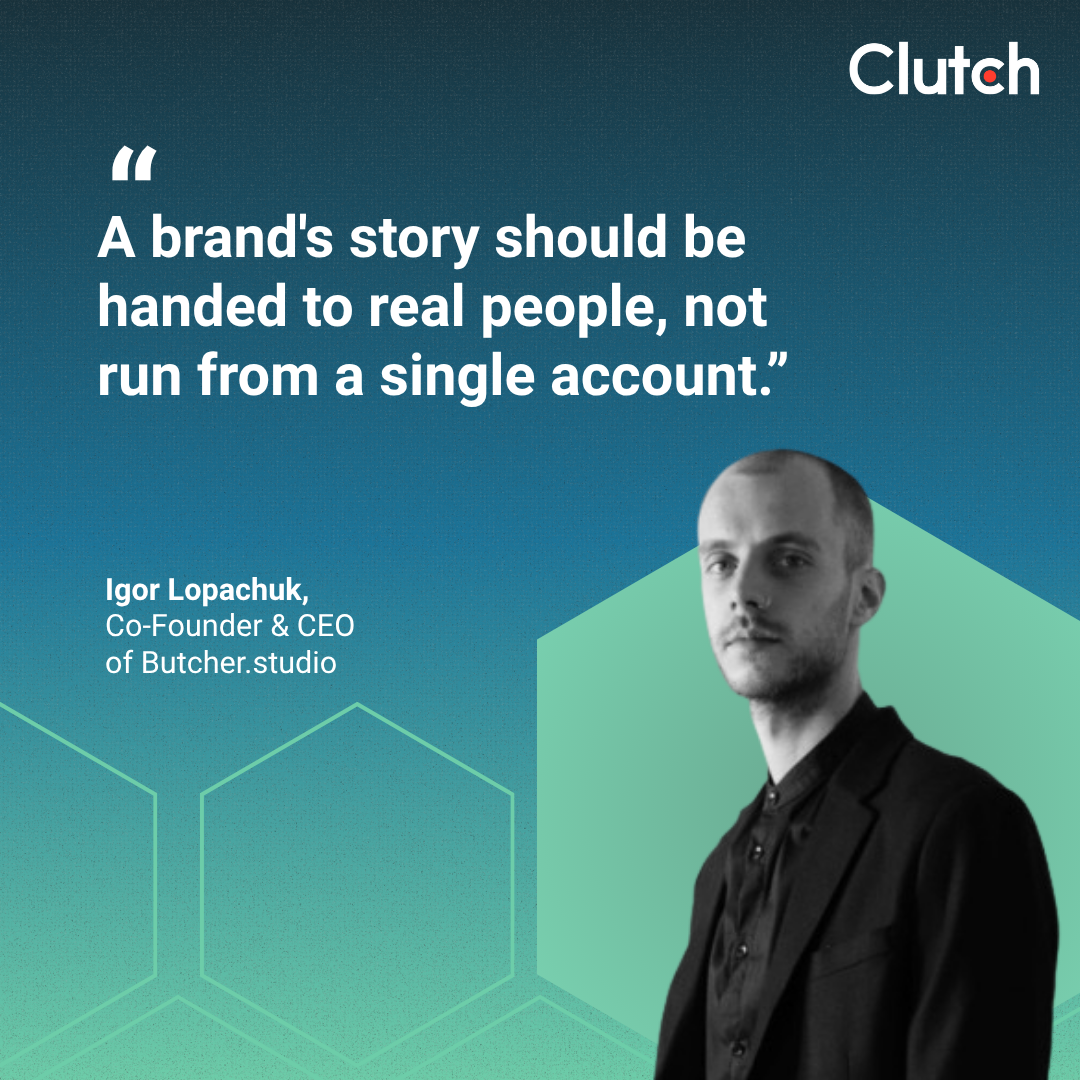
"A brand's story should be handed to real people, not run from a single account… and the strongest of all is the client. They speak about the brand from the outside, and so they can say what a brand simply cannot say about itself,” says Igor Lopachuk, Co-Founder & CEO of Butcher.studio.
That said, performative or over-scripted founder content backfires fast. Not every founder should be the face of the brand, and authenticity can't be manufactured at scale.
Deloitte Insights helps explain why. When they asked customers to rank the importance of the four factors of brand trust — humanity (kindness and empathy), transparency (openly sharing information and choices in plain language), capability (creating quality services and products), and reliability (consistently delivering on experiences and promises) — they said humanity and transparency mattered the most. But their actual purchasing and loyalty behavior told a different story: capability and reliability won. So, while emotional connection can open the door, competence and consistency are even more important.
For marketers, this means marketing should have a human voice, but that doesn't necessarily mean creating a founder-celebrity who goes viral every week. Rather, the goal is to create a human-centered brand that earns attention and then builds trust across real people.
The idea that “consumers trust founders over brands” has become a worn-out cliché in marketing. While there’s some truth to it, these blogs often overlook that founder-led and corporate-led brands aren’t necessarily vying for the same finite pool of attention.
But they aren't. Among existing followers, a founder's post edges the corporate account on trust — 26% to 19%. But 47% follow neither, which means the real contest was never founder versus logo in the first place.
To perform well in today's market, businesses need to win attention first. Once you've secured it, use a human voice to make it credible and build trust from there. That sequence — not the personal-brand-versus-company-account debate — is the real founder-led advantage.