
10 Actionable Link Building Tactics to Build Brand Authority & Legitimacy
Discover 10 actionable link building tactics to boost brand authority and rankings. Learn how quality backlinks build lasting trust in the AI search era.
Updated July 30, 2026

Search results stopped being ten blue links a while ago, but most content strategies haven't caught up.
People ask full questions, expect one clean answer, and rarely click through three pages to piece it together themselves.
Google's own announcement framed AI Overviews as exactly that: a summarized answer with a handful of sources, delivered in one view.
Looking for a SEO agency?
Compare our list of top SEO companies near you
Here's what that means in practice.
The pages getting quoted are not the 2,400-word thought leadership pieces. They're the unglamorous ones. FAQ pages, help center entries, and question-and-answer hubs that nobody on the marketing team wanted to own.
If you're wondering why your best blog posts have gone invisible while a competitor's bare-bones FAQ keeps showing up in AI answers, this is why.
Before you can fix visibility, you have to understand what the machine is actually doing when it lands on your page. Two things matter: how it interprets the query, and how it scores what you wrote against that query.
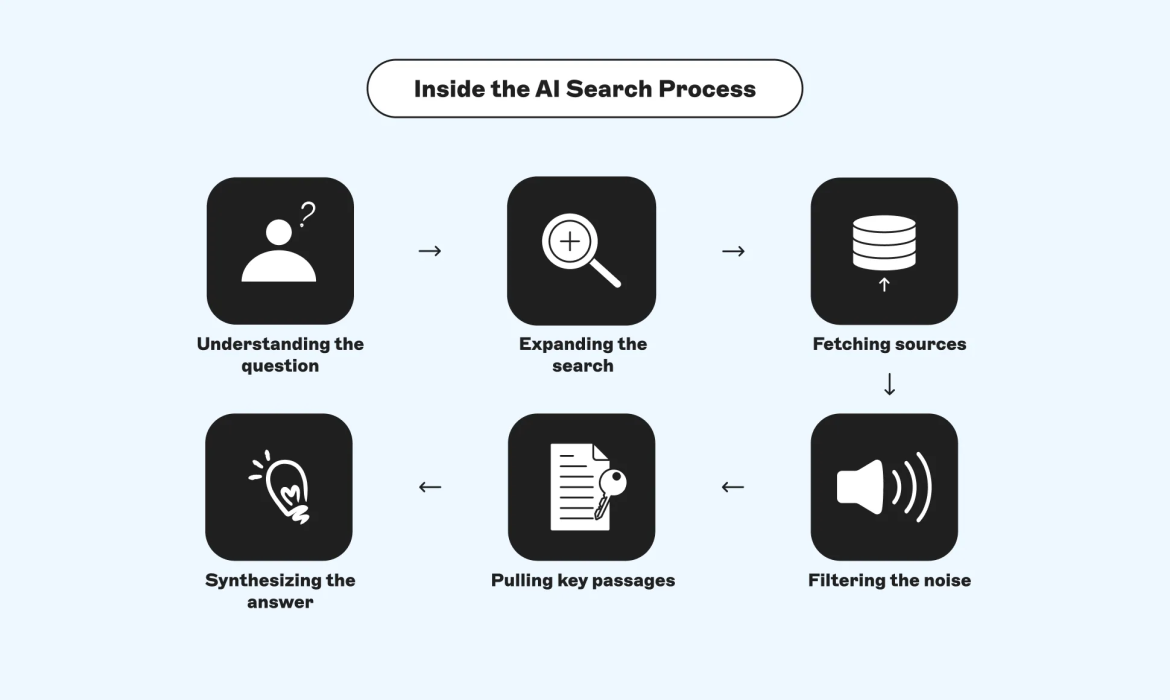
Modern retrieval relies on natural language processing that maps relationships between phrases rather than the presence of exact-match terms.
A query like "how long does an FAQ page take to rank" gets decomposed into intent, entities, and expected answer shape. The system already knows what a good answer looks like before it reads a single one of your paragraphs.
Content written to game a keyword loses to content written to answer a human. Every time.
This shows up most clearly in service industries, where the questions are specific and the stakes are personal.
Conrad Wang, Managing Director of EnableU, an aged care and disability support provider in Australia.
He says, "Families searching for care services do not browse. They ask one specific question about funding or eligibility and want the answer on the first line. When we restructured our content around those exact questions, we started appearing for searches our longer service pages never touched."
Relevance still matters. It just shares the stage with a blunter metric: how fast can a clean answer be extracted from this page?
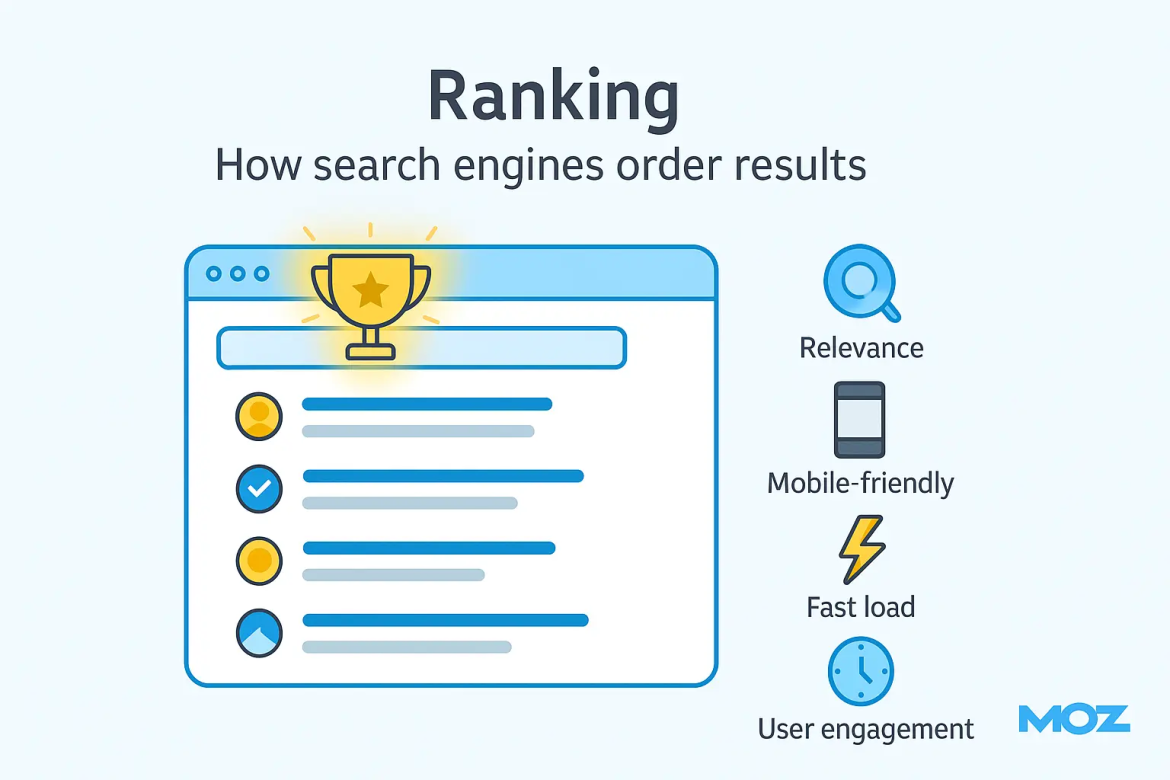
A page that buries its point under three hundred words of preamble gets skipped. Not penalized, exactly. Skipped. The AI grabs the answer from whoever made it easiest to grab.
Strip away the SEO framing for a second. An FAQ page is a collection of real questions, each answered directly, grouped by topic. They used to live in support sections purely to deflect tickets.
Now they do double duty: they resolve the user's question, and they hand search engines pre-chunked, labeled answers in exactly the shape AI systems want to serve.
The winning format hasn't changed in years:
Each entry works as a self-contained unit, which means a crawler or an AI system can lift any single answer without needing the rest of the page for context. That independence is what separates an FAQ from a blog post broken up with question-shaped subheadings, where the answers still lean on what came before.
The advantage isn't mystical. It comes down to three mechanical realities about how answers get extracted, matched, and labeled.
AI systems scan for liftable answers. An FAQ entry is a question paired with its answer, no digging required. A blog post is an argument that unfolds. Guess which one gets quoted.
Nielsen Norman Group's decades of usability research point the same direction: users reward content that answers quickly and clearly, without fluff. The machines learned that preference from us.
FAQs naturally contain the exact phrases people type, because the user's phrasing is the heading. No forcing terms into a narrative.
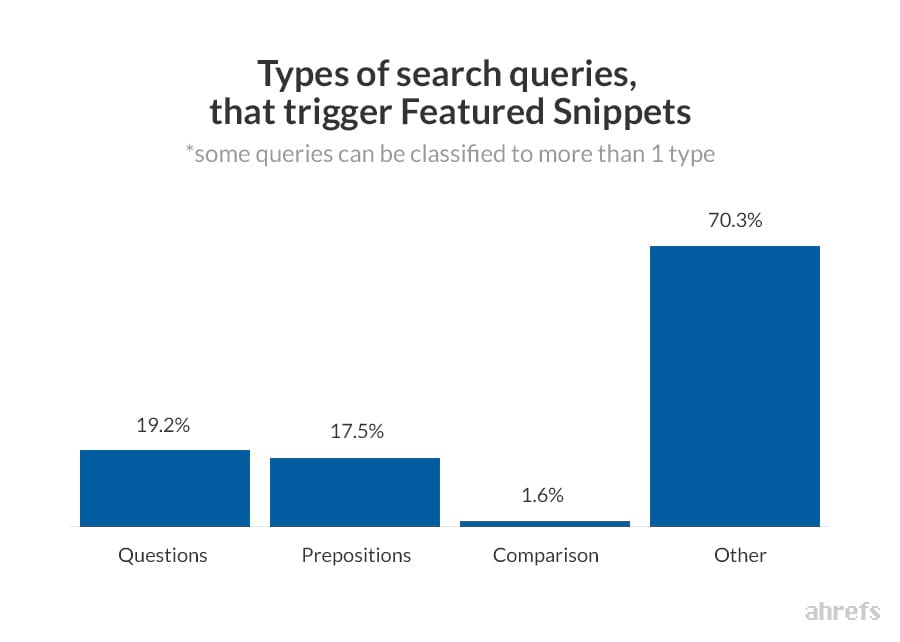
This maps directly onto long-tail intent and "People also ask" style queries, and research from Ahrefs shows that a significant share of queries trigger featured snippets, with question-type searches especially likely to do so.
You can watch this play out in B2B software, where buyers ask almost exclusively.
Someone evaluating contract management software isn't searching for a category name; they're asking "can legal and sales access the same repository?" or "What happens to contracts when the tool changes hands?"
A vendor who can answer those questions on-page, one per entry, is handing the engine exactly what the query asked for.
The vendor with a 3,000-word "ultimate guide" is hoping the engine does the chunking for them. It usually won't.
FAQPage markup in JSON-LD tells the engine precisely where each question starts, and each answer lives. Two things worth knowing before you implement:
The rich snippet was never the whole prize. Machine readability is.
Nobody should read this and delete their blog.
Long-form is still where authority gets built. Original research, storytelling, the reasoning behind a position: none of that compresses into a two-sentence answer, and none of it should. A brand that publishes only FAQ entries reads like a help desk.
The problem is narrower than a bad blog. It's that AI struggles to pull a single clean answer out of two thousand words.
Long posts take longer to reach the point, spread keywords across a dozen ideas instead of concentrating on one question, and wrap everything in a narrative that resists chunking. An excellent post can go completely unseen in AI results while a modest FAQ entry on the same topic gets cited weekly.
BrightEdge's ongoing research into Google's AI-driven results suggests concise, question-led content is well-positioned to be referenced in AI Overviews, since Google surfaces short, source-backed explanations to speed up resolution. The rules will keep shifting. The pattern won't.
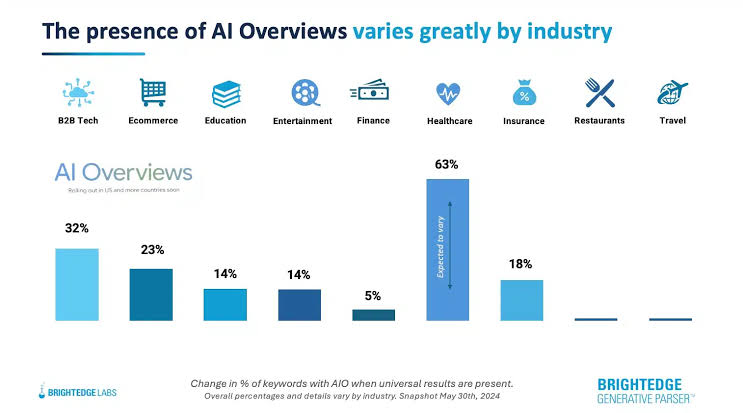
So the real move is division of labor: long-form builds depth and trust, the FAQ hub gets cited.
The build itself is not complicated. Most teams overthink it, then under-maintain it. What follows is the sequence that actually works, plus the maintenance habit that separates pages that keep earning citations from pages that decay.
Regulated and scrutinized niches feel this discipline more than anyone, because vague answers there don't just underperform, they erode trust.
Ryan Beattie, Director of Business Development at UK SARMs, is a UK-based supplier of research compounds.
He says, "Our buyers arrive with specific questions about legality, sourcing and quality standards, and they can tell in five seconds whether a page is going to answer or waffle.
Publishing direct answers to the exact questions people ask has done more for our qualified traffic than any long article we have written."
This is the part everyone skips, and it's where the compounding happens:
If you're sitting on a deep blog archive, you don't have to choose between formats. Pull the most-asked questions out of your long posts, spin them into canonical FAQ entries, and link back to the full analysis for the readers who want it.
The FAQ earns the citation; the blog post earns the trust of whoever clicks through.
AI-driven search rewards content shaped like the question.
FAQ pages have that shape by default, which is why a plain page of questions and first-sentence answers keeps outperforming polished editorial in AI citations, and why the teams winning visibility right now are usually the ones who treated their FAQ hub as core content instead of support overflow.
Gareth Edwards, General Manager of Fox Family Heating & Air Conditioning, has seen the value of treating FAQ content as an operational asset rather than a one-time marketing project.
He notes, "The questions customers ask don't stay the same forever. Updating FAQ pages as those conversations evolve has helped us keep the information useful for customers and far more discoverable in search than content we simply published once and left alone."
Seeing how experienced firms like yours approach content architecture, technical SEO, and AI search optimization can help you build a strategy that earns visibility as search continues to evolve.