How to Measure SEO Success When Traffic Declines
Organic traffic is down, but is your SEO failing? Learn which metrics show real SEO success when AI Overviews and zero-click searches are reducing clicks.
Updated November 3, 2026

Advertisers now have to choose between Google search ads and ads inside AI assistants, and users don't see the two the same way. Clutch’s new survey data shows how well people recognize each format as advertising and how much they trust it.
Search budgets have increasingly started moving toward AI. eMarketer forecasts that U.S. AI-search ad spending will reach $2.08 billion in 2026 (1.3% of total search ad spending) and climb to $25.93 billion by 2029 (13.6%). That growth trajectory places AI search ads squarely in the media plan, alongside channels you may have advertised on for years.
ChatGPT now sells ads through a self-serve Ads Manager. Google shows ads in AI Overviews, and Microsoft places ads in Copilot. Each option competes with the Google search ads that advertisers are already familiar with.
Looking for a SEO agency?
Compare our list of top SEO companies near you
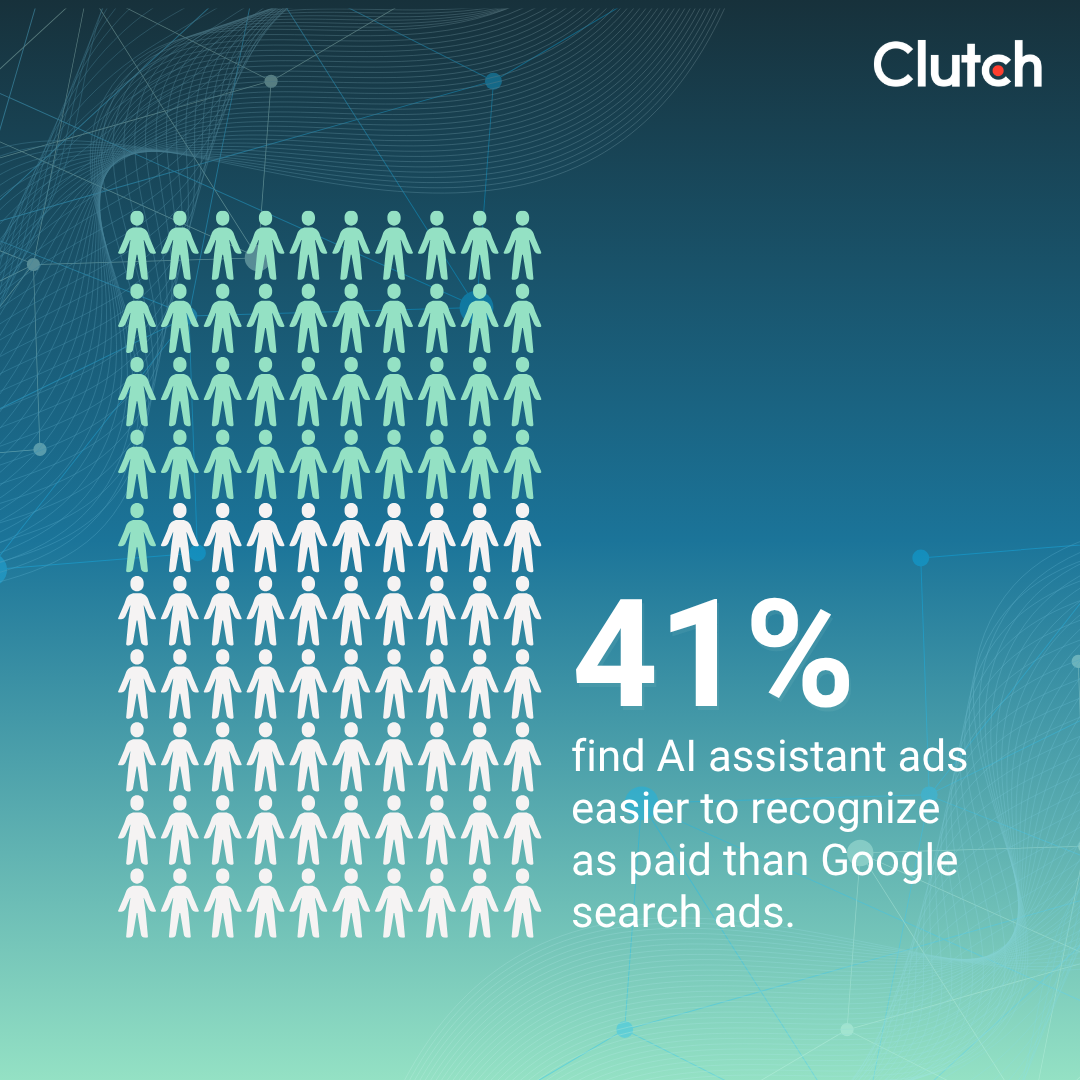
To gauge user reactions, Clutch surveyed 747 consumers in September 2026, 628 of whom regularly use AI assistants. Recognition favors the newer format: 41% find AI assistant ads easier to recognize as paid than Google search ads, while 24% find them harder. Trust divides more evenly. Among respondents, 30% say AI assistant ads are more trustworthy than Google search ads, while 25% say they are less trustworthy.
This article covers what AI search advertising is, how AI assistant ads and Google search ads work, how users perceive each other, and what the results mean for where you spend.
AI search ads refer to paid placements that appear alongside AI-generated answers and bear a “sponsored” label, rather than appearing in a list of links. You’re paying to reach someone who just asked a question and got a direct response. They may also be called large language model (LLM) advertising or AI chatbot ads when they appear in chatbots, rather than in search AI Overviews.
There are several places where advertisers can buy these placements so far:
Each platform sets its own rules, so one plan rarely covers all three.
One platform threw its hat in the ring but ultimately walked away. Perplexity began testing ads in 2024, phased them out, and confirmed in February 2026 that it was moving away from advertising, citing concerns about user trust.
The formats differ in more than placement. This table directly compares AI search advertising on ChatGPT to Google search ads:
| AI Assistant Ads (ChatGPT) | Google Search Ads | |
| Placement and format | Separate sponsored units below AI answers in a conversation | Labeled listings mixed into search results |
| Targeting | Conversational context and descriptions of relevant conversations | Keywords and match types |
| Buying | Cost per click (CPC) and cost per mille (CPM) bidding in ChatGPT ads manager | Google’s CPC auction |
| Audience | Logged-in adults on ChatGPT’s Free and Go tiers | Nearly everyone who searches on Google |
| Measurement | Newer, more limited reporting | Mature conversion tracking |
| Restrictions | No ads near sensitive topics, such as health and politics | Category-based ad policies |
This is where Google’s two ad worlds overlap. Advertisers don't buy Google’s AI Overview ads separately. They run through standard Search campaigns, and eligibility requires broad match, AI Max for Search, or Dynamic Search Ads. A campaign that relies only on exact-match keywords won't qualify.
Google’s cost benchmarks are well-established.
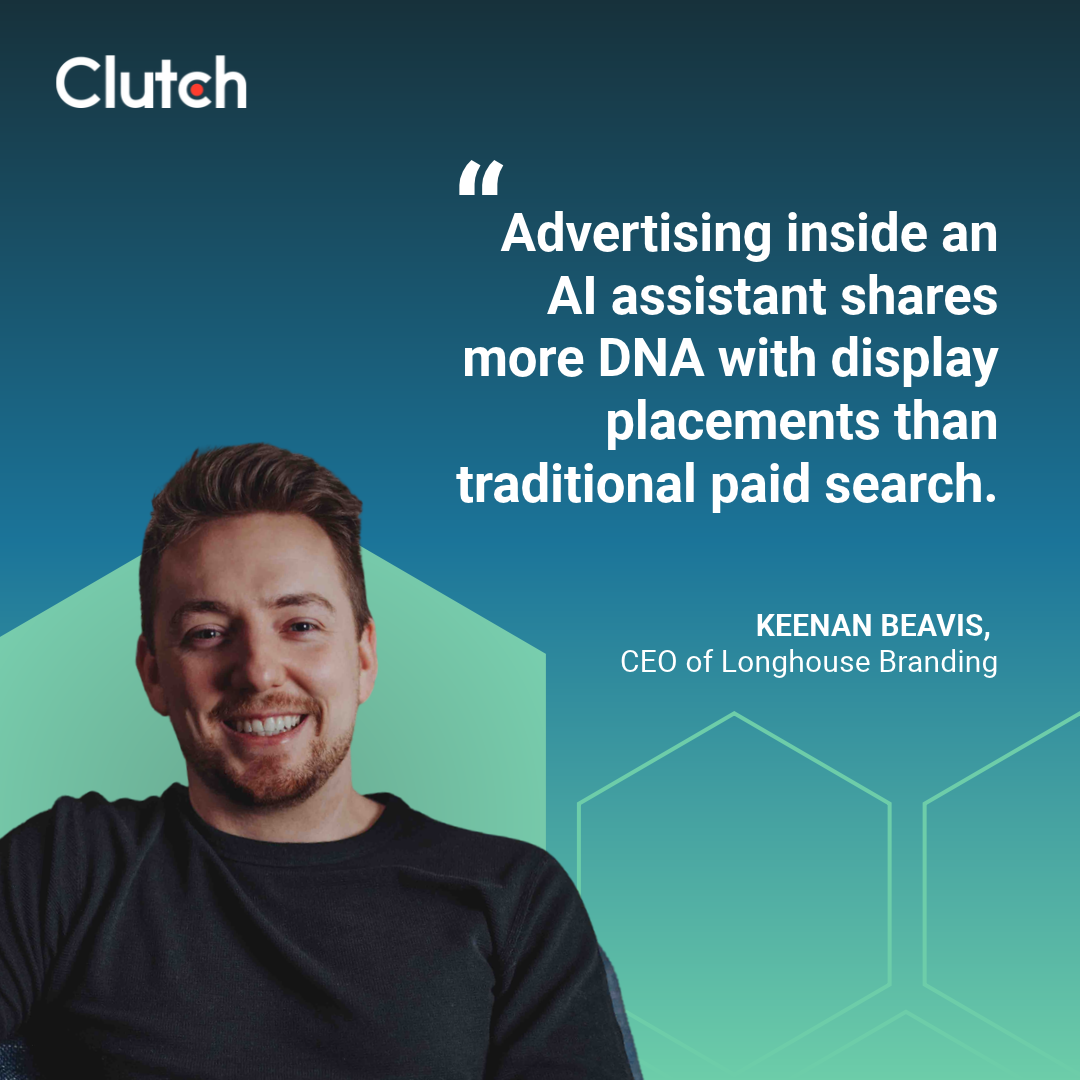
The bigger difference may be intent. “Advertising inside an AI assistant shares more DNA with display placements than traditional paid search,” said Keenan Beavis, CEO of Longhouse. “Traditional search ads capture active, high-intent queries with a bottom-of-the-funnel focus.”
AI assistant ad pricing is still settling, so ChatGPT's CPM or CPC figures change quickly.
Among regular AI assistant users, 41% find AI assistant ads easier to recognize as paid than Google search ads, with 25% saying much easier and 16% saying somewhat easier. Another 28% see no difference, and 24% find them harder to identify.
Format and layout cues likely drive much of those results: 36% recognized AI assistant ads because they appeared in a separate card or box. ChatGPT's sponsored unit sits apart from the answer, while Google search ads share a list with organic results and look much like them.
Users in AI assistants know they're looking at an ad, so the creative can't blend in. Instead, it must earn attention by being genuinely useful.
Useful, in this case, means concrete. A price, a feature the user asked about, or a delivery time gives the reader something to act on. A generic tagline, on the other hand, is likely to be skipped over as quickly as it's spotted.
Recognition has limits: Even if many users find AI assistant ads easier to recognize than Google search ads, 65% of those surveyed still agree that ads in AI assistants are hard to tell apart from regular answers.
Keep in mind that the comparison is relative, not absolute. Compared with Google's lookalike listings, AI assistant ads may be more recognizable. However, next to a conversational answer, the line between ad and answer can blur. That matches the central finding in our AI assistant ads research, where users feel confident spotting ads yet still struggle to distinguish them from answers.
An AI assistant ad sits right beside an answer users rely on for objective guidance, so any confusion reflects on both the platform and the brand. A user who feels tricked won't blame ChatGPT alone.
“When a brand pays for placement, the prompt-and-response dynamic creates skepticism if the ad attempts to mimic or manipulate the assistant’s objective advice,” Beavis said.
For your brand, that confusion comes at a cost. If a user decides an ad passed itself off as advice, they may discount the brand’s other channels, too, and that doubt can drag down results well beyond the assistant.
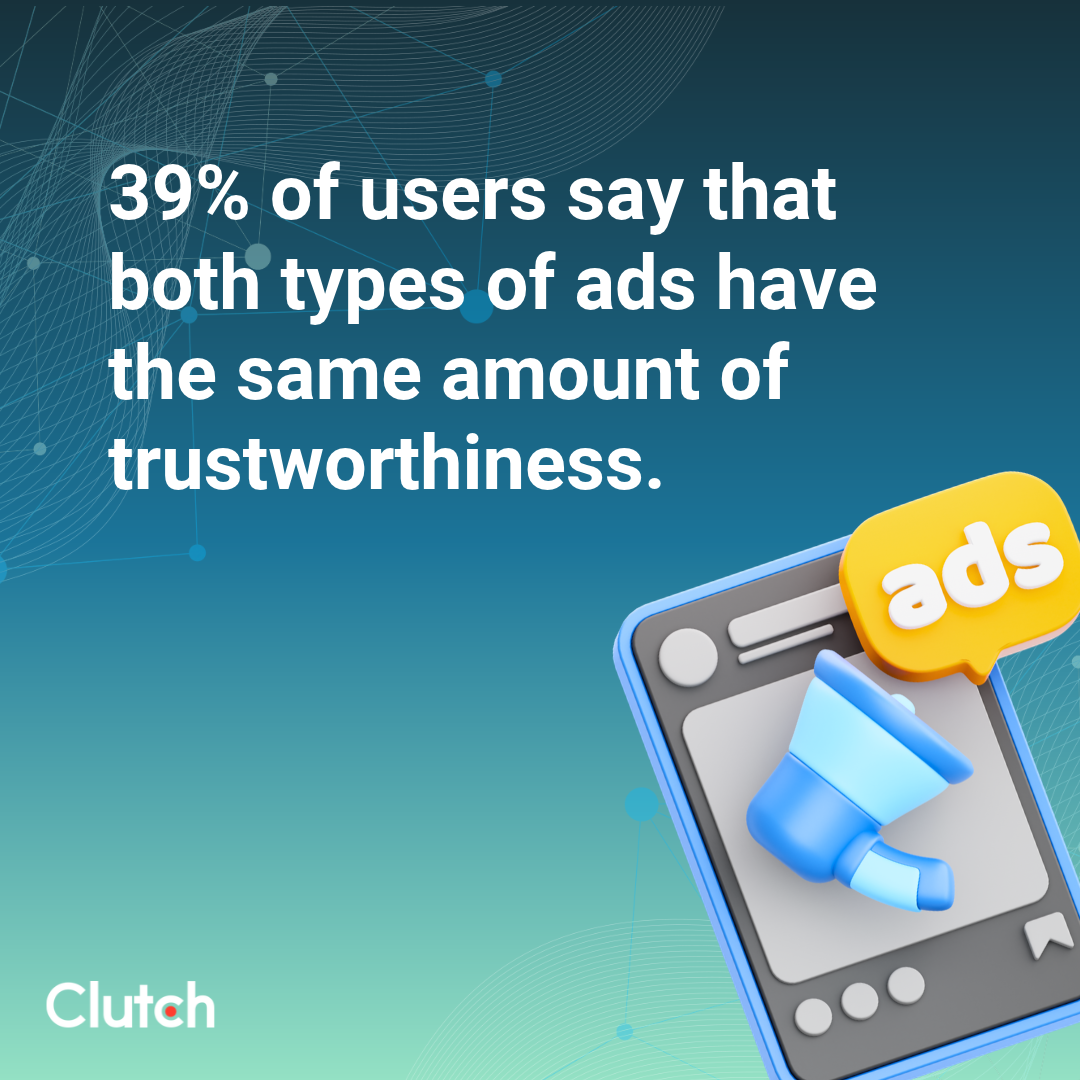
In the trust race thus far, neither ad format is the indisputable winner. Among our survey respondents, 30% say AI assistant ads feel more trustworthy than Google search ads, while 25% say they feel less trustworthy. The largest group — 39% — says that both types feel about the same. Generally, users trust both options about equally.
These results should temper the hype. A format can look cleaner and still fail to earn more consumer confidence.
Different AI assistant platforms have answered the trust question in very different ways. Perplexity decided ads weren't worth the risk to user trust and stepped back entirely. OpenAI opted to move ahead, creating a visual separation between ads and ChatGPT's answers. It also keeps ads away from sensitive topics like health and politics, which limits the moments when a sponsored placement could land badly.
In essence, the two companies took opposite bets on the same question: Perplexity decided that ads cost more trust than they earn, while OpenAI believes that clear separation and topic limits can protect that trust. So far, neither race has run long enough to call.
Users haven’t yet decided whether they trust AI assistant ads. The early advertisers now will help shape that trust, for better or worse.
When you're deciding where to spend, treat AI assistant ads and Google search ads as complementary channels. If you’re weighing Google Ads alternatives, you'll find that AI search advertising changes how ads reach people during conversational research, but it works alongside Google search ads rather than replacing them.
Google Search remains the larger, more predictable channel, with established reporting and clear keyword-level intent. A user who types a specific query has told you what they want, and mature conversion tracking shows the results that the click produced.
One factor worth noting: Google AI Overview eligibility depends on broad match, AI Max, or Dynamic Search Ads, so your campaign settings decide how much AI exposure you get.
AI assistant ads reach users mid-conversation, when they're actively comparing options. That's best for consideration-stage messaging, such as how your product differs from two competitors.
Before launching your full campaign, start with a small test budget and set clear success criteria. Your first AI search advertising test should show you whether your audience responds to useful specifics.
Comparison questions make a good fit. If a user asks an assistant how two tools differ, an ad that lays out your pricing and integrations next to those of two competitors answers the question they just asked.
Choose two or three success measures before you spend, such as click-through rate, cost per qualified lead, and lift in branded search. Compare the results to determine whether your test was effective.
Each format excels when you use the appropriate approach for the creative:
AI assistant ads: Lead with useful specifics, as users already know they're looking at an ad.
Google search ads: Rely on keyword match and ad extensions to stand out in a crowded list.
Copy that works in one place may not perform as well in the other, so tailor your ad messaging to each platform.
Clicks can be lower for AI assistant ads compared to Google search placements. To measure your results, look at brand lift and downstream behavior as well, such as branded search volume and direct visits after exposure.
Accurately tracking downstream behavior can take some digging. Compare branded search volume and direct visits in the weeks before and after your test, then determine whether any increases align with the days your ads ran. A user who sees your brand name in an assistant may never click it, but may search for you on Google a day later.
Paid and organic results share the same answer surface in AI assistants, so how your brand appears organically affects how your target audience receives, perceives, and reacts to your ads. If an assistant describes your product inaccurately or omits it from a top-three list, an ad has to overcome that shortcoming. Audit what the major assistants say about you before you buy a placement.
AI assistant ads and Google search ads compete for the same marketing budgets, but they work differently and land differently with users. The survey data show where each stands:
Easier recognition helps AI assistant ads, but the real way to succeed with AI search advertising is to create paid placements worth recognizing.
A: AI search advertising involves paid marketing placements within AI search platforms that appear alongside AI-generated answers and carry a sponsored label. Advertisers buy ads on platforms like ChatGPT, Google, and Microsoft Copilot to reach people during relevant conversations.
A: ChatGPT shows sponsored units to users on the platform’s Free and Go tiers and sells these placements through a self-serve Ads Manager, currently in beta. Google runs ads in AI Overviews and tests them in AI Mode, and Microsoft places ads within Copilot.
A: Not currently. Perplexity tested ads beginning in 2024 but then phased them out, and confirmed in February 2026 that it was moving away from advertising because of concerns about user trust.
A: Neither AI search ads nor Google Ads are better in every situation. Google Search advertising offers scale, keyword intent, and mature measurement, while AI assistant ads reach users mid-conversation and, per our survey data, are easier to recognize as paid. Most advertisers will get more from running both.