How to Measure SEO Success When Traffic Declines
Organic traffic is down, but is your SEO failing? Learn which metrics show real SEO success when AI Overviews and zero-click searches are reducing clicks.
Updated October 27, 2026

Brands can now opt to purchase placements in AI assistants or earn organic recommendations, but the two aren’t entirely separate. Clutch’s survey shows how paid placements may reduce trust in the surrounding organic brand mentions.
Ads have arrived in AI answers. OpenAI began testing ChatGPT ads in February 2026, and Google shows ads in AI Overviews. This means brands that built visibility through generative engine optimization (GEO) now face a new choice: pay for placements, earn organic recommendations, or do both.
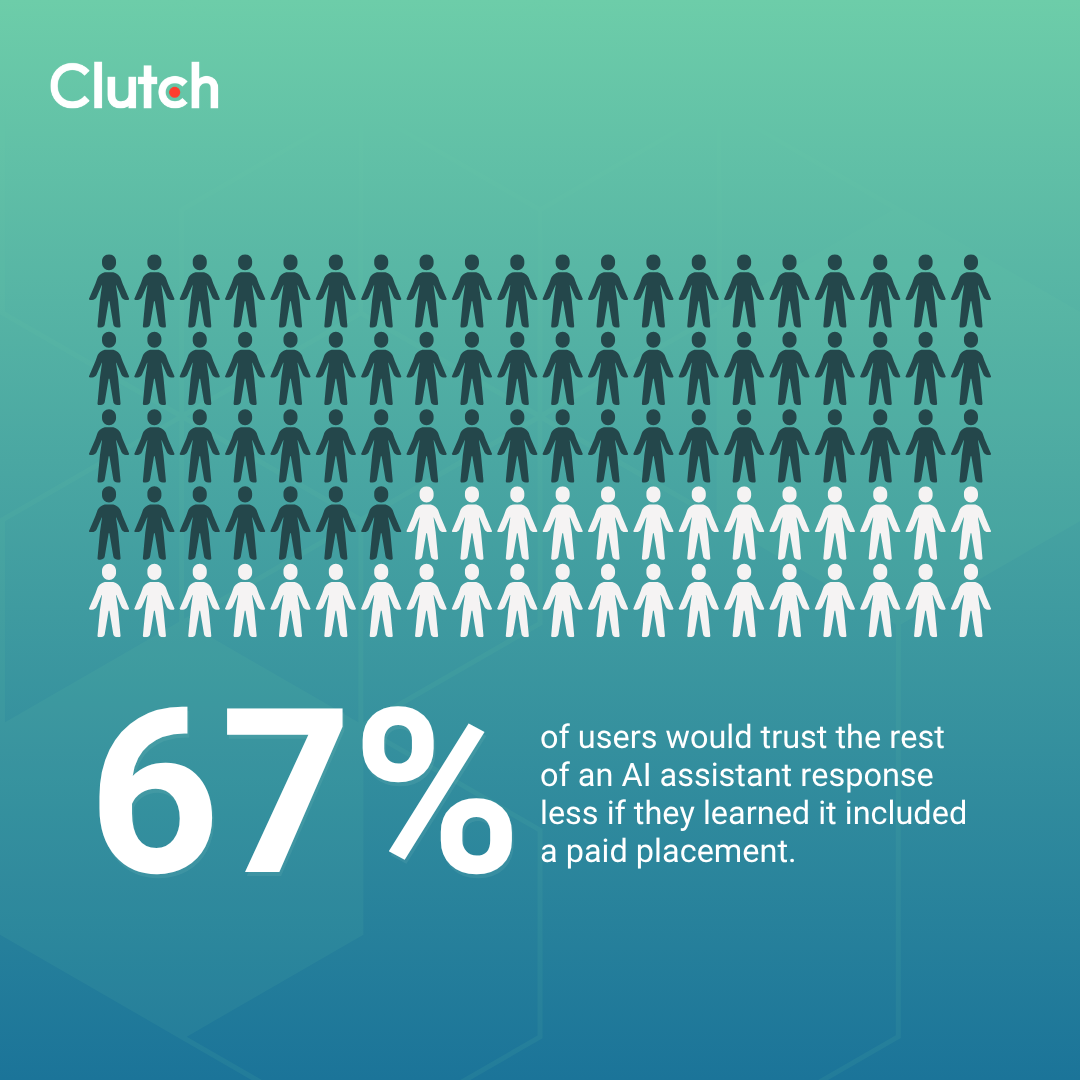
The catch, however, is that each choice affects the others. In September 2026, Clutch surveyed 747 consumers, 628 of whom are regular AI assistant users, about ads for AI assistants. Two findings stand out: 67% of users would trust the rest of a response less if they learned it included a paid placement, while 44% are concerned that advertisers will influence the recommendations they get.
Looking for a SEO agency?
Compare our list of top SEO companies near you
In other words, an AI ad may cost more than it's worth, as it can put organic brand mentions around it at risk.
How can marketers actually use AI ads without taking on these risks? This guide covers what a GEO strategy is and how paid and organic AI visibility interact. Explore how to decide which to use and build a strategy that accounts for both.
Generative engine optimization (GEO), sometimes called AI search optimization, is about improving how AI assistants and AI search find, describe, and recommend your brand. Your GEO strategy connects those efforts to business goals, such as reaching buyers during research or appearing in product comparisons.
GEO overlaps with SEO, but it targets a different result. SEO focuses on achieving a high search engine ranking in search results. GEO aims for mentions and recommendations inside a generated answer. The goal is large language model (LLM) visibility: whether the assistant names you, how it describes you, and which competitors it names alongside you.
Until 2026, organic GEO was the only way for brands to show up in an AI assistant's answer. Now, on certain AI platforms, paid placements can appear with a response.
This means your GEO AI search optimization strategy has to account for both paid placements and organic recommendations, as well as for how each one affects the other. If you get that balance wrong, an ad could weaken trust in the answers where you already appear.
An ad in an AI answer doesn't sit in isolation. It appears next to the organic answer, and it can change how users read that answer.
According to our survey, 67% of AI assistant users would trust the rest of a response less if they learned it included a paid placement. This includes 40% who would trust it much less and 27% who would trust it somewhat less.
Paid ads change users' perception of a brand. According to OpenAI, ads don't influence ChatGPT's answers, and they're labeled and visually separated from the assistant's response. So the organic answer stays the same. What changes is how much users believe in the answers.
When users discount a whole response, every organic brand mentioned in it loses credibility. That includes competitors, brands that earned their place organically, and the advertiser's own organic mention if it appears in the same answer.
Perplexity provides a real-world example of how paid ads can erode a brand's credibility. The AI search startup began running labeled ads beneath its answers in 2024, while assuring users that the ads didn't affect results. However, by the end of 2025, it began phasing out ads, and confirmed in February 2026 that it was moving away from advertising. An executive told the Financial Times that ads risked making users doubt everything the product said. Apparently, even labeling and separating ads from the organic content didn't remove the concern.
Interestingly, paid ads don't erode everyone's perceptions. According to our data, 18% of users would trust the response more if it included a paid placement, and 16% say it wouldn't change their trust. For most users, though, the mere presence of an ad carries a trust cost that spreads beyond the ad itself.
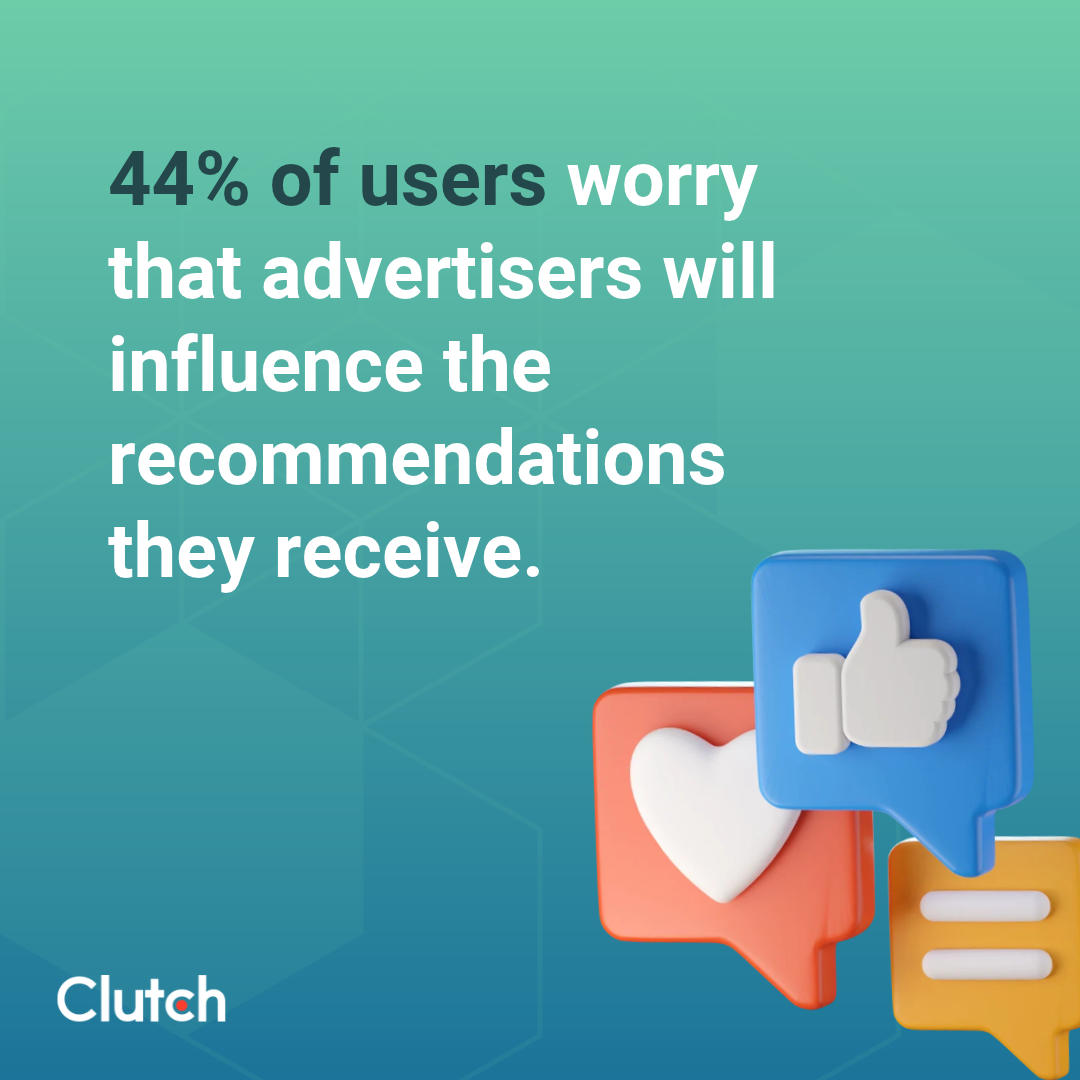
Many users already expect advertising to shape what AI assistants tell them. Our survey found that 44% of users worry that advertisers will influence the recommendations they receive, and 39% believe that an ad strongly influences an AI assistant's answer.
This suspicion exists before any individual ad runs. So brands that appear organically in AI answers next to ads may inherit that doubt, even if they never buy a placement. If users suspect that ads drive recommendations, any organic mention near an ad may read as paid.
For any brand, what matters is that organic AI visibility is only as valuable as users' belief that the answer is independent. Every brand that relies on AI recommendations has a stake in protecting that belief.
Brands that choose AI paid placements need to understand how to maintain trust: advertise selectively, keep paid claims consistent with organic ones, and measure the effect on trust.
How should a brand choose between paid, organic, or both? There is no absolute rule. The decision depends on your industry category, your existing organic presence, and the extent to which trust drives purchases.
Organic visibility matters most in high-consideration and high-trust categories, where users weigh recommendations carefully. This includes buyers researching software, financial products, healthcare services, or B2B vendors. A paid placement in answers about these products can prompt skepticism.
Organic also makes sense for prompts where your brand already appears credible. If ChatGPT is currently recommending your product for "best project management tools for small teams," paying for that conversation adds little in terms of reach. Instead, it risks making your earned mention look bought.
Paid placements fill gaps that organic visibility can't reach quickly. For example, a new product or category may have no organic footprint yet, because AI assistants draw on existing content and coverage. Ads can put the brand in front of users while that footprint builds.
Set expectations accordingly. Keenan Beavis, CEO of Longhouse, compared an AI placement to “a digital billboard, a transit bench, or a vehicle wrap,” rather than a search ad. Longhouse’s early ChatGPT ads testing found the channel currently works better for top-of-funnel awareness than for direct-response conversions. “Advertisers must treat these slots as contextual brand-discovery channels rather than high-converting capture points,” Beavis said.
Paid ads can also work for time-sensitive orders, such as seasonal promotions or limited-time discounts, as these events often end before organic signals catch up.
Avoid paying for conversations you have already won. Search marketers may already be familiar with brand-keyword cannibalization, in which you pay for clicks you would've gotten for free. The same goes for GEO and paid placements.
Also, keep paid messaging consistent with how AI assistants already describe your brand. If AI chatbots call your product the affordable option, but your ad promotes premium, expensive features, users will see a contradiction. With consistent claims, the ad reinforces the answer instead of contradicting it.
Finally, test before you scale. For example, you can run a holdout test by pausing ads in one market or time period while they keep running elsewhere. Then compare the results. For both groups, track how often AI assistants mention your brand, not just traffic, to see whether paid placements change your organic outcomes.
Now that you know what a GEO strategy is and the risks associated with paid placements, how do you build a GEO strategy that accounts for paid AI ads? Follow these basic steps:
Start by running your buyers' prompts — the prompts they're likely to use in AI assistants when looking for your services and products. For example, if you're a sneaker seller, relevant prompts might be "What are good running shoes near me in X location?" or "What are the best running shoes for jogging in winter?"
Then record which assistants mention your brand, how the assistant describes you, and which competitors also appear in the answers. Repeat the check across ChatGPT, Gemini, Perplexity, and Google AI, as results may differ by platform.
Organize key conversations by the buyer’s stage in the decision process: research, comparison, or purchase. Then choose paid, organic, or both for each stage.
For instance, research prompts often lean toward organic, as users are still shaping their opinions. Purchase prompts may warrant paid placements, especially when organic visibility is limited.
AI assistants rely on the information available about you. Original data, expert insights, clear product and pricing details, and trustworthy third-party reviews give them accurate material to use. When that information is missing, though, they may have to rely on competitors’ content or leave you out altogether.
Your ads should match the claims and language AI assistants already associate with your brand. Pull those descriptions from your audit and build ad copy around them.
The format of the ad matters, too. “Instead of using aggressive direct-response copy, brands need to offer utility that supplements the ongoing topic,” Beavis said. “For example, a home loan query benefits from a standalone mortgage calculator tool or an in-depth educational resource rather than an immediate pitch to hire a broker.”
If an assistant describes you inaccurately, fix the organic sources before you try to correct the record with ads. Note that a source can be accurate but still mislead an assistant if it buries the key point. State the claims you want repeated plainly and early in your GEO content.
Ad dashboards only report clicks and conversions. They don't show what happens to your organic standing. Track your brand's organic share of voice and sentiment before, during, and after campaigns to see whether paid placements help or hurt your earned visibility.
AI ad formats are still evolving. For example, in October 2026, OpenAI announced a visual ad format that it will first test during image generation in ChatGPT on Free and Go plans. Because each new format changes where ads appear and how users react, review your paid and organic mix on a set schedule, such as quarterly.
Paid and organic AI visibility now share the same answers in AI assistants and AI search results. This means decisions about organic vs. paid search need to consider how each shapes the other in consumers' minds.
Our data reflects the conflict: 67% of users would trust the rest of an AI assistant's response less if it included a paid placement, while 44% are concerned advertisers will influence recommendations, and 39% believe ads influence an assistant's answer a great deal.
This doesn't mean that brands should avoid AI ads. Paid placements may still make sense for new products, prompts where your brand has no organic presence yet, and offers that can't wait for organic signals to build. However, they work best in concert with a strong organic foundation, not as a replacement.
In AI answers, consumer trust is the asset that GEO builds. Accordingly, your paid placements strategy should protect that trust, not spend it.
A GEO strategy is an AI visibility strategy for improving how AI assistants and search find, describe, and recommend your brand. It ties generative engine optimization efforts, such as optimized content, original data, and third-party coverage, to business goals.
GEO vs. SEO offer different strategies for improving brand visibility. Search engine optimization aims for high rankings in search results, while generative engine optimization aims for mentions and recommendations inside AI-generated answers.
OpenAI says ads don't influence ChatGPT's answers, so buying an ad shouldn't change your organic visibility. However, paid ads can potentially affect user trust. In Clutch's survey, 67% of users said they would trust a response less if they learned it included a paid placement.
The value of investing in AI or GEO depends on what your brand needs. GEO builds organic credibility that ads can't buy, creating a stronger foundation. Buying AI ads can make sense for new products, prompts with no organic presence, and time-sensitive offers. Ultimately, brands that run both should take care to avoid undercutting consumer trust or paying for conversations they already win.