
Testimonial Advertising: How to Turn Customer Stories Into Sales
Testimonial advertising uses real customer stories and reviews to promote your brand. Discover popular types and how to put this content to work.
Updated October 13, 2026

Ads now appear in AI assistants like ChatGPT. Clutch surveyed 628 AI assistant users to find out whether they can spot paid placements, how ads affect their trust, and what that means for brands that advertise there.
AI assistants built their audiences as answer engines. Now there are ad opportunities for brands, too.
OpenAI began testing ads in ChatGPT in February 2026. Free and Go users were the first to see them, while Plus and Pro subscribers were exempt. The sponsored placements appear at the bottom of relevant responses and are separated from the organic answers. A month later, it was announced that ads would be shown to all Free and Go users in the US.
Looking for a Advertising agency?
Compare our list of top Advertising companies near you
By the end of September, the program had moved well past its testing phase – ads have now expanded to countries in Asia. Advertisers can now build multiple product feed campaigns through spreadsheet uploads, and OpenAI’s reporting now includes attributed conversions. Product feed ads have been among the top performers in its program so far.
For advertisers, that infrastructure makes ChatGPT a channel worth testing at scale. For consumers, it raises a more basic question: Can they tell when an AI's answer involves advertising, and does knowing change how much they trust it?
OpenAI has said advertising won’t influence outputs, but as our findings show, many users aren’t convinced.
To understand how people are responding, Clutch surveyed 628 people that regularly use AI assistantsin September 2026,.
For many of them, AI assistants are a habit, with 58% using their platform of choice daily.
This report will examine ads in AI assistants as a matter of brand and trust, not just clicks and conversions, drawing on insights from real users.
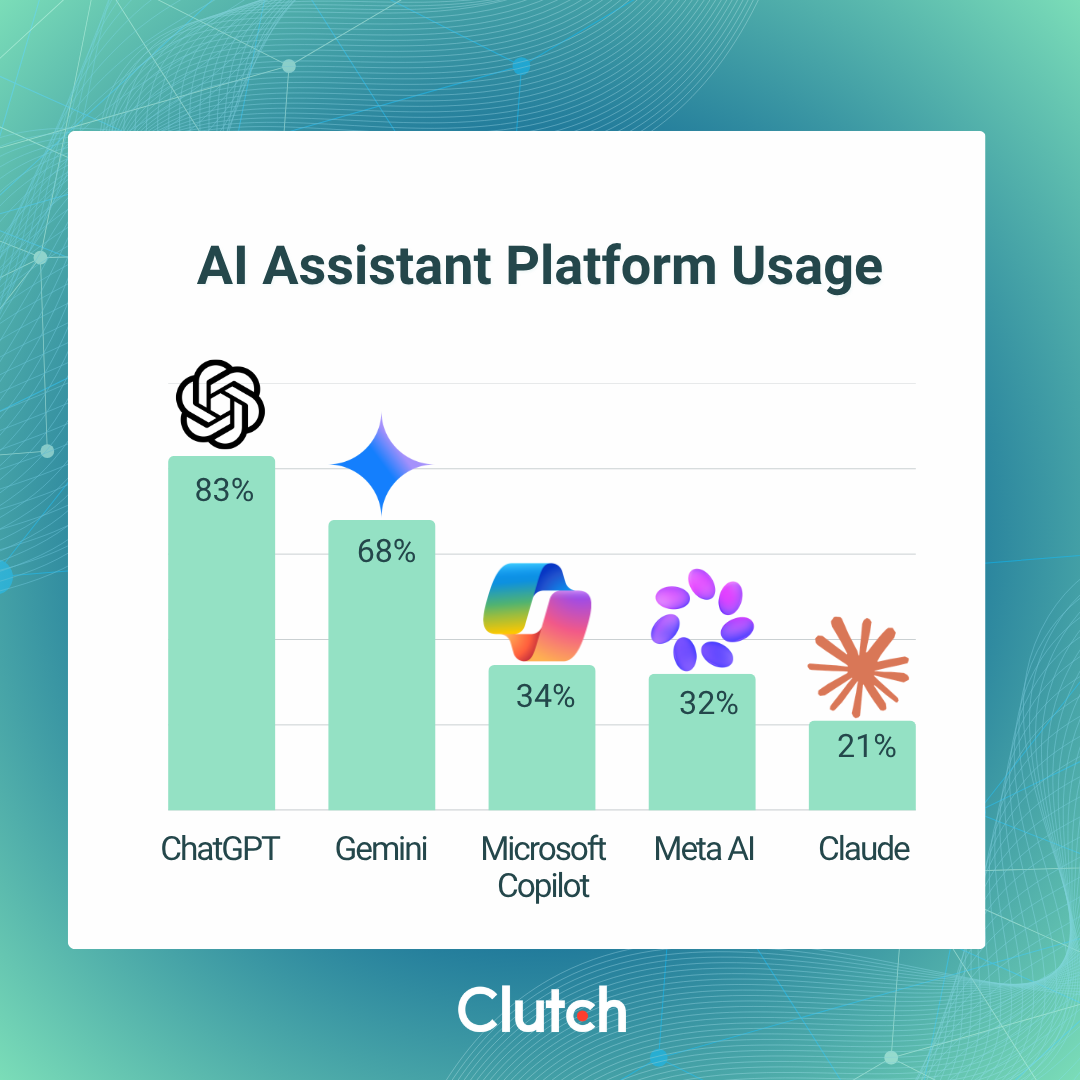
ChatGPT is the most widely used AI assistant, and most people use AI assistants without paying for them.
Eighty-three percent of AI assistant users use ChatGPT, followed by Google Gemini (68%) in the last three months.
Most users stay on free versions. Sixty percent use a free version of their AI assistant, while only 30% pay for any type of plan.
That matters for advertising. ChatGPT shows ads to users on its free and Go plans, while higher-paid tiers remain ad-free. So the free experience is where most users are likely to encounter ads, and it’s where the trade-off between monetization and trust will play out.
Consumers mainly use AI assistants for information. Seventy-two percent use them for quick facts or definitions, and 58% use them for research or decision-making.
Because so many people use AI assistants to research and make decisions, the answers they can get shape both what they understand and what they choose.
That influence extends to purchases: 41% of users turn to AI assistants for product recommendations or shopping. That puts brands directly in the path of buying decisions, a shift Clutch has also found in how agentic commerce is changing online shopping.
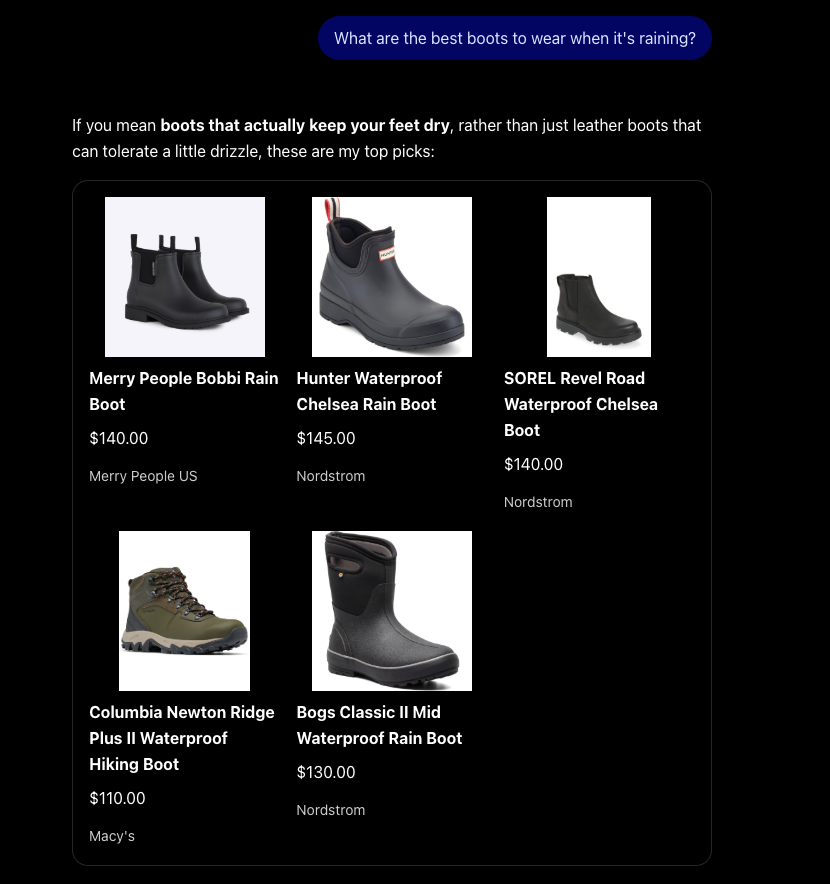
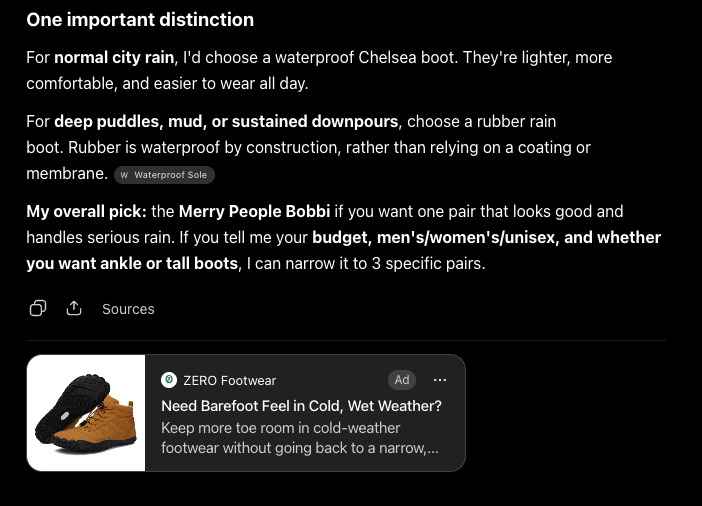
It also raises the question of whether those recommendations are paid for.
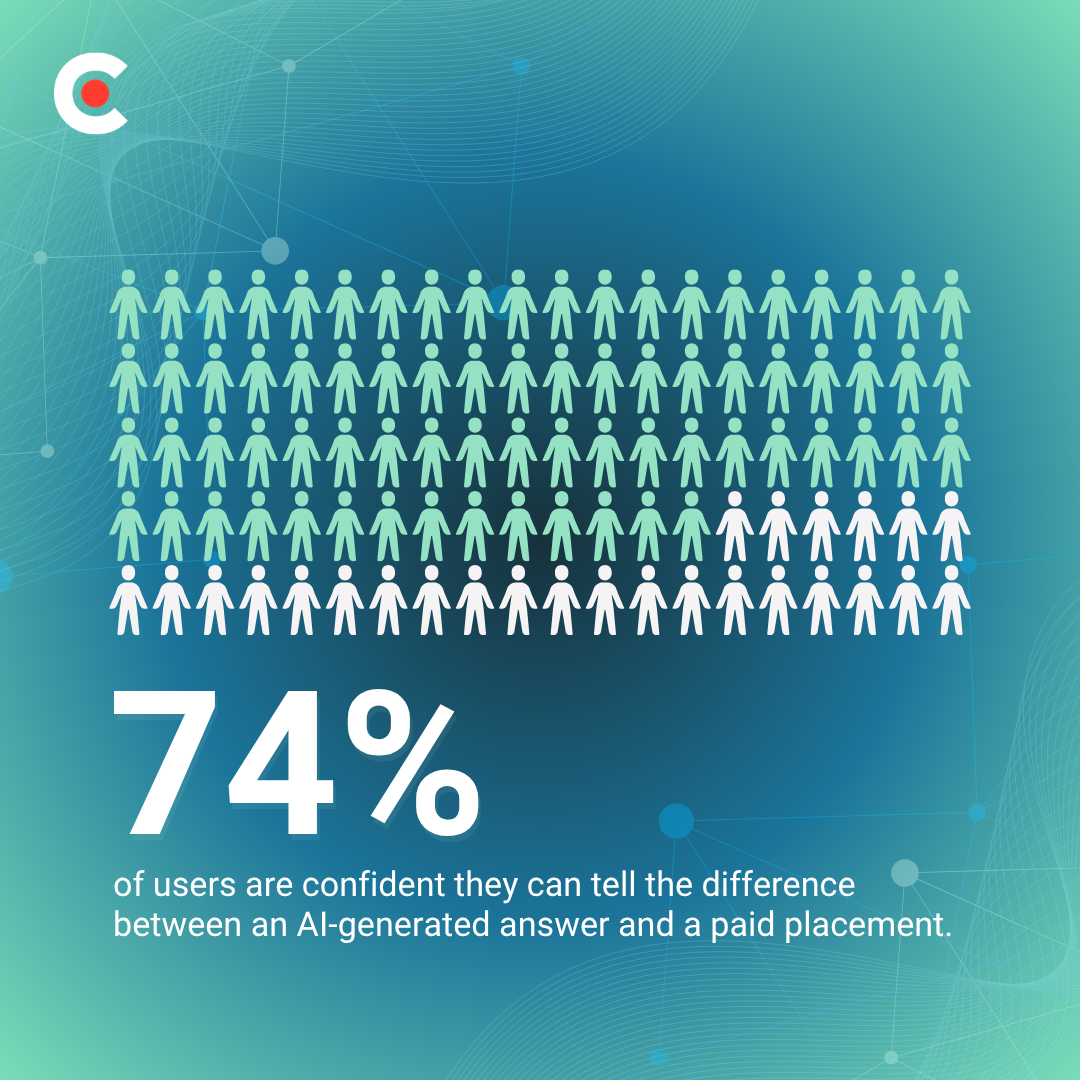
Most AI assistant users believe they can tell an ad from an answer. Seventy-four percent are confident they can tell the difference between an AI-generated answer and a paid placement.
Many users have seen these ads firsthand. Fifty-two percent of users have seen an ad in an AI assistant’s response, so for over half of users, AI advertising is already part of the experience.
Labels do much of the work. Among users who have seen an ad, 55% recognized it because it carried a “Sponsored” or “Ad” label.

OpenAI has said ChatGPT ads will be clearly labeled and separated from the organic answer, and these findings suggest that design choice is working..
Confidence and clarity don’t always line up, though. Sixty-five percent agree ads in AI assistants are hard to tell apart from real answers. Many users say they can spot an ad while also admitting the line between paid and organic content isn’t always clear.
The overlap points to a gap between how well users think they can identify ads and how easy ads actually are to identify. If users rely on labels, an ad that’s easy to miss or blends into the surrounding context may slip past even confident users.
Nearly all users trust their assistant to give neutral answers, but most also believe ads shape those answers.
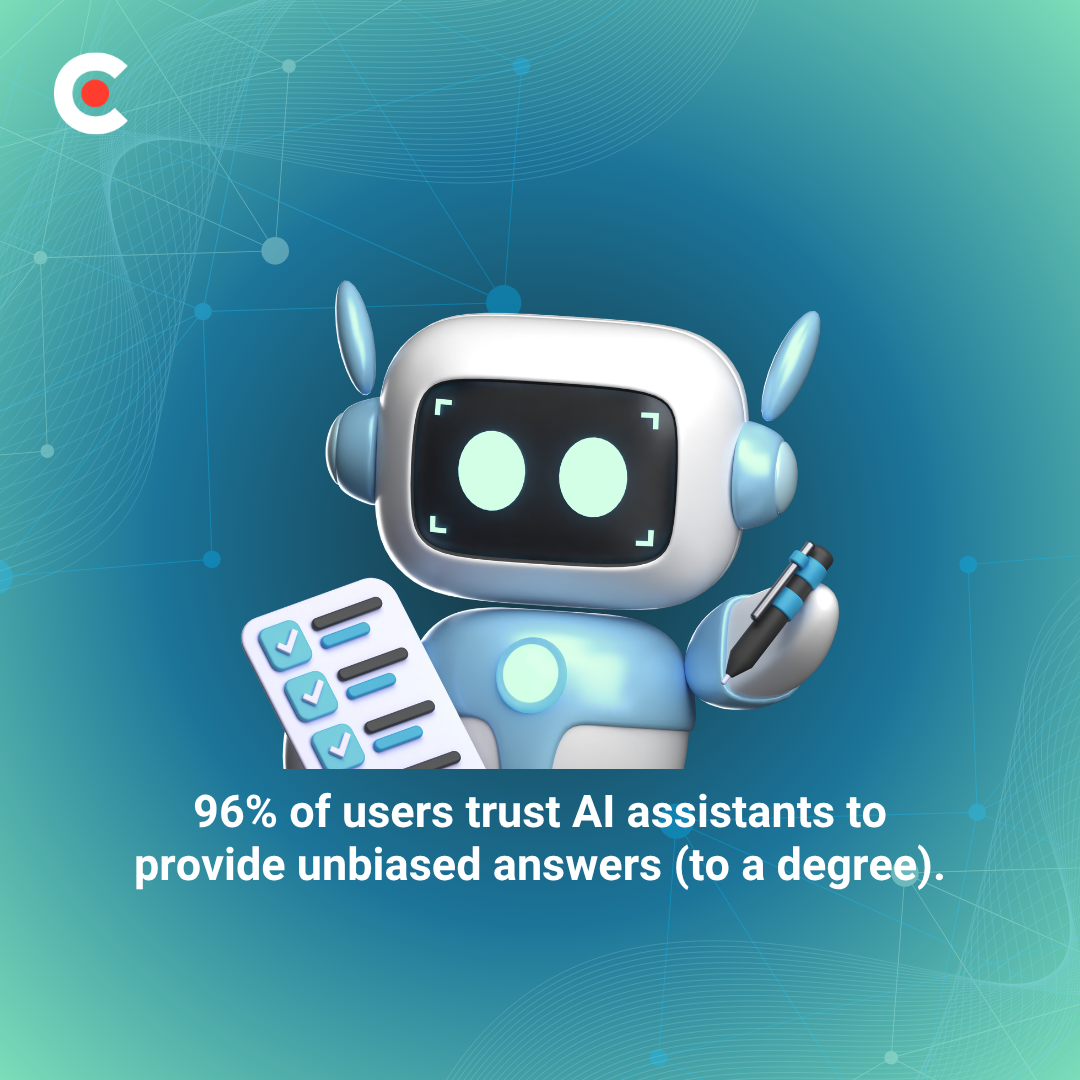
96% of users trust AI assistants to provide neutral, unbiased answers to some degree, yet 86% think an ad influences the answer they receive.
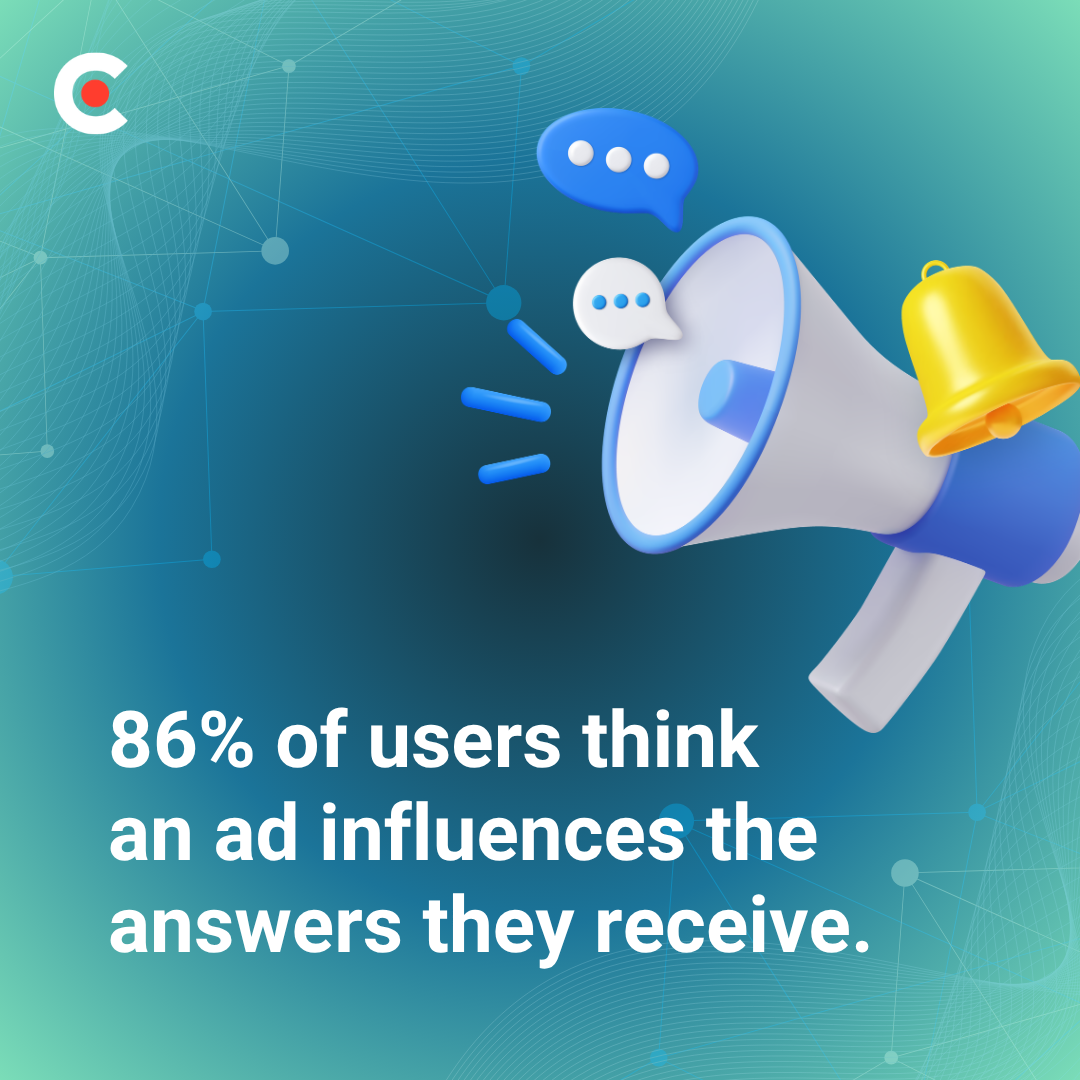
At first glance, these findings might seem contradictory, but a closer look shows how both can be true.
First, users’ trust in neutrality is broad but shallow. Only about half of users (49%) trust AI answers completely or a lot, and nearly as many (47%) trust them only somewhat or a little. Most users give AI assistants the benefit of the doubt, but that trust has limits.
Second, many users trust an assistant’s answers on their own and still expect an ad to steer those answers toward the advertiser. In other words, their trust in neutrality depends on an ad-free experience, which is changing quickly.
That suspicion shows up most clearly in recommendations. Eighty-nine percent of users wonder, at least sometimes, whether an AI assistant’s product recommendation was paid for, and 63% wonder every time or often. That doubt matters because of the number of users who already rely on AI assistants for product recommendations or shopping.
Valentina Chiriacescu, CCO of eCommerce Today, says that's what sets AI advertising apart from search.
"In search, users expect ads. In an AI conversation, they expect an answer tailored to what they actually need," said Chiriacenscu. "If users cannot tell whether a product is recommended because it is genuinely a good fit or because a brand paid to be there, trust can disappear quickly."
Taken together, the findings show users expect neutrality from AI assistants while also suspecting commercial influence. The next question is whether that suspicion turns into concern, and where users draw the line.
Almost every AI assistant user has concerns about ads in AI assistants, and their top worry is whether the answers stay objective.
Ninety-eight percent of users have at least one concern about ads in AI assistants. Two-thirds (66%) worry that answers will become biased toward advertisers, making bias the most common concern.
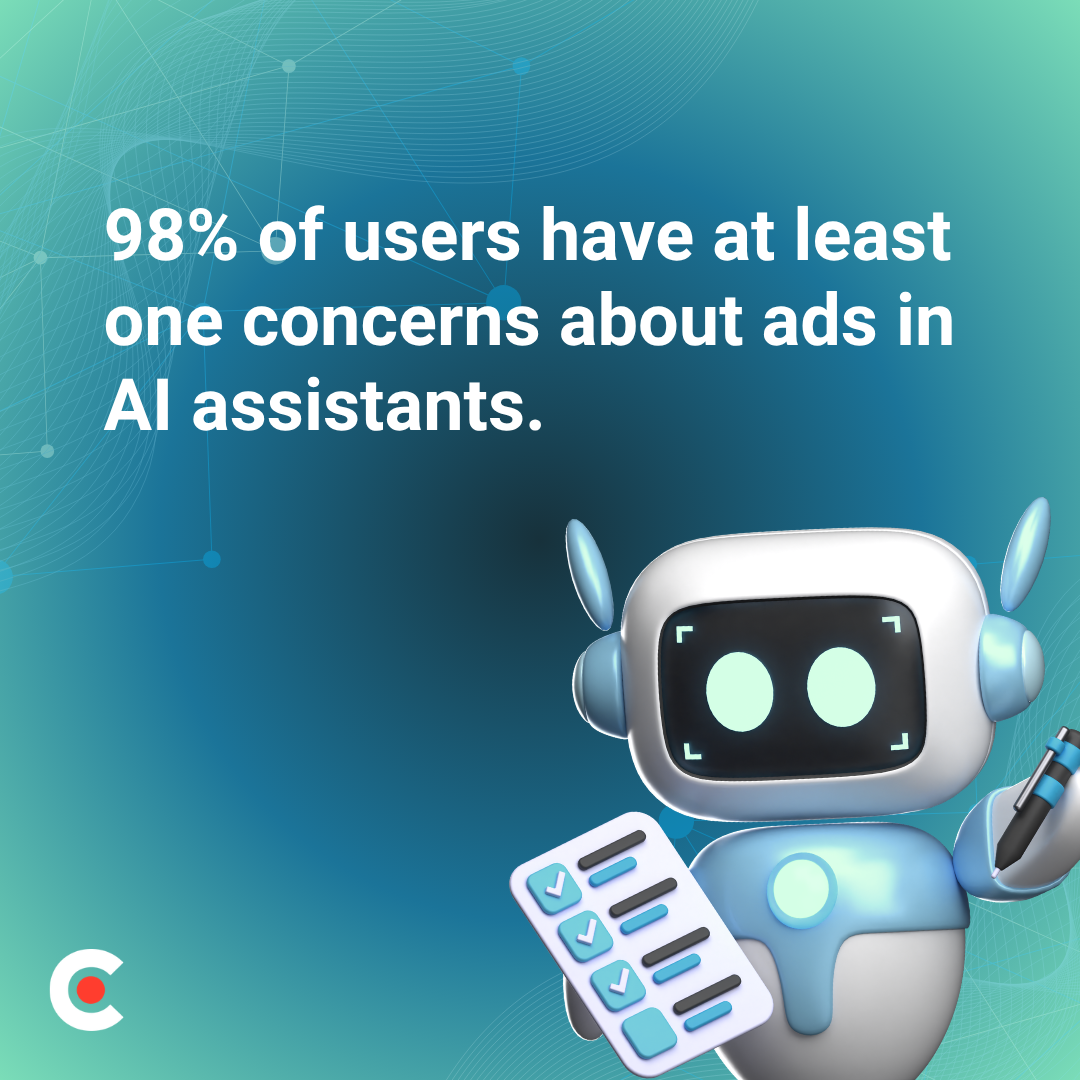
Users rank bias above ad volume. Their biggest concern isn’t seeing more ads, but whether they can trust the answer itself.
Volume and privacy are closely linked: 57% of users worry there will be too many ads, and 56% worry about privacy and how their data is used. ChatGPT shows ads based on the user’s current conversation, so it’s not surprising that many users wonder what happens to what they share. Their concerns go beyond the answers themselves to the overall experience of using an assistant with ads.
Users also draw clear lines around sensitive topics. Sixty-eight percent say ads during medical or health questions would be unacceptable, followed by mental health conversations (59%) and financial or legal topics (53%).
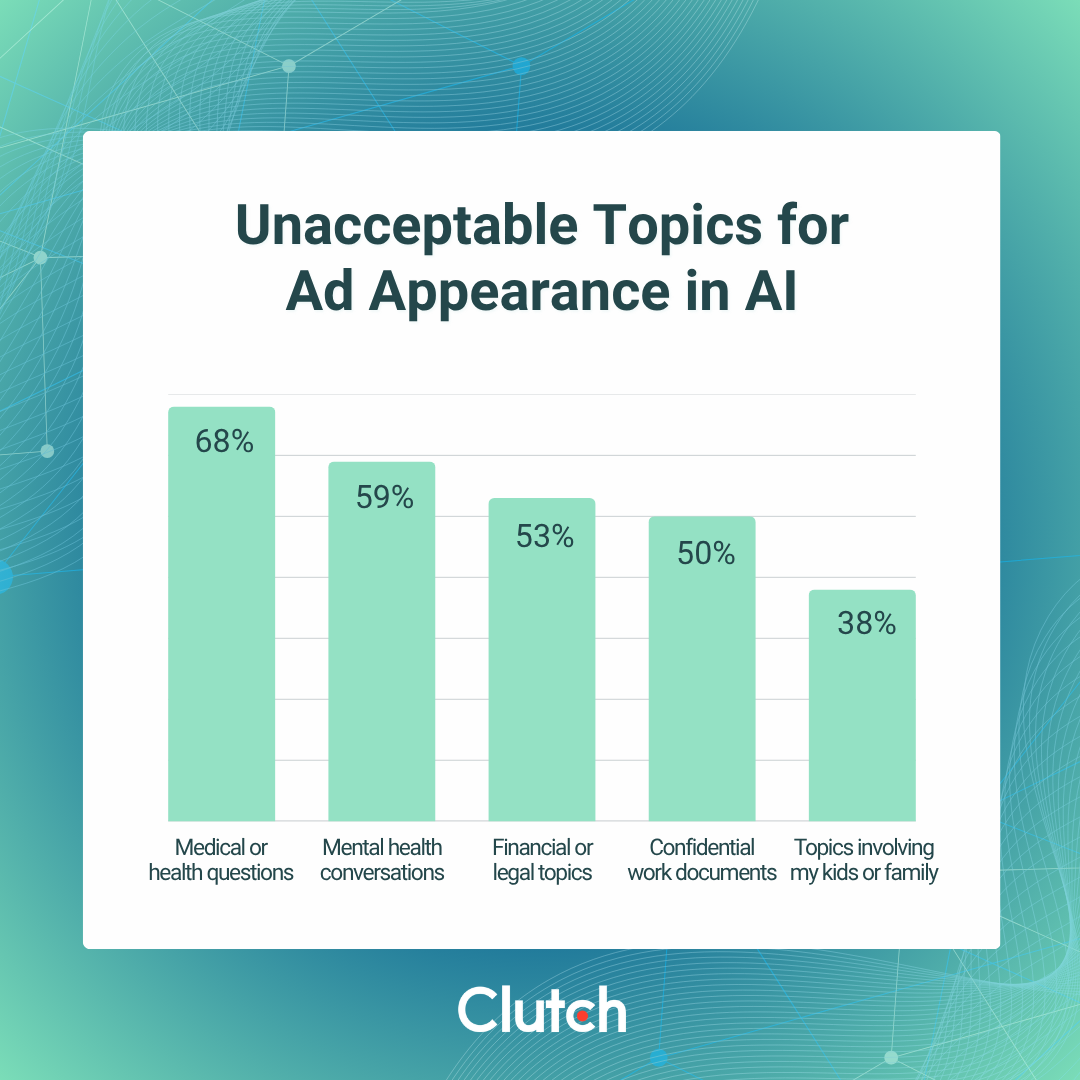
When OpenAI announced ads, they said they planned to keep them away from sensitive topics such as health and politics. Users’ boundaries line up with that approach and extend further, with more than half also wanting ads kept out of mental health conversations and financial or legal questions.
Lutfi Aydeniz, CEO of fasinatid, says platforms and advertisers should be cautious in those conversations.
"I would be particularly cautious about advertising in sensitive or high-stakes conversations, where commercial influence could undermine user confidence," said Aydeniz. "If an ad compromises trust or does not meaningfully serve the user's needs, it should not appear."
These findings suggest that consumers' acceptance of AI advertising depends heavily on context. An ad alongside a routine, low-stakes question is one thing. An ad alongside a health, financial, or legal answer, where the stakes are higher and the information is more personal, is another.
That raises the next question: whether these concerns go beyond attitudes and start to change how users trust and use their AI assistants.
Ads can cost AI assistants some of their users’ trust and loyalty.
Three-quarters of users (75%) agree that ads in an AI assistant’s answers would make them trust those answers less, and 47% strongly agree.
That’s a direct hit to what users value most in AI assistants. As earlier findings show, users see AI assistants as a neutral source of answers, and ads put that perception at risk.
Users also say they’re willing to act on that concern. Eighty-nine percent would take at least one step to avoid ads in an AI assistant.
The most common step is switching: Half of users (50%) would be willing to switch to an assistant that doesn’t show ads. Others would pay for a premium, ad-free subscription (39%) or accept fewer daily messages or usage limits in exchange for no ads (36%).
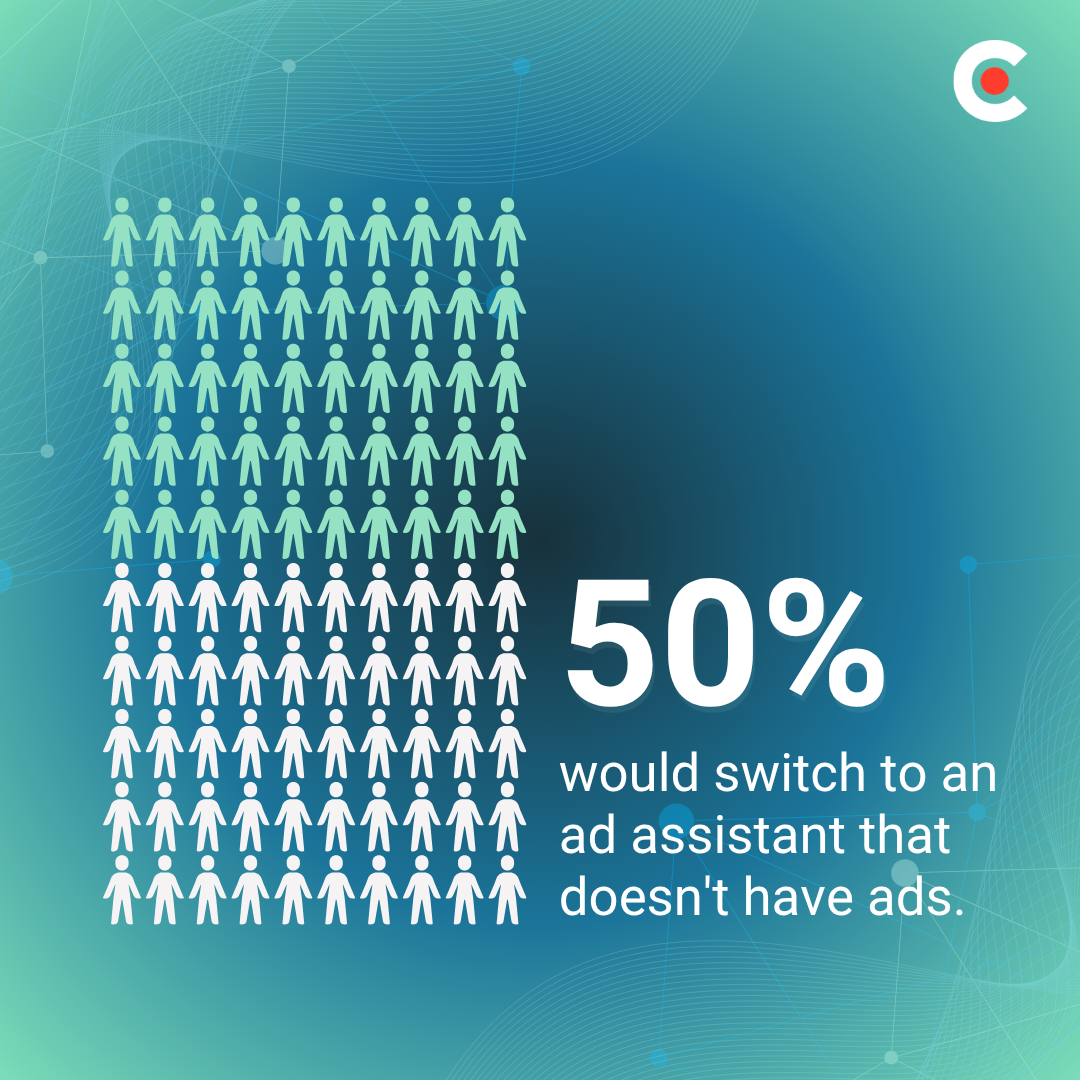
Being willing to switch doesn’t always mean users will actually switch. When asked what they’d most likely do if the assistant they use most started showing more ads, 25% said they’d switch to an ad-free assistant, and 20% would use it less overall. Another 31% would keep using the free, ad-supported version.
Still, that means 45% of users would pull back in some way, either by leaving or using their assistant less. With 58% of users turning to an AI assistant every day, even a partial pullback could affect engagement and retention.
Aydeniz says the risk isn't limited to the assistant.
"If advertising feels intrusive or disconnected from the conversation, it risks damaging trust in both the brand and the assistant," said Aydeniz. "Ultimately, value must come before exposure."
Users see ads as something that could change their relationship with the assistant itself. But the impact on advertising brands is a different story.
Ads may cost AI assistants some of their users’ trust, but they can still pay off for the brands that run them.
Forty-five percent of users would view a brand more favorably for advertising inside an AI assistant, compared with 31% who would view it less favorably.
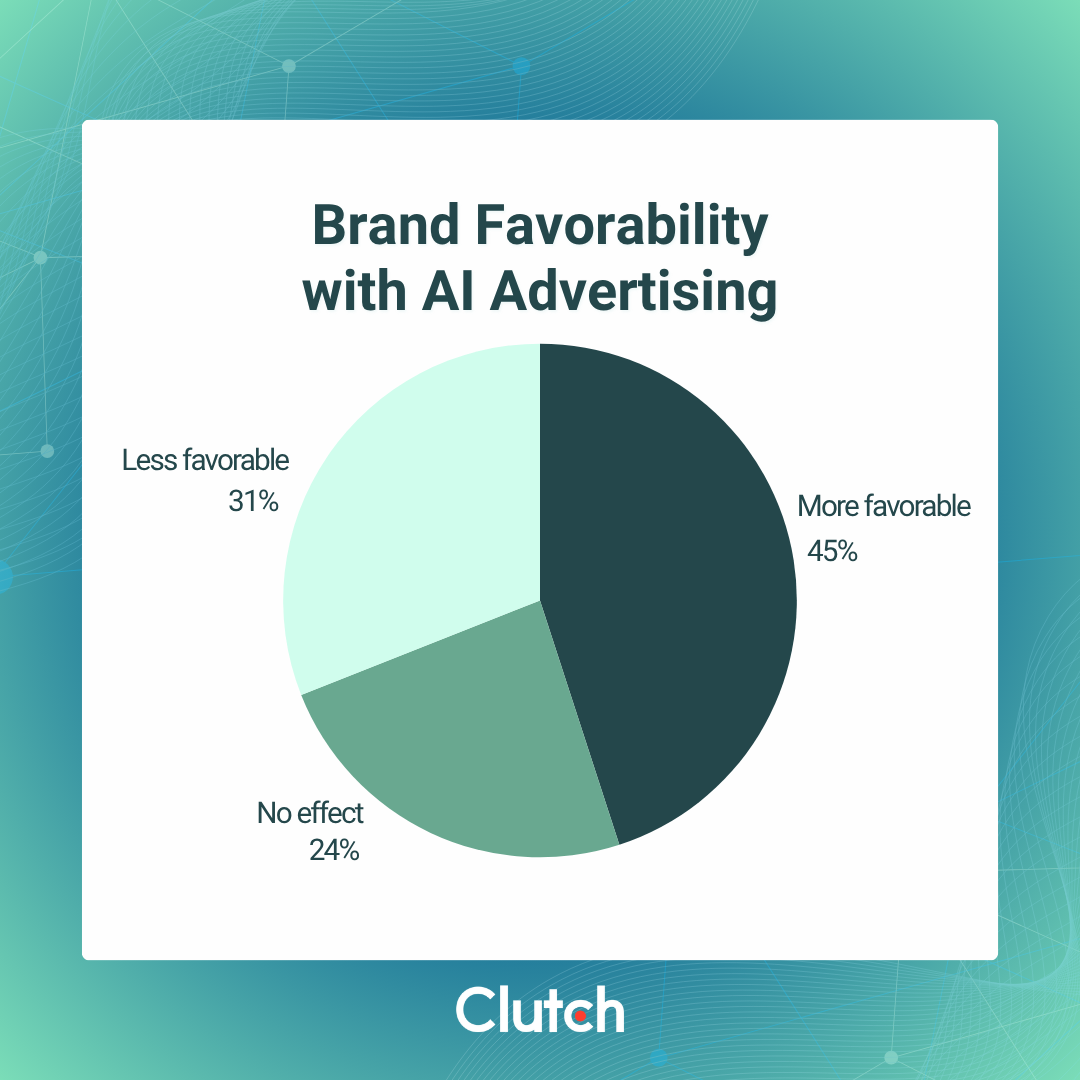
Most users would view an advertising brand more favorably than less favorably. That’s notable given the trust concerns many users have. It suggests that they may hold the assistant and brand to different standards: an ad can lower trust in the answer without hurting the brand behind it.
Relevant ads can also prompt users to dig further. Forty-two percent would research a product or brand further after seeing a relevant ad in an AI assistant.
For example, a user asks an AI assistant for running shoes that work for flat feet and sees a sponsored listing for a brand they hadn’t considered. The user doesn’t click the ad, but researches by looking up reviews, comparing prices, and visiting the brand’s website later in the week. The ad didn’t drive a sale on the spot, but it put the brand on the user’s list. That kind of influence on consideration can matter even when no purchase happens right away.
Users also see a practical benefit. Forty-five percent agree ads in an AI assistant would make it easier to find and buy what they’re looking for. With 41% of users already turning to AI assistants for product recommendations or shopping, relevance and convenience may be what makes ads acceptable to them.
"Trust is actually what makes AI advertising valuable. If brands over-commercialize the experience, consumers will eventually learn to ignore AI ads just as they ignore many traditional ads,” said Chiriacescu.
That’s the central tension for brands and AI platforms. Ads in AI assistants can build favorability, prompt research, and make shopping easier. But earlier findings show those same ads can raise concerns about neutrality and lower trust in the assistant. If that trust erodes, the value of showing up in an AI answer erodes with it.
Ads in AI assistants have moved past the testing phase. As ad programs expand to more advertisers and markets, our research shows that the channel’s value depends on the thing ads put most at risk: users’ trust in the answer.
Users feel confident they can spot ads, but most say ads are hard to tell apart from real answers. They trust AI assistants to be neutral, but most believe ads shape what they’re told. Nearly all have concerns about ads, especially bias and ads in sensitive conversations, and many say they’d pull back from an assistant that leans too hard on advertising.
At the same time, ads can lift brand favorability, prompt further research, and make shopping easier.
What comes next depends on how platforms and brands handle that tension. Clear labels, keeping ads out of sensitive topics, and relevance that ads to answer rather than steering it can help protect trust. Brands should also measure results beyond clicks, tracking favorability and consideration.
The platforms and brands that protect the neutrality users expect are likely to get the most out of advertising in AI answers.
In September 2026, Clutch surveyed 747 people about their thoughts on AI assistants. Of that group, 628 consider themselves regular users of AI assistants.
In terms of demographics, 48% of total respondents identify themselves as male, with 52% reporting as female.
14% of total respondents were ages 18 to 29; 31% of total respondents were ages 30 to 44; 55% of total respondents were 45 and older.