
Ads in the Answer: How Consumers Respond to Advertising in AI Assistants
Clutch surveyed AI assistant users about ads in tools. Learn how ads affect user trust, loyalty, and brand perception.
Updated September 29, 2026

Customers want to hear real experiences, not another marketing spiel. Testimonial advertising builds trust and provides social proof by centering the voices of the people who actually use your products and services.
No brand says that their products are just "decent" or "pretty okay." They fill their marketing with big promises and glowing adjectives like "top-notch" and "premium." Even when those claims are true, anyone who's ever been duped by an ad is probably giving them the side-eye.
When a real customer says something positive, though, it carries a lot more weight.
Looking for a Advertising agency?
Compare our list of top Advertising companies near you
Clutch surveyed 402 consumers and found that 96% regularly look at reviews when purchasing a product or service for the first time. Testimonial advertising caters to this interest in firsthand experiences by spotlighting customers' perspectives and stories. This guide breaks down the different types of testimonial advertising, what they look like in action, and how to make them work for you.
Testimonial advertising is a marketing strategy that uses real customer statements, reviews, or stories to promote a product or service. These firsthand accounts can appear in many channels, including:
If your company has an online presence, you probably already collect generic social proof. Customers may leave the occasional star rating on one of your product pages or like your Instagram posts. Maybe your website even includes statements like "Trusted by over 200 clients."
This social proof is easy to gather, but it doesn't tell customers much about your actual products or services. It's also often difficult to verify. After all, any company can claim that they have hundreds of customers or even buy social media followers.
On the other hand, testimonial advertising is specific and attributed to specific people. It also tends to tell stories about results. For example, an art supply company could share reviews from teachers about how they use the products in the classroom.
This approach works because humans are natural mimics. According to social proof theory, customers often make buying decisions based on what other people are doing. That's especially true when they feel uncertain about what to choose.
The more specific and relatable the testimonial, the stronger the pull.
Testimonials can be as simple as a quote on a landing page or highly complex. It depends on the kinds of stories you want to tell and how much effort you want to put in. Here are five examples and when they work best.
Written testimonials are direct quotes attributed to real customers that you can place in an ad, on a landing page, or in an email copy. This is a common format that doesn't require much effort on the customer's part.
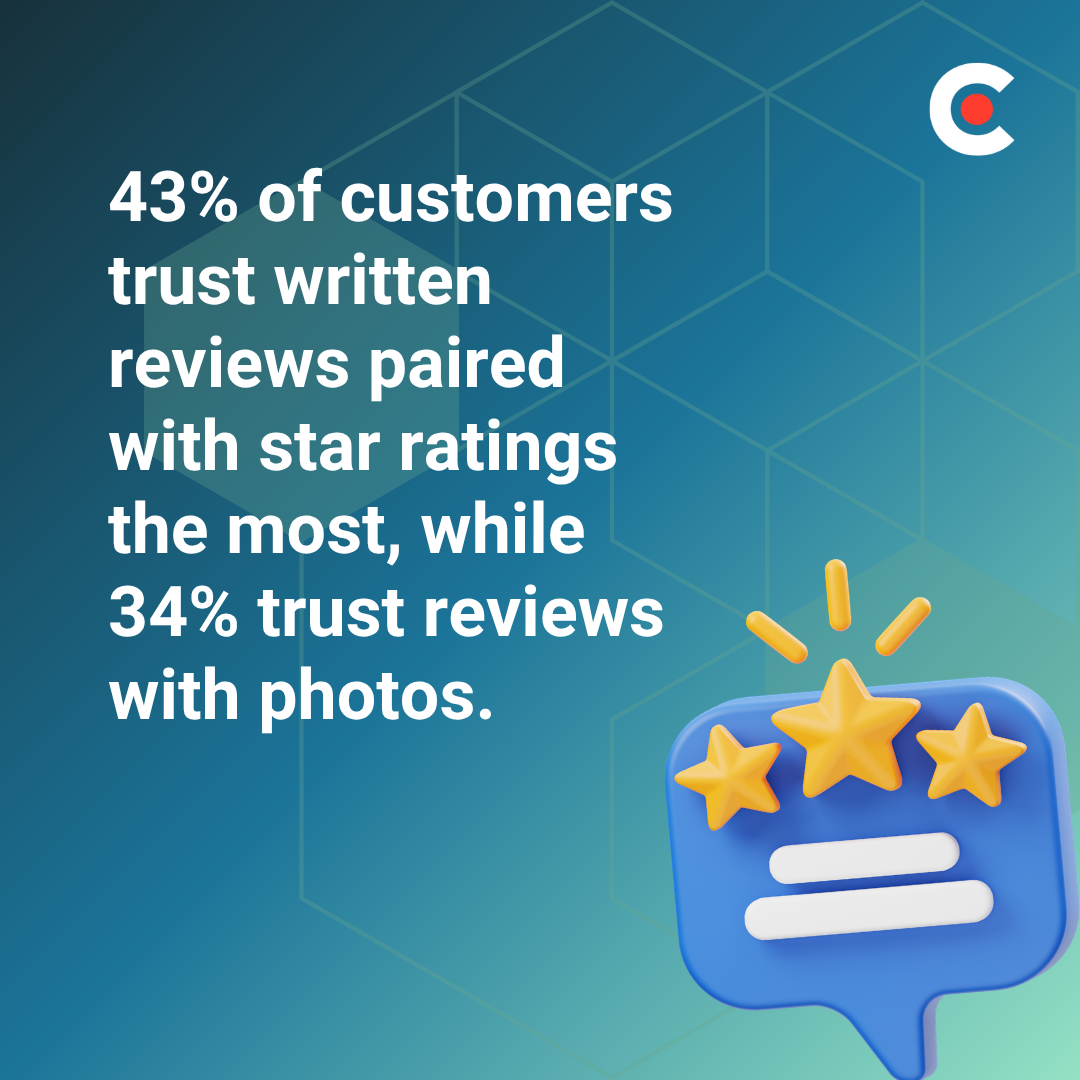
According to the Clutch survey, 43% of customers trust written reviews paired with star ratings the most, while 34% trust reviews with photos.
These testimonials work best when the quote is specific and focuses on results. "My German shepherd has played with this toy nonstop for three weeks" is more compelling than "Cool product."
The online store builder Sellfy often shares written reviews from customers on social media. One Instagram post includes this quote: "Sellfy excels at SEO and is easy to set up! Brilliant!" Smaller text at the bottom attributes the testimonial to "Eddy J., Content creator." For other current or aspiring creators, this review can help them see how Sellfy could support their content goals.
Video testimonials can be highly produced pieces filmed in a studio or raw clips from a customer's smartphone. Less polished pieces are often more effective, because viewers see them as authentic.
Videos are especially effective for social media and paid ads. They let the audience see the speaker's body language and tone, which often builds trust faster than written quotes.
Lume Dental frequently posts videos of patients recounting their experiences. In one recent post, a man talks about getting dental treatment before his wedding day. The video even includes a photo of the smiling groom with dazzling white teeth. This heartwarming content may make going to the dentist feel less scary.
Customers often create organic content about the brands they love. For example, someone who enjoys your products may post an unboxing video on Instagram or share before and after photos on TikTok.
UGC works because it shows customers who else is buying products and how they're using them. You can amplify this content by repurposing it for paid or organic channels (with permission, of course).
JOLYN often uses UGC to show off its swimwear. Its Instagram feed mixes branded content with posts and videos from real customers. The company tags each creator's account, adding even more authenticity. This content also builds a sense of community around the swimwear instead of only focusing on the products themselves.
A case study is a long-form narrative that traces a customer's journey from problem to solution to result. It often includes specific examples of how the brand helped and supporting data.
B2B businesses frequently use case studies to build credibility. This content is most effective when it includes specific numbers and outcomes. "Our machine increased the client's output by 50% in three weeks" is more compelling than vague claims like "improved efficiency."
You should also ask customers for permission to identify them by name. That makes it easier for your audience to check your claims. Plus, it shows that your existing clients value your relationship enough to let you share their stories.
For instance, the marketing agency Compose.ly published a case study about its partnership with GetYourGuide. The testimonial begins with the client's problem: they needed to publish thousands of articles in six months.
After setting the stage, the case study describes the specific ways that Compose.ly met this need. It also shares tangible results, such as "deliver[ing] nearly 2.2 million words across more than 1,600 articles." These concrete numbers show exactly what the agency accomplished.
Be sure to include quotes from your clients, too. After all, they're the main characters in these stories.
An endorsement is a public statement of support for a brand from a recognizable name or a trusted voice.
Look for collaborators who genuinely fit your products and values. If you pick influencers based only on their name, your partnership might seem inauthentic and purely for profit.
Don't assume that you need to splurge on a celebrity. Endorsements from micro-influencers with 10,000 to 100,000 followers often perform better than those from megastars.
In the pet niche, Charlotte Bryant (weim_crime.sisters) often shares products that she uses while training and camping with her rescued Weimaraners. One of her recent Instagram posts spotlights EnviroBiotics, a product that she uses to eliminate pet odors.
Like many micro-influencers, Bryant frequently responds to her followers' comments. Regular engagement helps smaller creators build personal connections with their audience. As a result, their recommendations often feel less salesy than celebrity endorsements.
Not all testimonials are created equal. Customers are more likely to be persuaded by specific reviews that describe concrete, relatable results.
"Five years of back pain went away as soon as I started using this mattress" will likely pique a reader's interest, especially if they have similar issues. Meanwhile, a dozen five-star ratings on their own don't give them much to go on.
Authenticity matters, too. Customers often prefer lower-quality content from real people than something that looks like it was shot by Greta Gerwig.
Take Dove's Real Reviews campaign. The beauty company gathered Reddit reviews of its Intensive Repair 10-in-1 Hair Mask and filmed the authors reading them on a set. It also featured these comments in posters, a pop-up experience in New York City, and social media content.
This campaign worked because it didn't cherry-pick the feedback. Both positive and negative comments got spotlighted. For example, one Redditor bluntly said, "This cap. I hate it," while another remarked that the hair mask "kind of smells like expired hotel shampoo." These balanced perspectives fit Dove's commitment to #KeepBeautyReal, which emphasizes authenticity over perfection.
The takeaway from Dove's campaign is that you don't have to manufacture sentiment. Look for the conversations your customers are already having in reviews, Reddit threads, Facebook comment sections, and support emails. That's the campaign, unpolished language and all.
You don't need to bribe customers for testimonials. This playbook will help you gather their stories consistently.
Don't wait for customers to drop testimonials in your lap. Actively look for opportunities to spotlight their voices. Pay attention to:
As you collect social proof, filter out generic comments like "Great product." Instead, look for feedback that names a concrete result or talks about a before and after.
The best testimonials also capture an emotion that potential customers might recognize, such as joy or surprise. These feelings can help other people picture themselves having similar experiences.
Once you have a pool of strong testimonials, repurpose them across different channels. This approach helps you reach more people and puts less pressure on your team to create original content.
Scatter these moments throughout the sales funnel. During the consideration phase, share customer quotes in welcome emails and social posts. You can also compile them into short-form videos. This content is an easy way to introduce potential buyers to your brand through the perspective of other customers.
Testimonials can also help you win over skeptical buyers during the decision stage. For example, you might add this social proof to a landing page, a cart email, or a retargeting ad.
According to Clutch data, 96% of consumers regularly look at reviews when purchasing products and services. By placing a testimonial at the moment of decision, you can give buyers exactly what they're already looking for.
Ideally, customers will bring testimonials to you so you don't have to scour the internet every time you need a quote.
Make it easy for people to share their experiences. Create a hashtag for your brand, and encourage customers to use it when they share UGC. You can also send post-purchase prompts or offer rewards for tagged content.
When customers share photos and videos, ask if you can repost this content on your own channels. Follow in JOLYN's footsteps by always crediting the original creator. This simple step creates a stronger sense of community and lets your customers keep ownership.
When a brand amplifies a customer's voice, it shows other people that their perspectives matter. That may motivate them to post their own UGC. Over time, this positive loop can snowball into a constant flow of testimonials.
Brands often overlook the abandoned cart sequence when looking for ways to repurpose testimonials. However, these emails are one of the best places to add social proof.
Forget about the generic "Did you forget something?" emails. Instead, follow up with a real customer review that addresses a common concern that hesitant buyers often have.
If people often balk at the price tag, include a testimonial that talks about the long-term value of your product. That might look something like this: "I was skeptical about the price, but these shoes have lasted two years and countless washes."
Matching your best testimonials to common hesitations will help you overcome objections at the moment that they're most likely to appear. That can make the difference between closing the deal or losing the customer.
With 96% of consumers regularly looking at reviews before making a purchase, the impact of testimonials is clear.
Take the time to listen to what your customers are already saying and share their experiences. By sharing authentic, specific experiences in the right places, you can win over people who are still considering your brand.
These genuine voices will only become more valuable as AI-generated content gets easier to produce at scale. By creating a testimonial strategy now, you can build a strong foundation of trust with your audience.
Are you looking for the right agency to help build out your ad strategy? Clutch makes it easy to find vetted partners with real client reviews.