
Testimonial Advertising: How to Turn Customer Stories Into Sales
Testimonial advertising uses real customer stories and reviews to promote your brand. Discover popular types and how to put this content to work.
Updated September 3, 2026

A single success metric rarely tells the full story of a campaign’s effectiveness. The real skill lies in identifying the exact data point that supports your business objectives, so you don’t win one metric while quietly losing another.
A glance at a single success metric can’t give you the full picture of your campaign’s effectiveness. “Did the ad work?” is a question with at least four different answers, and your campaign can easily knock one metric out of the park while quietly tanking another.
Ask a media buyer, a brand manager, and a performance marketer to assess the same campaign, and don’t be surprised when their grades don’t match — even though none of them is wrong. Each one has their eyes on a different metric, because depending on who you ask, how to measure advertising effectiveness depends entirely on the initial question.
Looking for a Advertising agency?
Compare our list of top Advertising companies near you
That’s the trapdoor waiting beneath most post-campaign debriefings: Two teams can examine identical results and walk away with opposite conclusions about the campaign’s success.
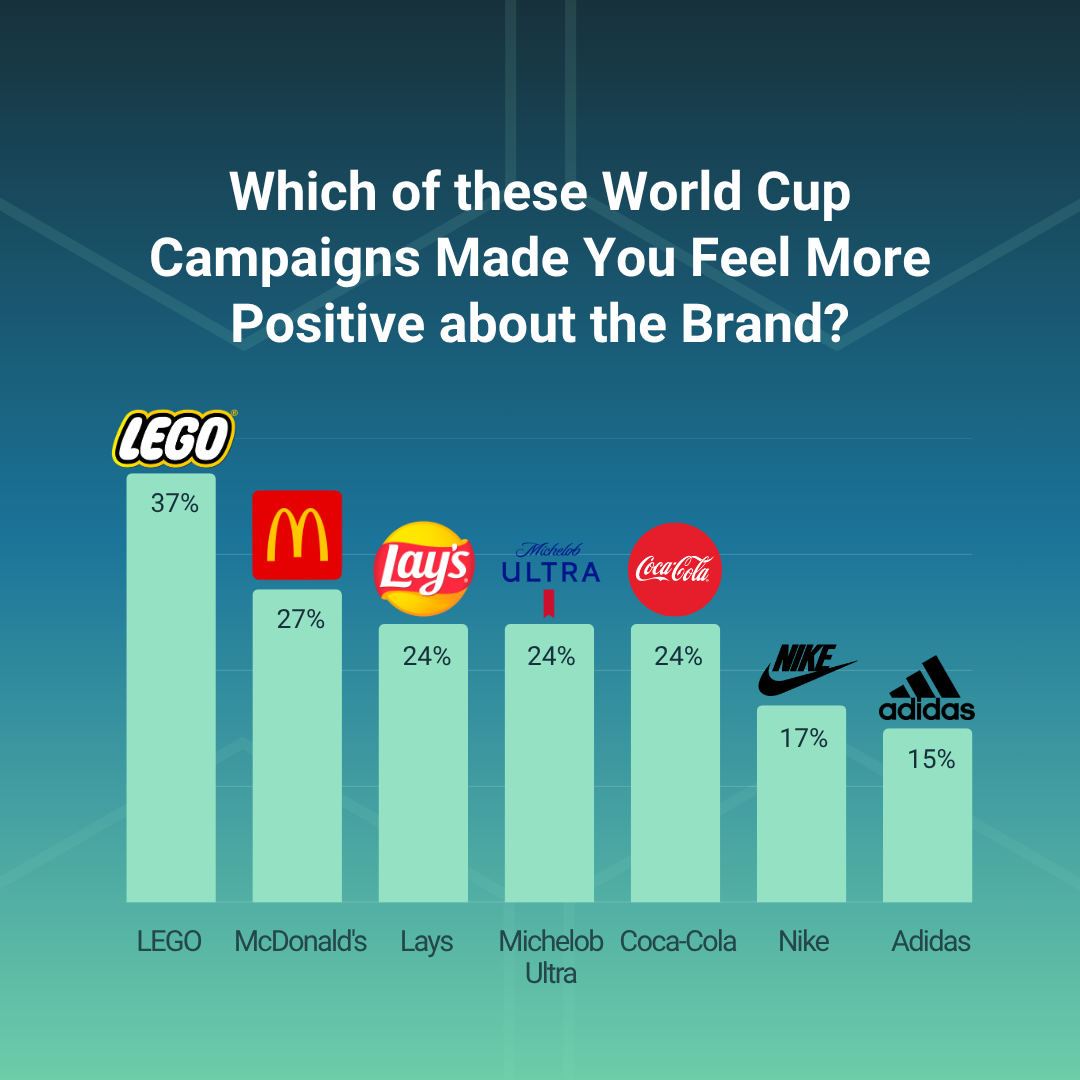
When we surveyed 552 consumers in July 2026 about which World Cup advertisers stood out, 42% named Adidas as the tournament’s most memorable advertiser. LEGO, on the other hand, led on brand lift — the improvement in how positively people feel about a brand after seeing its ads — at 37%, while Adidas ranked nearly last in that category. That’s the same tournament, same campaigns, same audience, but two different winners.
We’ll assess the four core ways to measure whether an ad worked: recall, brand lift, purchase intent, and engagement. Each metric gauges a different aspect of advertising effectiveness, but each one has blind spots. We’ll help you understand how to choose the metric that means most to your team.
Measurement starts with an objective. Whether your campaign goal is awareness, brand perception, conversion, or interaction, the metric follows the goal, not the other way around.
The four core metrics we mentioned earlier (recall, brand lift, purchase intent, and engagement) align with four stages in the marketing funnel. Observe:
These four indicators fit inside a nesting doll of advertising effectiveness metrics that also includes reach, impressions, return on investment (ROI), return on ad spend (ROAS), conversion, and cost per acquisition (CPA). However, recall, brand lift, intent, and engagement answer a more pointed question than those broader metrics: Did the message hit the way we intended?
Vanity metrics, such as impressions and likes, count exposure rather than impact. A campaign can rack up millions of impressions and likes and still miss the campaign’s goal by a mile. A video ad can reach five million views but generate next to no purchase intent, while a campaign the C-suite mutters about being a disappointment can still be actively reshaping how people think about the brand.
Defining what “worked” means before your campaign launches is how to measure advertising effectiveness in a meaningful way. By making that decision early, you can prevent most of the arguments that would otherwise crop up at the debrief.
Ad recall measures whether your campaign was memorable enough for someone to name it later, with or without prompting. Researchers test this with aided and unaided recall surveys, which are in the same family as the tools that measure brand lift.
A typical ad recall study asks respondents to name every advertiser they remember from a set period. Researchers then check the list against brands that actually ran ads. The width of the chasm between the named brands and genuine advertisers tells you whether consumers noticed the campaign and linked its message to the correct brand, or your brand was lost in the creative.
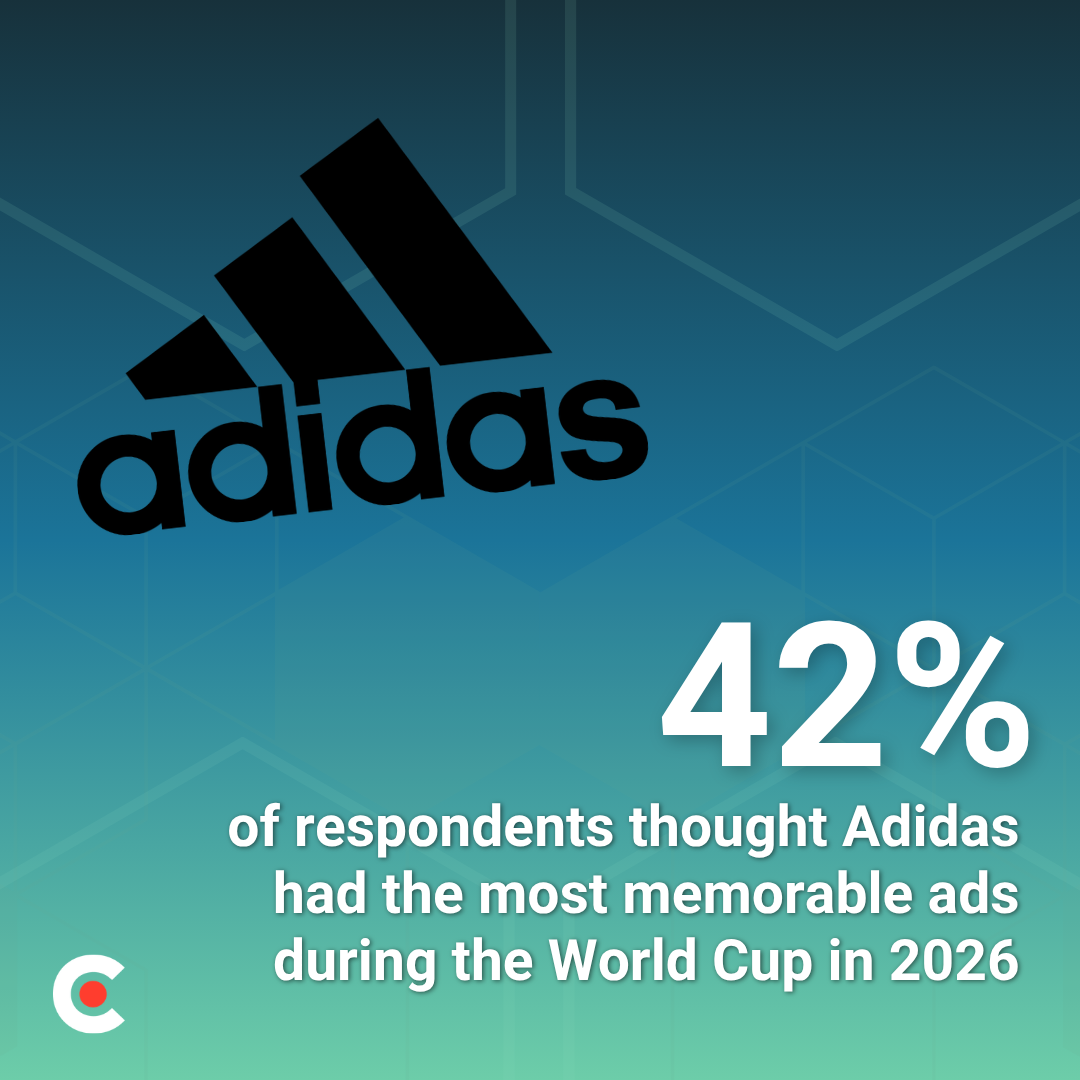
At the 2026 World Cup, Adidas topped the list, with 42% of respondents naming it the most memorable advertiser of the tournament. That’s a strong result by any standard, and it explains why so many marketing teams, when asked how to measure ad effectiveness during a launch window, default to ad recall.
Recall proves attention, not affection or action. An ad can lodge itself in someone’s memory without giving that person warm, fuzzy feelings about the brand behind it. As a primary metric, recall is most valuable during a launch or pure awareness push. When the goal moves toward perception or purchase, however, recall alone isn’t enough.
Brand lift is the improvement in how positively people feel about a brand after seeing its ads. In funnel terms, it’s an increase in favorability, perception, or consideration, just past pure awareness, but before an actual purchase decision.
Our survey shows how differently this metric can rank the very same field. LEGO topped the brand lift metric results at 37%, while Adidas, the recall leader, earned only 15% on this measure. Although the ads were the same as those evaluated for recall, the two brands essentially swapped places once the question changed from "who do you remember" to "who do you like more now."
Most lift studies compare a group that saw the ad against a matched group that didn't, then measure the difference in favorability between the two. That’s part of why the results take longer to turn around than a relatively straightforward recall survey.
As a metric, brand lift captures the affection that recall misses. It quantifies whether people actually warmed up to your brand, not just whether they clocked your existence. Because it evaluates perception rather than memorability, it comes with a cost: Lift studies take longer to run, and it’s hard to parlay even a significant lift increase into actual sales. For this reason, brand lift is most relevant in a campaign driven by reputation or perception.
Purchase intent asks the most direct question of the metrics we’re discussing: Did the ad push someone closer to making a purchase? If your goal is revenue, this is how to measure advertising effectiveness. Of the four core metrics, purchase intent is the closest proxy for conversion.
Across all campaigns during the 2026 World Cup, 40% of respondents said an ad made them buy something, and another 14% said it made them want to.
These surveys usually boil down to a single question: After seeing this ad, how likely are you to buy this brand’s product within the next few months? Researchers weigh participants’ answers against actual purchase data whenever available.
Self-reported intent isn’t a confirmed sale, and that distinction is more important than you might think. Closing the distance between intent and actual revenue requires tools that track dollars, like ROAS or attribution, rather than sentiment. It’s most beneficial to track purchase intent when your campaign’s goal centers on conversion, but back this metric up with real revenue numbers to confirm what the survey suggests.
Engagement tracks visible reactions, such as likes, shares, comments, and saves — essentially, any time someone stops scrolling long enough to interact and amplify.
The World Cup numbers show something interesting. Even though 54% of survey respondents said they didn’t engage online with any advertising campaign they saw during the tournament, 40% of them bought something from an advertiser anyway. The fact that a large portion of buyers never liked, shared, commented, or otherwise interacted with social ads points to an unexpected conclusion: Engagement undercounts quiet conversion.
Engagement is the easiest of our four effectiveness metrics to misread. High engagement indicates resonance and can extend a campaign’s reach beyond its paid audience, but it isn’t the same as purchase numbers. Also, low engagement doesn’t automatically mean your campaign has failed; plenty of buyers convert without ever leaving a trace of themselves on the post.
Tracking engagement is worthwhile when amplification or community-building is your campaign objective. Although a campaign with a modest advertising budget may never set a comment section ablaze, that alone says little about whether the message hit home.
To determine which measurement you should use for your campaign, use this table as your guide.
| Campaign Goal | Metric To Use |
| Awareness | Ad recall |
| Perception | Brand lift |
| Conversation | Purchase intent (confirmed with ROAS/attribution) |
| Amplification | Engagement |
The traps many teams fall into are:
Our World Cup consumer survey provides hard data to bolster the assertion that it’s best to focus on a single metric. Across the same eight campaigns, the “best” ad changes depending on the question asked. Adidas won on recall, while LEGO won on brand lift. Neither advertiser earned the top spot across the board, because no single campaign does. Expecting one number to answer how to measure advertising effectiveness for every goal is a fool’s errand.
Choose a campaign goal, then measure the single primary metric that matches it. Consider everything else in context.
The same eight campaigns produced four separate results. Adidas topped the recall list at 42%; LEGO took the top spot (37%) in brand lift. Purchase intent divided the audience almost down the middle, with 54% saying an ad moved them toward buying and 46% saying none did. Engagement told yet another story: 54% stayed hands-off online, even though a significant chunk of the same group still made a purchase.
The mistake is treating “effectiveness” as a single scoreboard when it should be four, and they disagree by design.
Before measuring any effectiveness indicator, decide what success means for your campaign. Then judge the results against the metric that matches that goal — not the one that’s easiest to move. That’s how to measure advertising effectiveness in a way that can help guide your next campaign.
You can find professional assistance for your next campaign on Clutch’s directory of Digital Marketing Agencies.