Testimonial Advertising: How to Turn Customer Stories Into Sales
Testimonial advertising uses real customer stories and reviews to promote your brand. Discover popular types and how to put this content to work.
Updated September 3, 2026

Streaming has won live sports. But the ad model underneath it hasn't caught up, and the 2026 World Cup put every gap on display.
Traditionally, we think of sports as a couch family thing: everyone gathered in front of the TV, cheering for their favorite teams, snacks laid out within reach. But the 2026 World Cup showed how much that picture has changed.
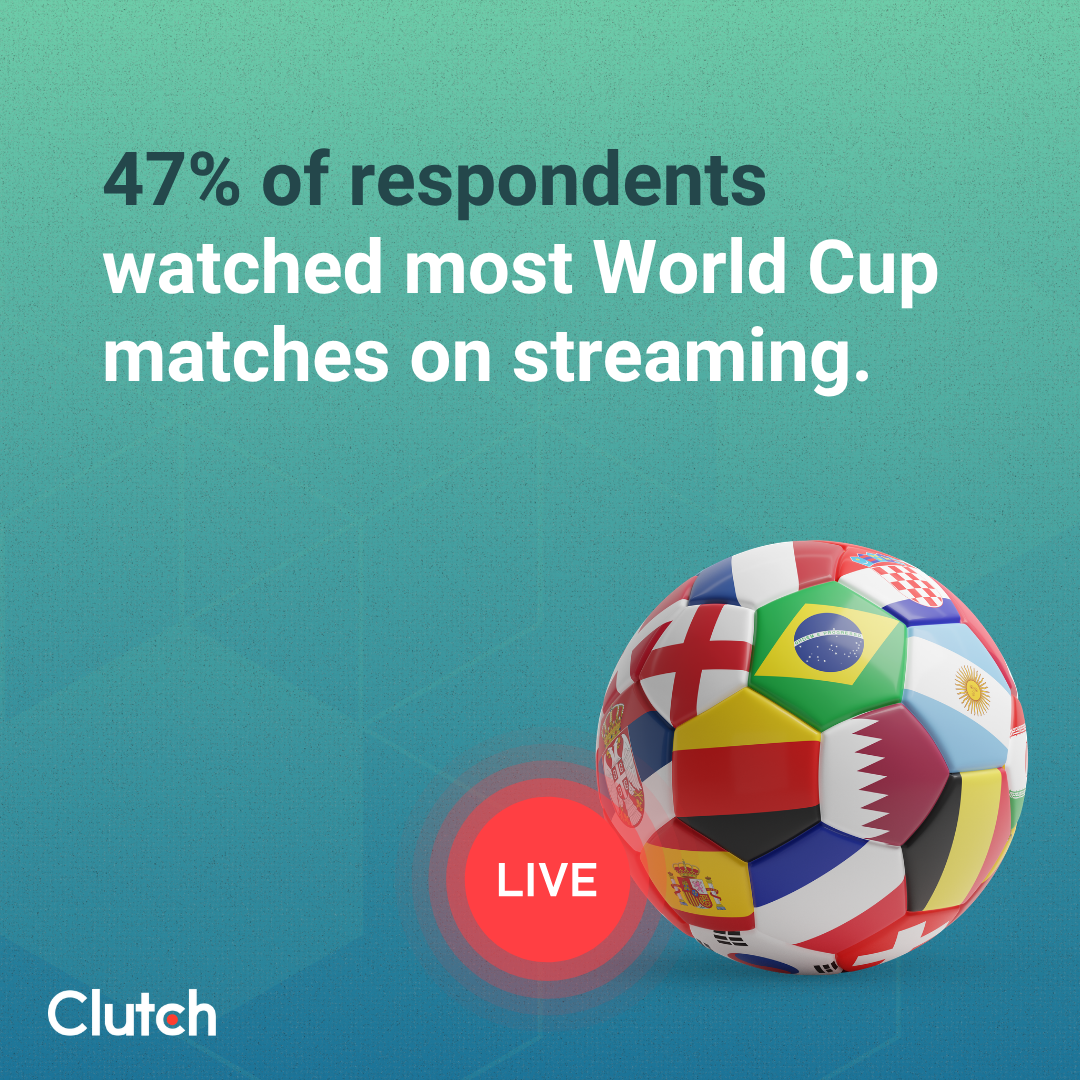
In July 2026, Clutch surveyed 552 consumers immediately after the tournament to find out how the ads during the event landed with viewers. 47% of respondents said they watched most matches through a streaming app, compared to 39% on cable.
Looking for a Advertising agency?
Compare our list of top Advertising companies near you
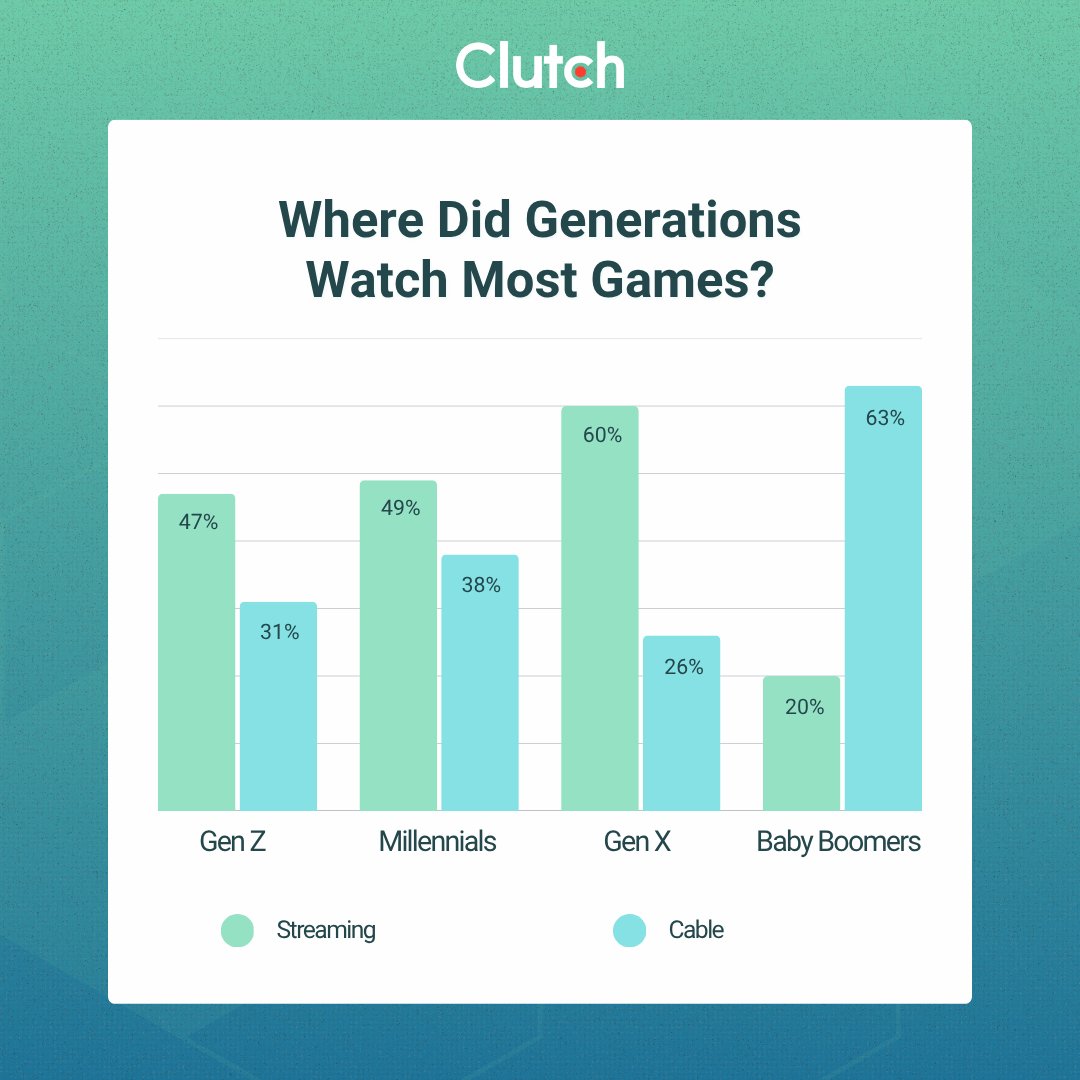
Every generation preferred streaming except Baby Boomers, who still leaned toward cable at 63%.
The ad model underneath, however, hasn't kept pace with that shift. Audiences are fragmenting across apps and subscription tiers faster than measurement, targeting, and frequency capping can keep up, and viewers are noticing.
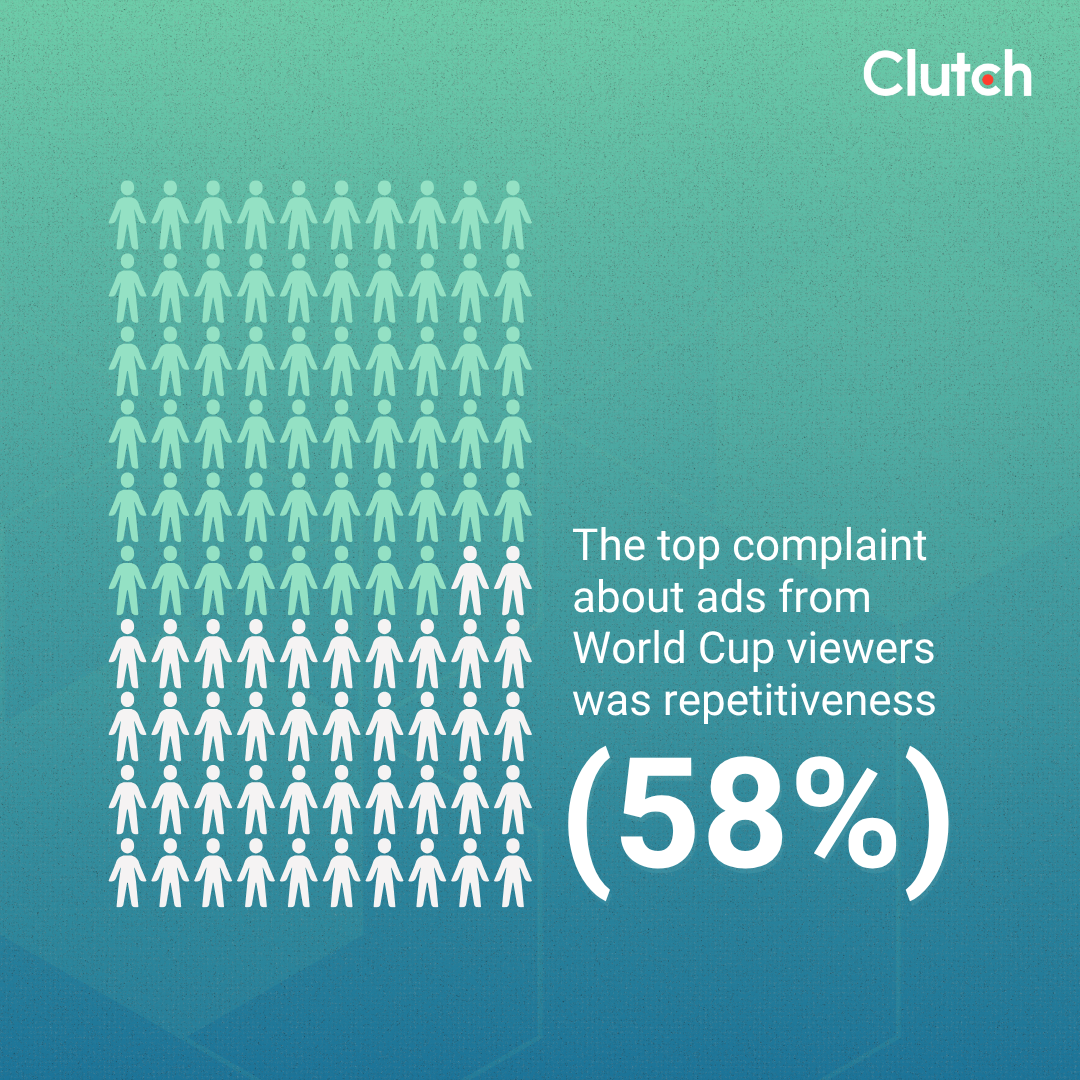
When Clutch asked what bothered them most about World Cup ads, "too repetitive" topped the list, cited by 58% of respondents with complaints.
That complaint points to three deeper problems with how streaming ads are bought and measured:
This was evident in how the tournament's two US broadcasters, Fox and Telemundo, handled their coverage, a split that digital marketers watched play out in real time. The two networks split the 2026 rights between English and Spanish-language audiences, but they made almost opposite choices about how to sell and deliver their in-game advertising, choices that exposed all three problems at once.
Read to learn more about these three streaming advertising challenges, and what the Fox-Telemundo split reveals about where ad dollars are landing and where they're still being wasted.
This year, streaming was the majority channel for World Cup viewing, at 47%. But "streaming" isn't a single destination like cable used to be; it's dozens of apps, subscription tiers, and devices, each pulling a slice of the same audience.
The tournament made that fragmentation literal, with English-language coverage split across Fox, FS1, Tubi, and Peacock, while Spanish-language coverage was split across Telemundo and Universo. Within each, viewers are again split between watching on a traditional TV signal (linear) and streaming via an app.
Telemundo’s numbers highlight the scale of the shift. In 2022, 30% of its audience streamed content; by 2026, that number had climbed to 48%. For a network that’s traditionally been TV-first and streaming-second, the lines have clearly blurred. Now, TV and streaming are simply two paths into the same game.
Think that’s a lot of fragmentation already? Zooming out beyond a single broadcaster reveals an even messier, more fragmented picture. A single connected TV (CTV) service can carry around 114 different supply paths for ad delivery, and the average streaming viewer moves across three to five apps in a given stretch. Each app only reports on its own slice of that traffic.
So what’s the takeaway for brands? Buying “the World Cup” didn’t mean securing a single audience, but rather a scattered mix of apps, languages, and subscription tiers, with no single purchase reaching everyone watching at the same time.
Fragmentation brings another big challenge: you can’t measure the full audience. There’s no single ID connecting Fox linear, Tubi, Telemundo linear, and Peacock. Since each platform is its own walled garden, they can only report on what happens within their boundaries. Figuring out unduplicated reach and true frequency — the real number of people who saw an ad and how many times they saw it — is almost impossible when a campaign runs across multiple platforms.
The in-game ad experience at this year's tournament shows how this gap happens and its consequences. Fox ran full-screen commercials during the newly introduced hydration breaks, while Telemundo took a different approach entirely, cutting to studio coverage during those same breaks and selling its inventory elsewhere, mainly around halftime and the pre- and post-game windows.
This wasn’t a case of one network showing ads and the other skipping them—both sold plenty of inventory. The difference was that the ad load a viewer saw depended entirely on which door they entered, and no system tracked the full picture across both. So it wasn’t “ads vs. no ads,” but rather varying in-game ad loads depending on whether the viewer watched on Telemundo or Fox, with no system capturing the combined view.
If measuring across just Telemundo or Fox feels hard, imagine doing it across five networks. Since platforms can't share a common viewer ID and won't share their raw audience data with each other, the industry has changed what it measures instead of waiting for that access. Rather than chasing an exact count of every ad impression, which no single company can produce, advertisers have shifted toward tracking outcomes: did the ad lead to a purchase, a search, or a visit?
A few tools support that shift:
While these tools help, they’re costly to operate, tricky to execute well, and most advertisers aren’t using them at the scale a tournament like this really needs.
The takeaway for a brand? If you can't measure reach and frequency across your entire buy, you're not tracking waste or impact. You're guessing at both. Ultimately, cross-platform measurement shouldn't be an afterthought; it should be a requirement before scaling spend on this fragmented inventory.
The top complaint from viewers annoyed by ads was that they were "too repetitive," with 58% saying so. Another 17% felt the ads disrupted the flow of play. Taken together, these stats suggest that frequency capping isn’t keeping pace with today’s fragmented viewing landscape.
Frequency capping only works when a system can recognize the same household across every place they're watching. But nothing connects Roku, Fire TV, Peacock, and linear TV into one view. This means the same 30-second spot can loop match after match without a single system ever noticing.
Fox's hydration breaks show what that looks like at scale. The network sold up to 832 spots during these breaks, priced between $200,000 and $750,000 each, for a total estimated around $250 million, with buyers such as Nike, Adidas, Coke, and Lenovo. A viewer who watched several matches on Fox, or who moved between Fox and a streaming app carrying the same rotation, likely saw some of those spots repeatedly, with nothing capping that repetition at the household level.
In contrast, Telemundo's hydration breaks had no commercials; instead, its inventory was moved to halftime and the pre and post-game windows. This means that the hydration-break repetition problem was tied to how Fox chose to sell that inventory.
And Fox's choice does more than just annoy viewers. According to MiQ's research, over-frequency cuts purchase intent by roughly 16%. So brands paying premium hydration-break prices weren't just risking annoyance; in some cases, they were paying to actively lower the odds a viewer would buy.
The lesson for brands is that heavy spend without cross-platform frequency control buys diminishing returns and real irritation, not just repeated impressions. That's why you should invest in capping at the household level and varying creative across platforms to keep that spend from working against itself.
The real takeaway from the Fox-Telemundo split is that Fox turned a new player-welfare rule — the mandatory hydration break — into about $250 million worth of ad inventory, covering more than half of its estimated $485 million rights fee for the tournament. This wasn’t some small test; it’s proof that big advertising money is pouring into live sports streaming, and networks are creating and selling new ad space as quickly as they can dream it up.
But that same split also reveals several gaps. First, the fragmentation shows up in the English/Spanish and linear TV/streaming divides between the two networks. The measurement gap also shows up because no system tracks reach or frequency across the divides. And the frequency problem shows up in Fox's repeated hydration-break spots, whereas Telemundo had no equivalent given its ad structure.
A strategic read of this whole situation is that American audiences already tolerate in-play ads — think NFL and NBA norms. But a captive audience isn't the same as a persuaded one. Reaching someone mid-match and actually winning them over are two different buys, and right now, the industry is much better at the first than the second.
Ultimately, the lesson for brands is that World Cup inventory is real and lucrative, but the plumbing hasn't caught up. So, budget for the gaps, not just the reach.
Our July 2026 survey revealed that streaming won the World Cup, 47% to cable's 39%.
But streaming's ad model hasn't caught up. Streaming and CTV advertising problems like fragmentation, thin measurement, and weak frequency control turned record reach into complaints about ad frequency. The Fox-Telemundo split makes for the perfect case study, with huge ad money pouring into live sports streaming, even as its uncapped repetition risked reducing the odds that a viewer would actually buy.
For brands, the fix isn't waiting for measurement and frequency control to catch up. It's budgeting for those gaps now. Until the plumbing improves, winning at live sports streaming won't be about buying more reach. It'll be about controlling the reach brands already have.