
How to Define Brand Values That Guide Every Business Decision
Brand values are the principles that guide company decisions, define what a brand stands for, and shape how it treats customers, employees, and partners.
Updated September 3, 2026

The World Cup, the Super Bowl, and the Olympics hand you a mass audience, but one far more scattered than the sport’s core fanbase. Here’s how to advertise during a big cultural moment without wasting the reach.
An event like the World Cup, the Super Bowl, or the opening ceremony at the Olympics places something rare at your brand’s fingertips: a stadium-sized audience gathered around a single broadcast. It’s a bigger audience than the sport’s regular fanbase, and it behaves less predictably. That means your event marketing strategy requires some outside-the-box thinking.
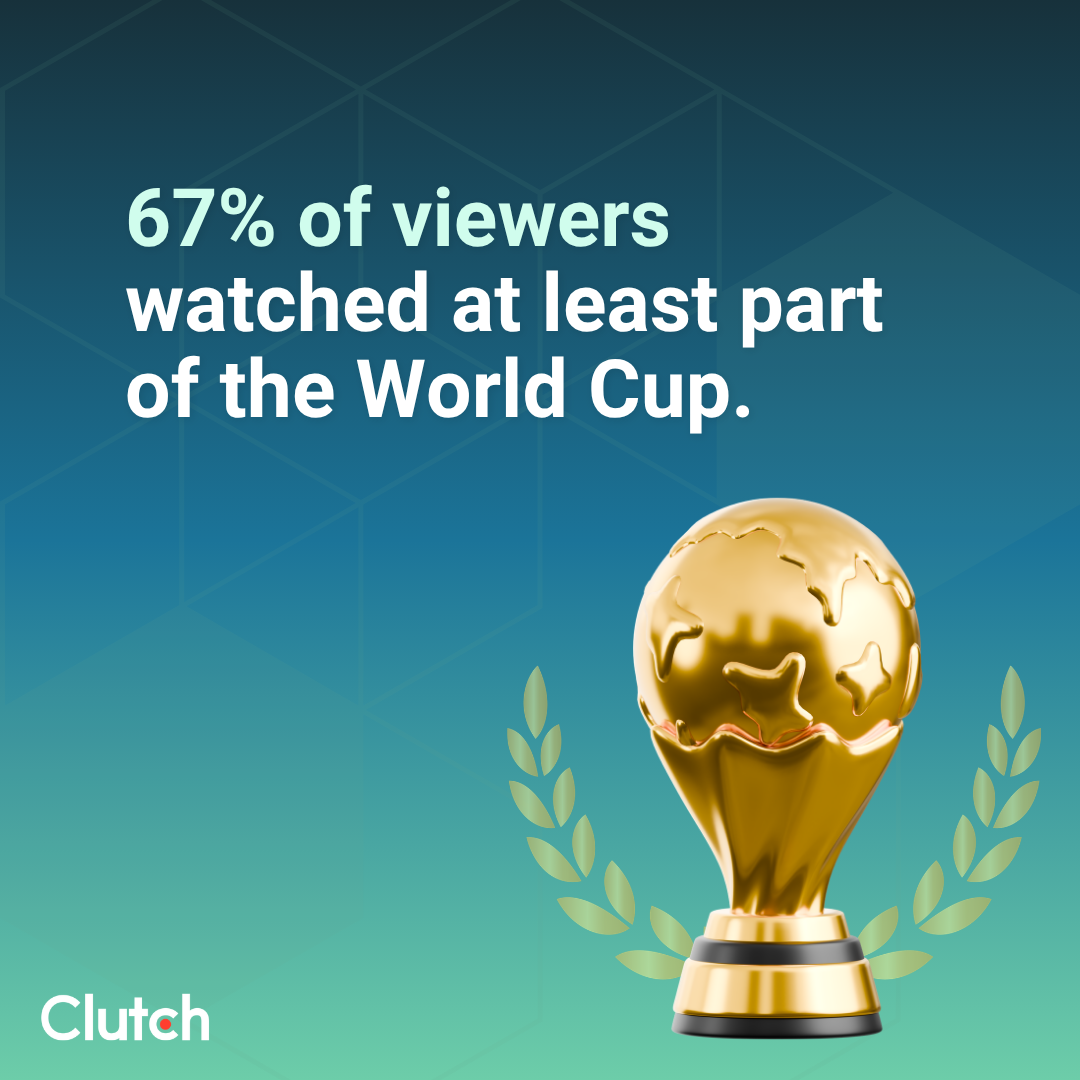
When Clutch surveyed 552 consumers in July 2026 about their World Cup viewing habits, the data proved that hypothesis. Sixty-seven percent watched at least part of the tournament, yet 37% of all respondents admitted they otherwise don’t follow soccer at all. The people who showed up did so for the cultural moment, not the sport itself.
Looking for a Public Relations agency?
Compare our list of top Public Relations companies near you
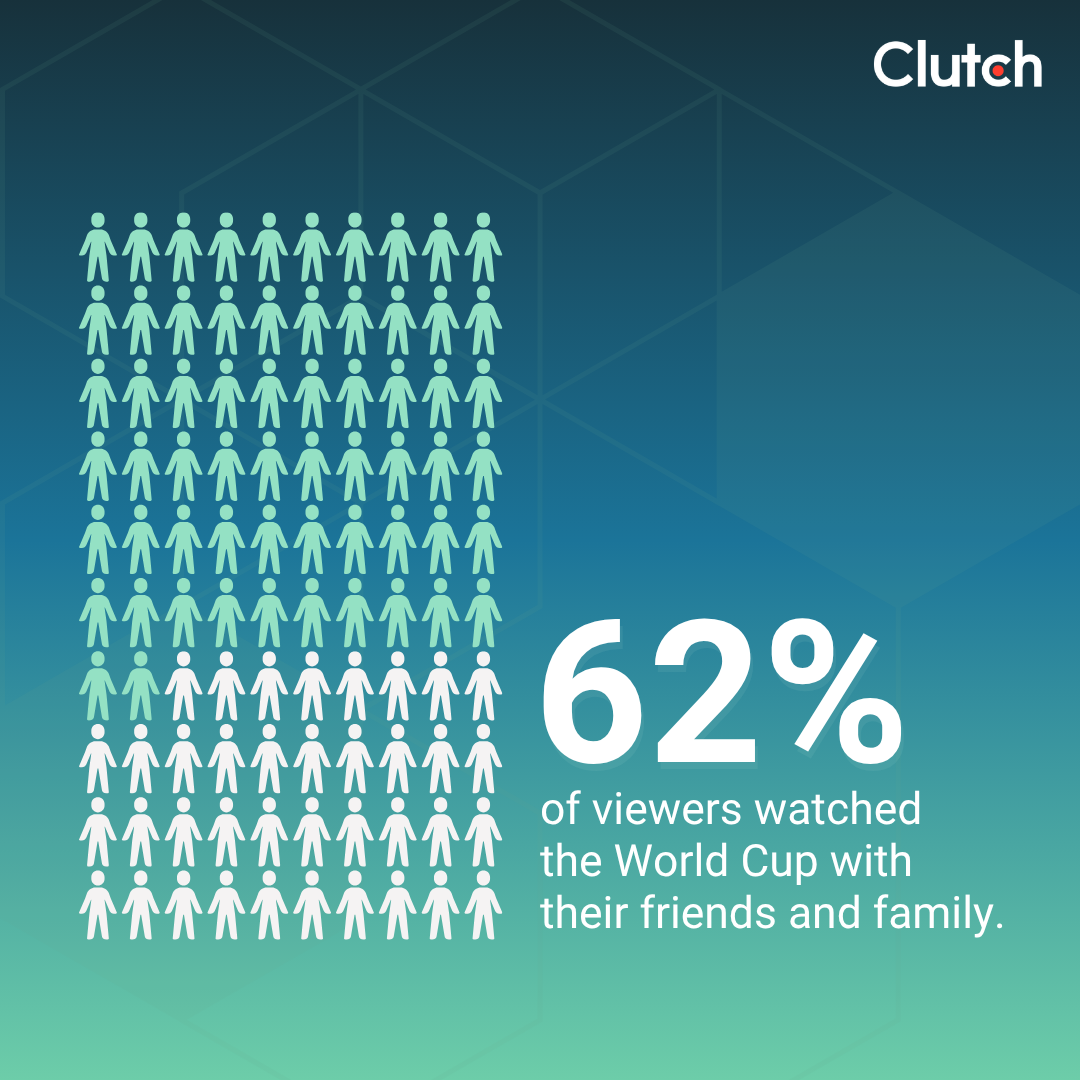
Among those who watched, 33% caught between one and nine games throughout the full tournament. Sixty-two percent watched with family or friends rather than alone. We’re talking about a room full of people trading conversation and snacks, half-watching the screen between rounds of small talk: a casual crowd only half-paying attention, not a panel of analysts.
Moment marketing has to work for that room.
Consider this your moment marketing playbook, in which we’ll lay out how to advertise during a big cultural moment — and how to hold onto the audience’s attention after the final whistle blows.
Our survey found that two out of five people who tuned in to the World Cup don’t regularly watch soccer, and a third of all viewers watched only a handful of matches. That’s the audience your advertising actually reaches during a tentpole event: casual, not committed, and watching for the moment. A campaign aimed at diehard fans who track every offside call generally misses the rest of the room, and in the case of the World Cup, we’re talking about a majority of people.
According to the data, World Cup screen habits were divided almost evenly, with 47% watching on streaming platforms and 39% on cable. With such an even split, cross-channel presence isn’t optional. If you buy ad space on only one platform or the other, you’re ceding almost half of your audience before you even launch your campaign.
The same 30-second spot, however, doesn’t perform the same way on each pipe. Streaming viewers skip or scroll past breaks, while cable viewers, lacking the option to do otherwise, sit through them. Creative made for a single format generally needs major adjustments to work for the other format.
Because the crowd leans casual, the ads that hit home lead with shared emotion and spectacle rather than insider references. A quip about a specific tactical substitution will earn a laugh from the sliver of viewers who caught it and a shrug (if you’re lucky) from everyone else. A campaign that centers on the collective thrill of a last-minute goal speaks to the whole room.
If you’re planning a cultural moment marketing push, design for the room, and remember that you’re working with a casual audience’s divided attention, not a captive one.
Adidas, the Clutch survey found, proved this point. Forty-two percent of surveyed viewers remembered the brand’s advertising, and 33% named it the best campaign of the event, which was nearly triple the next-closest brand. Every advertiser bought into the same pool of eyeballs, but Adidas was the one people still remembered after the hubbub subsided.
That difference separates two things many brands lump together. Renting attention means paying for a spike during the broadcast: a spot that runs, gets seen, and fades when the game ends. Earning memory, on the other hand, means running a spot that people remember, and that recall persists after the event ends, which is the harder and more valuable outcome. Spending more on airtime buys the first, but it doesn’t guarantee the second.
Volume wasn’t the factor that set Adidas apart from the rest. A single idea communicated consistently across touchpoints was, because that’s what moment marketing during a tentpole event rewards. If you’re chasing real-time marketing success during a cultural moment, having a compelling throughline is significantly more important than buying the most airtime.
Reach isn’t usually the problem for brands during a cultural event. The audience is already there, tuned in, and paying some level of attention. Still, even a campaign created with your team’s best moment marketing instincts can fail, and if it does, it’s often because of one of three self-inflicted wounds: sponsor confusion, ad fatigue, or forced brand fit.
More than a third of respondents (36%) believed that Nike was an official FIFA sponsor. It wasn’t. An even more eyebrow-raising revelation is that fewer people were able to name the actual paid World Cup sponsors than those who incorrectly named Nike:
Seventeen percent of respondents weren’t sure who sponsored the tournament at all.
The confusion cuts both ways. Consumers barely track who’s official, so a brand without official sponsorship rights can still piggyback on the real sponsors’ halo through an event marketing strategy called ambush marketing: advertising heavily and visibly during the event time frame, implying a vague connection but never claiming official status.
Conversely, the same lack of sponsorship awareness can work against official sponsors, whose significant investment may not translate into the recognition or association they expect. Paying for sponsorship rights doesn’t guarantee the amount of credit a sponsor may think they’re due. And of course, never forget that trademark law prevents non-sponsor brands from calling themselves official partners or using protected terms (like the event’s name) in their advertising. That, of course, is true even if they’re riding the cultural wave surrounding the event.
Ad fatigue is real. The World Cup survey respondents agreed, although they struggled to explain why the advertising bothered them so badly. The reasons they gave included:
Some also pointed out that certain commercials interrupted the flow of the gameplay. In a finite-inventory tentpole event, the scarcity of ad spots might make buying extra slots tempting to ensure the audience couldn’t miss your messaging. The data, however, suggests that past a certain point, the opposite happens. Restraint and a rotation of creative outperform brute frequency, as seeing the same spot on a loop is how goodwill rapidly curdles.
Some brands, sponsors or not, feel shoehorned into an event. LEGO was at the top of Clutch’s “natural fit” list (31%) despite having no ties to soccer whatsoever. Visa, an official World Cup sponsor, ranked last among the brands with just 11%. Sponsorship money and ad frequency didn’t buy a sense of belonging to the brand; creative resonance and emotional connection did.
If you try to force a tie-in to a cultural event without a real connection, it tends to feel inauthentic, no matter how much you paid for the association. LEGO’s example shows the flip side of that coin: A brand with a genuine, well-executed angle can feel more at home in a cultural moment than the rights-holder who paid to be there.
Although two marketing strategies tend to get lumped together, separating them is essential, lest your brand waste both opportunities.
Your brand needs to know in advance which of these event marketing strategies you’re employing, because the reactive side requires infrastructure that the planned side doesn’t.
MAGNA’s “Societal Sync” research underscores the importance of speed in reactive-moment marketing. Compared to generic messaging, real-time targeting tied to cultural relevance tripled purchase intent. The window is limited, however, as 76% of consumers expect brands to respond to a cultural moment within a week, and 56% expect them to do so within 48 hours. Without pre-approved creative templates and a swift sign-off process, you can’t slip through that window during the allotted time frame. Speed, not luck, is the critical infrastructure.
You also need to match the moment to the metric. Forty percent of survey respondents either bought something they saw advertised during the World Cup or said they wanted to, but that overall number masks a schism between generations in regard to conversion:
A tentpole event usually does more awareness work than direct-response work, so set your campaign goal — awareness, consideration, or conversion — before the media buy.
The bottom line is this: Decide which game you’re playing, resource the speed to play it, and measure it against the campaign goal you set in advance. If you’re weighing whether to engineer the reactive speed and creative capability you need in-house or bring in outside help, you can start by browsing Clutch’s directory of digital marketing agencies.
The tentpole provides every advertiser with the same reach and the same audience. If you had a media budget, you would have had access to that reach during the World Cup. The challenge is how you handle a casual, distracted, emotionally primed majority.
Sixty-seven percent of our survey respondents watched at least some of the tournament, and 37% don’t even follow soccer. If you need proof that a cultural moment can affect consumer behavior and not just impressions, remember that 40% of those surveyed either bought or planned to buy something advertised during the World Cup.
The campaigns that stuck in people’s minds weren’t the ones that cost the most to create or played repeatedly during the tournament, but the ones that revolved around a single, distinctive, memorable idea. That’s the real lesson to take away from these moment marketing examples: Moment marketing isn’t about securing a place in front of the audience. It’s about earning a reason for them to remember you once the broadcast ends.