
How to Define Brand Values That Guide Every Business Decision
Brand values are the principles that guide company decisions, define what a brand stands for, and shape how it treats customers, employees, and partners.
Updated October 28, 2026

A founder’s LinkedIn profile can get more attention than the company page, but that doesn’t mean one should replace the other. This article looks at when founders should post under their own name, when the company page deserves more attention, and how to use both without repeating the same content.
LinkedIn is where you build professional reputations, where buyers get approached, and where talent goes looking.
For a founder, that overlap is useful and confusing in equal measure: put the energy into a personal profile and become the face of the company, or build out the company page so the brand outlives any one person?
Looking for a Public Relations agency?
Compare our list of top Public Relations companies near you
Both earn their keep.
The trouble is that early moves on LinkedIn compound, so leaning hard in one direction tends to cost relationships, hires, or deals that would have surfaced on the other side.
What follows is the difference between the two, what each is actually good for, and how a founder runs both without turning the platform into a second job.
Personal branding is how expertise, judgment, and a particular voice come through in a profile and the activity around it. Concretely: a headline that says something, an About section that reads like a real story, posts that teach or pick a fight worth having, and comments on other people’s work that aren’t just applause.
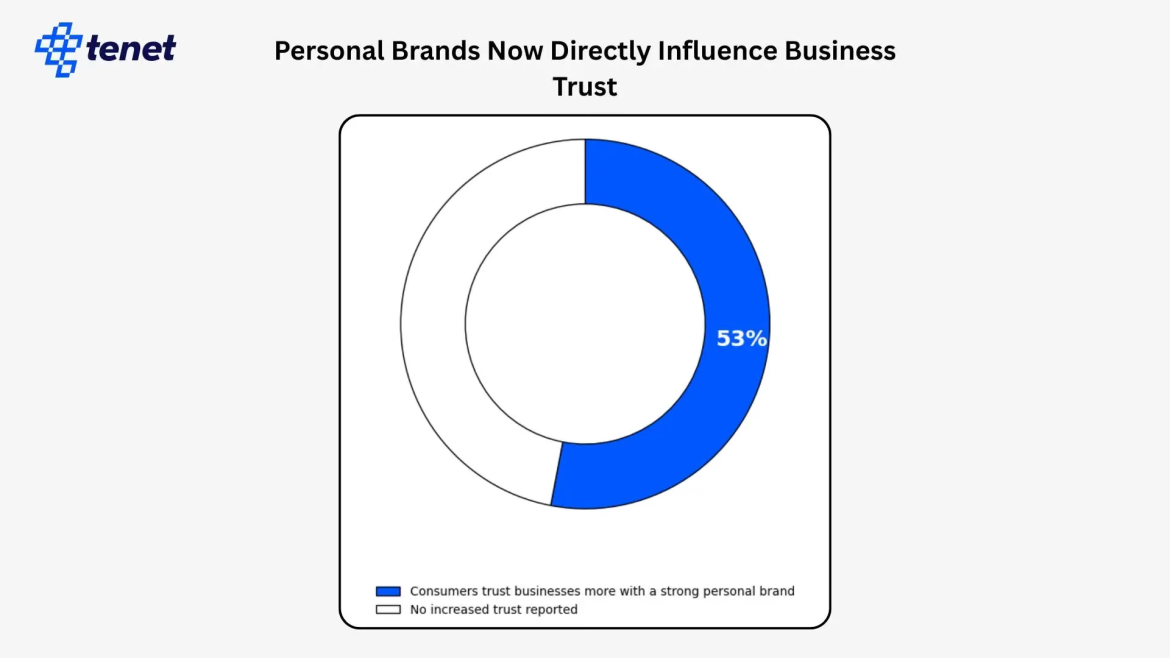
The reason it carries weight is dull and reliable: people follow people. A personal profile tends to drive more organic reach and better comment threads than a company page, and that holds true in B2B, not just the softer consumer stuff. Independent analyses keep landing on the same gap.
Socialinsider’s benchmarking puts average engagement on company pages on the low side, which is exactly why steady, human posts from a named individual end up doing the heavy lifting as a distribution channel for ideas and announcements.
The founders who get traction here tend to post the unglamorous specifics like a lesson that cost them something or actual numbers. They point the spotlight at customers and the people on their team and turn up in conversations in their corner of the market rather than broadcasting into it.
Andrew Bates, COO of Bates Electric, oversees an electrical contracting company his family has run since 1992, with crews on 24/7 emergency call across eight states.
Bates says, “When the power cuts out at nine at night, nobody opens a search engine and scrolls through company listings. They call the name they already know. Being that name is the whole point of me showing up with a face and an opinion instead of a logo. People hire the person they trust, and trust is built long before the emergency.”
Jason Lemkin is the obvious case. Years of answering tactical SaaS questions and sharing patterns pulled from thousands of founders, and all of that trust compounds back into SaaStr’s events and media reach. Chris Walker is another: a steady run of demand-gen posts that turned into a movement and then a business with a real pipeline behind it. Same throughline both times: the content is useful, it’s specific, and it clearly comes from someone who has done the work.
There’s a lot of room for that to spread. LinkedIn has passed a billion members, and four in five drive business decisions, the exact audience most founders are trying to reach.
A company page is the story the organization tells about its product, how it works inside, and what it changes for the people who buy it.
Done well, a page pulls buyers in with content that’s genuinely worth reading and positioning that doesn’t wobble. It gives press, partners, and investors a credible place to check. And it runs around the clock as a hub for hiring and employer brand.
The recruiting math is hard to wave away.
LinkedIn reports that millions of people search for jobs every week and that new hires are hired every minute. Its own talent research links a strong employer brand to a lower applicant pool.
Gong’s page is the one people point to, with consistent, data-heavy posts that revenue teams actually open, keeping the brand in the right rooms. Below is an example.
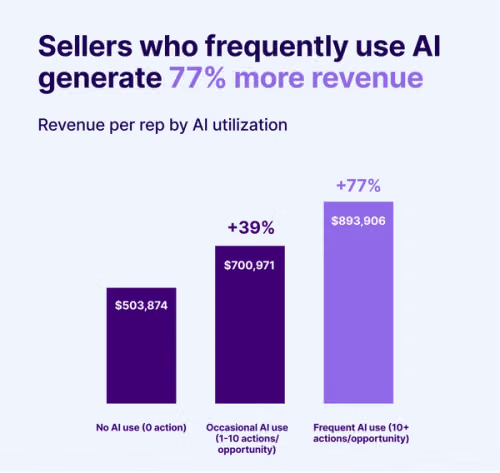
Canva runs a different play, mixing product education with a lot of community celebration, and the page ends up pulling in users and candidates at the same time. The good ones read as human and useful. The faceless-billboard version gets scrolled past.
A page also does something a single person can’t sustain. It carries newsletters, hosts Lives, organizes content across product lines through showcase pages, and runs Thought Leader Ads that push a leader’s own post out from the company account.
For speed and actual back-and-forth, the personal profile usually takes it.
A person’s story gets comments, whereas a press release would get a polite scroll.
And once employees start sharing, the arithmetic changes. LinkedIn has reported that an employee’s network tends to run about ten times the size of the company’s follower count, and that the same post moves more when a person shares it than when the brand posts it alone.
Where the company page pulls ahead is the slow stuff.
It compounds trust over time, and it becomes an asset that can be handed off, something that keeps recruiting at scale, holds the case studies, takes paid distribution, and holds the line on presence through the stretches when the founder is buried in the actual work.
Jeffrey Zhou, CEO and Founder of Fig Loans, runs a lending company built around responsible borrowing for people traditional credit has shut out.
Zhou says, “Lending asks someone to trust you at the exact moment their finances are stretched thin. That trust does not come from a brand account posting polished copy. It comes from them seeing a real person stand behind how the product actually treats them. In this business, the founder being visible is the thing that makes the product believable.”
The thing worth holding onto is that neither account carries it alone. The founder lights the story. The company page gives it a home and a scale. Employees push it out into their own feeds.
Run all three together and reach climbs, but the real gain is how many separate times a buyer runs into the message, and a buyer usually needs to meet it in a few different settings before there’s any appetite to talk.
There’s a failure mode on each side. Personal posting with no plan drifts off-message. A company page that never takes a position turns into wallpaper nobody reads. The fix is unglamorous: agree on a handful of themes up front and hold both accounts to them.
There’s no universal ratio. A few things push it one way or the other.
The biggest lever is what’s being sold and how.
Founder-led branding does its best work in trust-heavy, complicated sales (B2B SaaS, services, anything regulated) where buyers want to see who’s behind the product before they commit.
Chuck Schaeffer, CEO of AVTEC, runs a Salesforce implementation firm that rebuilds CRM systems for enterprises on fixed timelines.
Schaeffer says, “A buyer signing off on a system rebuild is handing you the core of how their business runs. They want to know the person accountable for it is real before they commit to anything. That assurance comes off a founder’s profile, where they can watch how he thinks over months. A company page cannot carry that kind of trust on its own.”
Sell something self-serve or visual enough to explain itself, and the company page does more of the lifting with sharp demos and user stories.
Stage matters too. Early on, the founder’s personal brand is usually the fastest-growing asset. Once hiring picks up, the company page stops being optional; it’s where new advocates get recruited and brought up to speed.
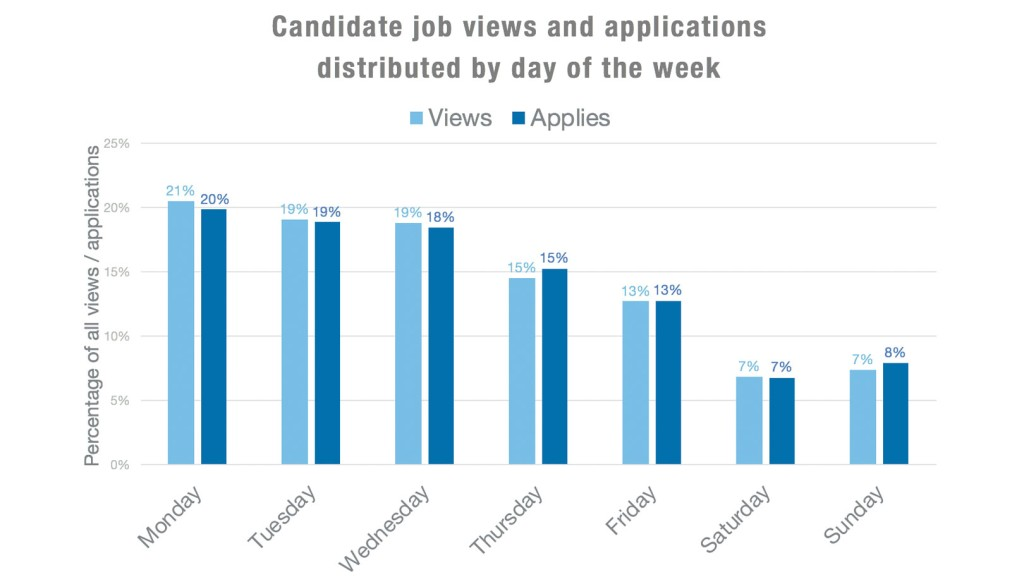
Then there’s who’s actually making the decision.
When a deal has to clear several functions, both accounts earn their place: the personal posts open the door and set the terms of the conversation, and the page hands evaluators and internal champions the proof they need to make the case upward.
The near-term goal also tilts things. If the job this quarter is demand creation, the personal profile leads, and employees get pulled in to share. If a hiring sprint or a raise is coming, the page gets the attention instead of the one with culture, case studies, and visible momentum.
One last thing. A company brand survives a change at the top; a personal one walks out the door with the person. Anyone planning to step back from daily operations needs the page to be built up enough to carry the story on its own.
None of this has to double the workload. It mostly comes down to running one system across two accounts.
Start with three pillars. Customer outcomes, category education, and the behind-the-scenes decisions nobody else is willing to post about. Run the same three on the personal profile and the page, and the message stacks instead of splitting.
The founder’s cadence can be light:
When a personal post lands, it shouldn’t die on the personal profile. A hit gets a second life as a company blog post, a sixty-second video, a carousel, maybe a line lifted into a case study. Tag the customers and partners who were part of what happened.
Employee advocacy works best when it’s set up.
When a post worth spreading goes live, a short internal note (the talking points and the link) makes sharing easy, and asking people to add their own angle before they hit post matters more than the raw share count. That’s where the multiplier is, since employee-shared content tends to out-pull the same thing from the brand account.
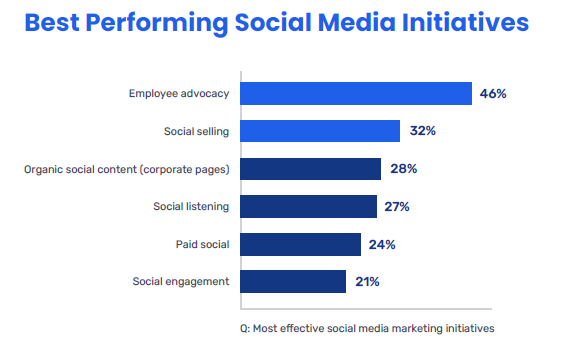
The platform’s own features earn their keep on both sides. Creator Mode opens up newsletters and Live for the founder. The page has Events, Product Pages, and Thought Leader Ads for pushing a leader’s post out directly.
A lot of what gets seen on LinkedIn never comes from posting.
Roughly half of it traces back to thoughtful replies on other people’s work. Split that effort between the founder account and the page, turn up in conversations that are actually relevant, and leave something useful rather than a pitch.
Keep the whole thing in one calendar. Personal and company posts in a single doc, a two-week horizon, with dates, pillars, links, and owners marked. Forty-five minutes of batching ideas once a week keeps overlaps out and the story moving.
As for the split, early-stage teams usually start around 70% personal and 30% company, then drift toward even as employer branding and paid reach start to matter more.
The personal profile is the tip of the spear. Helpful, specific posts on a steady cadence, plus real engagement in the comments, that’s the fastest thing a founder has to work with on day one.
The company page gets built in parallel to a solid baseline: a description that’s actually clear, visuals that aren’t three years old, and a couple of decent posts a week. Once the team and momentum are in place, employee advocacy, newsletters, and a bit of selective paid distribution take the lead.
Reputation isn’t only built on a feed. Buyers checking out a founder’s LinkedIn will go looking for proof the company holds up, and that’s where third-party reviews do the work a self-run page can’t.