
Personal Branding vs. Company Branding on LinkedIn: Where Should Founders Focus Their Efforts?
Should founders build a personal brand or a company page on LinkedIn? Learn what each does best and how to run both without turning the platform into a...
Updated October 19, 2026
To get press coverage, find a story that matters to a specific audience, identify journalists who cover it, prepare evidence they can check, and send a concise, relevant pitch. Research the press before investing in content so your story fits the people you want to reach.-
Most businesses want more press, but few know how to get it.
Part of the reason for this lack of understanding is the subjective nature of public relations. Unlike SEO or PPC, there are few hard metrics in PR, thus it is challenging to quantify relationships with journalists or influencers.
Looking for a Public Relations agency?
Compare our list of top Public Relations companies near you
Most businesses want more press, but few know how to get it.
Press outreach involves editorial judgment, but you can still measure replies, published coverage, referral traffic, and qualified inquiries. Set a campaign goal before choosing which journalists to contact.
A repeatable outreach process helps your team organize research, content creation, and follow-up. Adapt it to your news, available resources, and target outlets; coverage is an editorial decision and cannot be guaranteed.
This article will introduce a new approach to PR and walk through a simple four-step process for getting press.
Press coverage is earned editorial attention, such as an article, interview, or quote selected by a newsroom. Keep it separate in your plans and reporting from paid sponsored content, contributed articles, and distribution of a press release. Ask what a proposed placement includes before committing to it.
Creating content before researching its audience can leave your PR team trying to place a story that does not fit any outlet. Involve PR during planning so the topic, evidence, and format reflect the needs of the journalists you intend to pitch.
In the reverse PR process, instead of creating a piece of content and distributing it, you consider what the press wants, what kind of pitches work, and then create content around those two factors.
In Cision’s 2026 State of the Media survey, 66% of respondents said they rely on PR-provided content for story ideas, but 72% said fewer than a quarter of pitches are relevant. The survey covered 1,899 journalists across 19 markets in January and February 2026. These findings support researching fit before outreach; they do not promise collaboration or coverage.
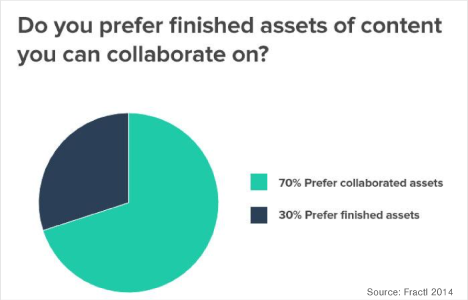
With the reversed approach, the PR team is a part of the content creation process from ideation through its eventual distribution. You consider what the press wants at each stage and fine-tune your content accordingly.
The benefit is a clearer connection between your content and the journalist’s audience. Use that research to decide what to create, then let the reporter determine whether and how to cover it.
Use the following four steps, considering each of their components, in efforts to garner better press coverage for your content.
Before you start creating your content, build a focused list of press targets. Prioritize journalists whose recent work overlaps with your topic and audience. Begin research early enough to prepare useful evidence and answer questions.
The following provides a framework for building a list of press targets and developing relationships with them.
Start with journalists whose work fits the story. Check the outlet’s pitching instructions too: its preferred contact may be a reporter, editor, producer, or designated submissions inbox.
When approaching your target outlets for coverage, an important concept to keep in mind are various industry beats.
Essentially, every journalist covers a specific area that’s called his/her “beat”. The breadth of a particular beat depends on the publication. A small regional newspaper might have a single journalist covering “technology”, while a tech publication might have separate people covering small tech niches like AI, IoT, etc.
Ideally, you want to contact journalists whose beat covers your industry or vertical.
What is the best way to find journalists?
Most publications will have an about page or a “masthead” with a list of all journalists and/or editors and their respective beats. Use these pages as a resource for targeting journalists for outreach.
If you have a news story in the social media space, for instance, contact the social media editor:
Recommendation: Search: "[publication name] + [masthead]" to find the "About" page.
Confirm each journalist’s current beat and outlet using recent bylines and their professional profile. Follow the contact instructions they publish instead of assuming that a social profile or old media list is current.
You can also research contacts through JustReachOut, which describes journalist search and outreach features. Verify each match against recent coverage. The article’s author runs JustReachOut, so this is a tool suggestion with an author connection rather than an independent product comparison.
For each target, record the journalist’s name, outlet, beat, a recent relevant article, published contact instructions, the reason your story fits, and outreach status. Start with a list small enough to research individually; expand only when you can explain the fit.
The aim of press outreach is to help a journalist report a relevant story that may mention your business or quote an appropriate expert. A contributed article under your own byline is a separate format and should follow the outlet’s submission policy.
Do not promise search rankings from a press mention or a familiar author name. Google’s guidance says E-E-A-T is not itself a specific ranking factor and encourages clear, accurate authorship and helpful content.
You can send a relevant pitch without an existing relationship. Muck Rack’s pitching guide explicitly distinguishes cold pitches from pitches to established contacts. Make the fit clear in either case.
Build relationships by being useful and reliable. Follow the journalist’s preferred channel, respond to their requests, and share relevant evidence when you have it. A fixed quota of comments or social replies is not a substitute for relevance.
For your outreach, adopt the principle of “give before you take”. Don’t ask for anything in your first messages. Instead, offer help, share tips, leave valuable feedback or introduce them to people they might benefit from.
Keep a record of previous conversations and any pitching preferences the journalist shares. Respect a decline or request to stop contact; being helpful does not create an obligation to cover your business.
The most important step in the PR process is to come up with content ideas that can convert to press coverage. The four main factors of consideration for converting ideas to coverage are as follows:
Cision’s 2026 report identifies original research, expert access, and embargoed information among the things journalists value in pitches. Choose evidence that helps your target journalist report a story, rather than assuming one content format works for everyone.
Before producing a large asset, ask: What has changed? Who is affected? Why does it matter now? What evidence or expert access can we provide? For local coverage, identify the specific community affected.
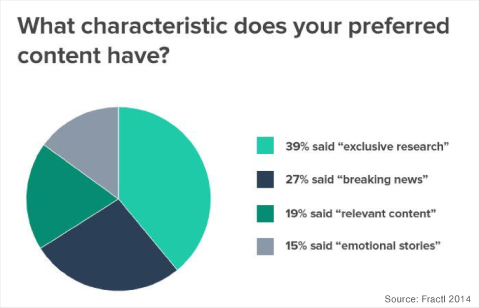
For example, the opening of a store alone is a company announcement. A more specific local angle might explain how the opening affects access to a neighborhood service, with verifiable details and people available for interviews. This is an illustrative angle, not a reported case study.
An exclusive gives one outlet an agreed-upon opportunity to report a story first. An embargo sets an agreed time before information may be published. PR Newswire’s guidance explains the agreement needed to share news before publication. Confirm the scope, deadline, release time, and time zone in writing; avoid promising the same exclusive to multiple outlets.
What kind of content you create will depend a lot on the objectives behind your press outreach.
Choose one primary goal and the evidence you will use to assess it. Treat links as a possible outcome, not a condition of coverage, and let the outlet choose whether to include them. Avoid promises of first-page rankings from a small number of backlinks.
Another critical component of the PR process involves research into the type of stories your target publications want.
Read the publication’s recent coverage first. BuzzSumo’s content discovery tools can supplement that research with engagement data, but social sharing alone does not establish what a journalist will accept. Check relevance and submission guidance directly.
For top stories, make note of the following:
Finally, evaluate your own content creation capabilities. Take stock of the following:
Ideally, you should have extensive experience and/or resources to create your target content type. For instance, if you’ve never made an infographic before and have no design resources, it would make sense to target a different content format.
Use that assessment to choose a story you can substantiate and an asset your team can deliver on time.
Next step: actually create the content.
This process can either be relatively straightforward or notoriously difficult, depending on your existing expertise and access to resources.
Regardless of the situation, there are a few things you should focus on when creating content:
When creating content, it’s a good practice to punch-up its emotional quotient, especially in its title, in order to drive views and shares.
Positive emotions, in particular, tend to get more shares.

Make the human impact of your story clear without exaggerating its findings. Explain who benefits, who faces a problem, and what has changed. Use accurate headlines and images that support the evidence; do not add dramatic adjectives to compensate for a weak news angle.
Making your content more readable should be a priority, no matter who you’re producing the content for.
Readable content contains the following characteristics (pullout box):
This is a great example of a highly readable article. Notice how the author makes some words bold to draw attention to them?
Explain unfamiliar terms and keep the language appropriate for the publication’s audience. Readability tools can flag dense sentences, but check that simplifying the language preserves the meaning.
Before you pitch your content, package your content in a clean, easy to read and easy to share format.
Ideally, this should be a separate landing page on your site with a short, shareable URL. This page should list the key findings and takeaways of your content in a visually rich format.
Fractl’s research reports are a great example of this.
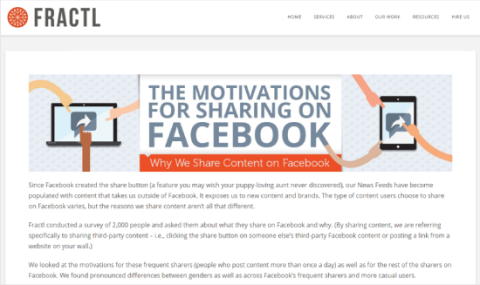
If you can’t create landing pages, package your content as a short PDF.
When journalists ask for the story, you shouldn’t have to direct them to a busy blog post. A well-packaged PDF or landing page will help them read and understand your content much faster.
Make a simple media kit available through one accessible link. Include a summary of the news, primary sources or research methods, a named media contact, a spokesperson’s role and availability, and relevant images with captions, credits, and permission to use them. For original research, show the sample, dates, question wording, and limitations. Check that links work without an unexpected sign-in.
If you’ve followed this strategy so far, you would now have:
The final step is to actually pitch your content. Consider the following for this vital, final step:
State the story in the subject line so a journalist can assess its relevance. Muck Rack’s guide recommends direct wording over vague or overly clever phrasing. Identify the news, affected audience, or useful evidence.
Adaptable examples: “New research on [issue affecting their beat]” or “[Local event] offers [specific community impact].” Use these only when they accurately describe your story.
Show why the story fits this journalist’s current beat or a specific recent article. Check names, facts, and links yourself before sending. Personalization cannot ensure a pitch will be read or accepted.
For your top targets at premier publications, however, I would recommend sending personalized emails by hand.
Make sure that your emails are short. A majority of journalists say that they wouldn’t read anything beyond 200 words.
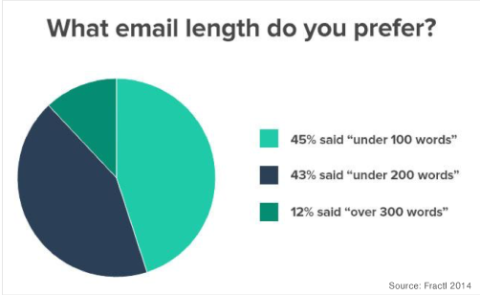
Keep the pitch brief enough for the journalist to assess the angle, evidence, and next step. Put supporting detail behind a link and follow any length requirements the outlet publishes. End with a specific offer, such as an interview or access to your research, rather than asking for a promised article.
This template is a starting point. Replace each bracketed field with accurate details and tailor the angle to the recipient. It is not a pitch that was sent or tested.
Subject: [Specific news or finding relevant to the journalist’s beat]
Hi [Name],
Your recent article on [topic] covered [specific issue]. We can offer [new evidence or source] that adds [relevant context] for your readers.
[One sentence explaining the news, who it affects, and why it matters now.]
The supporting [research, documents, or images] are here: [link]. [Named spokesperson and relevant role] is available [accurate availability].
Would you like [an interview or access to the evidence]?
[Name, role, email, and phone]
Follow the journalist’s stated preferences. If they have not replied and welcome follow-ups, send one brief message in the original thread after a reasonable interval. For a nonurgent story, several business days is a suggested starting point, not a universal rule. Add useful context, keep the offer clear, and stop if they decline or ask not to be contacted. Cision’s follow-up guidance also recommends respecting preferences and limiting reminders.
If the journalist responds, ask what evidence or interview access they need and when they need it. Confirm what you can deliver, keep spokesperson availability current, and do not assume a conversation means an article is scheduled. If coverage contains a factual error, send the outlet the specific correction and supporting source.
Review the campaign against the goal you set before outreach. Maintain one record per journalist and one per published story, with dates and URLs, so repeated follow-ups and syndicated copies do not inflate your totals.
| Measure | What to record | How to interpret |
| Replies | unique journalists who replied divided by unique journalists successfully contacted | Count a decline as a reply; report interested replies separately |
| Coverage | Unique editorial stories and outlets, with live URLs and publication dates | Separate original stories, syndicated copies, paid placements, and press-release republications |
| Quality | Audience fit, accurate facts, expert quotes, and key messages included | A relevant trade or local story may serve your goal better than an unrelated large outlet |
| Business response | Referral visits and qualified inquiries tied to coverage where observable | Record the attribution method and reporting period; avoid claiming every later lead came from PR |
Use these definitions consistently across campaigns. When results are weak, inspect the fit, evidence, pitch, and timing before expanding the contact list. A reply is not coverage, and published coverage is not proof of a sale.
There is a mistaken belief that getting press is either a matter of luck, or a matter of hiring an expensive PR agency.
A small business can pursue coverage by bringing a useful story and credible sources to an appropriate outlet. You can do the outreach yourself or use a PR agency when you need help with strategy, research, or coordination; neither route guarantees coverage.
As with most things in marketing, PR is a process. Once you identify the parts that make up a successful PR campaign, you can repeat and scale it.
Use these four steps to research the press, develop a relevant angle, prepare your evidence, and pitch it. Then review the response and coverage to improve the next campaign.