Lead Quality vs. Lead Quantity: Why B2B Teams Are Rethinking Their Funnel in 2026
Bigger buying committees and tighter budgets are forcing B2B teams to rethink lead quality vs. quantity. Here's how top teams rebalance the tradeoff in 2026.
Updated July 9, 2026

Online communities have become one of the most trusted spaces online, and consumers are spending more time in them than ever. These spaces are where real conversations happen, purchase decisions are shaped, and peer trust is built, making it a prime opportunity for brands.
The way consumers connect and seek advice has fundamentally changed. Where brands once controlled the conversation through traditional advertising and marketing channels, today’s consumers are increasingly turning to objective digital communities to solve problems, validate purchases, and share experiences.
Online communities have become a primary destination for authentic, peer-driven dialogue that no marketing campaign can replicate. For brands, this shift presents both an opportunity and a challenge. These spaces aren’t built for promotion; they’re built for people.
Looking for a Digital Marketing agency?
Compare our list of top Digital Marketing companies near you
To better understand how consumers are engaging with online communities and what role brands should play, Clutch surveyed 413 consumers who regularly use online community platforms in March 2026. The findings reveal an active and growing landscape that’s both hard to break into and largely underutilized by brands.
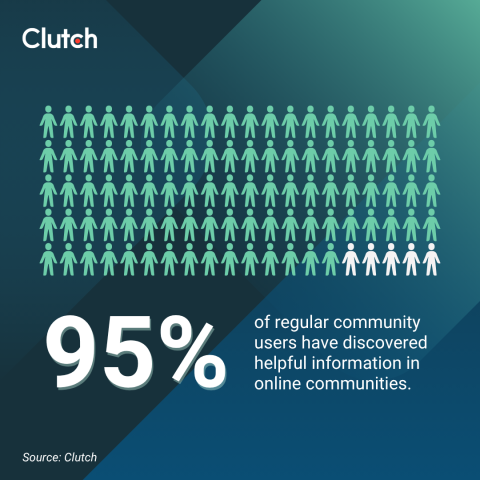
Our data shows that over the next year, half of those consumers plan to increase their participation in online communities, drawn by the opportunity for greater engagement and collaboration with peers. The value they find in community spaces is undeniable: 95% of respondents have discovered helpful information in online communities, making these spaces a critical target for brands looking to expand their marketing efforts in meaningful ways.
This report explores where consumers participate, what keeps them engaged, what frustrates them, and the role brands should play in these communities to build authentic relationships and lasting trust.
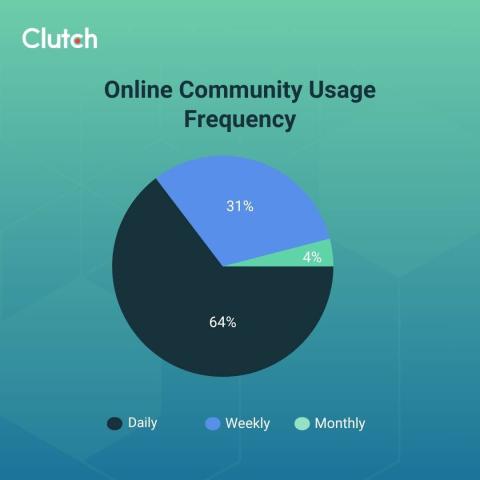
Online communities are no longer occasional resources people check once in a while; they’ve become part of daily consumer routines, much like scrolling through social media or catching up on the news.
Sixty-four percent of regular community users engage with them every single day, creating a constant stream of conversation, discovery, and peer-driven recommendations that brands simply can’t afford to ignore.
What makes these spaces particularly powerful is how consumers show up in them. It’s not passive scrolling – 54% of regular users actively post, and 35% actively comment, meaning the content others rely on is largely shaped by fellow community members.
These peer-to-peer exchanges feel fundamentally different from traditional advertising.

When a recommendation comes from someone with shared experiences, real-world product knowledge, and no incentive to spin the truth, it carries a different kind of weight.
That trust is reflected in the data: nearly all consumers (98%) who participate in online communities have some level of trust in a product or service recommendations from community members. That’s a remarkable figure, and it speaks to something that brand messaging often struggles to achieve on its own: trusted verification.
For brands, this is both an insight and an invitation. The peer conversations already happening in these communities are actively shaping purchase decisions. Authentic brands that show up to support those discussions by providing helpful information, answering questions, and contributing genuine expertise can become part of the trust ecosystem rather than an outsider trying to make their way in.
Consumers view online communities as places to learn, solve problems, and exchange knowledge – not to be marketed to. So when brands enter these spaces, the bar for how they show up is high.
The good news is that consumers aren’t opposed to brand participation; in fact, 95% of regular community users think authentic brand participation is important. The keyword here is “authentic”.
When asked what they actually want from brands in community spaces, consumers are clear: educational content tops the list.
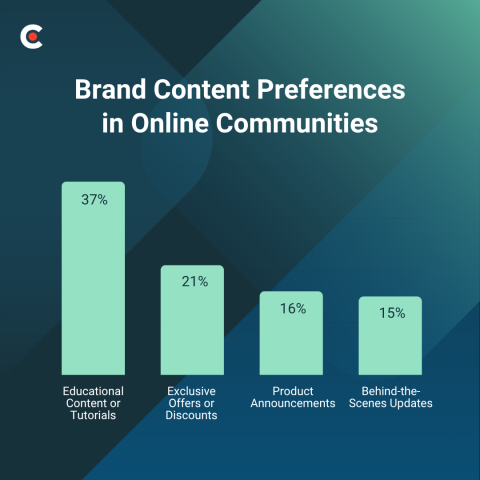
Users want content that helps them do something or understand something better. That means product tutorials, industry insights, troubleshooting guidance, and expert perspectives.
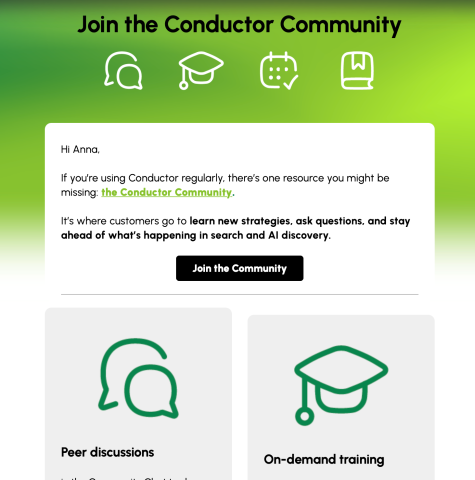
Brands are most welcome when they share expertise rather than push products.
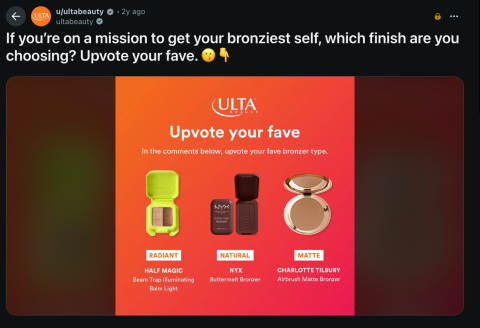
But showing up in communities isn’t just about what brands post – it’s about how they engage.
Seventy-five (75%) of community users think brands should actively listen to and respond to feedback in those communities.

Community participation, done right, is a two-way conversation. Consumers expect brands to acknowledge questions, address concerns, and engage with feedback openly and transparently. The moment a brand’s presence starts to feel scripted or promotional, it loses the room.
Emilio Garcia, Managing Partner at Boundify, says, “You can’t just parachute in with promotional messages and expect engagement. These communities have their own culture, their own norms, and their own reasons people show up.”
His advice to brands mirrors what the data suggests – listen first, understand what people actually care about, and then show up with value that fits the context.
“If you removed your brand name from the comment, would it still be valuable? If the answer is yes, you’re doing it right,” said Ribana Hategan, Director at FOUNDCOO.
The brands that build real credibility in community spaces are the ones that treat education and authenticity as the foundation.
When it comes to where consumers are actually gathering online, the answer is clear: social media platforms dominate.
Eighty-three percent (83%) of regular community users participate in social media communities, including Reddit, Nextdoor, Facebook groups, and LinkedIn.
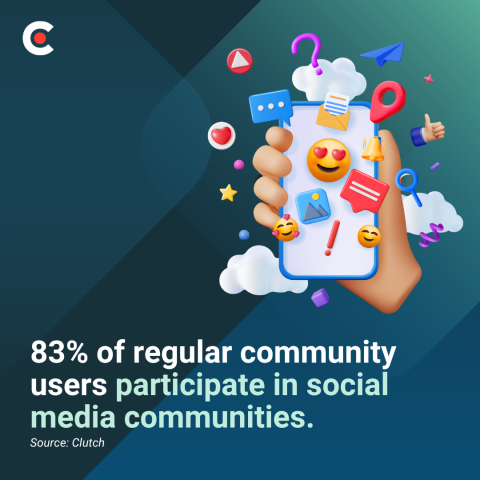
These aren’t niche destinations; they’re the environments where consumers already spend their time, and community engagement happens naturally within them.
The appeal makes sense. Social media-based communities offer content discovery, real-time interaction, and a sense of familiarity that standalone platforms can’t always match. These discussions are also often cited in LLMs, making it a quick destination for searchers. Whether it’s a local neighborhood group on Nextdoor, a hobbyist subreddit, or a professional network on LinkedIn, these spaces allow consumers to gather around shared interests without having to go anywhere new.
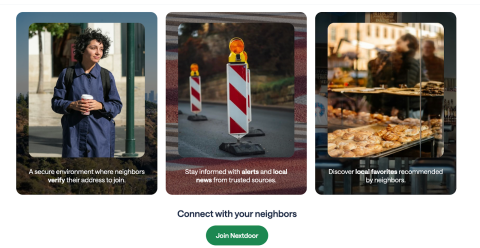
For brands, this is a critical insight. Many might assume that community building means creating a dedicated platform or private forum, but consumers are far more likely to engage where they already are. The online communities with the most traction aren’t the ones that asked people to change their habits; they’re the ones that met people where those habits already existed.
That said, the opportunity within these social ecosystems looks very different from traditional marketing. As Kamron Yazdani, COO of theKOLLAB, notes, each platform has “its own slang, its own unwritten rules, and its own power members.”
A brand that shows up with a polished, corporate tone risks sticking out immediately. Success in these environments requires learning each community's culture and participating in ways that feel native to it, not imported from a brand playbook.
When consumers choose where to spend their time online, they gravitate toward communities built around shared passions, hobbies, and lifestyles – not brands.
A majority of community users (69%) participate most often in interest-based communities, while only 14% say they participate most in brand-led communities, and just 11% in professional groups.
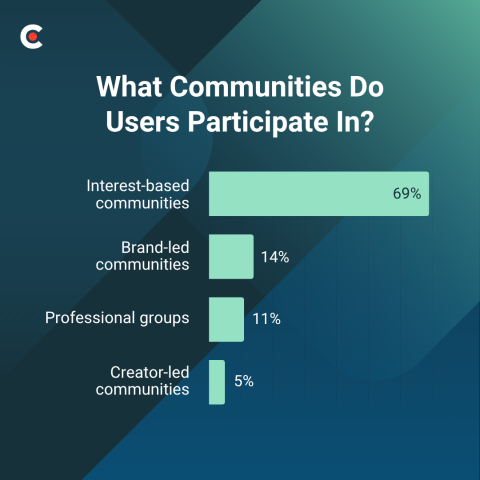
That gap tells an important story. Interest-based communities thrive because they’re built around something people genuinely care about – a hobby, a cause, a lifestyle, a shared challenge.

The engagement there is organic, the conversations feel relevant, and membership feels like belonging rather than opting into a marketing funnel. Brand-led communities, by contrast, often struggle to replicate that same pull because the reason to join is less about shared identity.
That doesn’t mean brand-led communities can’t work, but it does mean they require a much higher bar to succeed.
“Building your own community is a very different challenge,” said Jack Oddy, Managing Director at Soap Media. “It requires a clear reason for people to engage that goes beyond the brand itself. Without that, you don’t have a community.”
For most brands, the smarter starting point is to engage where the momentum already exists.
“Always meet people where they are,” said Khalil Kanbar, CEO of Kanbar Digital. “Finding creative ways to engage in existing interest-based communities will be easier and more effective than trying to build a brand-based community from scratch.”
The low participation in brand-led spaces isn’t a dead end; it’s a signal. Rather than asking consumers to come to them, brands have a real opportunity to show up in the interest-based communities where their audiences are already actively engaged.
Credibility built there can eventually create the foundation for something proprietary.
The primary draw of online communities is refreshingly simple: people want meaningful conversations.
Over 30% of community members say valuable discussions are the main reason they stay active in these spaces.
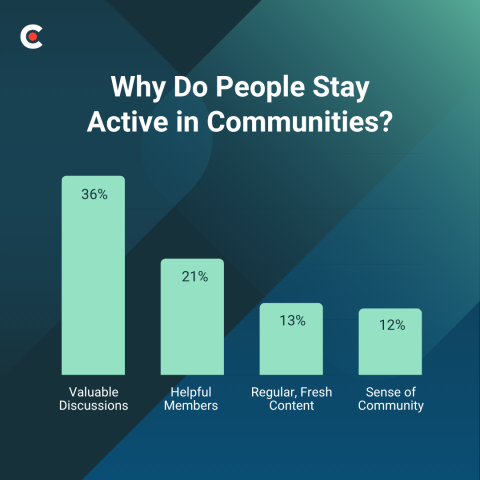
Community members gather to share experiences, learn from one another, and work together to solve real problems. When that dynamic works, communities become genuinely indispensable.
But there’s a flip side. The single biggest frustration consumers report in online communities is excessive promotional content (24%).
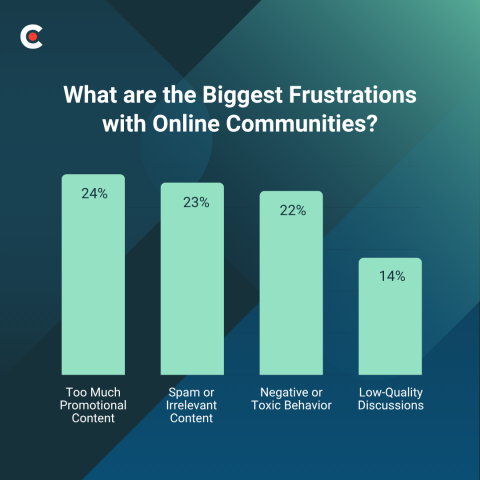
That might not sound like a large number in isolation, but consider the context: in spaces built entirely around peer trust and authentic exchange, promotional content doesn’t just annoy people; it undermines what makes the community worth being part of.
When marketing messages dominate conversations, they disrupt the peer-to-peer dynamic that gives these spaces their value.
“The best way is to use people and members to create the content. This means reducing content created by the company itself and moving towards dedicated members or creators who can be involved,” said Vojtěch Lambert, CEO and Founder of LCG New Media.
In other words, the most effective brand presence in a community often isn’t a brand voice at all – it’s the voices of the real people who connect with the brand’s offering.
Repetitive messaging, irrelevant influencer promotions, and inserting into discussions without adding value don’t just fail to land; they actively damage credibility, both for the brand and the community. The online communities that retain engaged, loyal members are the ones where every contribution earns its place by being genuinely useful.
The opportunity is there for brands since the space exists – it just has to be earned.
Online communities are only growing in influence, and consumers are showing no signs of stepping back from them. Users are turning to these spaces daily to learn, connect, and make decisions, and the trust that they place in fellow community members is something brands have long struggled to replicate through traditional channels.
For brands, the path forward isn’t complicated, but it does require a genuine shift in mindset. Stop treating communities as distribution channels and start treating them as conversations worth joining. That means leading with education, engaging with transparency, and resisting the pull toward promotion. The brands that get this right won’t just reach their audience; they’ll become trusted.
The rise of online communities offers brands an opportunity to show up differently and build credibility in spaces that matter.
During March 2026, Clutch surveyed 413 US-based consumers who regularly use online community platforms about their use of those platforms
Of the respondents, 48% of the respondents were male and 52% were female.
13% of the respondents were ages 18 to 29; 32% of the respondents were 30 to 44; 54% of respondents were 45 and older.